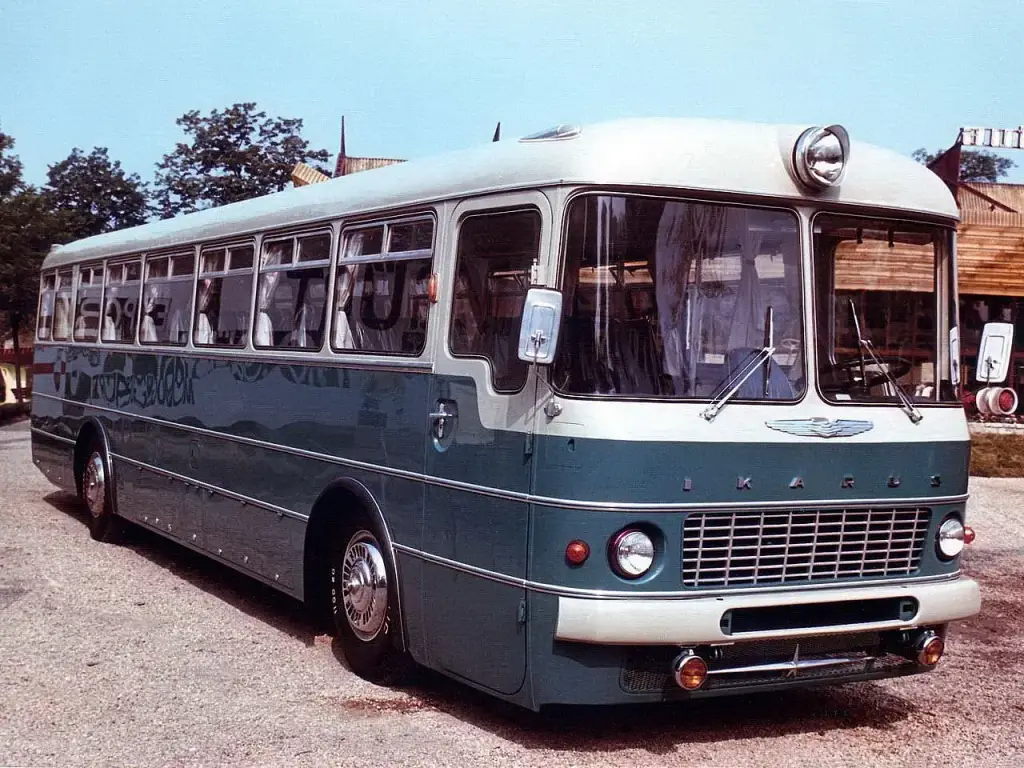
The Ikarus 557 was the long-distance member of the 180-556 family. Built from 1963 on the body of the city 556 with an underfloor engine, it should have given Ikarus a modern coach — but its new 169 hp JáFI engine was so unreliable that the whole type was withdrawn from service by 1967.
Ikarus 557 at a glance
| Maker | Ikarus, Budapest-Mátyásföld |
|---|---|
| Type | long-distance bus |
| First built | 1963, on the basis of the Ikarus 556 |
| First series | 35 buses |
| Later batch | 2 buses in 1965 |
| Engine | JáFI D-619 diesel of 169 hp, built by Csepel |
| Layout | engine under the floor in the middle of the bus |
| Doors | usually two swing doors, one ahead of the front axle and one behind the rear axle; also a folding-door version |
| Withdrawn | by 1967 |
Based on one source: the Hungarian Wikipedia article on the Ikarus 557.
History of the Ikarus 557
At the start of the 1960s Ikarus still had only two long-distance types, both increasingly out of date: the Ikarus 311, in effect patched and reissued since 1951 through the Ikarus 30 and 31, and the cult rear-engined “Faros” that had been in production for almost ten years. Buyers and engineers alike wanted a modern long-distance bus, and in 1963 the factory built the first Ikarus 557 on the basis of the Ikarus 556.
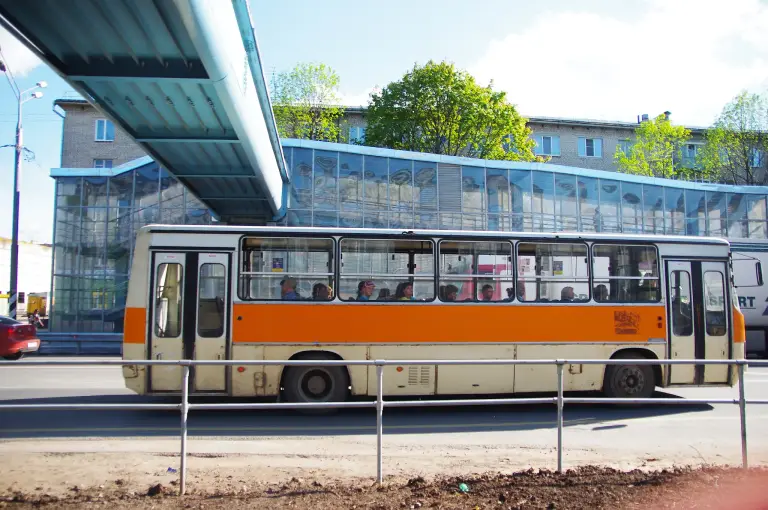
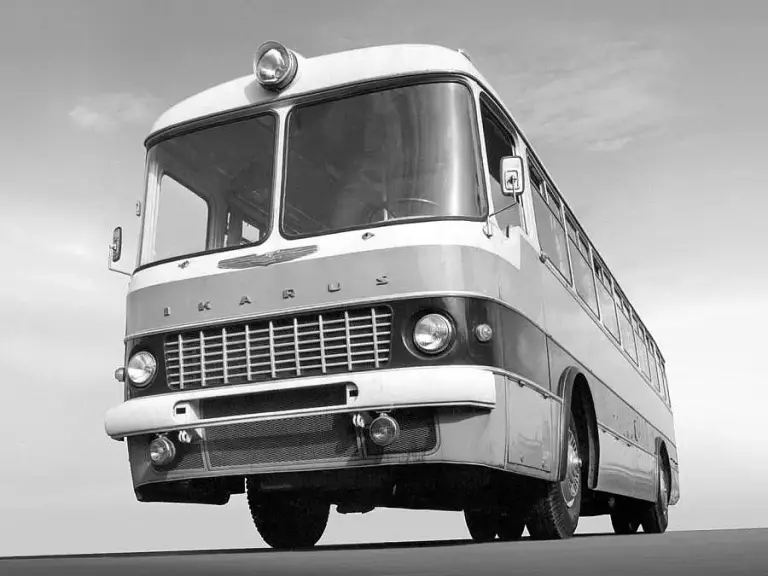
The first series of 35 buses received the very first examples of the new D-619 engine developed by JáFI and built by the Csepel works. Ironically it was this 169 hp engine that soon brought the type down. Most 557s had two swing doors with handles, one ahead of the front axle and one behind the rear axle, though a folding-door version with a front and a middle doorway was also built. The 35 buses were divided between three AKÖV companies and suffered almost continuous breakdowns: the new engines had manufacturing faults that practically kept the vehicles out of active service. The layout made things worse, because with the engine in the middle of the bus under the floor, a driver who broke down on the road could not even try to repair it.
Two more examples were sold in 1965 and suffered the same problems, so by 1967 every 557 had been withdrawn from active service and sold to state farms. In many places the new operators replaced the engines locally, after which the buses were usable for agricultural work. Ikarus naturally considered developing the type further and the engineers began to work on the problem, but on 15 December 1966 the factory issued a new design brief: a new, versatile family with a unified look. That policy produced the 200 series. The short-lived 557 became one of the factory’s failures, yet the experience gained on its buses played an important part in developing the Ikarus 250.
Design and features
- Modern coach body: built on the self-supporting body of the Ikarus 556.
- JáFI D-619 engine: 169 hp, the first examples of a new design — and the cause of the type’s failure.
- Underfloor engine: quiet and space-saving, but out of reach for roadside repairs.
- Lessons for the 200 series: the experience with the 557 fed into the Ikarus 250.
Ikarus 557 versions
- Swing-door version: two doors with handles, one ahead of the front axle and one behind the rear axle.
- Folding-door version: a front and a middle doorway.
- Second batch (1965): two more buses with the same engine problems.
- Converted buses: sold to state farms and re-engined locally for agricultural work.
The 557 was the long-distance version of the Ikarus 556, and its experience fed into the Ikarus 250. More buses are in the Ikarus collection.
Sources
- Ikarus 557, Hungarian Wikipedia: development, engine, production, failure