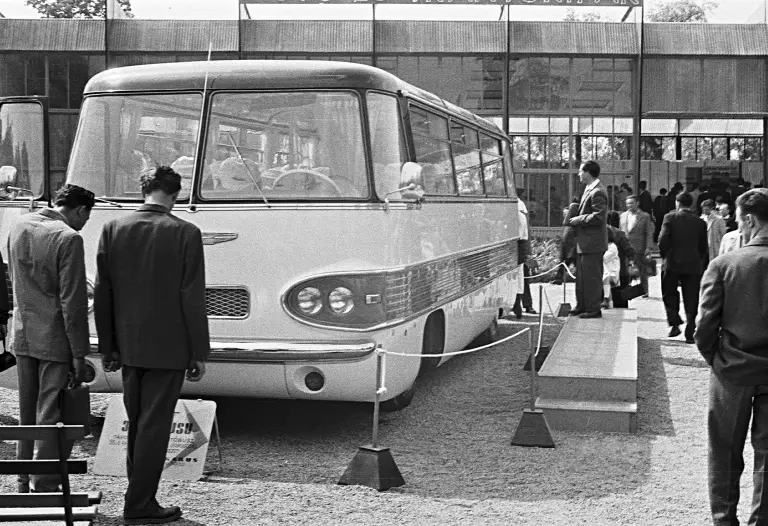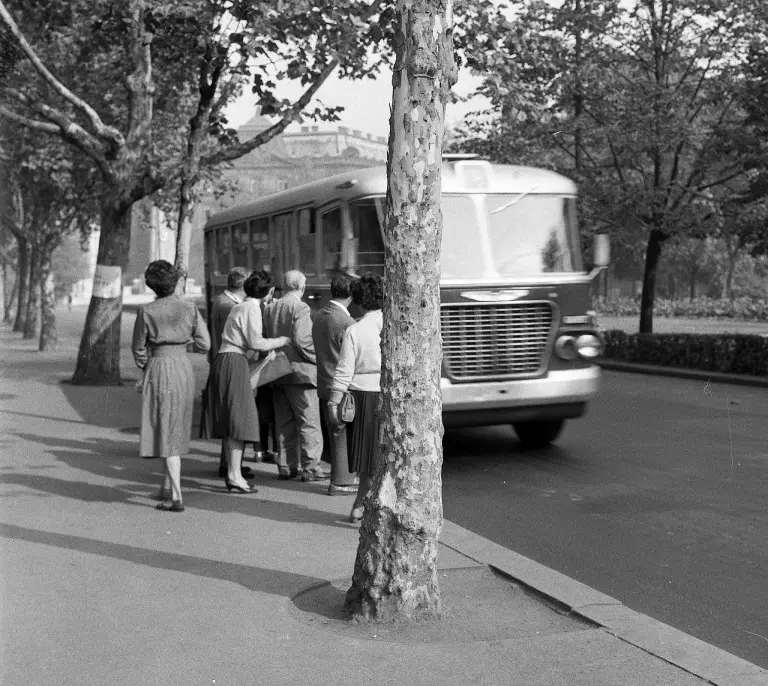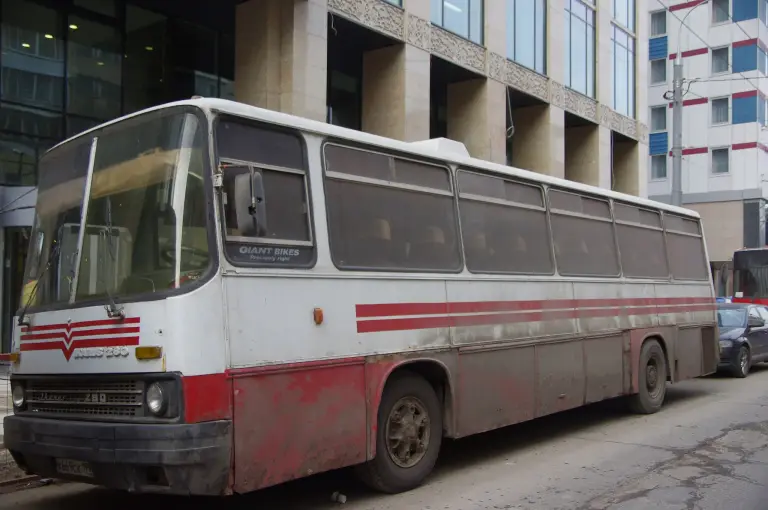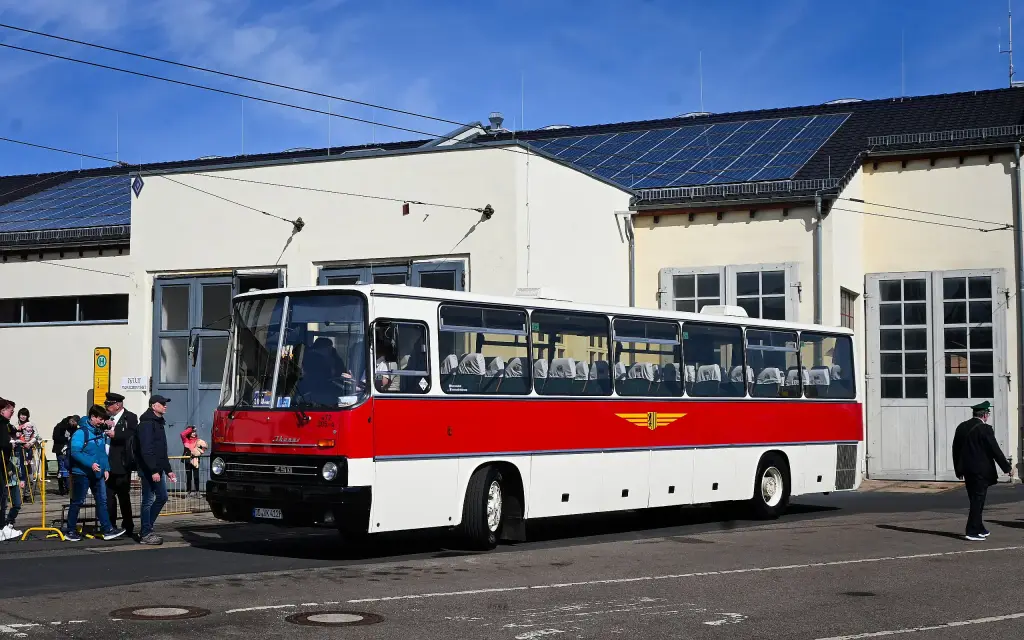
The Ikarus 250 was the first type of the 200 series that shaped Hungarian bus building for the next three decades. A high-floor coach for long-distance work, it used the rear-underfloor engine layout that Setra had pioneered in West Germany, and it set the mechanical pattern for the smaller Ikarus 256.
Ikarus 250 at a glance
| Maker | Ikarus, Budapest-Mátyásföld and Székesfehérvár |
|---|---|
| Type | high-floor long-distance coach |
| Length | 12 m, a metre longer than the Ikarus 256 |
| Production | series 1970–1996; English Wikipedia gives 1968–1989 |
| Engine | Rába-MAN D2156, 10.35 litres, 192 PS (141 kW) |
| Common alternative | Rába-MAN D2356 HM6U, 220 hp (162 kW) |
| Gearbox | five-speed, six-plus-one optional |
| Suspension | air-sprung beam axles, planetary rear axle |
| Brakes | pneumatic dual-circuit, exhaust brake, spring parking brake |
| Top speed | 106 km/h |
| Seats | 42–46 |
| Debut | 19 May 1967, Budapest International Fair |
The English and Hungarian articles disagree on the production years; both are given above.
History of the Ikarus 250
The prototype made its debut on 19 May 1967 at the Budapest International Fair, and further prototypes then travelled to international exhibitions, where they were well received. Series production began in 1970. The English article dates the type to 1968–1989, while the Hungarian one gives production to 1996, in the final body form from 1984 and in small numbers after 1991.
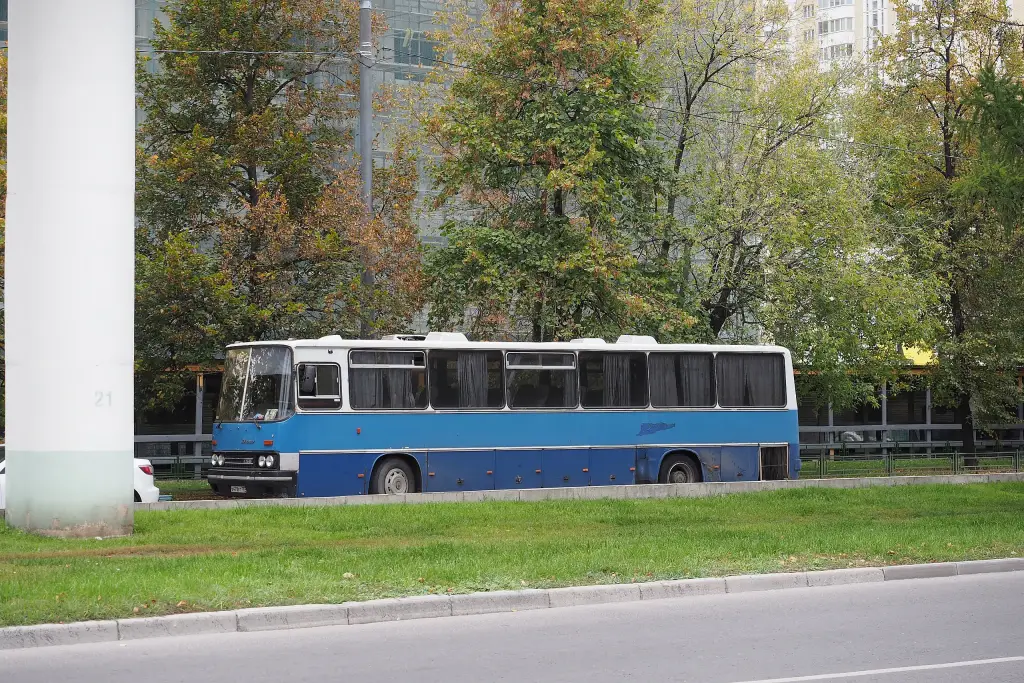
The 250 was designed as a high-floor two-axle coach with a semi-self-supporting body and the engine under the floor at the back, the layout Setra had pioneered in West Germany in the 1950s and 1960s. The body platform carries two air-sprung beam axles, the rear one a planetary axle, each with two hydraulic shock absorbers. Twin tyres are fitted at the rear and single ones at the front, 10–20 in size. Steering is hydraulically assisted ball-and-nut, and the bus has three braking systems: a pneumatic dual-circuit service brake, an exhaust brake and a spring-loaded parking brake.
Power comes from a MAN D 2156 built under licence by Rába: a straight six-cylinder, naturally aspirated, liquid-cooled diesel with direct injection and a displacement of 10.35 litres, rated at 192 PS (141 kW) and 696 N·m. The torque goes through a single-disc dry clutch to a fully synchronised five-speed gearbox, with a six-plus-one-speed unit as a factory option, giving a top speed of 106 km/h and seating for 42 to 46. The Hungarian article notes that most examples received the Rába-MAN D2356 HM6U of 220 hp (162 kW) and that the coach has four raised air vents or air conditioning. By 2020 only one 250 remained in public service at Volánbusz, the KAZ-698 registered 250.68; it was stopped in 2021 and scrapped in January 2022.
Design and features
- Underfloor engine at the rear: the Setra layout, giving a flat floor and better weight distribution.
- Air-sprung beam axles: with a planetary rear axle and twin rear tyres.
- Three braking systems: pneumatic dual-circuit service brake, exhaust brake and spring-loaded parking brake.
- Twelve metres with 42–46 seats: one bay longer than the Ikarus 256, with an extra side window and raised air vents.
- Conference-bus versions: individual examples were built as mobile meeting rooms, including one for Erich Honecker.
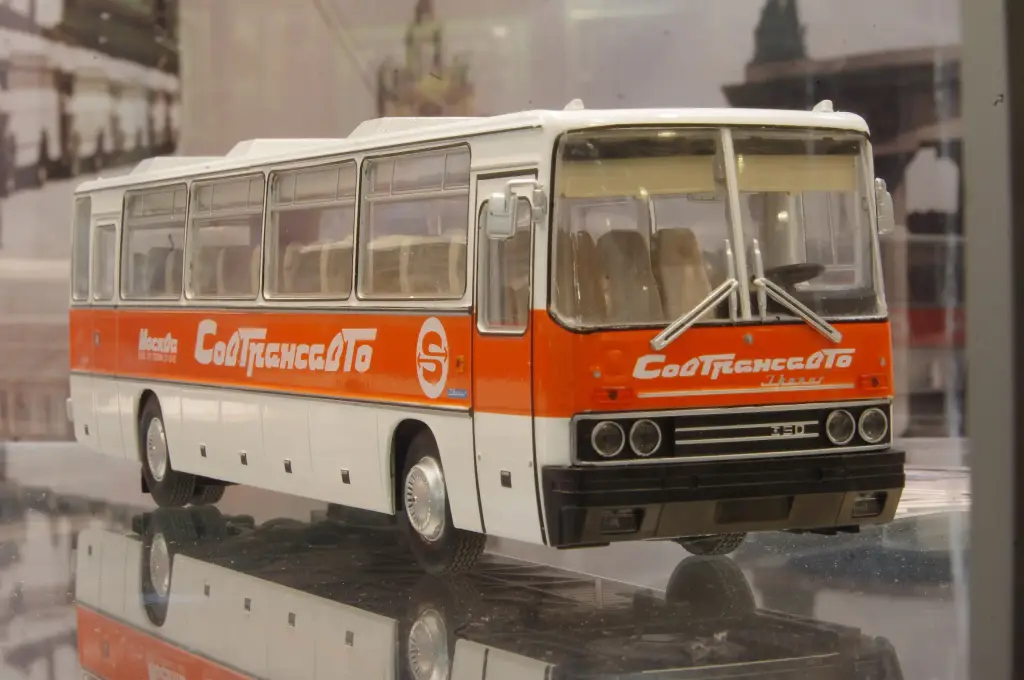
Ikarus 250 versions
- 250.01: early domestic type of 1971, 1-0-1 doors, 52 seats.
- 250.04 and 250.12: built for the Soviet Union in 1973 with a single front door and 42 seats.
- 250.14: thirty buses for IBUSZ in 1978.
- 250.16: fifteen for Hungary in 1980–1981, 1-0-1 doors and 45 seats.
- 250.59: the most widespread subtype, for the Volán companies and the Soviet Union, with power-operated doors.
- 250.66: Erich Honecker’s conference bus for East Germany, built in 1987.
The 250 shared its mechanical layout with the shorter Ikarus 256, and below both of them sat the cheaper Ikarus 255. More buses are in the Ikarus collection.
Video: Ikarus 250 | BCK-662 | Kékesbusz Kft.
Video by Tengex on YouTube.
Sources
- Ikarus 250, English Wikipedia: technical description, engine, gearbox
- Ikarus 250, Hungarian Wikipedia: debut, production years, subtypes, last bus