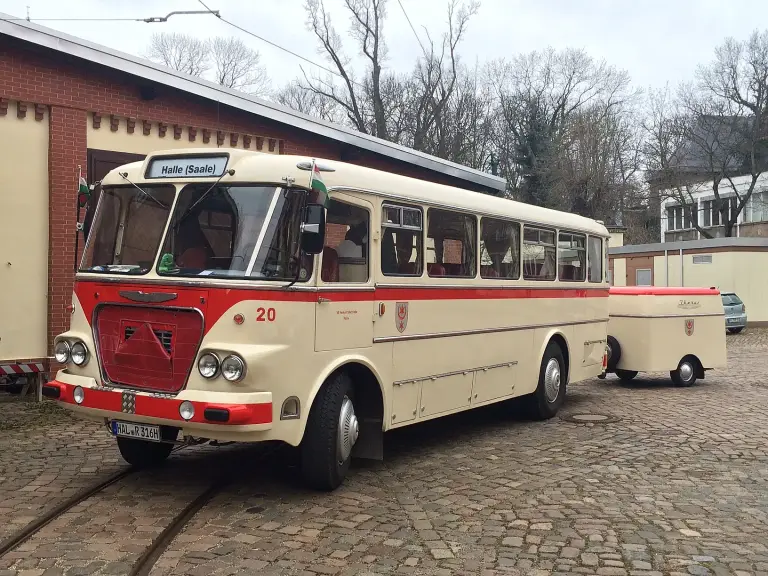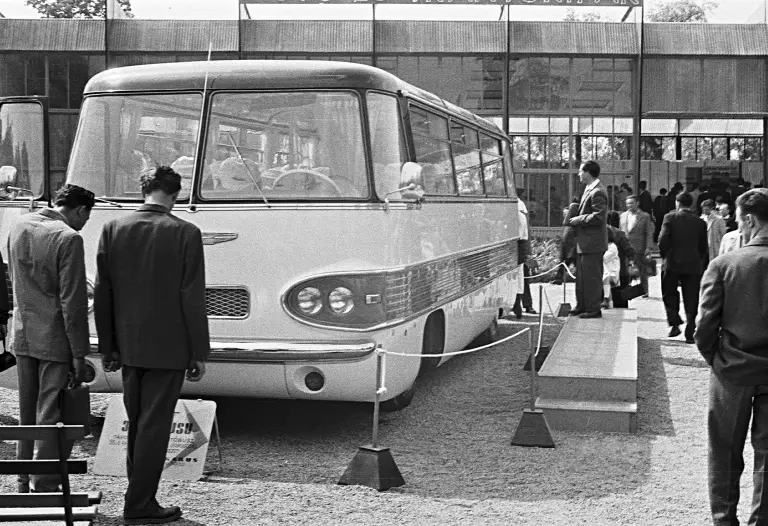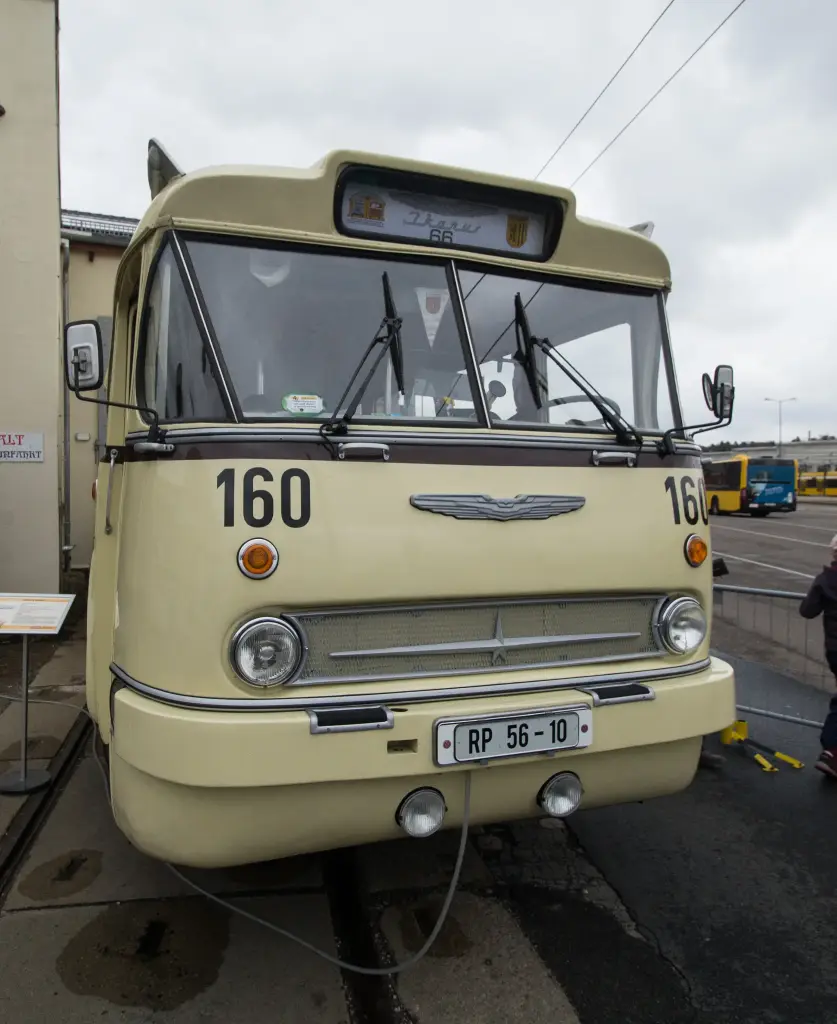
The Ikarus 66 was the city and interurban member of the rear-engined generation, the sibling of the Ikarus 55. Its bulbous engine compartment earned it the nickname “Faros”, and with 9,260 built it was one of the defining buses of Hungarian interurban travel in the 1960s and 1970s.
Ikarus 66 at a glance
| Maker | Ikarus, Budapest-Mátyásföld |
|---|---|
| Type | city and interurban bus |
| Prototype | A58, two doors, 1952 |
| Series production | from the end of the 1950s to 1973 |
| Built | 9,260 |
| East Germany | almost 6,000 between 1958 and 1973 |
| Hungary | about 2,700 at the Volán companies |
| Main subtypes | 66.22 with 2+2 seating, 66.23 with 1+2 |
| Budapest city version | 75 buses with 1-2-1 doors, 1959–1961 |
| Last built | spring 1973 |
Based on one source: the Hungarian Wikipedia article on the Ikarus 66.
History of the Ikarus 66
The two-door prototype with the drawing number A58 was finished in 1952. Styled by P. Horváth György, it was built with a self-supporting body, and its unusual rear engine compartment appeared the following year on the first examples of the Ikarus 55, the type designed for long-distance work. On the buses intended for city traffic, fitting the third, air-operated door behind the rear axle caused the factory difficulties at first, so series production began only at the end of the 1950s, unlike that of the 55.
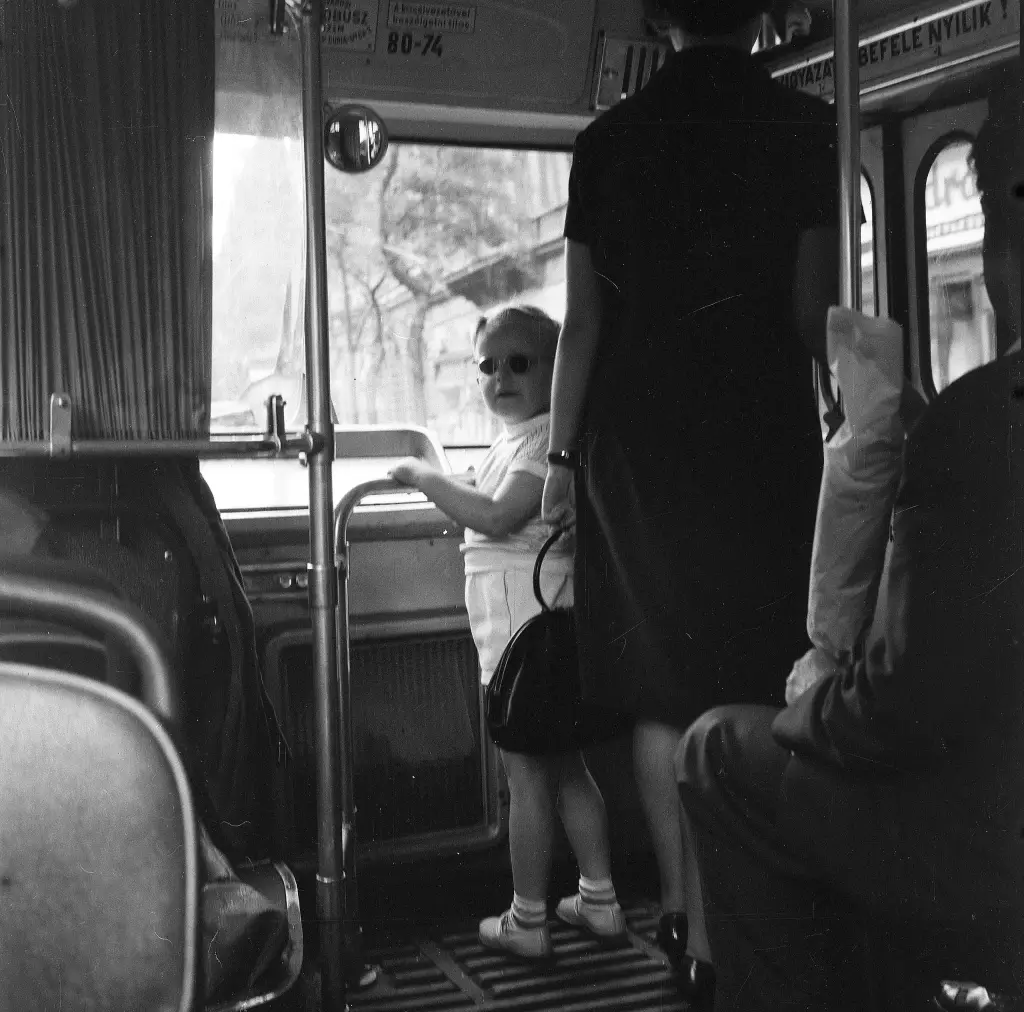
In Budapest the FAÜ began trials on 31 January 1956 with the bus registered GF 100, on route 12 along the Nagykörút. Later, between 1959 and 1961, the company received 75 buses of the city version with a 1-2-1 door arrangement. In Budapest service these did not succeed, mainly because of the narrow interior and poor passenger exchange, and by 1964 all of them had been handed over to the AKÖV companies. In interurban service the type appeared in numbers in 1963 and soon became the most numerous type at most Volán companies. The most widespread subtypes were the 66.22, with 2+2 seating per row, and the 66.23, with a 1+2 layout better suited to city traffic. The last examples were delivered to Volán 14 in the spring of 1973.
From the second half of the 1970s the mass purchase of the Ikarus 266 pushed the type out of public service, and during 1983 the remaining few were scrapped by the Volán companies. Three examples are known to exist: VOL-066, formerly EZY-690, a 66.62 brought back from East Germany; OT 53-00, a one-door bus probably left over from a Soviet export order and the first Hungarian Ikarus 66 to be registered as a veteran; and GC 39-35, a 66.22 that ran for Zala Volán between 1971 and 1982 and is awaiting restoration. Abroad, East Germany was the largest customer, taking almost 6,000 buses between 1958 and 1973, including three-door city versions; their engines were fitted with IFA injection pumps, and a large part were later re-engined during refurbishment with a much stronger 195 hp six-cylinder Schönebeck diesel. They stayed in public service until the late 1980s. Poland took almost 300, and 250 buses with Austrian Saurer engines went to Egypt and Kuwait; about 100 of the Kuwaiti buses later reached South Yemen, where the vehicles, by then over ten years old, proved themselves in hard mountain conditions.
Design and features
- Rear engine: the bulbous compartment at the back gave the type its “Faros” nickname.
- Self-supporting body: styled by P. Horváth György and shared in concept with the Ikarus 55.
- City and interurban versions: 1-2-1 doors for the city, 2+2 or 1+2 seating for interurban work.
- East German career: almost 6,000 buses, many re-engined with a 195 hp Schönebeck diesel.
Ikarus 66 versions
- 66.22: 2+2 seating, the classic interurban version.
- 66.23: 1+2 seating, better suited to city traffic.
- 66.62: one of the types brought back from East Germany; VOL-066 is an example.
- Three-door city version: built for East Germany.
- Saurer-engined buses: 250 examples for Egypt and Kuwait.
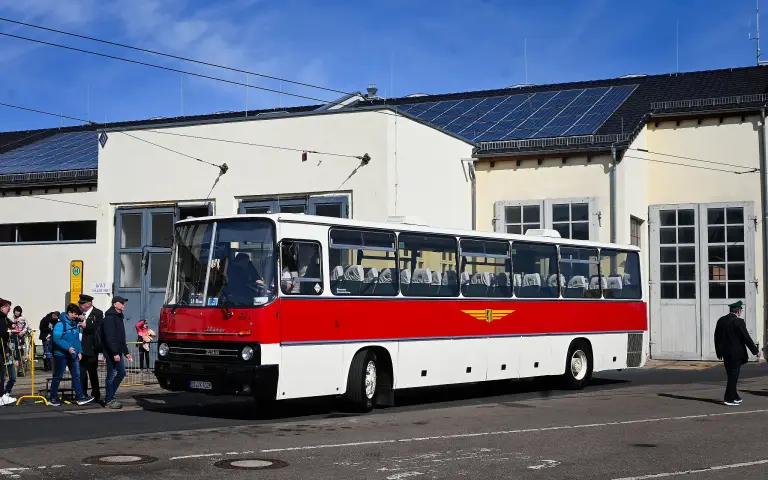
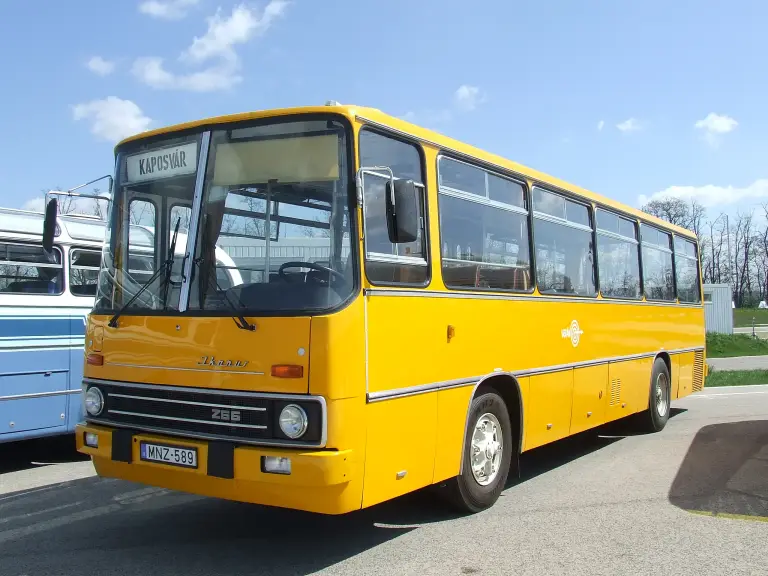
The 66 was the city sibling of the Ikarus 55, and it was displaced by the Ikarus 266. More buses are in the Ikarus collection.
Video: Ikarus 66 – eine Mitfahrt
Video by choppernachladung on YouTube.
Sources
- Ikarus 66, Hungarian Wikipedia: prototype, production, Hungarian and export service, survivors