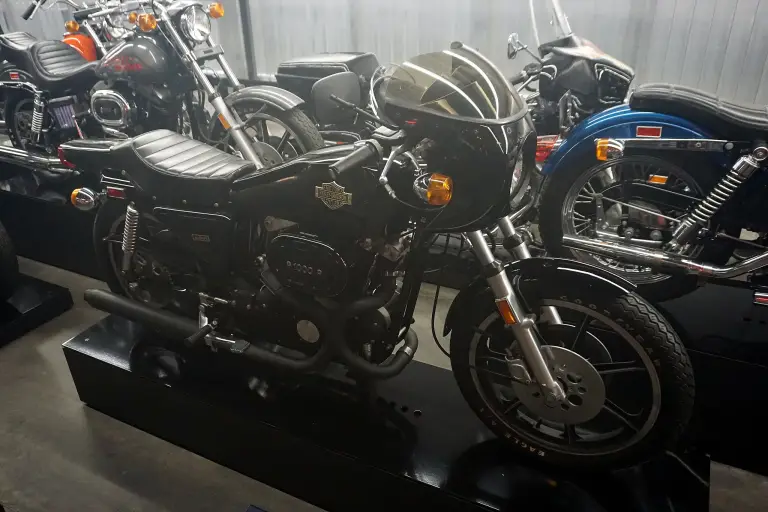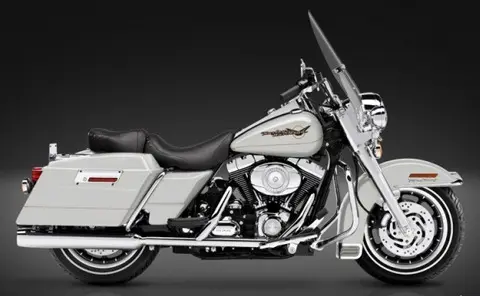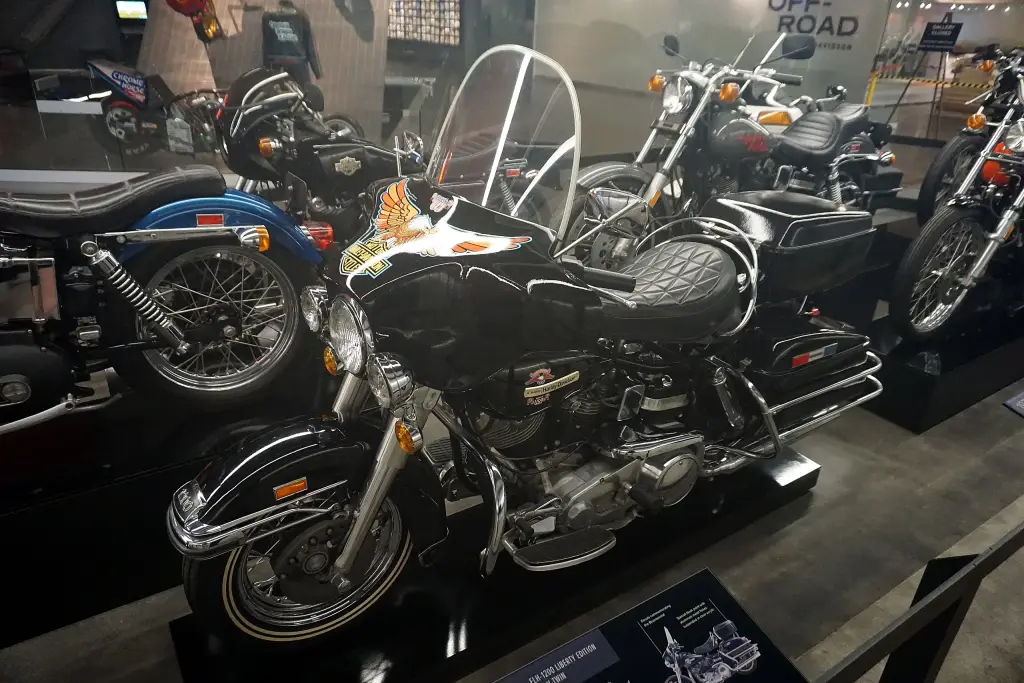
The Shovelhead is the Harley-Davidson V-twin built from 1966 to 1984 as the successor to the Panhead. Its rocker covers looked a little like an upturned coal shovel, which gave it the name, and its extra power helped the company increase sales by 26 per cent early in its life.
Harley-Davidson Shovelhead at a glance
| Production | 1966–1984 |
|---|---|
| Replaced | the Panhead engine |
| Replaced by | the Evolution engine |
| Extra power | about 10 hp over the Panhead |
| Technical changes | shallower combustion chamber, larger valve drop, better porting, stronger valves and pistons |
| Nickname | from rocker covers resembling an upturned coal shovel |
| Cooling | only 10 fins on the cylinders, so the engine ran hot |
| Oil use | a quart every 250 to 500 miles according to the owner’s manuals |
| 1980 changes | belt final drive, five-speed gearbox, rubber engine mounts |
| 1981 changes | new oil pump, improved valve guides, lower compression |
| Last use | the FLH of 1985 |
History of the Harley-Davidson Shovelhead
The Shovelhead was created because the Panhead was becoming obsolete and owners wanted more power against more modern motorcycles. The new engine had a shallower combustion chamber, a larger valve drop for both intake and exhaust, better porting and stronger valves and pistons, which gave about ten extra horsepower and a different appearance. Its sales success gave Harley-Davidson a 26 per cent increase in the early part of its run.
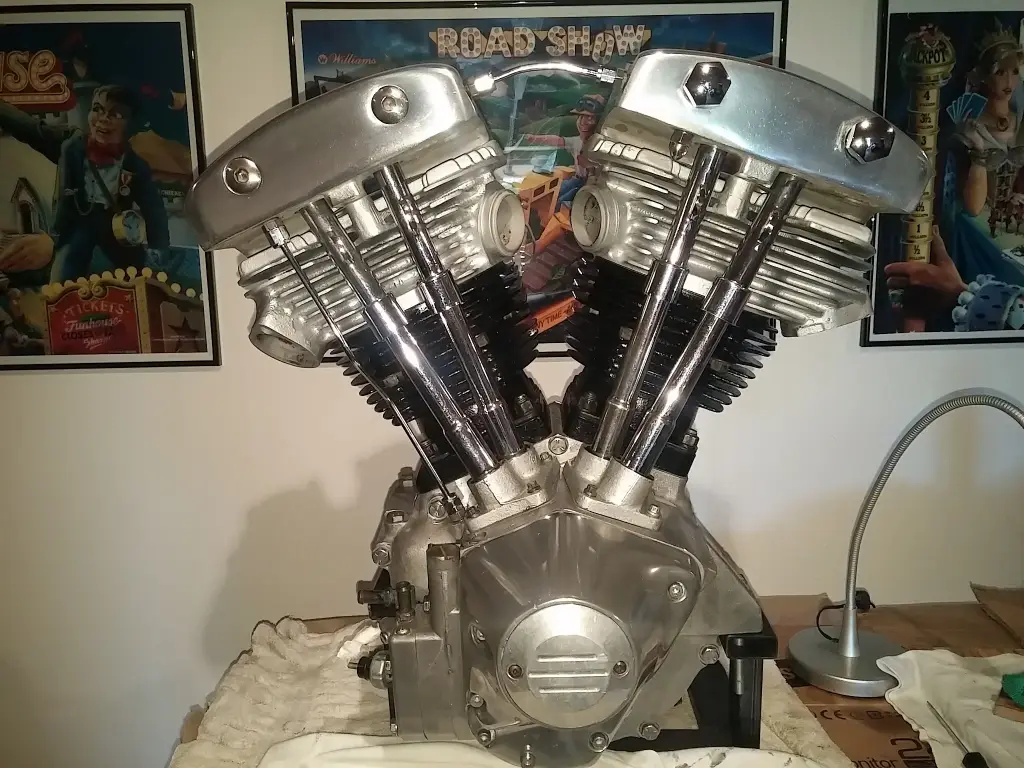
The engine had its troubles. Only ten fins cooled the cylinders, so it ran hot, and oil pooled in the cylinder heads, leaked past the valves and burned, while oil also collected in the crankcase instead of being pumped away. Leakage and consumption became so bad that owner’s and shop manuals of the day quoted normal consumption of a quart every 250 to 500 miles, much of it because 1940s technology left the Bohnalite pistons with single-piece oil scraper rings. With unleaded fuel, the non-hardened valve seats of the early Shovelhead wore quickly. Replacing the rings with three-piece versions and fitting hardened seats solved much of it, but the company spent its effort on repairs rather than development and fell behind the cheaper, more reliable Japanese machines.
Harley-Davidson merged with American Machine and Foundry in the hope of financial help, and after AMF took control the engine was improved with company money: in 1970 the alternator was redesigned and hidden behind a new side case and the carburettors changed to Zenith-Bendix. The 1973 oil crisis brought lower-octane fuel, engine knock, overheating, blown gaskets and damaged head bolts, and making more engines in 1976 damaged quality further. Updates in 1978 brought more displacement and steel struts cast into the pistons, 1979 brought electronic ignition, and 1980 brought belt drive, a five-speed gearbox and rubber engine mounts. After buying back AMF’s share in 1981 the company added a new oil pump, better valve guides and lower compression, and the engine was produced until 1984, when the aluminium Evolution began to take over; a few remained in models such as the 1985 FLH.
Design and features
- More power: better breathing and stronger components gave about ten horsepower over the Panhead.
- Shovel-shaped covers: the rocker boxes that named the engine.
- Known weaknesses: heat, oil consumption and valve seats that disliked unleaded fuel.
- Continuous fixing: alternator, carburettors, ignition, belt drive and oil pump were all revised in service.
Harley-Davidson Shovelhead versions
- Early Shovelhead (1966–1969): the first version with the generator charging system.
- Alternator models (from 1970): the redesigned charging system behind a new side case.
- 1978 specification: larger displacement and steel struts in the pistons.
- 1980 specification: belt drive, five speeds and rubber mounts.
- 1981 specification: new oil pump, improved guides and lower compression.
The engine before the Shovelhead is described in the article on the Panhead, its replacement in the article on the Evolution, and the big twin it powered in the article on the FL. The chopper-style model that used it is the Super Glide, and more machines are in the collection.
Sources
- Harley-Davidson Shovelhead engine, English Wikipedia: history, problems, updates, usage