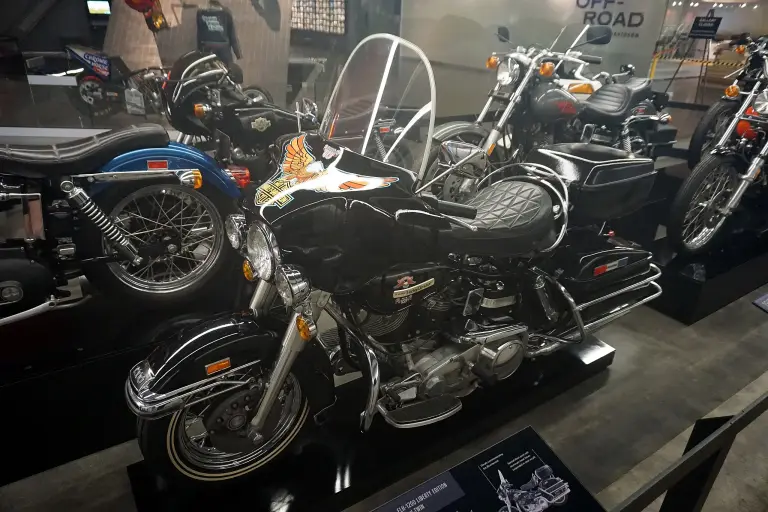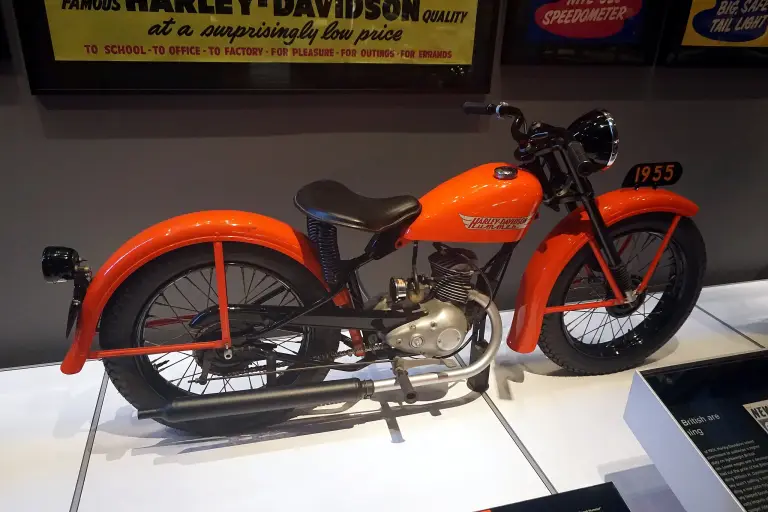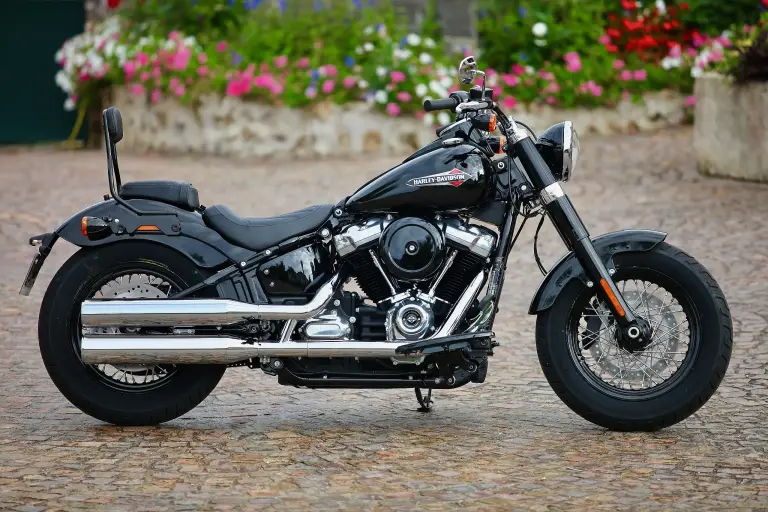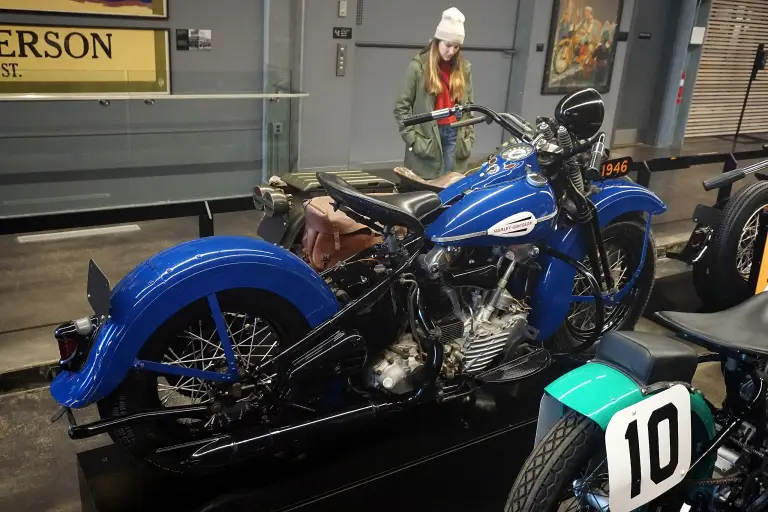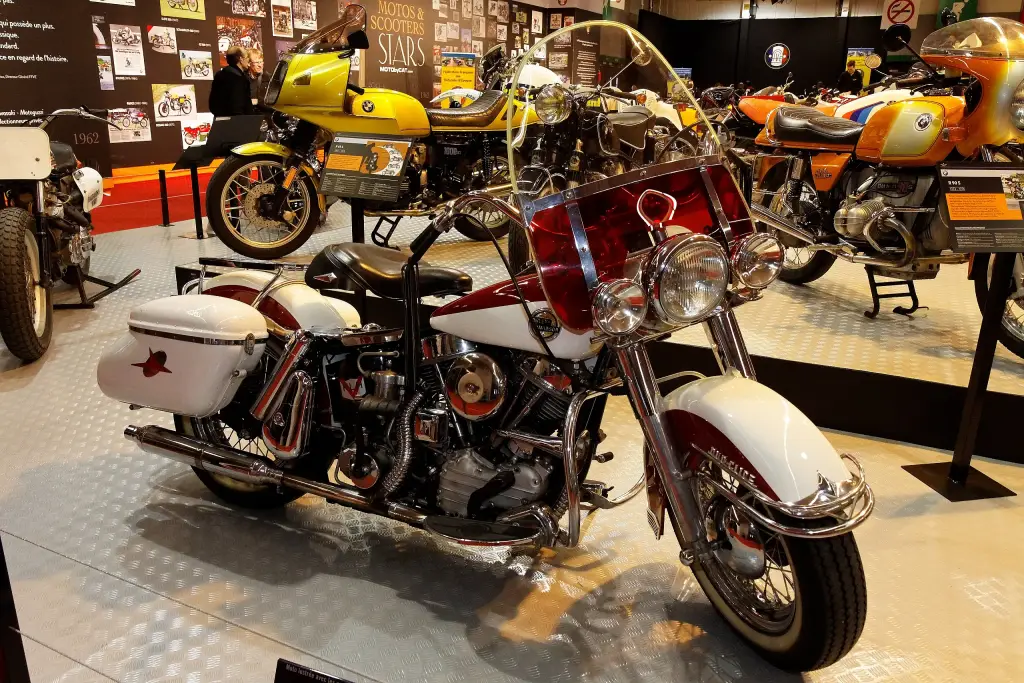
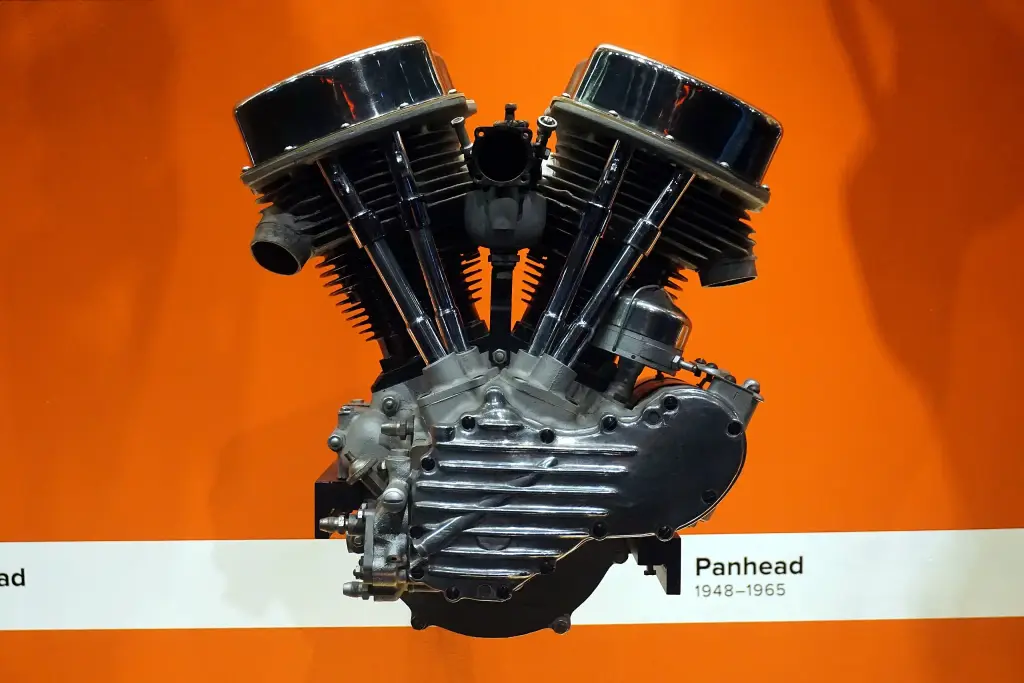
The Panhead is the overhead-valve Harley-Davidson V-twin that replaced the Knucklehead in 1948 and was built until 1965. It takes its nickname from rocker covers that looked like cooking pans, and it powered the big twins through the Hydra-Glide and Duo-Glide years.
Harley-Davidson Panhead at a glance
| Production | 1948–1965 |
|---|---|
| Replaced | the Knucklehead engine |
| Replaced by | the Shovelhead engine |
| Layout | 45-degree V-twin, pushrod overhead valves, two valves per cylinder |
| Small version | 61 cu in, model EL |
| Large version | 74 cu in, models FL and FLH |
| Nickname | from rocker covers shaped like cooking pans |
| Famous use | the Captain America and Billy bikes in Easy Rider (1969) |
| Today | custom Panhead-style engines are still made by third parties |
History of the Harley-Davidson Panhead
The Panhead replaced the Knucklehead in 1948 and was manufactured until 1965, when the Shovelhead took its place. It is a two-cylinder pushrod V-twin with two valves per cylinder, made in both 61 cubic inches for the EL and 74 cubic inches for the FL and FLH. Because the shape of the rocker covers lets Harley enthusiasts identify an engine at a glance, the names Flathead, Knucklehead, Panhead and Shovelhead became the usual way of talking about the different generations.
In the FL line the Panhead arrived a year before the Hydra-Glide front forks of 1949 and was still under the tank when the Duo-Glide frame with a rear swingarm came in 1958. Beyond the factory models, Panhead engines became a popular choice for custom motorcycles during the rise of American chopper culture in the 1960s and 1970s, valued for their appearance and their ease of modification. The Captain America chopper ridden by Peter Fonda in Easy Rider (1969) had a Panhead engine, and so did the Billy Bike ridden by Dennis Hopper’s character.
As of 2024 several third-party manufacturers build custom Panhead-style engines in a range of bores, many much larger than the original displacements, updating the design for performance and reliability while keeping the classic styling and structure.
Design and features
- Pan-shaped rocker covers: the detail that gave the engine its nickname and its following.
- Two displacements: 61 cubic inches in the EL and 74 in the FL and FLH.
- Chopper favourite: easy to modify, which made it the default engine of 1960s and 1970s custom bikes.
- Film fame: both main motorcycles in Easy Rider used Panhead engines.
Harley-Davidson Panhead versions
- EL (1948–1952): the 61-cubic-inch high-compression version.
- FL and FLH (1948–1965): the 74-cubic-inch big twins, the FLH more highly tuned.
- Custom and replica engines: third-party Panhead-style motors built today in larger bores.
The engine the Panhead replaced is described in the article on the Knucklehead, its successor in the article on the Shovelhead, and the big twin that used it in the article on the FL. More machines are in the Harley-Davidson collection.
Video: Harley-Davidson 1948 Panhead cold kick start
Video by DUSTERS RACING CLUB on YouTube.
Sources
- Harley-Davidson Panhead engine, English Wikipedia: production years, sizes, custom use, film