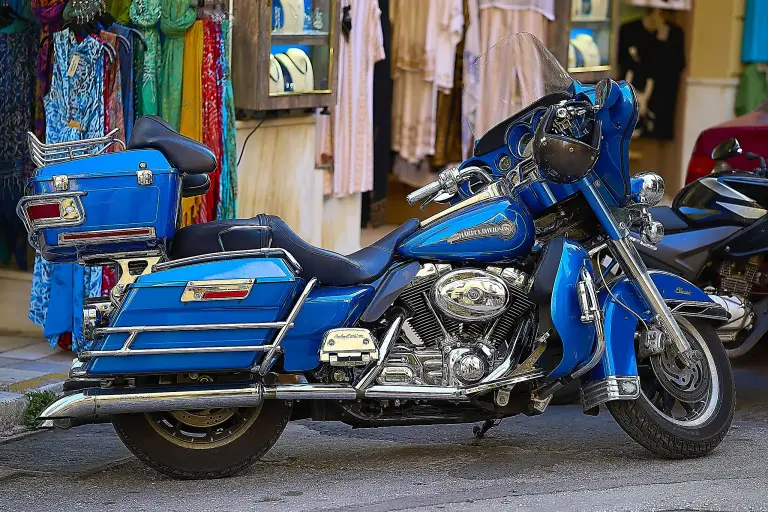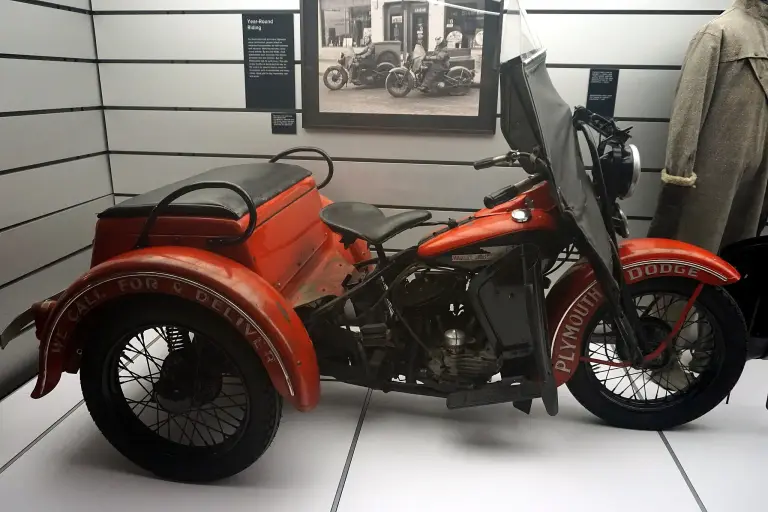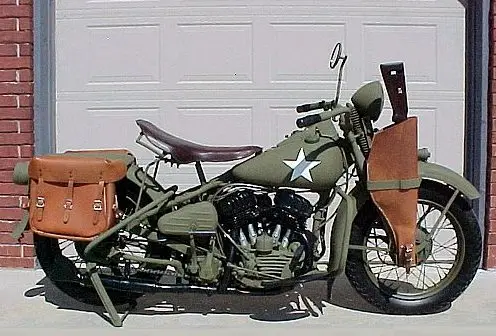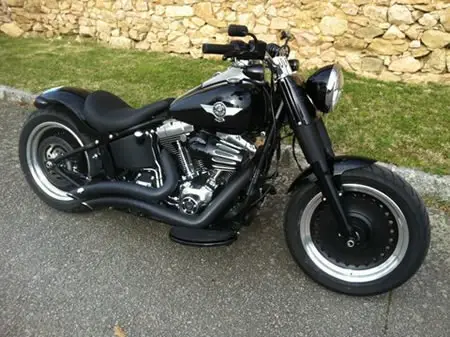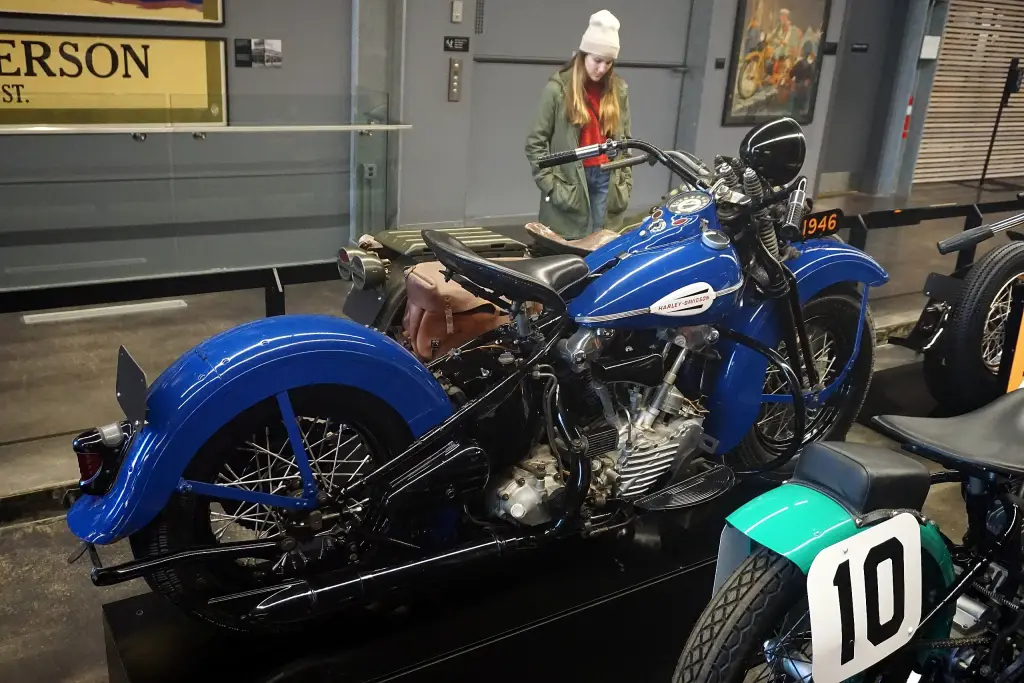
FL is the designation Harley-Davidson has used for its large-frame twins since 1941. The F stood for the new 74-cubic-inch overhead-valve engine, the L for higher compression, and the same letters carried the model through the Hydra-Glide, Duo-Glide and Electra Glide names.
Harley-Davidson FL at a glance
| Introduced | 1941 |
|---|---|
| Engine at launch | 74 cu in (1,210 cc) Knucklehead overhead-valve V-twin |
| Letter L | higher compression, more power, higher-octane leaded fuel |
| Letters | FLS sidecar, FLE police and escort, FLF foot clutch and hand shift |
| Frame shared with | EL, U and UL |
| Replaced | the UH and ULH, 80 cu in flathead twins |
| Panhead engine | from 1948 |
| Hydra-Glide name | from the 1950 model year |
| Duo-Glide name | from 1958, with a rear swingarm |
| Electra-Glide name | from 1965, with an electric starter |
| FLH | from 1955, a more highly tuned engine |
| Front wheel | 5.00-16, the same as the rear, until the 1970s |
The article covers the Hydra-Glide, Duo-Glide, FLH and FLHTP records of the old gallery, which are all names of the same FL line and now redirect here.
History of the Harley-Davidson FL
The F and FL joined the range in 1941 as large-capacity versions of the Model E and EL of 1936. The FL used a 74-cubic-inch (1,210 cc) version of the overhead-valve Knucklehead engine that powered the EL at 61 cubic inches, and it shared its frame with the EL and with the U and UL, which had a 74-cubic-inch flathead engine; it replaced the UH and ULH, which used the same frame with 80-cubic-inch flatheads. Only a few Knucklehead FLs were built, because the war forced Harley-Davidson to concentrate on military versions, mainly the WLA, based on the simple WL flathead. The FL continued relatively unchanged until 1948, when it and the EL received the Panhead engine with self-adjusting hydraulic lifters and aluminium cylinder heads, and the 74-cubic-inch flathead twins were discontinued.
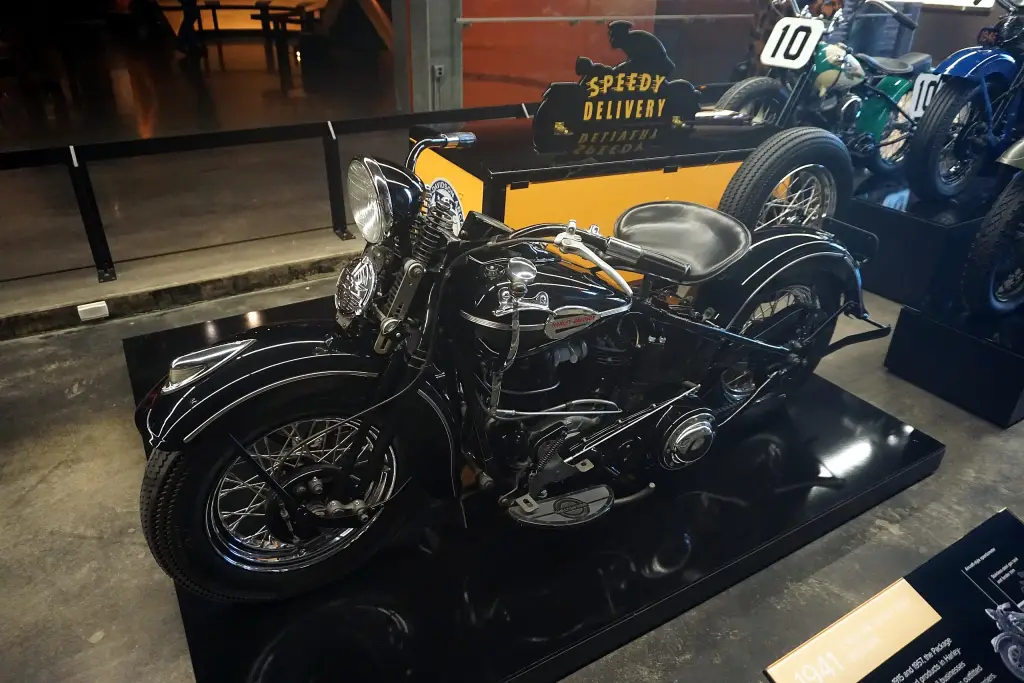
In 1949 the FL received hydraulically damped telescopic forks in place of the leading-link spring suspension, and for the 1950 model year the marketing department renamed the big twins Hydra Glide. It was the first departure from the policy of using simple letters to name models. The optional foot-shift and hand-clutch layout was added in 1952, the last year of the 61-cubic-inch EL, and the 50th anniversary was marked in 1954 with special paint and badges on the front mudguard. A more highly tuned engine with high-compression heads, higher-lift cams and polished ports arrived with the FLH version of 1955, a designation that has continued ever since.
The FL got a new frame in 1958 with a rear swingarm on coil-over shocks, and to honour the fully suspended chassis the name changed from Hydra-Glide to Duo-Glide; the small-frame K series had received rear suspension as early as 1952. The third and last change of name came in 1965, the final year of the Panhead, when the electric starter turned the FL into the Electra Glide. Until the 1970s every FL came with a front wheel the same size as the rear, 5.00-16, with a large mudguard and a wide fork to match, often with fairing, panniers and chrome as a full dresser. In 1971 the FX Super Glide combined the FL frame and drive train with the smaller XL front end, and since then the FL prefix has meant the traditional 16-inch front wheel and big mudguards.
Design and features
- One designation, three names: the same big twin was the Hydra-Glide, the Duo-Glide and then the Electra Glide.
- Letter codes: FLS for sidecar use, FLE for police and escort work, FLF for the traditional foot clutch and hand shift.
- Full dresser: 16-inch front wheel, big mudguards, fairing and panniers as factory equipment.
- Starting point for customs: owners stripped FLs into bobbers and choppers, and the factory answered in 1971 with the FX Super Glide.
Harley-Davidson FL versions
- FL (1941–1948): Knucklehead-engined big twin, few built because of the war.
- Hydra-Glide (1950–1957): telescopic front forks and the first non-letter model name.
- FLH (from 1955): the higher-tuned engine with high-compression heads and polished ports.
- Duo-Glide (1958–1964): new frame with a rear swingarm and coil-over shocks.
- FLHTP and other police versions: fleet machines derived from the FL.
- Electra Glide (from 1965): the electric-start version that continued the line.
The version that took over the name in 1965 has its own article: the Electra Glide. The engine that powered the first FL is described in the article on the Knucklehead, and the touring derivative in the article on the Road King. More machines are in the Harley-Davidson collection.
Video: 1949 FL Harley-Davidson Panhead
Video by Granny’s Garage on YouTube.
Sources
- Harley-Davidson FL, English Wikipedia: history, names, letter codes, engines