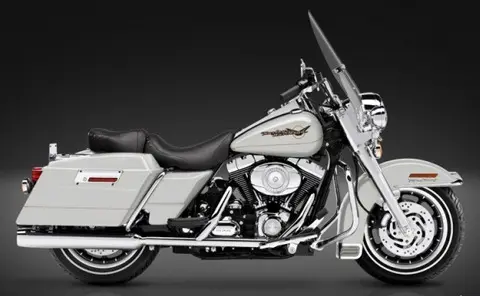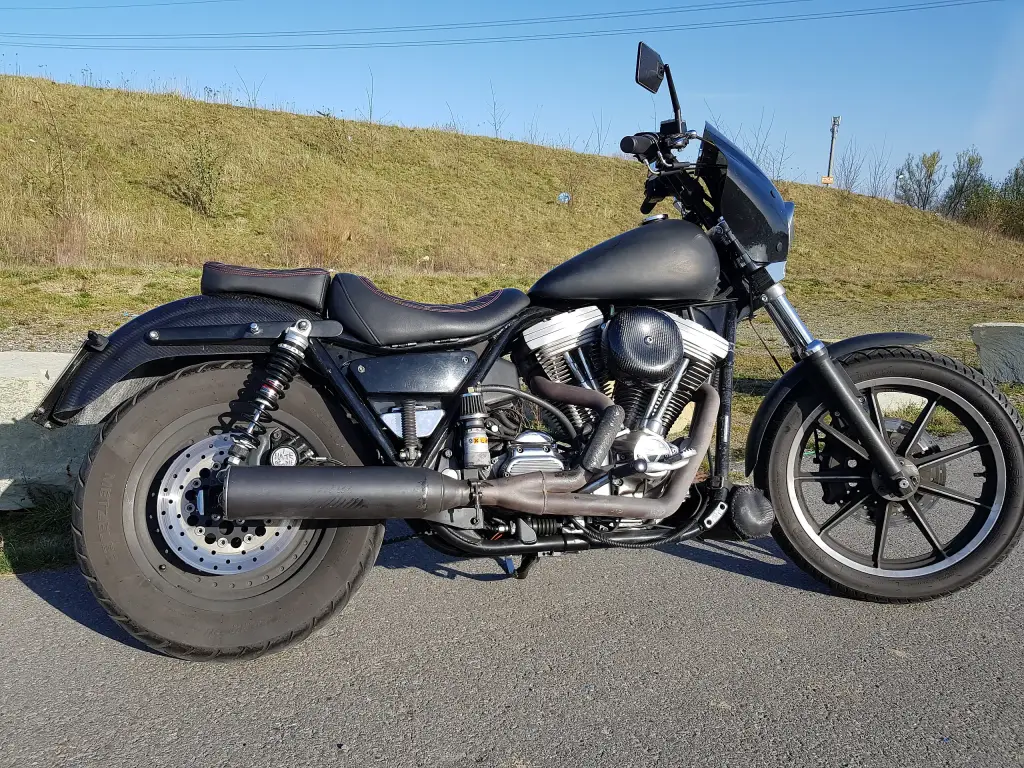
The Evolution, usually shortened to Evo and sometimes called the Blockhead, is the air-cooled 45-degree V-twin that Harley-Davidson introduced in 1984. In the big twins it displaced 1,340 cc and replaced the Shovelhead; in the Sportster it arrived in 1986 and is still made in 883 and 1,200 cc form.
Harley-Davidson Evolution at a glance
| Introduced | 1984, for the big twins |
|---|---|
| Layout | air-cooled 45-degree V-twin, two valves per cylinder |
| Big Twin size | 1,340 cc (82 cu in), officially 1,338.6 cc |
| Material | aluminium cylinder heads and cylinders |
| Big Twin camshaft | a single four-lobe, gear-driven cam above the crankshaft |
| Sportster version | from 1986, four individual gear-driven camshafts |
| Sportster sizes | 1,100 cc until 1988, then 883 cc and 1,200 cc |
| Last big twin Evo | the FXR4 of the 2000 model year |
| Replaced by | Twin Cam 88, in 1999 Touring and Dyna, 2000 Softail |
| Fuel system | carburettors until 2007, then Delphi electronic fuel injection |
History of the Harley-Davidson Evolution
The Evolution was manufactured from 1984 as an air-cooled 45-degree V-twin for Harley-Davidson’s motorcycles. In the big V-twins it was made in a displacement of 1,340 cc (82 cubic inches), replacing the Shovelhead, and it stayed in production until 2000, when the last one was fitted to a factory custom FXR4. In 1999 the Twin Cam 88 took its place in the Touring and Dyna models and in 2000 in the Softail. The engine was also used in the Sportster from 1986, first in 1,100 cc form until 1988 and still today in 883 and 1,200 cc displacements, where it replaced the ironhead Sportster engine.
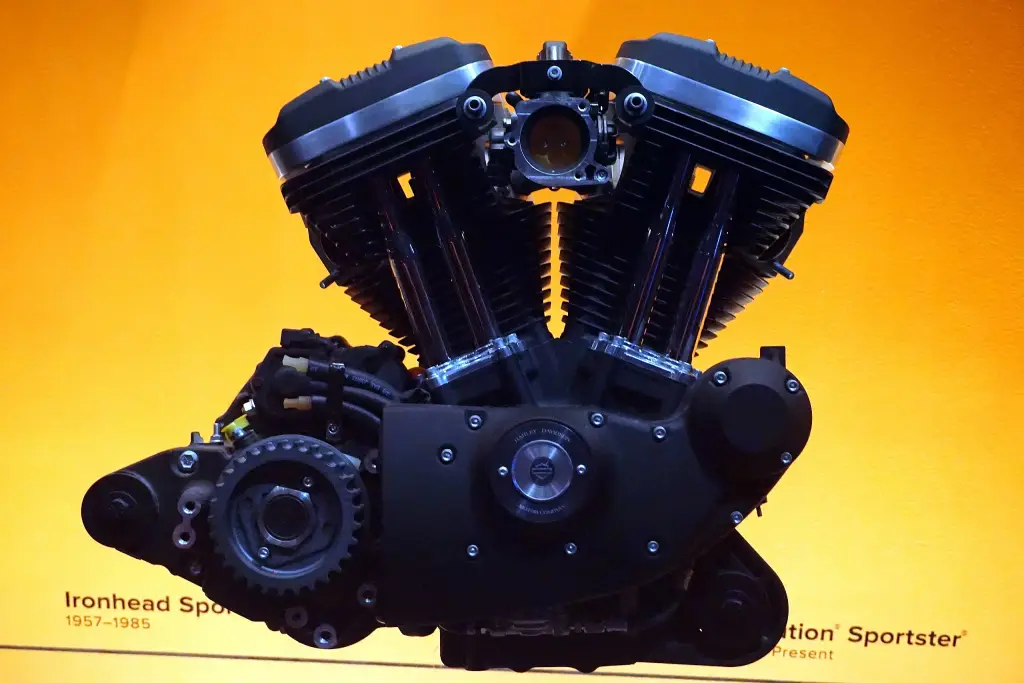
Most analysts regard the Evolution as the engine that saved the reorganised Harley-Davidson company from bankruptcy, and its name was probably part of the attempt to reform the company’s image after the 1981 management buyout from AMF. Both the heads and the cylinders are aluminium, which saves weight against cast iron and cools better, and the blocky rocker boxes earned the engine the nickname Blockhead, though it never caught on. Apart from those aluminium castings, the big-twin and Sportster versions of the Evolution are significantly different engines.
In the Sportster the unit-construction crankcase that had been unchanged since the side-valve 750 cc K Model of 1952 was retained, producing a unique valve train: one cam per overhead valve, giving four separate single-lobe gear-driven camshafts with the pushrods arranged in pairs parallel to the cylinder axis. That layout suits radical high-output camshafts and made the Sportster Evolution the natural choice for the Buell sportbikes that Harley-Davidson owned from 1986 to 2009. In the big twins a single four-lobe camshaft sits just above the crankshaft axis, and the pushrods have their characteristic helical look because the plane of each cylinder’s rockers is perpendicular to the plane of the cam lobes. The Evolution big twin was the last of Harley-Davidson’s single-cam overhead-valve engines tracing their line back to the Knucklehead, and it is the most extensively supported design in the aftermarket.
Design and features
- Aluminium top end: heads and cylinders in aluminium for less weight and better air cooling.
- Four cams in the Sportster: one gear-driven cam per valve, a layout friendly to high-performance camshafts.
- One cam in the big twin: a single four-lobe shaft above the crankshaft, simple to change.
- Long life: still in production in the Sportster, decades after the big-twin version ended.
Harley-Davidson Evolution versions
- Big Twin Evolution, 1,340 cc (1984–2000): in Dyna, Softail, FXR and Touring frames.
- Sportster Evolution, 1,100 cc (1986–1988): the first Sportster version.
- Sportster Evolution, 883 cc and 1,200 cc: the two sizes still made, the 883 with a smaller bore.
- FXR2, FXR3 and FXR4: the limited CVO models that used the last Evolutions.
The engine before the Evolution is described in the article on the Shovelhead, its replacement in the article on the Twin Cam, and the model that still uses it in the article on the Sportster. More Harley-Davidson engines and models are in the collection.
Video: Harley-Davidson 1340 Evo kickstart
Video by chopbobber pirata on YouTube.
Sources
- Harley-Davidson Evolution engine, English Wikipedia: history, construction, Sportster and big twin differences