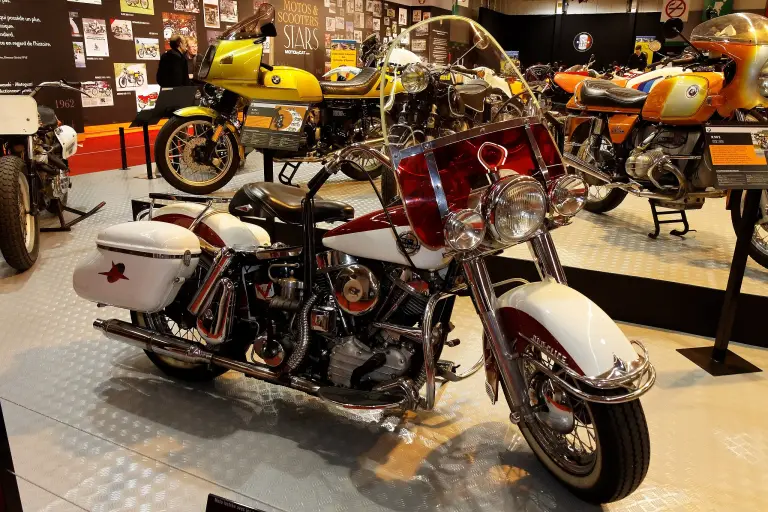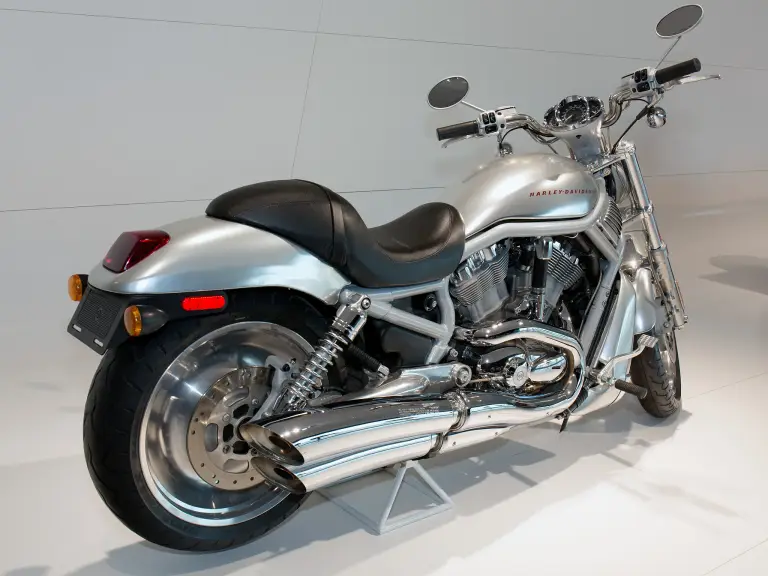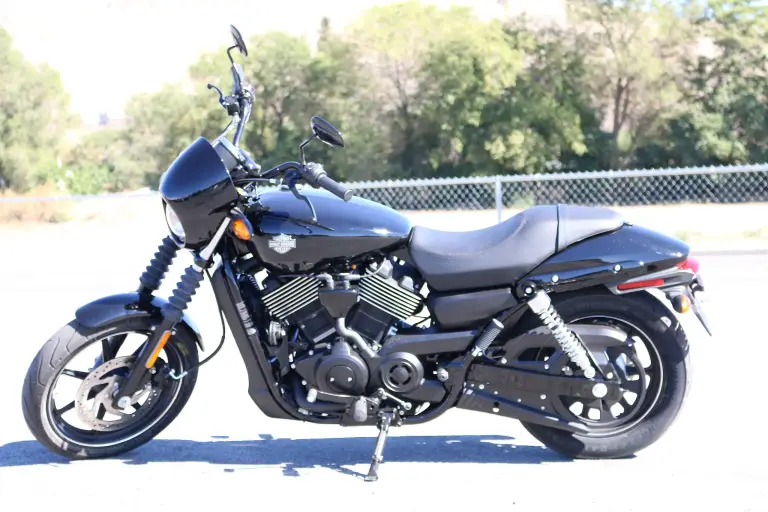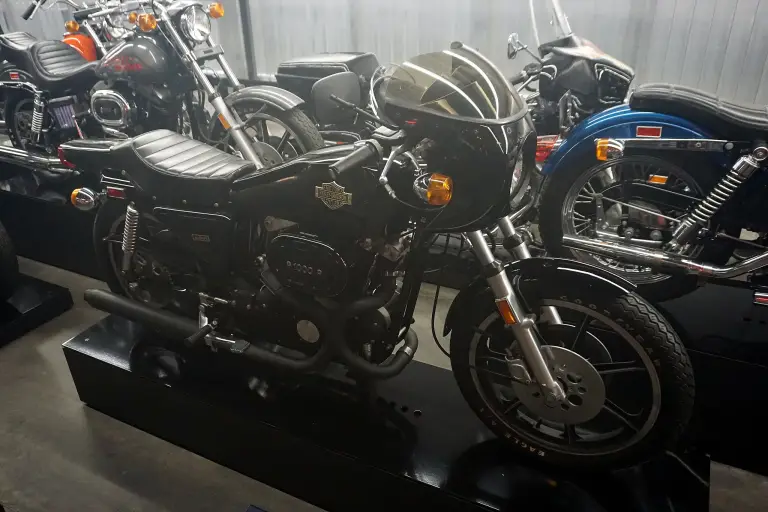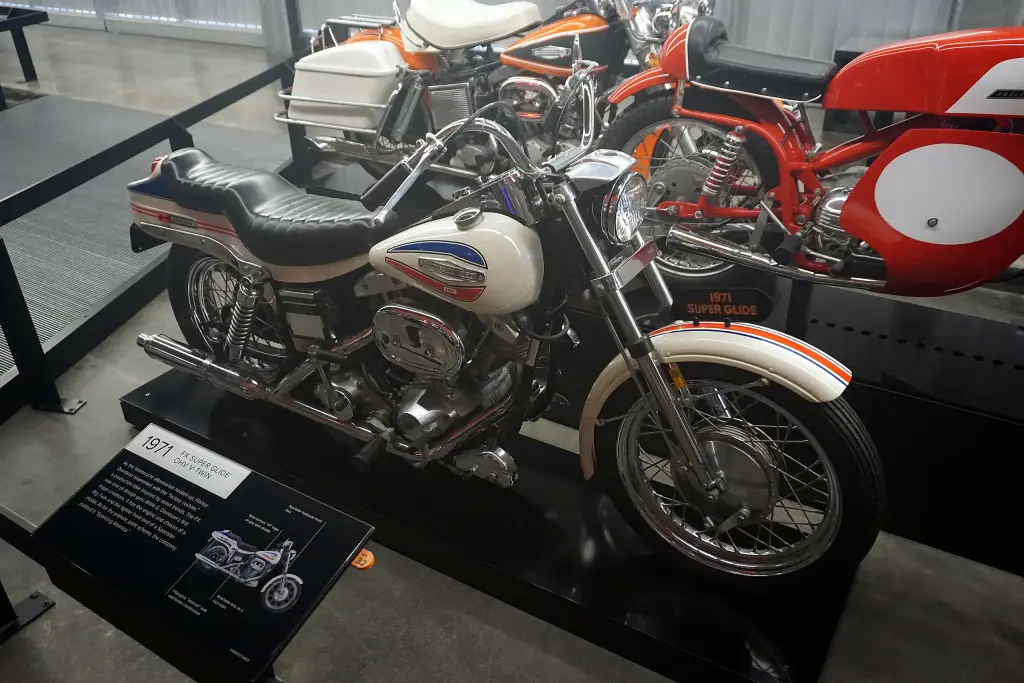
The Harley-Davidson Super Glide is reputed to be the first factory custom motorcycle. Introduced in 1971, it mated the frame and drivetrain of the FLH Electra Glide with the narrow front end of the XLH Sportster, creating the FX series and the middle ground between the smallest and largest Harleys.
Harley-Davidson Super Glide at a glance
| Introduced | 1971, as the FX Super Glide |
|---|---|
| Designed by | Willie G. Davidson, styling director |
| Formula | FLH Electra Glide frame and engine, XLH Sportster front end |
| FX meaning | Factory Experimental |
| First styling | buckhorn handlebars and a boattail rear end |
| FXE | 1974, an electric-start Super Glide |
| FXS Low Rider | 1977, with alloy wheels and two front discs |
| FXWG Wide Glide | 1980, wide forks and flame paint |
| FXR | 1982, the new chassis with rubber-mounted engine and five speeds |
| Dyna chassis | 1991, starting with the FXDB Sturgis |
| Dyna discontinued | 2018, models moved to the Softail frame |
The article covers the Dyna, Dyna Defender, FXR, FXRP, FXWG, Wide Glide, Low Rider and Custom records of the old gallery, which are all FX, FXR or Dyna models and now redirect here.
History of the Harley-Davidson Super Glide
From 1934 to 1970, apart from the Servi-Car, Harley-Davidson built two distinct lines of V-twin motorcycles, the small twins and the big twins. Individual riders nevertheless customised their bikes, swapping parts or cutting and rewelding frames to suit their taste. Styling director Willie G. Davidson knew the phenomenon and decided to design a production motorcycle with the look of those customs: he took the frame and rear suspension, but not the electric starter, of the FLH Electra Glide and mated them to the smaller telescopic forks of the XLH Sportster. The combination was called the FX chassis, where FX meant Factory Experimental, and it also explains the FX letters, since the bike mixed FL and XL parts. To finish it he added buckhorn handlebars and a boattail tail and mudguard unit like those on the XLH.
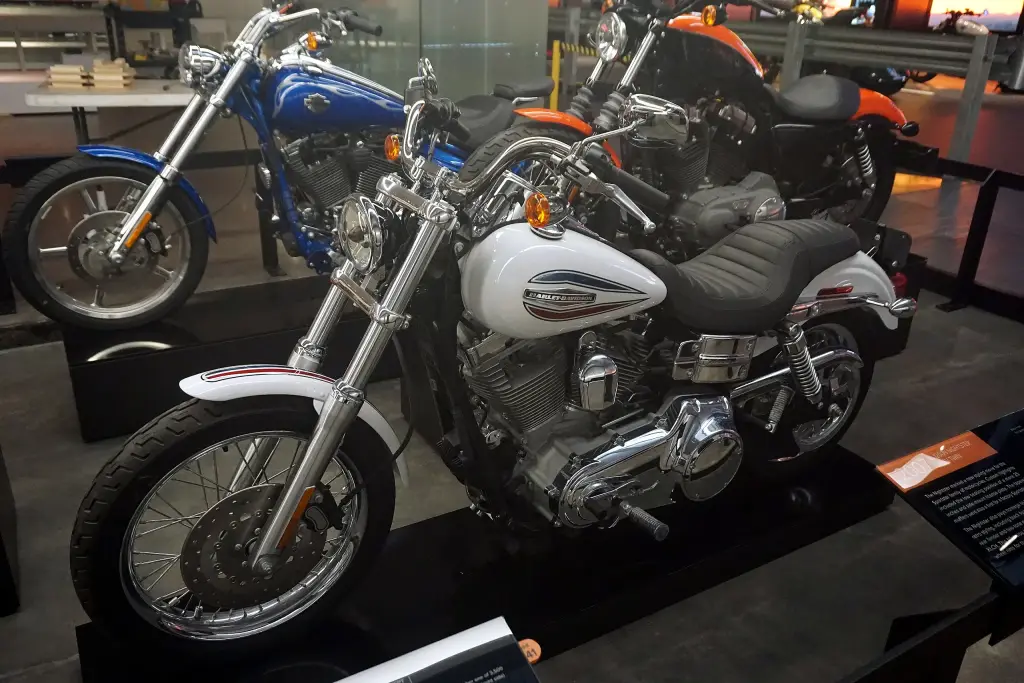
The production FX Super Glide was released in 1971 to a lukewarm reception; the boattail was particularly disliked, as it had been on the Sportsters, and sales improved once less radical rear styling was offered. In 1974 the FXE joined it with an electric starter, and both versions received an exclusive one-piece tank instead of the Fat Bob tank used by the FL. The FXS Low Rider of 1977 had alloy wheels, two front disc brakes, extended forks with a 32-degree rake and a 26-inch seat height, and it was an instant hit, outselling every other Harley-Davidson in its first full year. All three FX models returned to Fat Bob tanks with a centre divider carrying a tachometer. A Confederate Edition of the Super Glide with commemorative paint and decals was built in only 228 examples. The base kickstart-only FX was dropped in 1979, the year the FXEF Fat Bob appeared, followed by the FXB Sturgis, an all-black Low Rider with belt primary and secondary drives, and the FXWG Wide Glide with wide forks and a flame pattern on the tank.
In 1983 the Low Rider changed from chain to belt drive as the FXSB and the FXB was dropped, while the FXDG Disc Glide arrived with a disc rear wheel. The FXE Super Glide ended in 1985, when the FXEF Fat Bob became the base model, and in 1986 all FX-based bikes except the Wide Glide were replaced by FXR-based machines; the Wide Glide followed a year later as the new Softail line offered chopper looks. The FXR and FXRS Super Glide II had appeared in 1982 with the chassis of the FLT Tour Glide, a rubber-mounted engine and a five-speed gearbox, and the FXRT Sport Glide of 1983 added a fairing and saddlebags. Work on the Dyna chassis began soon after the first FXR models were sold, and the Dyna arrived in 1991 with the limited-production FXDB Sturgis, using two rubber mounts instead of three. The FXDB Daytona and the FXDC Dyna Glide Custom followed in 1992. The Dyna platform was discontinued for 2018 in favour of the new Softail frame, with some of its models carried over to the Softail line.
Design and features
- Factory custom: the first production Harley built to look like a rider’s custom bike.
- Mixed parts: FLH big twin chassis and engine with the narrow Sportster front end.
- The FX line: the series that grew into the Low Rider, Wide Glide, Fat Bob and Sturgis.
- Middle ground: for years the FX and later Dyna models filled the gap between the small and large Harleys.
Harley-Davidson Super Glide versions
- FX Super Glide (1971): the original with buckhorn bars and a boattail.
- FXE (1974): the electric-start version.
- FXS Low Rider (1977): alloy wheels, two front discs, extended forks.
- FXEF Fat Bob (1979): the replacement for the base FX.
- FXWG Wide Glide (1980): wide forks and flame paint.
- FXR and FXRS Super Glide II (1982): the new chassis with a rubber-mounted engine.
- FXDB Sturgis (1991): the first Dyna model.
The chassis family the Super Glide grew into is described in the article on the Softail, which replaced the Dyna in 2018, the big twin behind it in the article on the FL, and the small twin that donated its front end in the article on the Sportster. More machines are in the collection.
Sources
- Harley-Davidson Super Glide, English Wikipedia: origin, FX series, FXR and Dyna history
- Softail, English Wikipedia: end of the Dyna platform