
Open the bonnet of one car and the engine is over the front wheels; look behind the seats of another and it sits there instead. Which end of the car holds the engine, and which wheels it drives, shapes grip, balance, space and how a car feels at the limit. This guide walks through the five layouts, with the cars that made each one famous.
The short version
Every layout is two decisions: where the engine sits (front, middle or rear) and which wheels it turns (front, rear or all four). Front-wheel drive dominates family cars, front-engine rear-wheel drive was the old standard, a mid engine gives a sports car its balance, a rear engine gives traction at a price, and four-wheel drive adds grip on top of any of them.
Two decisions, five shorthand names
Engineers describe a car’s powertrain layout by the location of the engine and by the drive wheels. The shorthand is simple: the first letters give the engine position and the drive. FF is front engine, front-wheel drive. FR is front engine, rear-wheel drive. MR is mid engine, rear-wheel drive. RR is rear engine, rear-wheel drive. Add four driven wheels and you get 4WD, also written AWD (all-wheel drive).
| Layout | Engine | Driven wheels | Typical weight, front / rear | Known for |
|---|---|---|---|---|
| FF | Front | Front | 65 / 35 | Traction in snow and mud, roomy cabins; understeer |
| FR | Front | Rear | 55 / 45 | The traditional layout of most of the 20th century |
| MR | Behind the cabin, ahead of the rear axle | Rear | 45 / 55 | Balance and a low moment of inertia; two seats |
| RR | Behind the rear axle | Rear | 35 / 65 | Traction and braking; lift-off oversteer |
| 4WD | Usually front | All four | Varies | Grip on many surfaces; rally and off-road |
Weight splits are the typical figures given for each layout on English Wikipedia; real cars vary with the engine, the gearbox position and the body.
Front engine, front-wheel drive (FF)
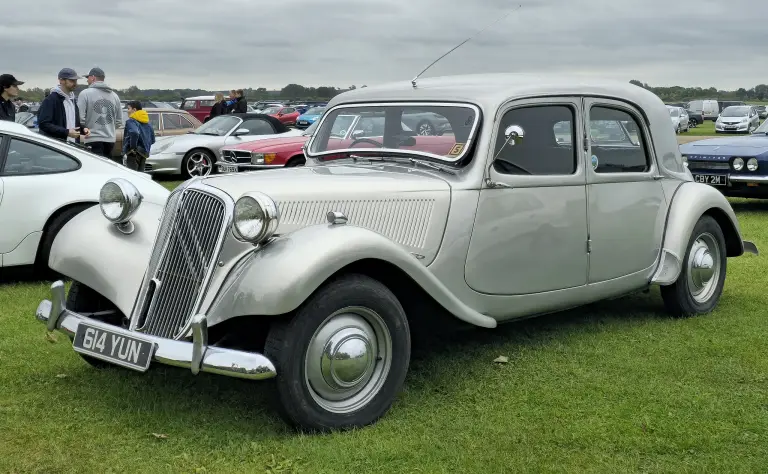
Today this is the layout of most family cars, and its roots go back further than many people think. Alvis built front-wheel-drive cars in the 1920s and the Cord L-29 followed in 1929, but the car that made the idea mainstream was the Citroën Traction Avant. It was the world’s first mass-produced front-wheel-drive car with a semi-monocoque body, and about 760,000 were built from 1934 to 1957.
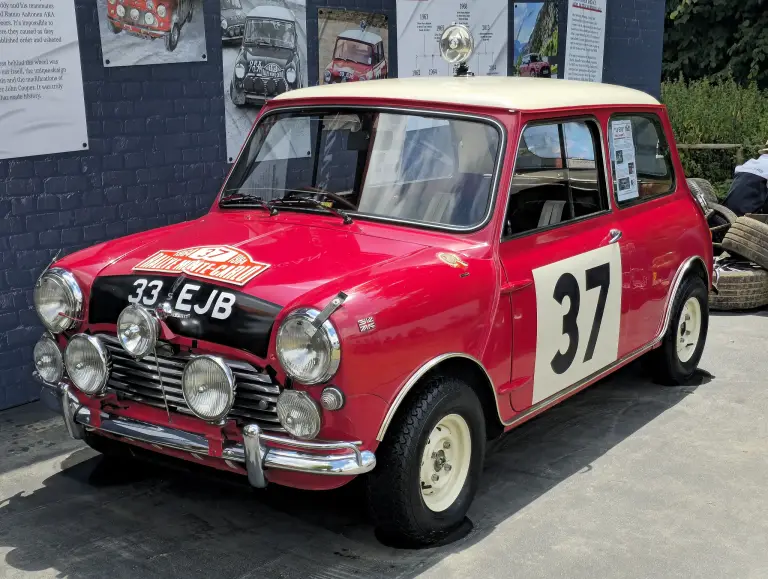
The layout’s big step in packaging came with Alec Issigonis’s Mini of 1959, which turned a four-cylinder engine sideways and placed the gearbox in the sump below the crankshaft. Variations on the transverse engine spread through Europe in the 1960s and 1970s; Toyota was the last Japanese maker to switch, in the early 1980s. BMW stayed with rear-wheel drive even in smaller cars. Audi and Subaru mount the engine lengthwise instead, and the 1966 Oldsmobile Toronado holds the record as the largest-engined front-wheel-drive car ever built, with 8.2 litres.
- For: simple, cheap drivetrain; no central tunnel for a driveshaft; roomy passenger compartment and boot; good grip on snow, ice, mud, gravel and wet tarmac because the engine sits over the driven wheels.
- Against: the heaviest part is at one end of the car, so cars understeer on slippery corners; the driven wheels also steer, so hard acceleration eats into cornering grip, and torque steer can appear. High-performance cars rarely use FF.
Front engine, rear-wheel drive (FR)
For most of the 20th century this was simply how a car was built: an engine at the front, a driveshaft down the middle, and the rear wheels pushing. It is also known as the Système Panhard. It remains the most common layout for rear-wheel-drive cars, and it is also used in trucks, pickups and high-floor buses.
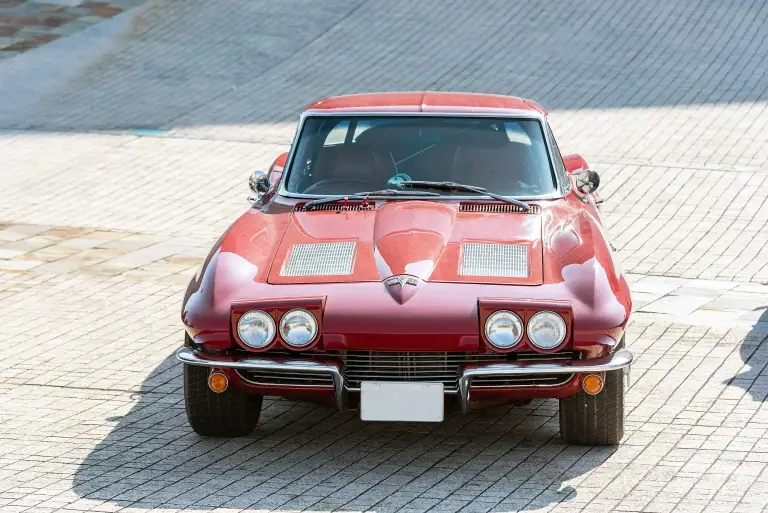
Sports cars refined it by sliding the engine back behind the front axle, a variant called front mid-engine (FMR). The result is a long bonnet, front wheels pushed to the corners and better weight distribution, which is why many 2+2 grand tourers use it. The Chevrolet Corvette is the classic example: the engine stayed at the front through seven generations, from 1953 until the mid-engined C8 arrived for 2020.
Jalopnik sums up the downsides of any front-engined layout: a heavy engine over the front axle makes the car nose-heavy and prone to understeer, and weight shifts forward under braking. On the other hand, it calls the layout versatile, with easy servicing under a big bonnet and predictable behaviour for everyday driving.
Rear engine, rear-wheel drive (RR)
Put the engine behind the rear axle and the drivetrain shrinks: there is no driveshaft, and the differential can be built into the gearbox as a transaxle. Weight sits over the driven wheels, which helps traction and braking, and in low-grip hill climbs RR is considered the best two-wheel-drive layout. Many dune buggies were built on Volkswagen Beetle parts for this reason.
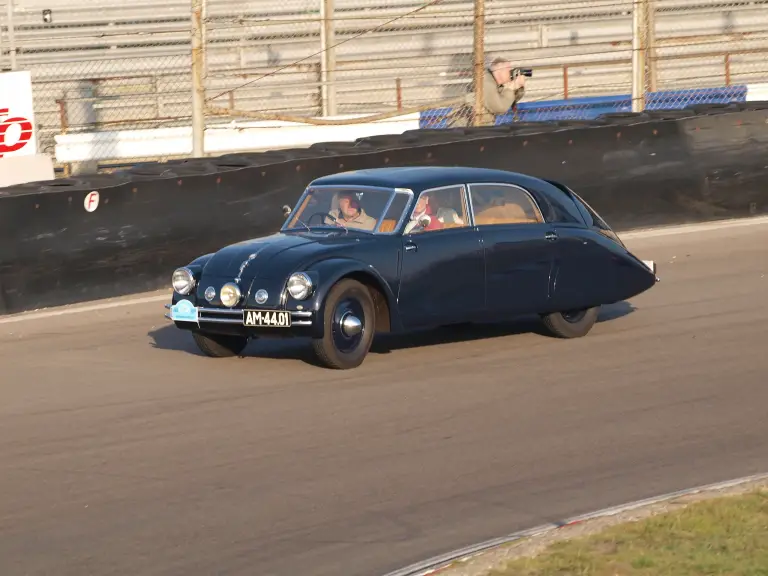
One of the first rear-engined cars was the Czechoslovak Tatra 77 of 1934, a streamlined saloon with a 2.97-litre air-cooled V8 at the back. Its air-cooled, rear-engined, teardrop formula influenced Ferdinand Porsche’s “People’s Car”, the Volkswagen Beetle, and the Beetle set a trend for RR small cars that lasted into the 1960s.
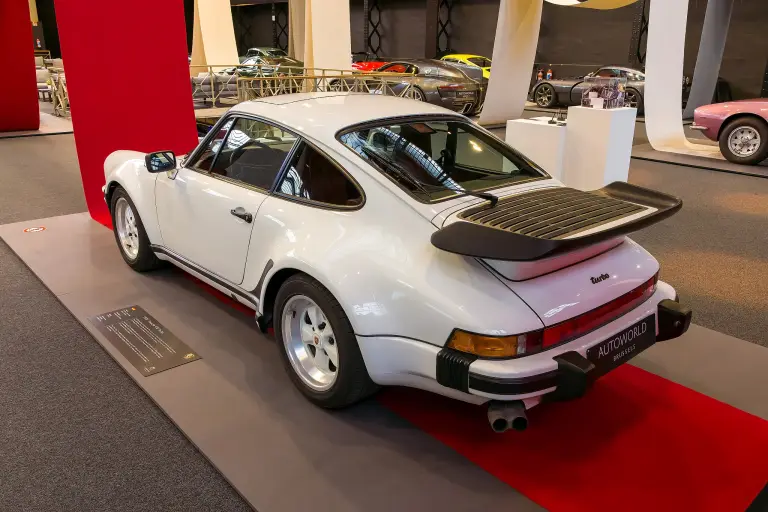
The price is balance. With a typical 35/65 weight split, a rear-engined car can become unstable under braking or when the throttle is lifted, and a slide is easier to start and harder to recover from than in a front-engined car. Liquid-cooled engines also need long coolant pipes or relocated radiators. Because of this, almost every maker abandoned the layout, with one famous exception: the Porsche 911, which has kept its engine behind the rear axle since its introduction in 1964, now with electronic aids to tame the handling. Jalopnik points out one practical cost: a modern 911 has only 4.8 cubic feet of luggage space in the front.
Mid engine, rear-wheel drive (MR)
A mid-engined car carries its engine between the axles; most often it sits behind the seats and ahead of the rear axle. That is the difference from RR: in an MR car the centre of mass of the engine is in front of the rear axle, in an RR car it is behind it. The mid-engine, rear-wheel-drive format can even be called the original automobile layout, since Daimler and Benz both used it in the 1880s, but it only became a high-performance road-car idea in the 1960s.
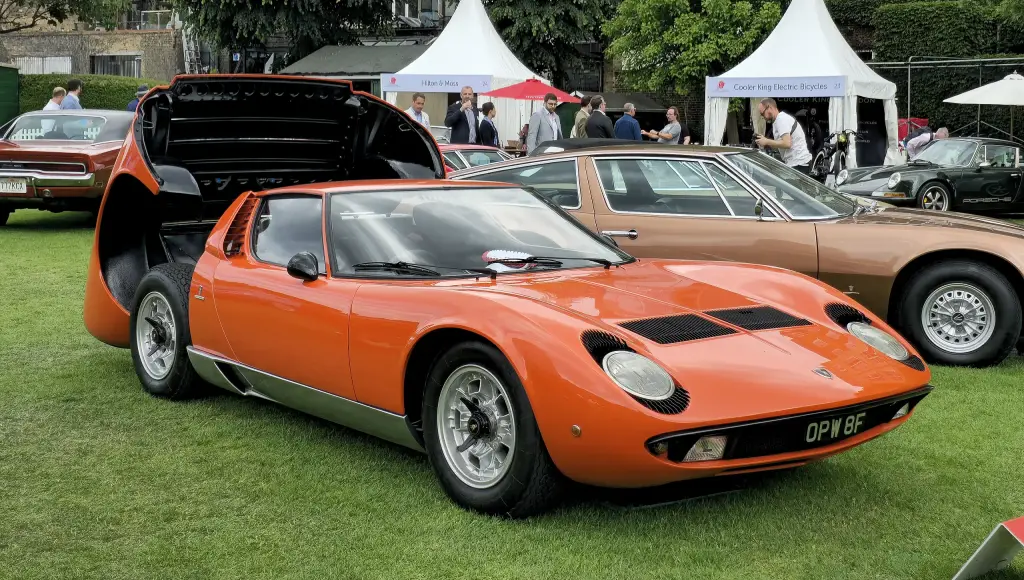
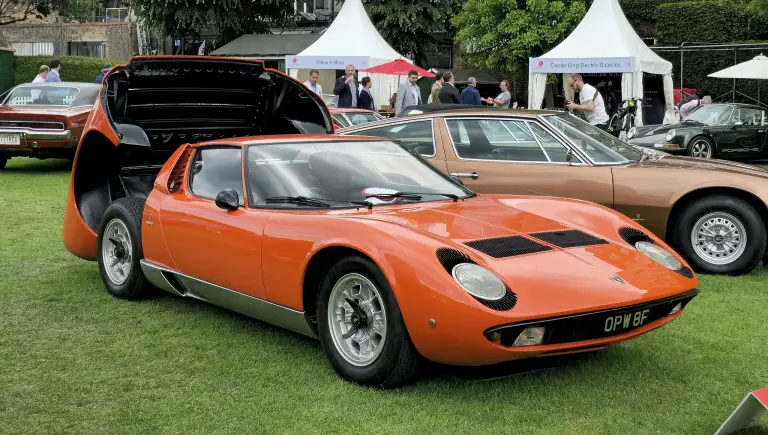
The turning point was the Lamborghini Miura, shown at the 1966 Geneva Motor Show. English Wikipedia calls it the first high-performance production road car with a rear mid-engine, rear-wheel-drive layout, a layout that has since become the standard for performance sports cars. Its transverse V12 was effectively merged with the transmission and differential to save space. More than half a century later Chevrolet followed the same logic: the Corvette C8 was unveiled on 18 July 2019 and is the first rear mid-engined Corvette.
- For: a near 50/50 weight distribution, a low moment of inertia and more weight over the rear tires for traction and braking; a low, slippery nose; storage at both ends in some cars.
- Against: rarely more than two seats; harder engine cooling and servicing; and because the mass is concentrated near the centre, a spin comes suddenly and is hard to catch.
Four-wheel drive (4WD, AWD)
Four driven wheels are older than most people expect. The Dutch Spyker 60 H, presented in 1903 for the Paris–Madrid race, was the first four-wheel-drive car powered directly by an internal-combustion engine. The wartime Jeep made the idea famous, and Willys introduced the CJ-2A in 1945, the first full-production four-wheel-drive vehicle sold to the general public. The Land Rover Series appeared at the Amsterdam show in 1948.
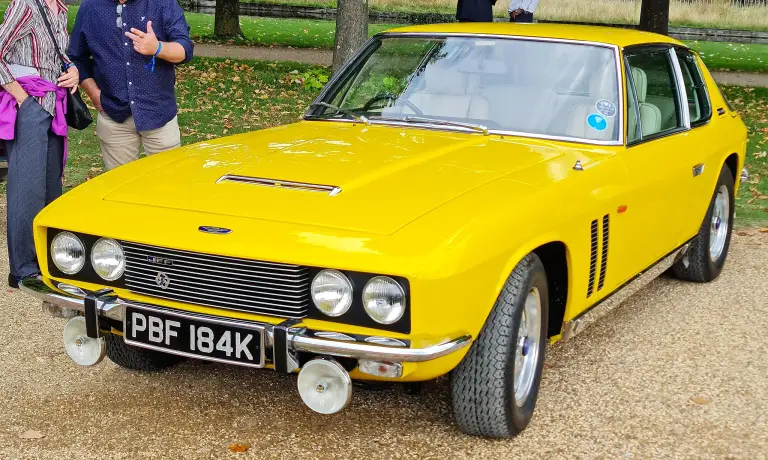
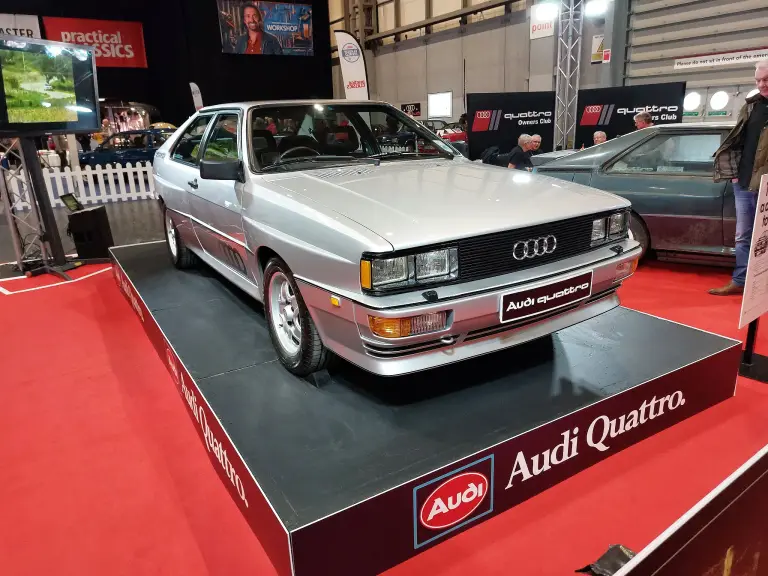
On the road, the pioneer was the Jensen FF of 1966 to 1971, a grand tourer with a Ferguson Formula system (the letters FF) and the first non-all-terrain production car with both four-wheel drive and anti-lock brakes. It was not a commercial success, but its idea returned in 1980 with the Audi Quattro. Audi engineer Jörg Bensinger proposed it in 1977 after he saw that the Volkswagen Iltis military vehicle outperformed other cars in snow tests, and the Quattro was the first rally car to exploit a rule change that allowed four-wheel drive. Porsche added all-wheel drive to the 911 range in 1989.
Most four-wheel-drive layouts are front-engined and grew out of earlier FR designs. Part-time systems must be engaged by the driver and have no centre differential; full-time systems use a centre differential (or a similar device) to split torque between the axles.
A century of layouts
- 1903Spyker 60 H: the first four-wheel-drive car powered directly by an internal-combustion engine.
- 1934Citroën Traction Avant (front-wheel drive, mass-produced) and Tatra 77 (rear-engined, streamlined) both appear.
- 1945Willys CJ-2A: the first full-production four-wheel-drive vehicle for sale to the general public.
- 1959Mini: a transverse four-cylinder engine with the gearbox in the sump.
- 1964Porsche introduces the 911, a rear-engined sports car that is still built with the same layout.
- 1966Lamborghini Miura (the first high-performance mid-engined road car) and Jensen FF (four-wheel-drive grand tourer) arrive.
- 1980Audi Quattro shown at Geneva on 3 March.
- 1989Porsche adds all-wheel drive to the 911.
- 2019Chevrolet reveals the first mid-engined Corvette, the C8.
Dates from English Wikipedia. The 911 is dated to its September 1964 introduction in its own article; other Wikipedia pages describe its rear-engined layout as dating from 1963, the year it was first shown.
Eight cars, five layouts
Each of these cars is a textbook case for its layout. Browse more in our Classic Cars and Exotic Cars collections.







What the layout means when you drive or buy
- Snow, mud and wet roads every day: an FF car sends the engine weight over the driven wheels, and four-wheel drive adds more grip.
- A traditional, predictable drive: an FR car, ideally a front mid-engined one, gives a long bonnet and balanced weight.
- The sharpest handling in a two-seater: a mid engine puts the mass in the middle, but expect cramped space and sudden spins at the limit.
- Hard launches and hill starts in low grip: RR puts weight on the drive wheels, at the cost of oversteer when you lift off.
- Off-road or rally use: four-wheel drive, which is why rally and off-road cars lean on it.
If you are looking at a classic, our buying guide shows what to check first, and The anatomy of a grille covers the grilles that rear-engined cars carry on the rear deck.
Engine layout questions and answers
What do FF, FR, MR and RR mean?
They give the engine position and the driven wheels: front engine with front-wheel drive, front engine with rear-wheel drive, mid engine with rear-wheel drive and rear engine with rear-wheel drive.
What is the difference between mid-engine and rear-engine?
The centre of mass of the engine. In an MR car it is ahead of the rear axle; in an RR car it is behind it, between the axle and the rear bumper.
Why did most family cars switch to front-wheel drive?
The drivetrain is simple and cheap to build, the cabin and boot are roomy because there is no driveshaft tunnel, and the engine weight sits over the driven wheels, so the car grips well in poor conditions. Most European and Japanese makers switched in the 1960s and 1970s.
Why do sports cars use a mid-engine layout?
Handling matters more than space. Placing the engine between the axles lets designers aim for a weight split close to 50/50 and keeps the mass near the car’s centre.
Is all-wheel drive the same as four-wheel drive?
English Wikipedia uses both terms for any drivetrain that can send power to all four wheels. Part-time systems must be engaged by the driver and have no centre differential, while full-time systems split torque between the axles with a centre differential or a similar device.
Why is Porsche the last big rear-engine maker?
Handling difficulty, the need for space efficiency and the near-universal use of liquid-cooled engines led most makers to abandon the layout. Porsche kept developing the 911 for over 60 years and tamed its drawbacks with engineering and electronic aids.
Based on English Wikipedia and Jalopnik. Wikipedia treats 4WD and AWD as two names for drivetrains that can power all four wheels.
Sources
- Automobile layout, English Wikipedia: the layout names and the shorthand
- Front-engine, front-wheel-drive layout, English Wikipedia: history, Mini, Toronado, characteristics
- Rear-engine, rear-wheel-drive layout, English Wikipedia: weight splits, Tatra, Beetle, Porsche
- Mid-engine design, English Wikipedia: benefits, drawbacks, history
- Four-wheel drive, English Wikipedia: Spyker, Jeep, Land Rover, Jensen FF, Quattro
- Lamborghini Miura, English Wikipedia
- Audi Quattro, English Wikipedia
- Jensen FF, English Wikipedia
- Citroën Traction Avant, English Wikipedia
- Tatra 77, English Wikipedia
- Porsche 911, English Wikipedia
- Chevrolet Corvette (C8), English Wikipedia
- Front vs. mid vs. rear engine: the pros and cons of each layout explained, Jalopnik: handling trade-offs, 911 front luggage space