The Volkswagen Beetle, officially the Volkswagen Type 1, is a small family car produced from 1938 to 2003. With 21.5 million cars built in twenty locations, it is the best-selling car of a single platform in history, and its 65 years of production are the longest for any single generation of automobile. The name Beetle was not official until 1968; before that the car was sold simply as the Volkswagen.
Volkswagen Beetle at a glance
| Maker | Volkswagen, Wolfsburg |
|---|---|
| Official name | Volkswagen Type 1; Beetle from 1968 |
| Production | 1938–2003 |
| Designed by | Ferdinand Porsche and his team |
| Design concept | attributed to Béla Barényi, 1925 |
| Layout | rear-mounted air-cooled flat-four, rear-wheel drive |
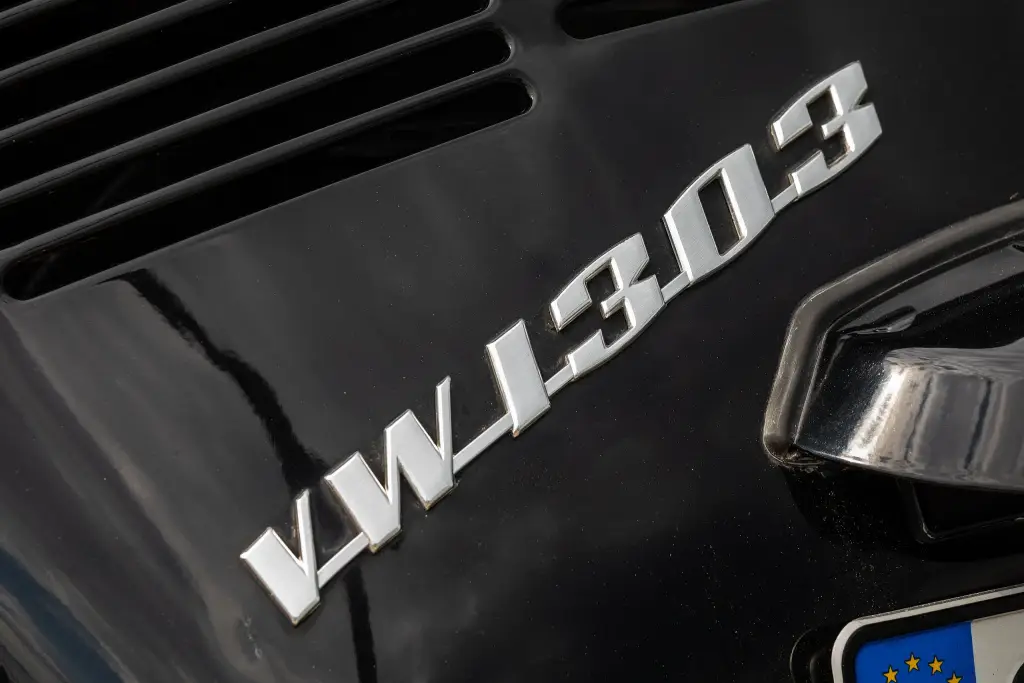
| 1960s designations | 1200, 1300, 1500, 1600, 1302 and 1303 |
| Prototypes | V1, V2 and V3 (1935–36), W30 (1937), VW38 and VW39 |
| Total built | 21.5 million |
| Production sites | twenty worldwide |
| Best-seller record | passed the Ford Model T in 1972 |
| Changes over its life | more than 78,000 updates |
History of the Volkswagen Beetle
The Beetle began in the early 1930s, when Adolf Hitler decided that Germany needed a people’s car for its new Reichsautobahn network, and Ferdinand Porsche and his team were set to design it; the fundamental design concept is attributed to Béla Barényi in 1925. At a meeting in Berlin in May 1934 Hitler asked for a car that could carry two adults and three children on no more than seven litres of fuel per 100 km, with every component designed for quick and inexpensive replacement and an air-cooled engine because not every country doctor had a garage. Porsche received the development contract on 22 June 1934. The project was originally designated Type 60, with Erwin Komenda on the body, Josef Kales on the engine and Karl Rabe as chief engineer, and Franz Xaver Reimspiess credited with the Volkswagen badge.
The first two Type 60 prototypes were finished in October 1935 as the V1 sedan and V2 convertible, followed by three V3 cars whose testing began on 11 July 1936; by June 1936 the V3s had covered more than 50,000 km. Thirty W30 development cars built by Daimler-Benz covered over 2,900,000 km in early 1937, and 44 VW38 pre-production cars introduced the split rear window in 1938, followed by fifty VW39 cars completed in July 1939. The Kraft durch Freude organisation ran the project, and its head Robert Ley promised in 1938 that every German would own a Volkswagen within ten years. The war delayed series production until 1945.
In the 1960s Volkswagen gave the car a set of designations that are still used by owners: 1200, 1300, 1500, 1600, 1302 and 1303. The Type 3, Type 4 and K70 were introduced to supplement it, but none matched its success. In 1972 the Beetle passed the Ford Model T to become the best-selling car of all time, a record it held for 25 years. The design stayed recognisable throughout, yet Volkswagen made more than 78,000 changes over the car’s life, mostly small alterations to the exterior, interior, colours and lighting, along with new engines and equipment. Production ended in 2003 after 65 years and 21.5 million cars.
Design and features
- Rear-mounted air-cooled engine: the layout that defined the car from the first prototype.
- Longest production run: 65 years, the longest for any single generation of automobile.
- 21.5 million built: the best-selling car of a single platform in history.
- Number designations: 1200, 1300, 1500, 1600, 1302 and 1303 named the engines and the later front-end designs.
- Constant development: more than 78,000 changes over the model’s life.
Volkswagen Beetle versions
- 1200 and 1300: the standard models named after their engine sizes.
- 1500 and 1600: the larger-engined versions of the 1960s.
- 1302: the 1970 model with MacPherson struts at the front.
- 1303: the 1972 version with a curved windscreen and a more rounded front.
- V2 convertible: a 1935 prototype rather than a production body style.
The Beetle’s chassis and engine were used for the Karmann Ghia and for the Type 2 van, and it was supplemented in the 1960s by the Type 3. More cars are in the Volkswagen collection.
Video: 1973 Volkswagen Beetle – Production Line
Video by YOUCAR on YouTube.
Sources
- Volkswagen Beetle, English Wikipedia: origins, prototypes, designations, production records