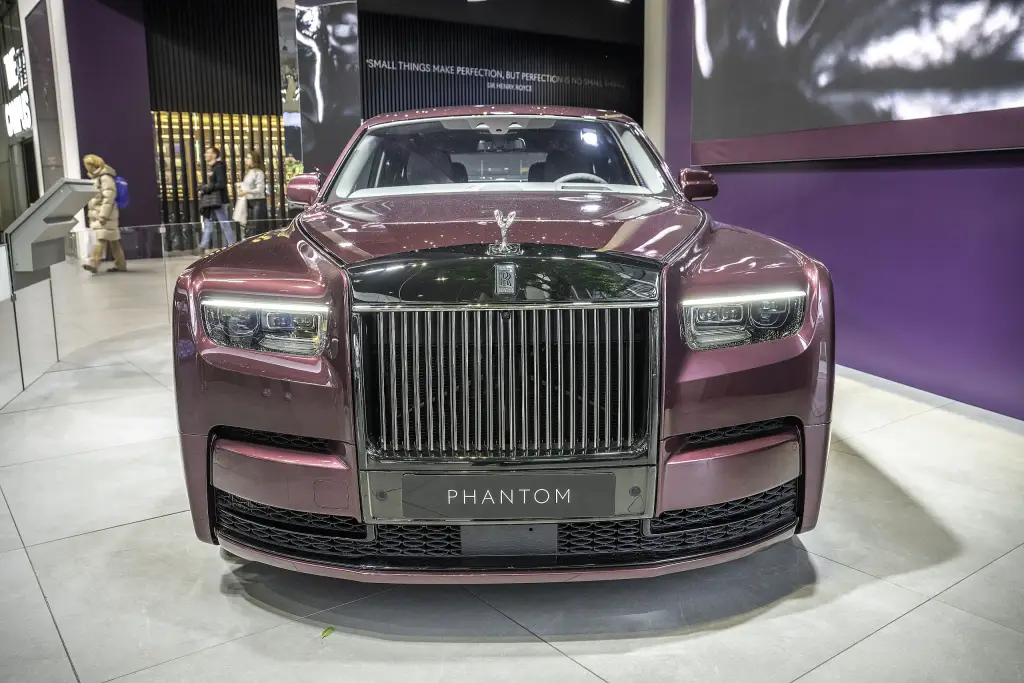

Every car has a face, and for most of motoring history the face was a grille. It began as a way to let air reach the radiator, and became the quickest way to tell one marque from another. This guide takes a grille apart: what it does, how it got its looks and what happens to it when the radiator goes away.
The short version
A grille covers an opening in the body to let air in or out. It evolved from the gravel shields that protected exposed radiators until the early 1930s, and today big grilles are mostly cosmetic and serve as a brand’s main identifier. Electric cars, which need little front cooling, have forced makers to decide whether a face needs a grille at all.
What a grille actually does
In engineering terms a grille covers an opening in the body so that air can enter or leave. Most vehicles carry one at the front to protect the radiator, and its main job is to admit cooling air to it. There are other locations too: below the front bumper, in front of the wheels to cool the brakes, in the cowl for cabin ventilation, and on the rear deck of rear-engined cars. And one common spelling mistake: the word is grille, while “grill” is a cooking method.
- Radiator grille: front-engined cars, protects the radiator and admits cooling air.
- Bumper skirt grilles: below the bumper, front and rear.
- Fender grilles: cover brake ventilation ducts in front of the wheels.
- Bonnet scoop grille: lets intercooler air in.
- Roof or boot grilles: on rear-engined cars.
Grille locations as classified in the English Wikipedia article; the drawing is a simplified illustration, not a specific car.
From gravel shield to face
- 1900Wilhelm Maybach fits a honeycomb radiator to the Mercedes 35 PS to keep the engine cool.
- 1903The grille as a feature first appears on cars, per Wikipedia. The arch shape soon becomes the standard for years.
- 1923The “split” grille first appears, on an Alfa Romeo sports car.
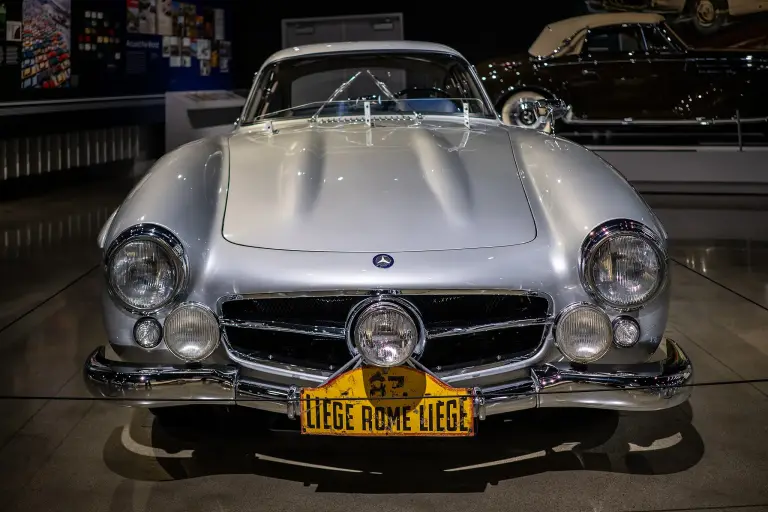
- 1931The Mercedes-Benz 170 moves its radiator behind a grille; the chrome grille with the three-pointed star becomes the brand’s identifier.
- 1930s–40sMakers get creative: bell shapes (Buick, Chevrolet, Pontiac), split and slightly folded fronts (Mercury, 1946 Oldsmobile), crosses (1941 Cadillac, 1942 Ford). Packard, Rolls-Royce and the MG TC keep the old arch.
- 1947After the Buick, Studebaker and Kaiser, grilles become shorter and wider.
- 1950sMercedes shows a standalone grille with horizontal slats on the 300 SL and 190 SL.
- 2006Ford’s three-bar grille debuts on the Fusion and becomes a Ford signature.
- 2021Hyundai Mobis presents an active air flap system that opens and closes the grille with coolant temperature.
Dates from English Wikipedia and Motor1’s history of the Mercedes grille. The 1900 honeycomb radiator and the 1903 first appearance of a grille refer to different things: a radiator design and a styling feature.
The face as a signature
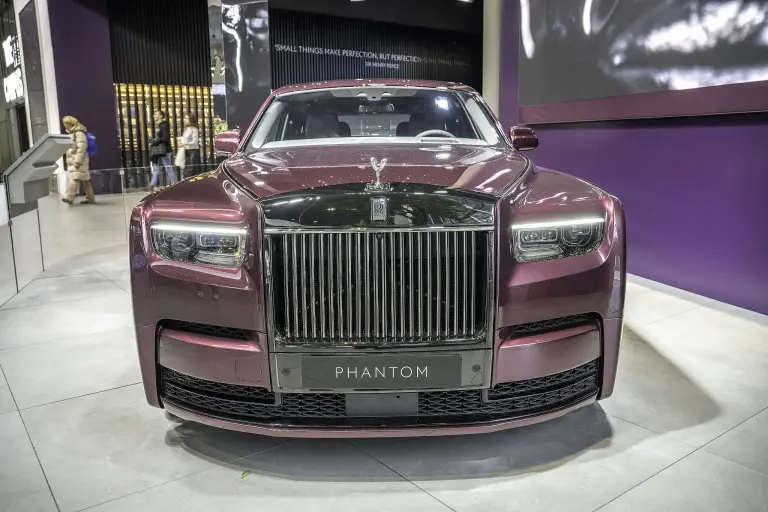
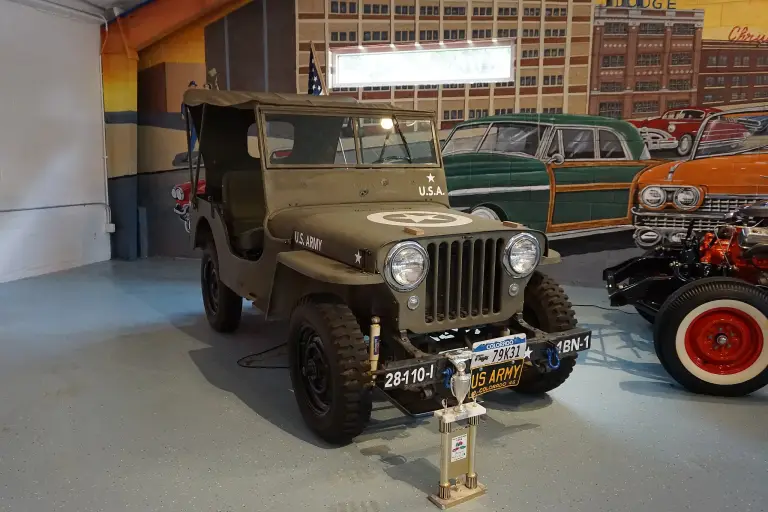
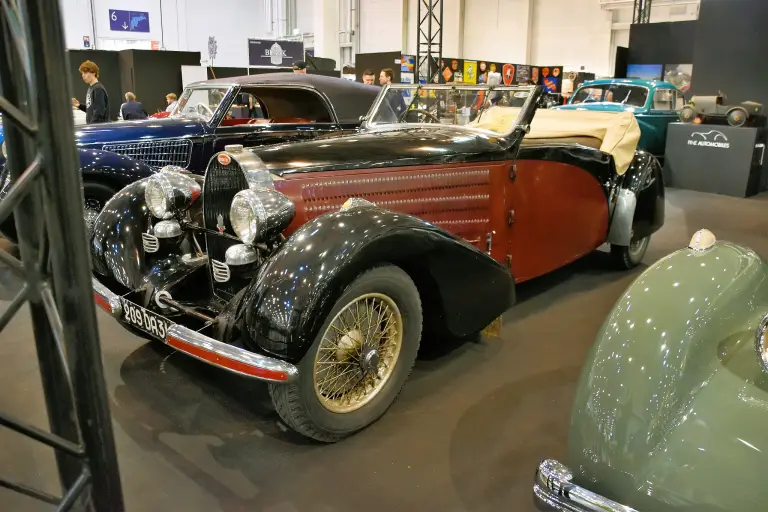
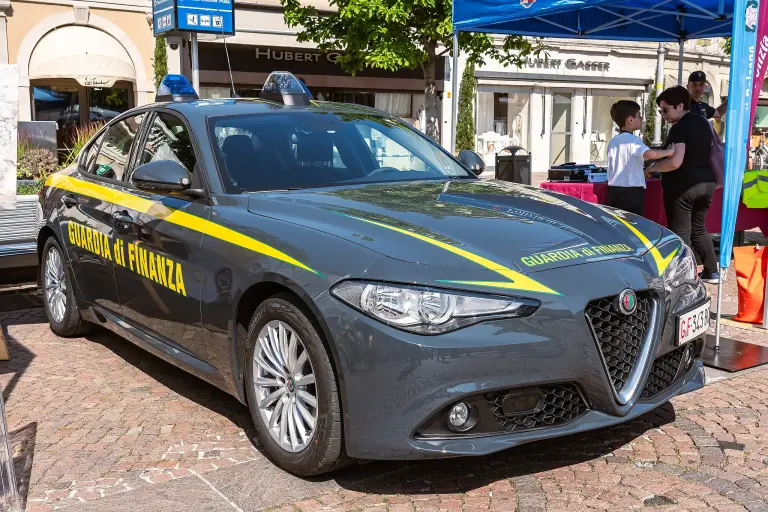
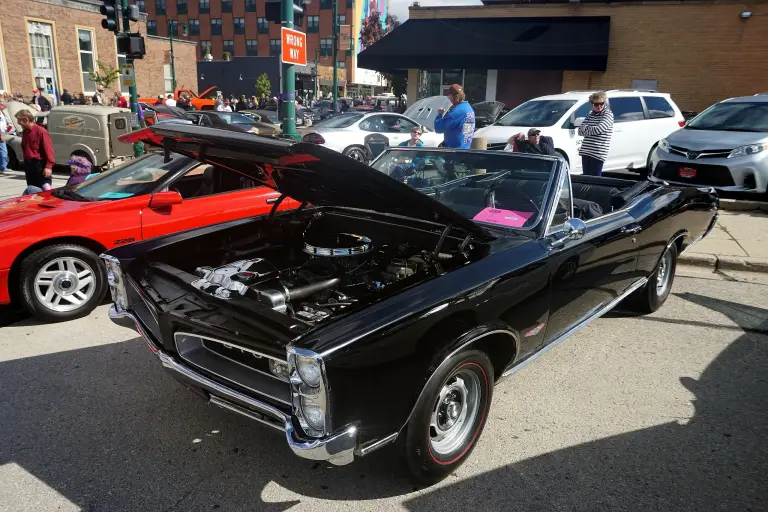
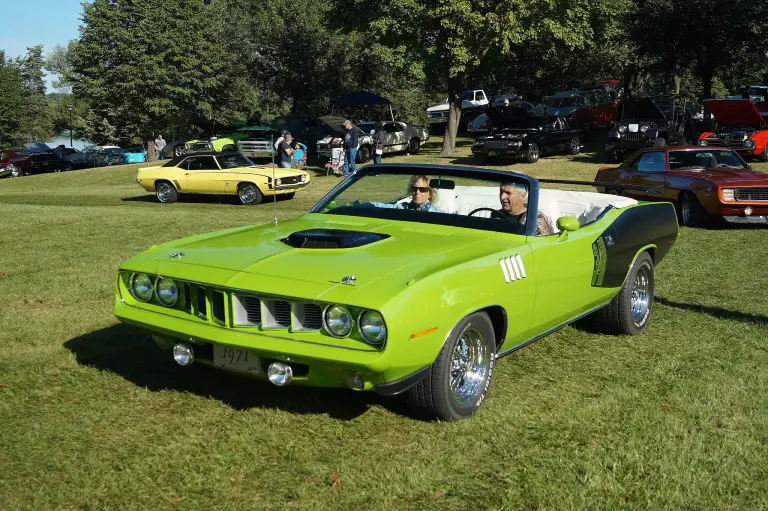
The front of a car has an important role in attracting buyers. The look matters a great deal more than whether the design serves any function, and an inspired grille shapes a car’s identity by tying it to the maker’s history and reputation. Many marques use it as their primary brand identifier. Here are eight faces with the grille facts that go with them.







BMW: one idea, many kidneys
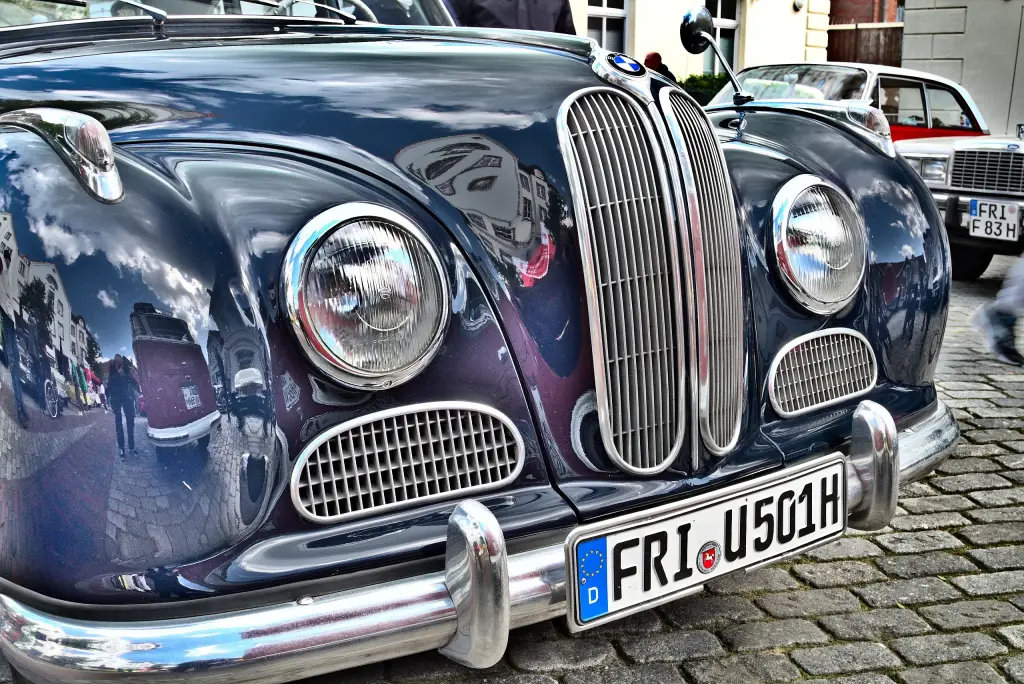
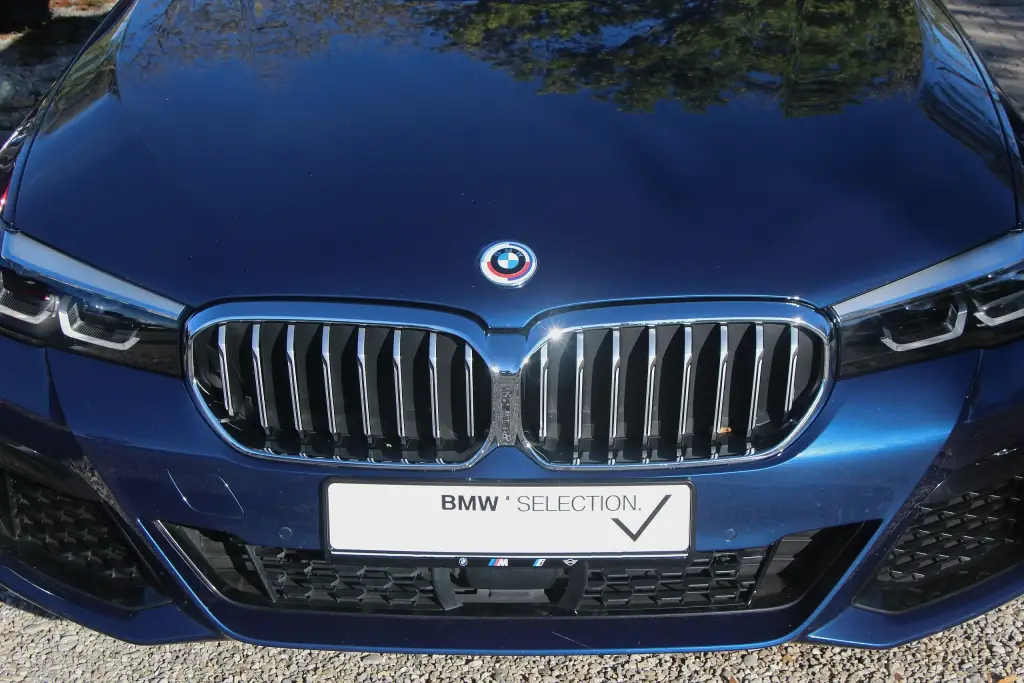
BMW’s split kidney is one of the best-known grilles in the world, and the 303 of 1933 is widely cited as the first car to wear it. The 1950s 501 below shows a tall, upright version; a recent 5 Series (G30) next to it shows how far the shape has grown. Even on its electric i models, which have no radiator to cool, BMW keeps the kidney and blanks it off with plastic.


Fashion, and a way to fake a new model
Grilles follow fashions. In the early years after World War II many American makers switched to fewer and thicker bars. Cadillac had no standard grille form and from the late 1930s changed its pattern from horizontal bars to different crosshatches as a cheap way of making the car look new each year. Customisers did the opposite: they altered the grille as a matter of course, taking a bar from another make, or even a piece of perforated sheet metal sold for home repairs.
The ornament on top
Many grilles end in a mascot. Early Rolls-Royces carried only the emblem. When Lord Montagu of Beaulieu commissioned sculptor Charles Sykes to make a personal mascot for his 1909 Silver Ghost, Sykes made a figurine named The Whisper. By 1910 personal mascots were fashionable, and Rolls-Royce, worried that owners were fixing “inappropriate” ornaments to their cars, commissioned Sykes to design a dignified one for every car. He adapted The Whisper, and the result became the Spirit of Ecstasy.
When the radiator goes away
Electric motors need little or no cooling air at the front, so the grille has lost its purpose. Makers have answered in different ways.
- Keep the face. Nissan has put cosmetic grilles back on its electric cars after the mixed reception of early grilleless models. BMW keeps its kidneys, and Mercedes uses a “Black Panel” grille on its EQ models that hides sensors behind a smooth surface.
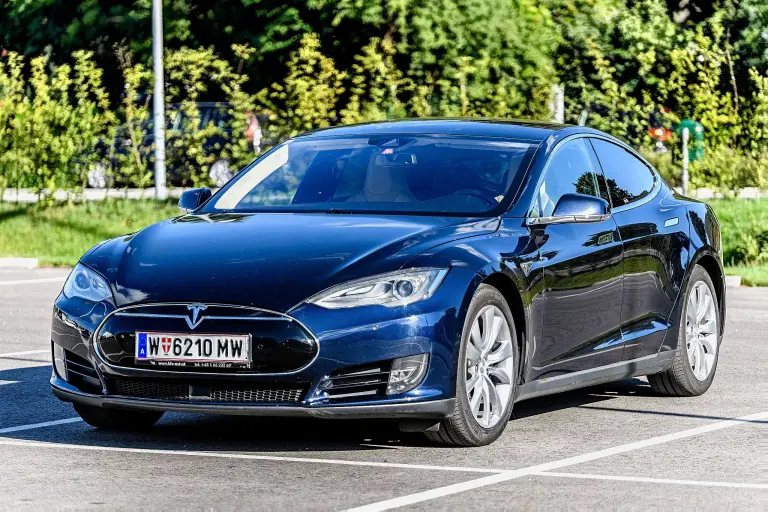
- Drop it. Tesla and Rivian, which only build electric cars and have no history of grilles to honour, have gone furthest; early Teslas carried a false grille that was later removed.
- Reinvent it. The electric Renault Zoe has an enlarged diamond that acts as an air intake and opens to reveal the charging port.
- Make it active. Hyundai Mobis’s active air flap opens when the coolant is hot and closes to cut drag.
Grilleless cars are not new. Car Design News lists the Fiat 500, the Citroën DS, the Studebaker Avanti, the Mazda RX-7 and several generations of Corvette among them, and the original Volkswagen Beetle built its face from headlamps and stamped panels. Porsche, a long-time maker of air-cooled cars, still keeps the grille discreet on its modern water-cooled models.
Grille questions and answers
What is the difference between grill and grille?
Grille is the part of the car; grill is the cooking method, a common misspelling.
Are big grilles functional?
Mostly not any more: today’s big grilles are primarily cosmetic, though the principal function of a grille is still to admit cooling air.
Which marques are known by their grille?
Among others Jeep (seven bars), Rolls-Royce, BMW (kidney), Alfa Romeo (shield), Bugatti (horse-collar), Pontiac (split) and Audi (single-frame).
Do electric cars need a grille?
They need little front cooling, but many makers keep one for identity, and some hide sensors behind it.
Browse the faces in our Classic Cars and Muscle Cars collections.
Based mainly on English Wikipedia, Car Design News and Motor1. The BMW kidney’s early-1930s origin is widely cited but I did not read BMW’s own history in full.
Sources
- Grille (car), English Wikipedia: function, locations, design, history, electric vehicles
- Spirit of Ecstasy, English Wikipedia: The Whisper and the Rolls-Royce mascot
- Brand identity beyond the radiator grille, Car Design News: grilles as brand signatures, EVs, grilleless cars
- Mercedes-Benz grille evolution, Motor1: honeycomb radiator, 1931 Mercedes-Benz 170, 300 SL, Black Panel