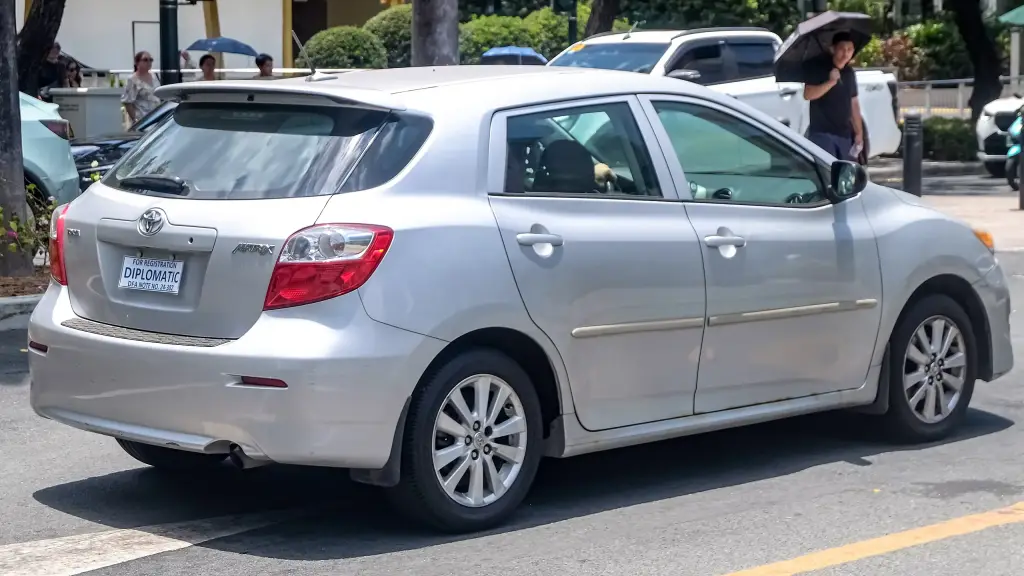
The Toyota Matrix, officially the Corolla Matrix, is a compact hatchback built by Toyota in Cambridge, Ontario, and derived from the Corolla. Introduced in 2002 as a 2003 model, it was a joint venture with General Motors, whose version was the Pontiac Vibe, assembled at NUMMI in California.
Toyota Matrix at a glance
| Maker | Toyota |
|---|---|
| Production | 2002–2013 in the United States, 2014 in Canada |
| Built in | Cambridge, Ontario, Canada |
| Based on | Toyota Corolla |
| Class | Compact hatchback or sport wagon |
| First generation | E130, from 2002 |
| Engines | 1.8-litre 1ZZ-FE and 2ZZ-GE |
| Power | 126–180 hp |
| Twin model | Pontiac Vibe, built at NUMMI |
| Top trim | XRS, with four-wheel disc brakes |
Based on one source: the English Wikipedia article on the Toyota Matrix.
History of the Toyota Matrix
Concept and first generation (E130; 2002)
The Matrix was positioned as the sporty hatchback counterpart of the North American Corolla and counted as a Corolla variant in Toyota’s sales figures. It and the Pontiac Vibe were mechanically almost identical but had different sheetmetal and trim designed by their own brands. Both were narrow, tall station wagons styled in a quasi-SUV way, which Toyota called crossover utility vehicles and others called sport wagons, and both were aimed at younger buyers. The first cars were sold in February 2002. A facelift for 2005 revised the front fascia after complaints that it rubbed the ground, replaced the red tail lamp lenses with clear ones, and swapped the GM-sourced radio for a Toyota unit.
Engines and trims
Two 1.8-litre four-cylinders were offered: the 1ZZ-FE from the Corolla, with 130 hp from 2003 to 2005 and 126 hp in 2006, and the 2ZZ-GE from the Celica GT-S with 180 hp in 2003, 173 hp in 2004 and 170 hp in 2005. The 2006 figures fell because of new testing standards rather than an engine change. The XRS, the top model, came with four-wheel disc brakes, ABS with electronic brake distribution, 16-inch alloys and cruise control, and with the 2ZZ-GE’s 11.5:1 compression it needed premium fuel; a six-speed manual was the only gearbox apart from an automatic in 2003. All-wheel drive was available from 2003 to 2006 with the 1ZZ engine and an automatic, but was dropped with the XRS in late 2006, when a 2007 M-Theory appearance package of 2,500 cars took its place.
The second generation and the end
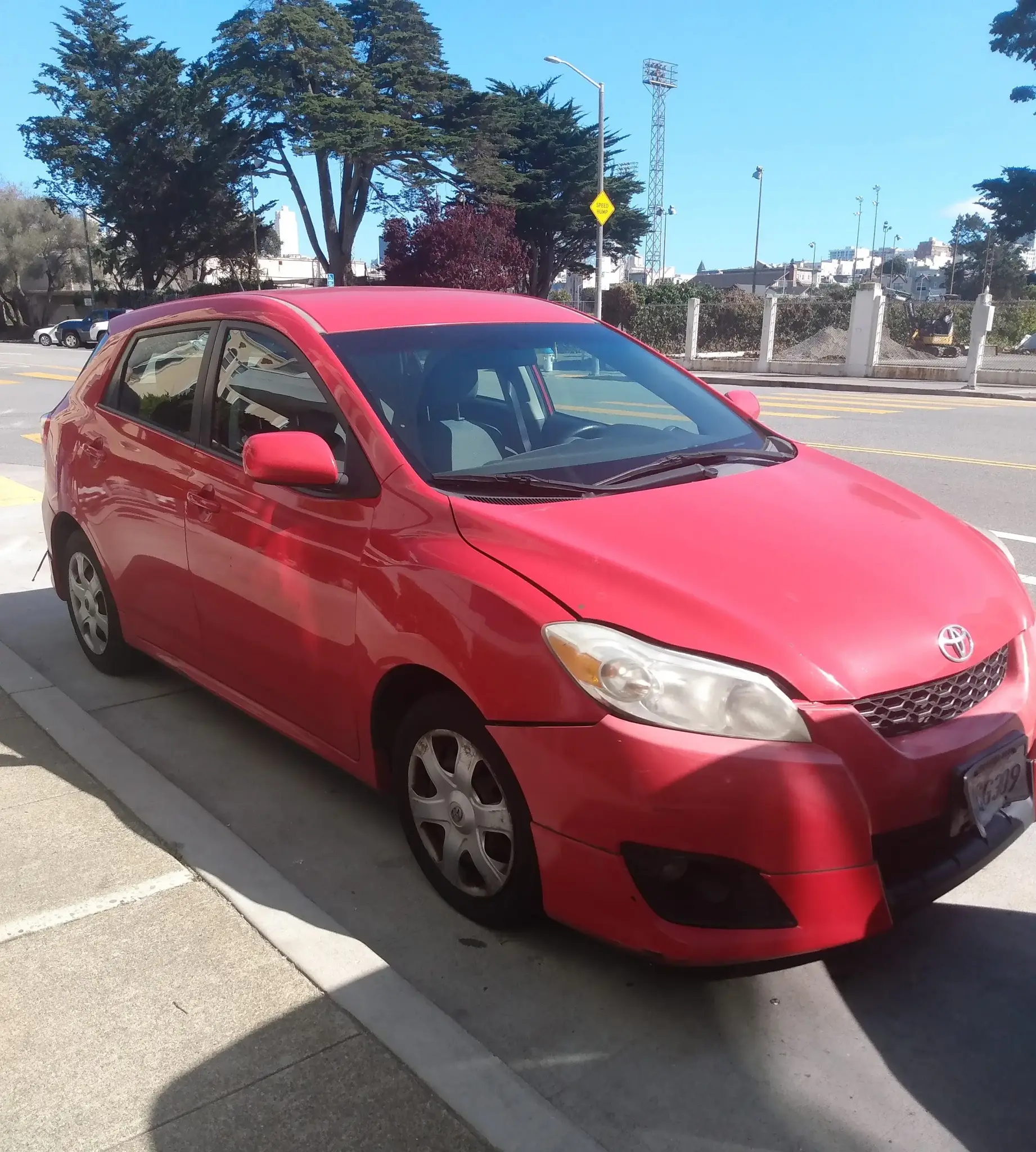
The Matrix was redesigned completely in 2008 for the 2009 model year, following the tenth-generation Corolla. It remained a front-wheel-drive wagon with a 59/41 weight distribution in the sporty version and a relatively light 1,300 kg, and a 60 mph stop took 114 feet. Sales ended in the United States in 2013 and in Canada in 2014, as buyers moved towards small SUVs.
Design and features
- Corolla base: the same platform and engines as the North American Corolla.
- Pontiac Vibe twin: a GM version built at NUMMI with different sheetmetal.
- XRS: the 2ZZ-GE engine with 180 hp and a six-speed manual.
- All-wheel drive: offered from 2003 to 2006 with the smaller engine.
Toyota Matrix versions
- Standard (2003): the base model, with optional all-wheel drive.
- XR (2003): mid-grade with colour-matched trim and a leather steering wheel.
- XRS (2003): 2ZZ-GE engine, four-wheel disc brakes and 16-inch alloys.
- M-Theory (2007): appearance package of 2,500 cars in Speedway Blue.
- Second generation (2008): redesigned for 2009 on the tenth-generation Corolla.
The Matrix was a Corolla E120-based wagon, and its GM twin was sold in Japan as the Voltz. The hot engine came from the Celica, and more cars are in the Toyota collection.
Sources
- Toyota Matrix, English Wikipedia: generations, engines, trims