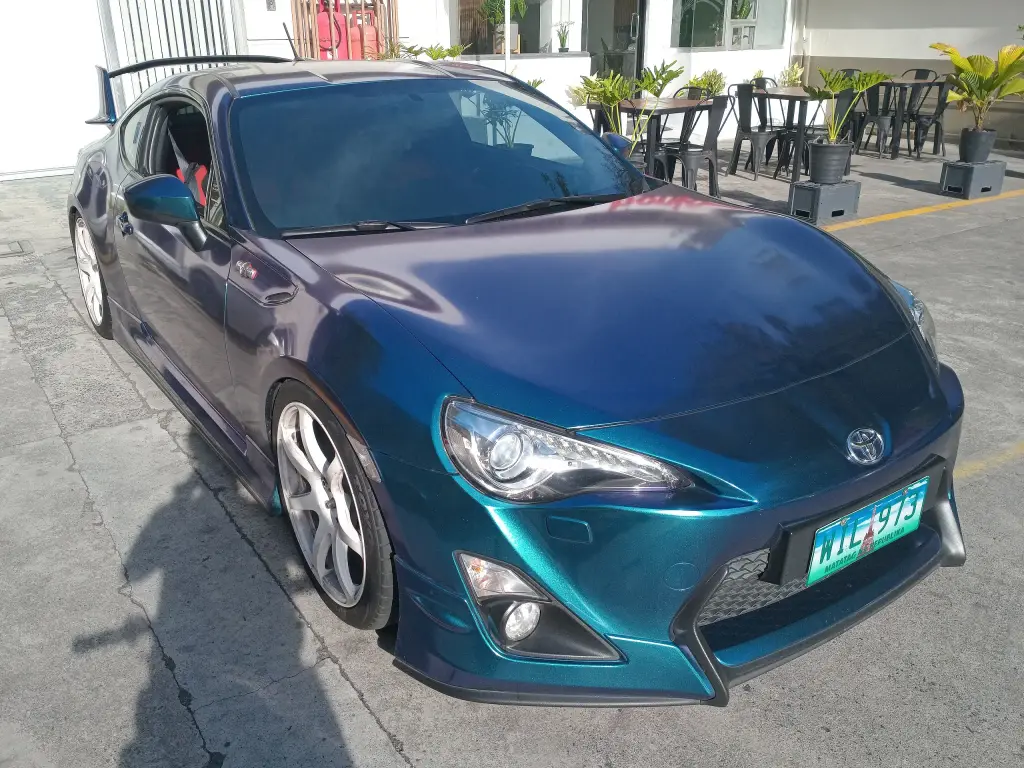
The Toyota FT-86 is the concept car that previewed the production Toyota 86, developed jointly with Subaru. It debuted at the Tokyo Motor Show in October 2009 as a smaller, simpler study than the earlier FT-HS, with a naturally aspirated boxer engine and rear-wheel drive.
Toyota FT-86 at a glance
| Maker | Toyota with Subaru |
|---|---|
| Concept shown | Tokyo Motor Show, October 2009 |
| Earlier study | Toyota FT-HS, 2007 |
| Layout | Front engine, rear-wheel drive, 2+2 |
| Engine | Subaru D-4S boxer, naturally aspirated |
| Design | Toyota ED2 studio, refined from the FT-HS |
| Chassis | Subaru, modified from the Impreza |
| Further concepts | FT-86 G Sports (2010), FT-86 II (2011) |
| Production car | Toyota 86, from 2012 |
| Inspiration | AE86, Celica and Supra |
The FT-86 is described in the pre-launch section of the English Wikipedia article on the Toyota 86; this page uses that section and the engineering data for the production car.
History of the Toyota FT-86
From FT-HS to FT-86
Toyota first presented the layout and design of the car with its “FT” — Future Toyota — concept naming. The FT-HS appeared at the 2007 North American International Auto Show as a front-engine, rear-wheel-drive 2+2 with a hybrid-assisted V6. In 2008 Toyota bought 16.5 per cent of Fuji Heavy Industries, the parent of Subaru, and project leader Tetsuya Tada invited Subaru to co-develop a new D-4S boxer engine. Subaru first refused, since the project conflicted with its reputation for all-wheel-drive cars, and the programme stalled for six months until a test of the development prototype convinced Subaru to take part.
The concept
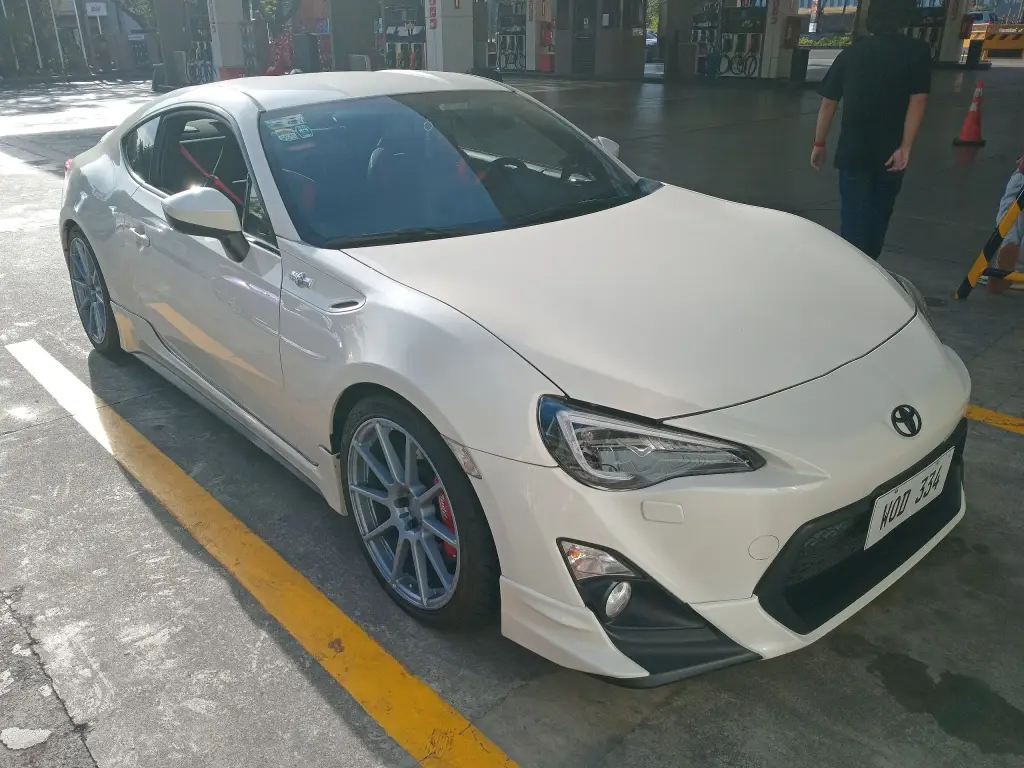
The collaboration produced the FT-86 Concept, which debuted at the Tokyo Motor Show in October 2009. Smaller than the FT-HS, it was refined by Toyota’s ED2 design studio and swapped the hybrid V6 for the new D-4S boxer. Subaru supplied a chassis modified from the Impreza. The concept wore a custom red paint said to be based on the backside of a Japanese macaque, and Toyota cited the AE86, Celica and Supra as inspirations.
Further concepts and production
At the 2010 Tokyo Motor Show Toyota showed the FT-86 G Sports concept alongside its new G Sports accessories line, with carbon-fibre panels, a vented bonnet, a rear wing, 19-inch wheels, Recaro seats and an interior roll cage; its D-4S engine added a turbocharger. In 2011 five near-production studies followed, starting with the FT-86 II Concept at Geneva, and Subaru showed its own versions leading to the BRZ. The production Toyota 86 debuted at the Tokyo Motor Show in December 2011, with development led by Tetsuya Tada, and was built at Subaru’s Gunma plant from February 2012. The 2.0-litre boxer produced 200 PS, the car weighed little and used a 53/47 front-to-rear weight balance, a six-speed manual or automatic gearbox and a Torsen limited-slip differential.
Design and features
- Boxer engine: Subaru’s flat four with Toyota’s D-4S direct injection.
- Rear-wheel drive: a 2+2 coupe with a 53/47 weight balance.
- Subaru chassis: adapted from the Impreza by Subaru engineers.
- Retro inspiration: the AE86 Corolla coupe, Celica and Supra.
Toyota FT-86 versions
- FT-HS (2007): the first study, with a hybrid V6.
- FT-86 Concept (2009): the boxer-engined design study.
- FT-86 G Sports (2010): turbocharged show car with carbon panels.
- FT-86 II (2011): near-production concept at Geneva.
- Toyota 86 (2012): the production car, sold as the GT86 in Europe and the Scion FR-S in America.
The FT-86 became the Supra’s smaller stablemate and followed the spirit of the Celica. Its Corolla ancestor is covered with the Corolla E90, and more cars are in the Toyota collection.
Sources
- Toyota 86, English Wikipedia: concepts, development, engineering