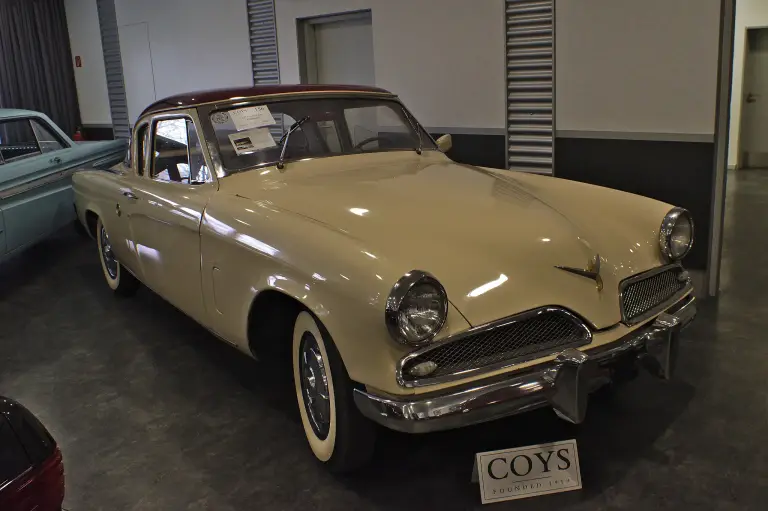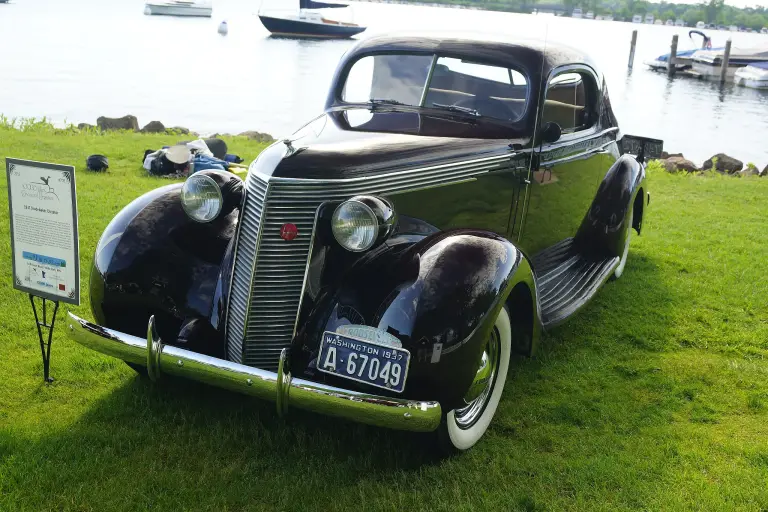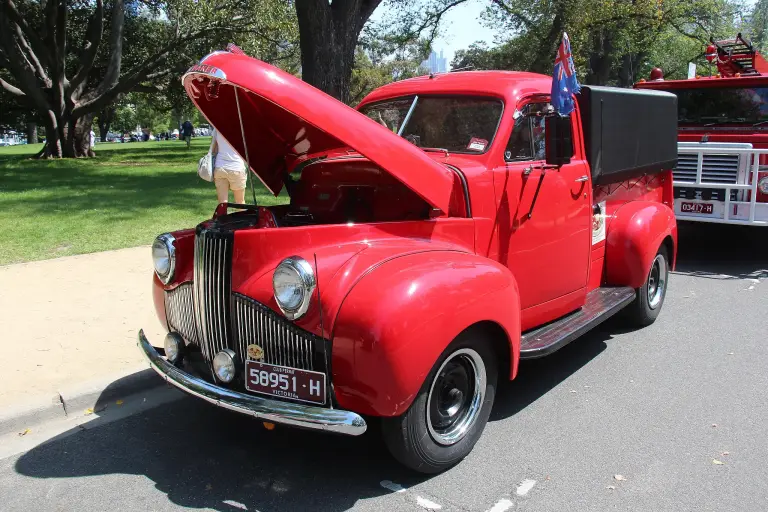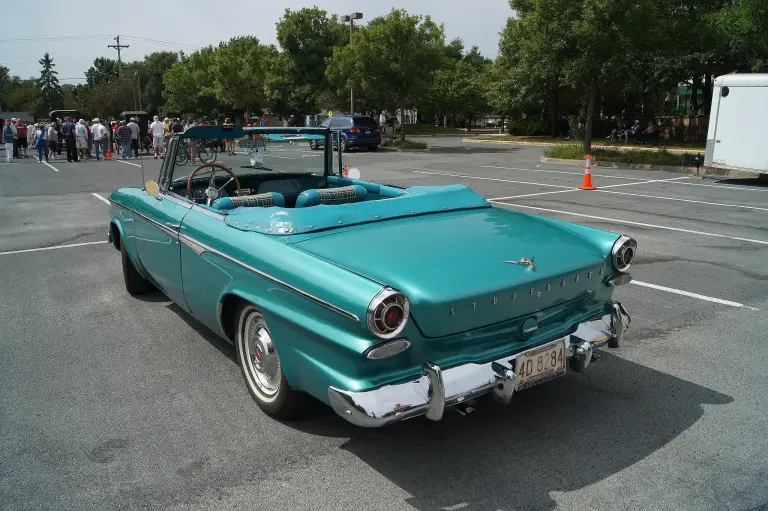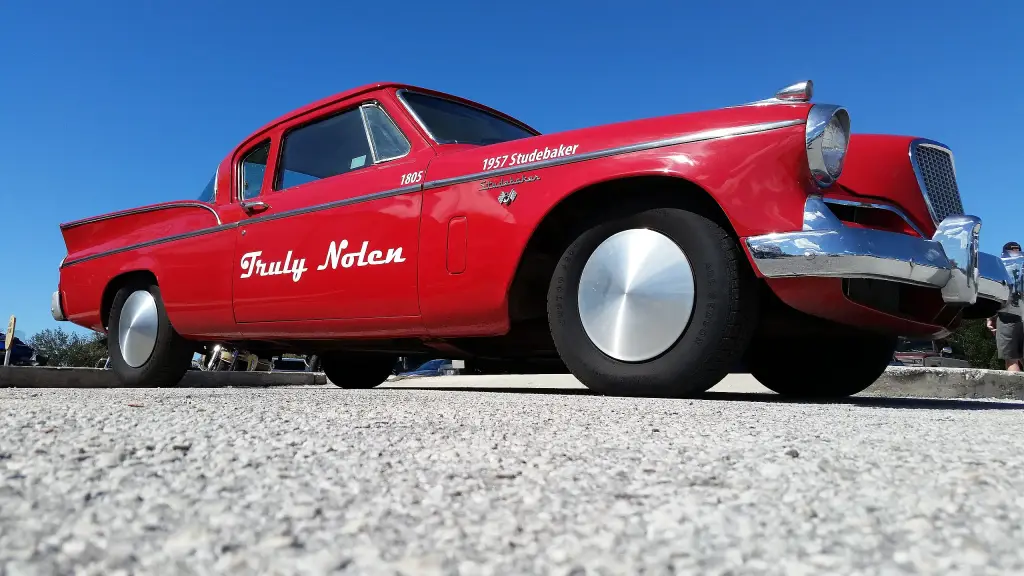
The Studebaker Hawk was a line of pillarless and pillared coupes introduced in 1956 on the 1953 coupe and hardtop body designed by Robert Bourke. Four models started the range; by 1959 only the Silver Hawk remained, and the Hawk was replaced in 1962 by the restyled Gran Turismo Hawk.
Studebaker Hawk at a glance
| Maker | Studebaker Corporation, South Bend |
|---|---|
| Line introduced | 1956 |
| 1956 models | Golden Hawk, Sky Hawk, Power Hawk, Flight Hawk |
| 1956 engines | 352, 289 and 259 cu in V8s; 185 cu in six in the Flight Hawk |
| 1956 bodies | Golden and Sky Hawks hardtops; Power and Flight Hawks pillared coupes |
| 1957 | Silver Hawk replaced the Power and Flight Hawks |
| 1959 | Silver Hawk the only Hawk model, 7,788 sold |
| 1959 engines | 169.6 cu in six or 259 cu in V8 |
| 1960–1961 | all models called simply Hawks, 289 cu in V8 |
| 1960 result | class win in the Mobil Economy Run at 22.9 mpg |
| Replaced by | Gran Turismo Hawk, restyled by Brooks Stevens, for 1962 |
Based on one source: the English Wikipedia article on the Silver Hawk, which covers the whole Hawk series.
History of the Studebaker Hawk
Four Hawks for 1956
Studebaker introduced the Hawk line in 1956 with four models built on the wheelbase and body of the 1953 coupes and hardtops drawn by Robert Bourke, head of the design team Studebaker contracted from Raymond Loewy Associates. The Golden Hawk, Sky Hawk and Power Hawk came with 352, 289 and 259 cu in V8s, while the Flight Hawk used the Champion’s 185 cu in engine. The Golden and Sky Hawks were hardtops and the Power and Flight Hawks pillared coupes; only the Golden Hawk had fins.
The Silver Hawk
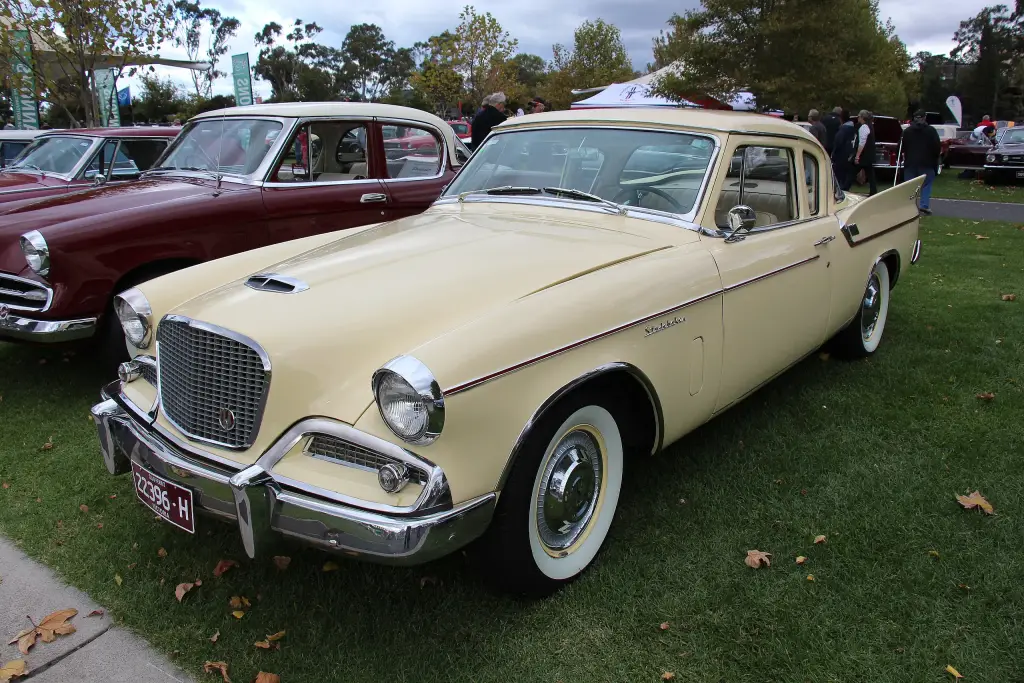
For 1957 the Silver Hawk was introduced as a pillared coupe, replacing both the Power Hawk and the Flight Hawk. The 185 cu in Champion six was standard and the 259 cu in Commander V8 was offered only for export. The Sky Hawk was dropped, leaving two Hawks for 1957: the Silver Hawk with six or 289 V8 and the Golden Hawk with a supercharged President 289. A one-year Packard Hawk was also offered in 1958 with the supercharged engine. The Silver Hawk was plainer than the Golden Hawk: less chrome, no supercharger or bonnet bulge, and a simpler two-tone scheme in which the lower colour included the fin. Some dealers painted only the fin, or the boot lid recess and side grilles, in a contrasting colour, often matched to the interior.
For 1959 the Silver Hawk became the only Hawk in production, largely because dealers wanted a glamorous flagship to draw customers who would then buy the new Lark; it was the only non-Lark model kept. Changes included new tailfins with the Silver Hawk script moved onto them, individual STUDEBAKER letters on the boot lid, parking lights moved to the side grilles, chrome window mouldings and an interior between the two former models’ levels. Two-tone paint was discontinued for US orders but stayed available for export. Buyers could choose the 169.6 cu in six with 90 hp or the 259 cu in V8 with 180 or 195 hp; the 289 was no longer listed. Cars were also exported as CKD kits and built in Belgium by D’Ieteren Frères.
The last Hawks
The 1959 model year was Studebaker’s first profitable one in six years, thanks mostly to the Lark, and the Silver Hawk sold 7,788 cars. For 1960 all models were called simply Hawks, externally much as in 1959 but with the 289 cu in V8 back as the only US engine, joined by export sixes and 259s. The steel strike of 1960 hit Studebaker hard, and the company concentrated on building Larks, delaying Hawk production until February 1960. The 1961 cars brought an optional beige stripe along the fin and the option of bucket seats and a four-speed Borg-Warner gearbox, the same unit used in the Chevrolet Corvette. A stock Hawk won its class in the 1960 Mobil Economy Run at 22.9 mpg. The Hawk was replaced for 1962 by the Gran Turismo Hawk, restyled by Brooks Stevens.
Design and features
- 1953 body: the Hawk line used the 1953 coupe and hardtop shell designed by Robert Bourke.
- Four models in 1956: from the six-cylinder Flight Hawk to the 352 cu in Golden Hawk.
- Fins: only the Golden Hawk had them in 1956; the Silver Hawk gained new fins in 1959.
- Supercharging: the Golden Hawk and the 1958 Packard Hawk used a supercharged 289.
- Economy: a stock Hawk managed 22.9 mpg in the 1960 Mobil Economy Run.
Studebaker Hawk versions
- Golden Hawk (1956–1958): hardtop with a 352 cu in V8, later a supercharged 289; the only finned Hawk at first.
- Sky Hawk (1956): hardtop with a 289 cu in V8.
- Power Hawk (1956): pillared coupe with a 259 cu in V8.
- Flight Hawk (1956): pillared coupe with the 185 cu in Champion six.
- Silver Hawk (1957–1959): pillared coupe, six or V8, the only Hawk left by 1959.
- Hawk (1960–1961): one model with the 289 cu in V8, replaced by the Gran Turismo Hawk.
The Hawk’s body came from the 1953 Starliner coupe, and it shared its V8s with the Commander and President. The model that drew Hawk buyers into showrooms was the Lark, and more cars are in the Studebaker collection.
Video: 1963 Studebaker Hawk GT 289 V8 at Country Classic Cars
Video by RamblinAround on YouTube.
Sources
- Studebaker Silver Hawk, English Wikipedia: Hawk models, engines, 1959 changes, end of the line