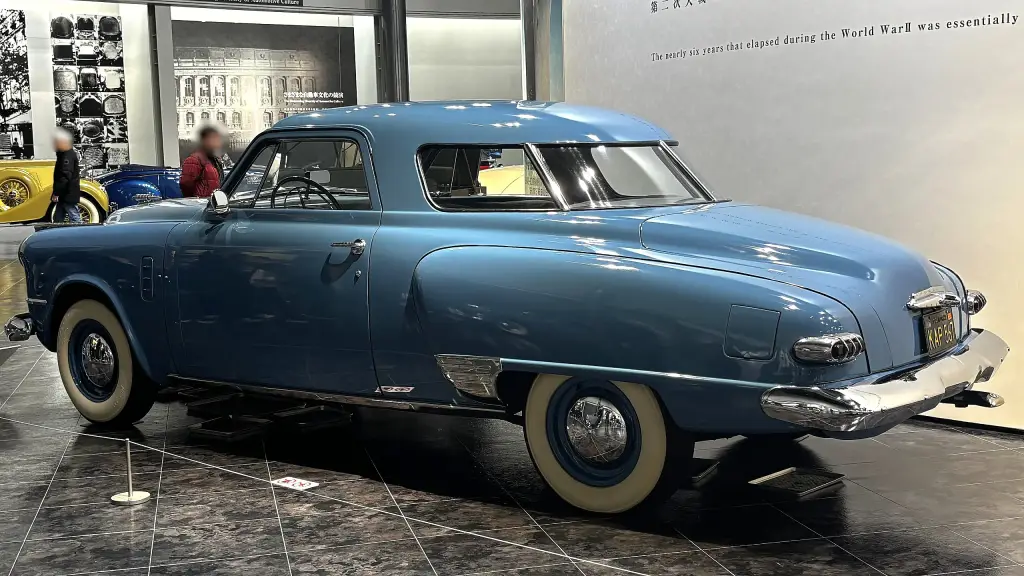
The Studebaker Commander is the name the company used on a long series of cars from 1927 to 1964, with interruptions in 1936 and between 1959 and 1963. For most of that time it was the mainstream Studebaker, with the Champion as the junior model.
Studebaker Commander at a glance
| Maker | Studebaker Corporation, South Bend; Studebaker of Canada |
|---|---|
| First used | 1927 |
| Last used | 1964 |
| Breaks | 1936 and 1959–1963 |
| 1927 Commander | continuation of the Special Six, 226 cu in six |
| 1928 GB Commander | developed from the Big Six, 354 cu in, 75 bhp |
| Eight-cylinder | added to the range in 1929 |
| 1937–1938 | the name given to Studebaker’s cheapest model, formerly the Dictator |
| 1947 body | Raymond Loewy’s post-war shape, Starlight coupe |
| 1953 body | Robert Bourke’s coupe and hardtop, the Starliner |
| 1953 road test | 0–60 mph in 17.9 s, 26.1 mpg at 30 mph (Popular Mechanics) |
| Role after 1955 | mid-range model below the President |
Based on one source: the English Wikipedia article on the Commander.
History of the Studebaker Commander
The 1920s and 1930s
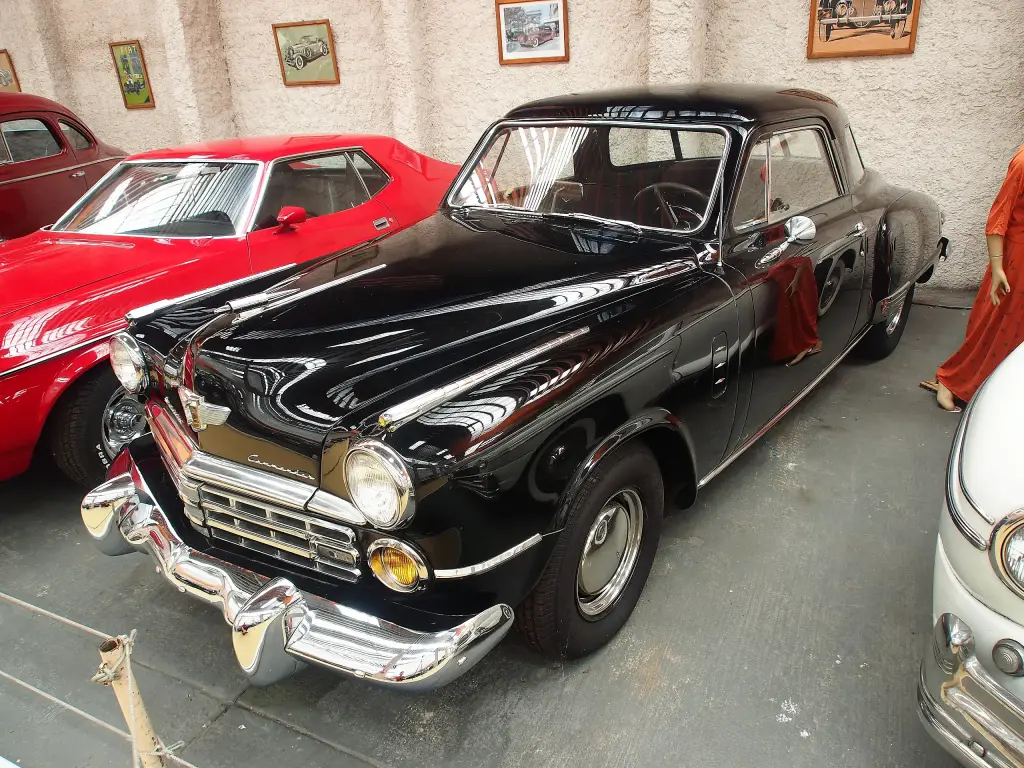
Until the straight-eight President appeared in January 1928, every Studebaker was a six. There were three basic models: the Light Six, the Special Six and the Big Six, with 40, 50 and 60 bhp at 2,000 rpm. The first Commander of 1927 was a continuation of the mid-range Special Six with a 226 cu in engine, and the 1928 GB Commander descended from the Big Six, using the proven 354 cu in unit tuned to 75 bhp at 2,400 rpm. That October, three Commander sixes challenged the 15,000-mile speed record at Atlantic City Speedway and went on to set records up to 25,000 miles with two sports roadsters averaging better than 65 mph; the cars were then stripped and checked part by part and found to be strictly stock. In Australia a Commander roadster crew led by Norman “Wizard” Smith broke the Fremantle–Sydney record by 12 hours 23 minutes. An eight-cylinder Commander joined the range in 1929.
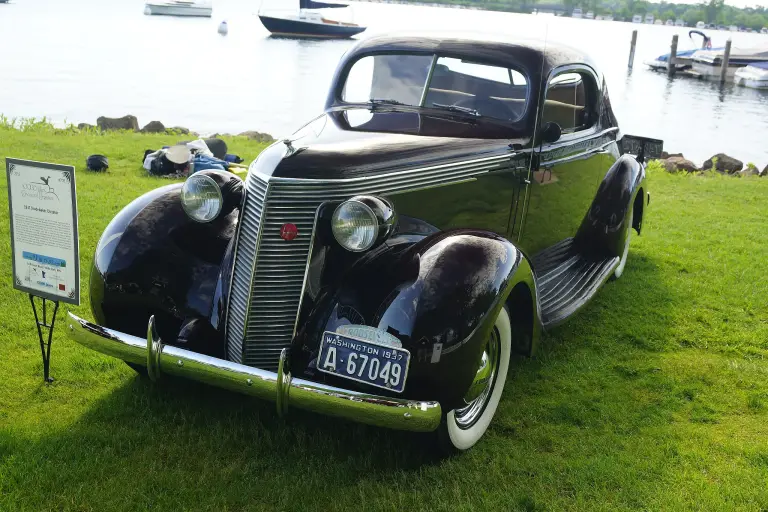
The Commander was dropped in 1935 and brought back in 1937 as Studebaker’s least expensive model, taking the place of the Dictator. With the arrival of the Champion in 1939 it moved back to the middle of the range.
The post-war Commander
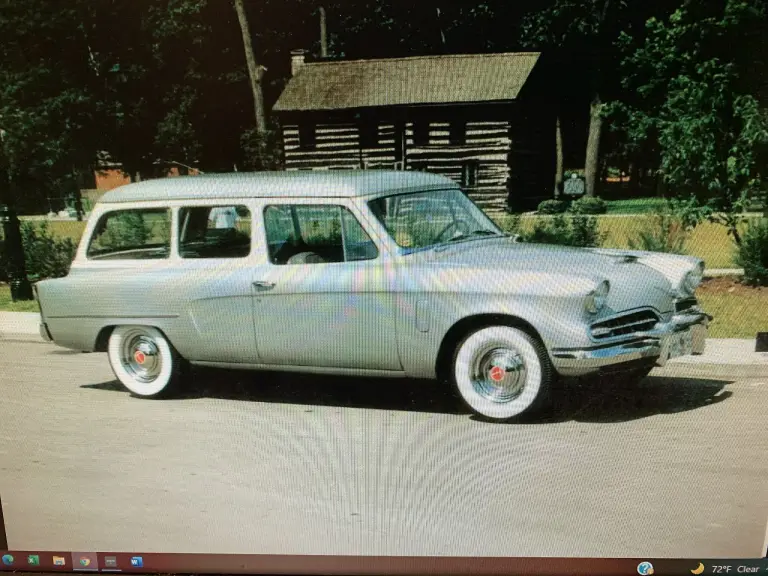
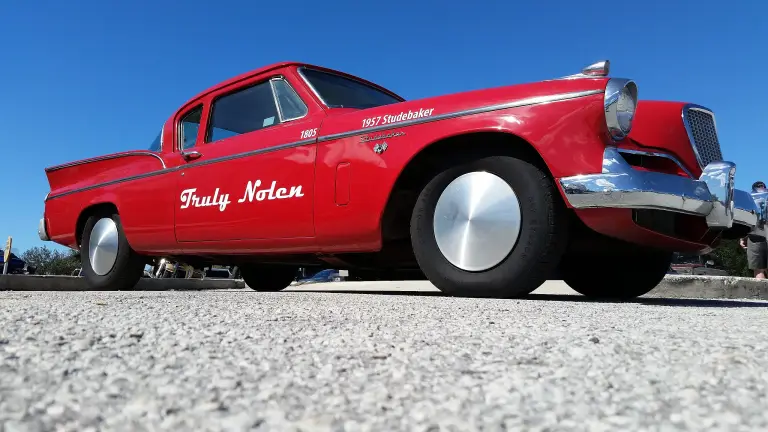
Immediately after the war Studebaker dropped the President and the Commander moved up again, gaining an extended-wheelbase version called the Land Cruiser. Raymond Loewy’s 1947 shape, spectacular on the Starlight coupe, gave the Commander and Champion their post-war identity. In 1953 the cars were redesigned by Robert Bourke of Loewy’s studio: the two-door hardtop was called the Starliner and the pillared coupe the Starlight. Popular Mechanics tested a 1953 Commander at 0–60 mph in 17.9 seconds and 26.1 mpg at a steady 30 mph. No convertible was listed for 1953, although Studebaker built one prototype from a Starliner hardtop to see whether the body could be mass-produced; the extra structural weight ruined acceleration and the project was abandoned, and the car later passed into a private collection.
The final years
In 1955 Studebaker brought back the President for its premium models and the Commander became the mid-range line, extended with more body styles. The name was not used between 1959 and 1963; when it returned it was on the Lark-based range, where by early 1964 Lark-derived cars were sold only as Commander, Daytona and Cruiser. Production ended with Studebaker’s withdrawal from car making in 1966.
Design and features
- Long-lived name: used on the company’s mainstream car for most of four decades.
- Six and eight cylinders: the Commander had both, the eight arriving in 1929.
- Record-breaking sixes: stock 1928 Commanders set long-distance speed records.
- Loewy and Bourke bodies: the 1947 and 1953 shapes are the ones collectors remember.
- Land Cruiser: an extended-wheelbase Commander introduced after the war.
Studebaker Commander versions
- 1927 Commander: 226 cu in six, successor to the Special Six.
- 1928 GB Commander: 354 cu in six with 75 bhp.
- 1937–1938 Commander: the cheapest Studebaker, replacing the Dictator.
- 1947 Commander: Loewy body, including the Starlight coupe.
- 1953 Commander: Bourke body with Starlight coupe and Starliner hardtop.
- 1964 Commander: Lark-based mid-range model at the end of the line.
The Commander shared its body with the Champion and its coupe version became the Starliner. The cheaper model it replaced in 1937 was the Dictator. More cars are in the Studebaker collection.
Video: Studebaker Commander Land Cruiser – 1950
Video by Dave Sinclair on YouTube.
Sources
- Studebaker Commander, English Wikipedia: history by decade, engines, records, 1953 test