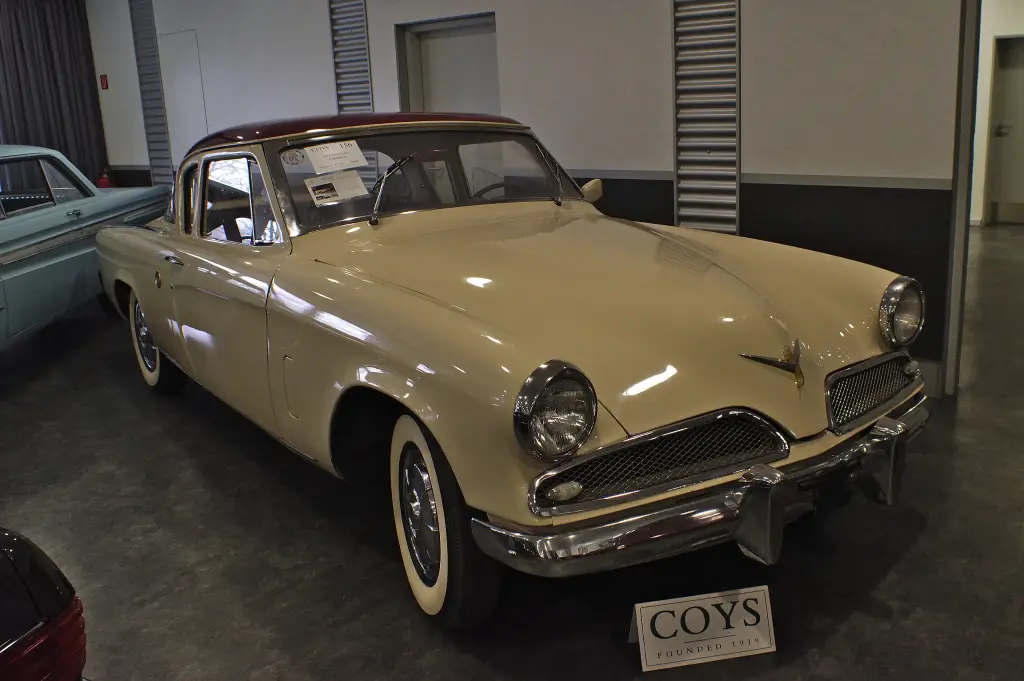
The Studebaker Champion was produced from the start of the 1939 model year until 1958. A full-size car in its first three generations and a mid-size one in the fourth and fifth, it was the junior model to the Commander and the car that kept Studebaker alive after weak 1938 sales.
Studebaker Champion at a glance
| Maker | Studebaker Corporation, South Bend |
|---|---|
| Production | 1939–1958 |
| Position | junior model below the Commander |
| Class | full-size in generations 1–3, mid-size in generations 4–5 |
| Price in 1939 | $660 for the two-door business coupe |
| Engine in 1939 | 164.3 cu in straight six, 78 hp |
| Economy claim | 27.25 mpg-US in 1940 |
| Engine in 1947 | 169.9 cu in six, 80 hp; 85 hp from 1950 |
| Share of sales in 1947 | 65.08 per cent of the company’s total |
| Military use | powerplant of the M29 Weasel, 1943–1945 |
| Replaced by | the 1959 Studebaker Lark |
Based on one source: the English Wikipedia article on the Champion.
History of the Studebaker Champion
Design and launch
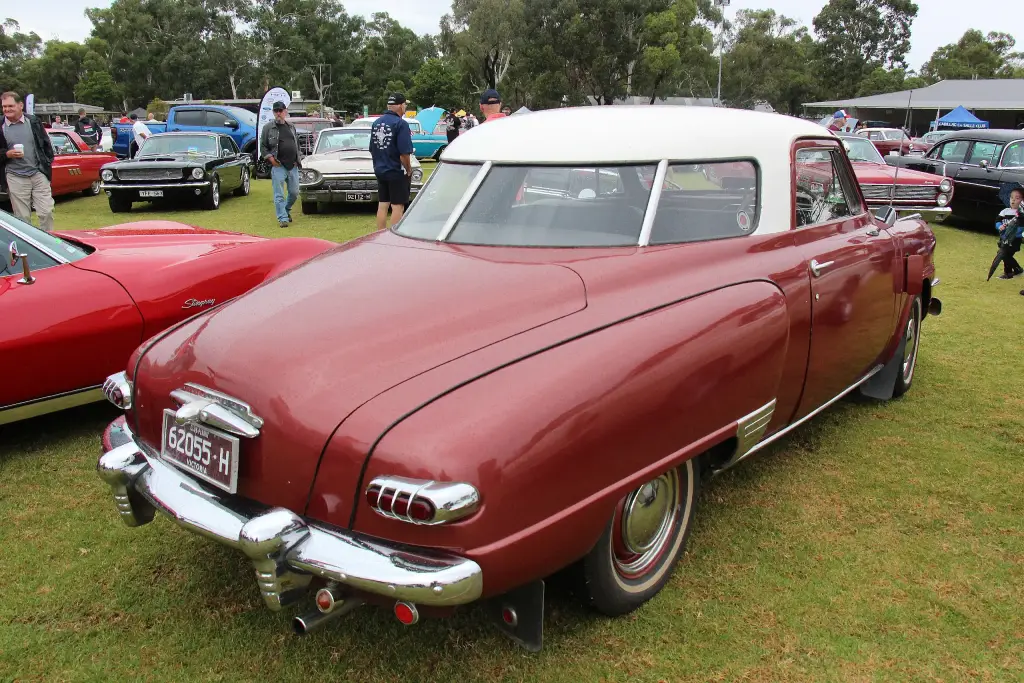
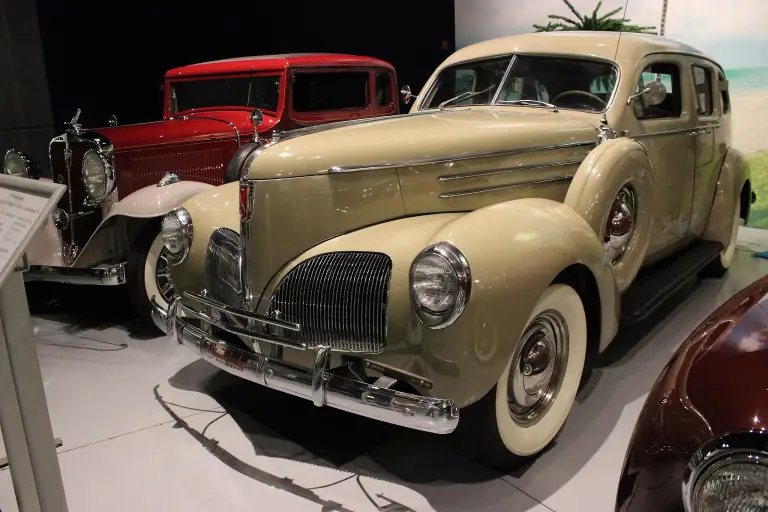
The Champion’s success in 1939 was vital to Studebaker after a poor 1938. Unlike most cars of the period it was designed from a clean sheet, with no need to reuse older parts or to provide components for heavier vehicles, and the guiding principle was the engineering watchword “weight is the enemy”. For its size it was one of the lightest cars of its era. Market research shaped the equipment, the styling was by Raymond Loewy under his long contract with Studebaker, and the price was low: a two-door business coupe cost $660 in 1939. The 164.3 cu in six produced 78 hp, Deluxe models came with arm rests and dual wipers, and in 1940 Studebaker claimed 27.25 mpg-US. Champions won Mobilgas economy runs, and during the war, when petrol was rationed, their efficiency made them sought after.
Generations two and three
The second generation arrived for the shortened 1942 model year, and all Studebakers built in 1946 were sold as Skyway Champions while the company prepared its post-war body. In 1947 the Champion and Commander were completely redesigned as the first new American cars after the war, with ponton styling, a new rear window and details such as backlit instruments and automatic courtesy lights. The Champion took 65.08 per cent of Studebaker’s 1947 sales. Its 169.9 cu in six made 80 hp in 1947 and 85 hp from 1950, when a Borg-Warner automatic transmission joined the options and the wraparound rear window of the two-door coupes became a trim line of its own, the Starlight.
The Loewy coupe and the end
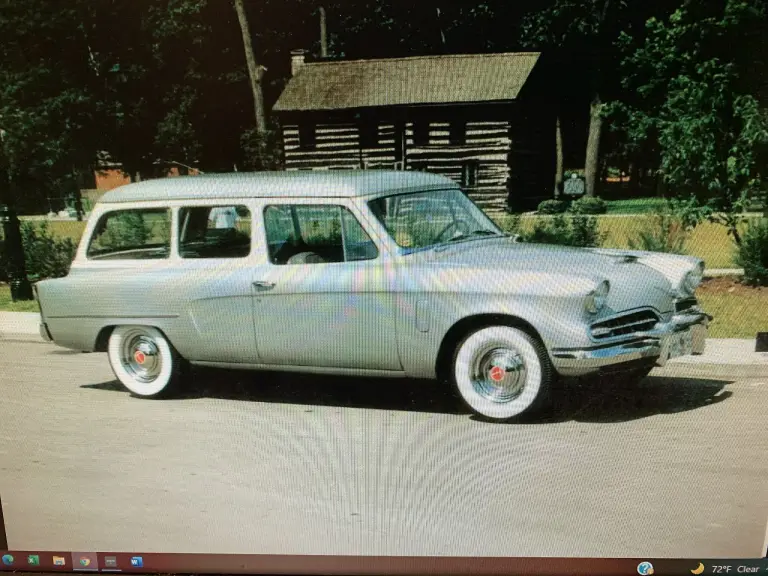
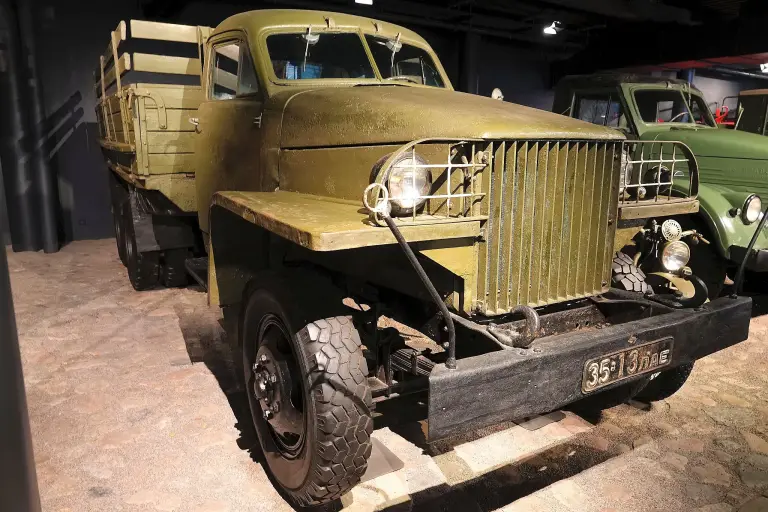
In 1953 Studebaker was redesigned by Robert Bourke of Raymond Loewy’s studio, producing the shape known as the Loewy Coupe. The pillared two-door was the Starlight and the more expensive hardtop the Starliner; alongside them there was a two-door sedan on a shortened four-door body, taller and less valuable to collectors, whose panels do not interchange with the coupe. The front of the new Champion sat lower than its contemporaries. The Champion was phased out in 1958 to make way for the 1959 Lark, by which time Studebaker was in receivership and trying to return to profit. Its engine, however, lasted longer than the car: the compact six was built to the end of the 1964 model year, switching to overhead valves in 1961, and from 1943 to 1945 it powered the Studebaker M29 Weasel carrier.
Design and features
- Light weight: designed to the principle that weight is the enemy, and among the lightest cars in its class.
- Economical six: 164.3 cu in at first, then 169.9 cu in, winning Mobilgas economy runs.
- Loewy styling: ponton bodies from 1947 and the 1953 Loewy Coupe.
- Starlight and Starliner: the two 1953 two-door coupe styles, pillared and hardtop.
- Long-lived engine: the six was built until 1964 and powered the M29 Weasel during the war.
Studebaker Champion versions
- 1939 Champion: 164.3 cu in six with 78 hp; Deluxe trim with arm rests and dual wipers.
- 1942–1946 Champion: second generation, sold in 1946 as the Skyway Champion.
- 1947–1952 Champion: post-war ponton body, Starlight coupe trim from 1950.
- 1953–1954 Champion: Loewy Coupe in Starlight and Starliner form.
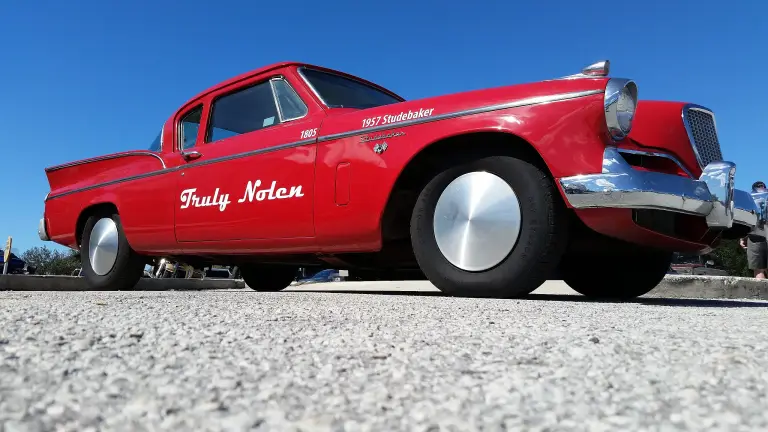
- 1955–1958 Champion: final generations before the Lark.
The Champion was the junior model to the Commander, and its 1953 coupe body is described in the Starliner article. The car it was replaced by was the Lark, and more Studebakers are in the collection.
Sources
- Studebaker Champion, English Wikipedia: design, generations, engines, prices, M29 Weasel, end of production