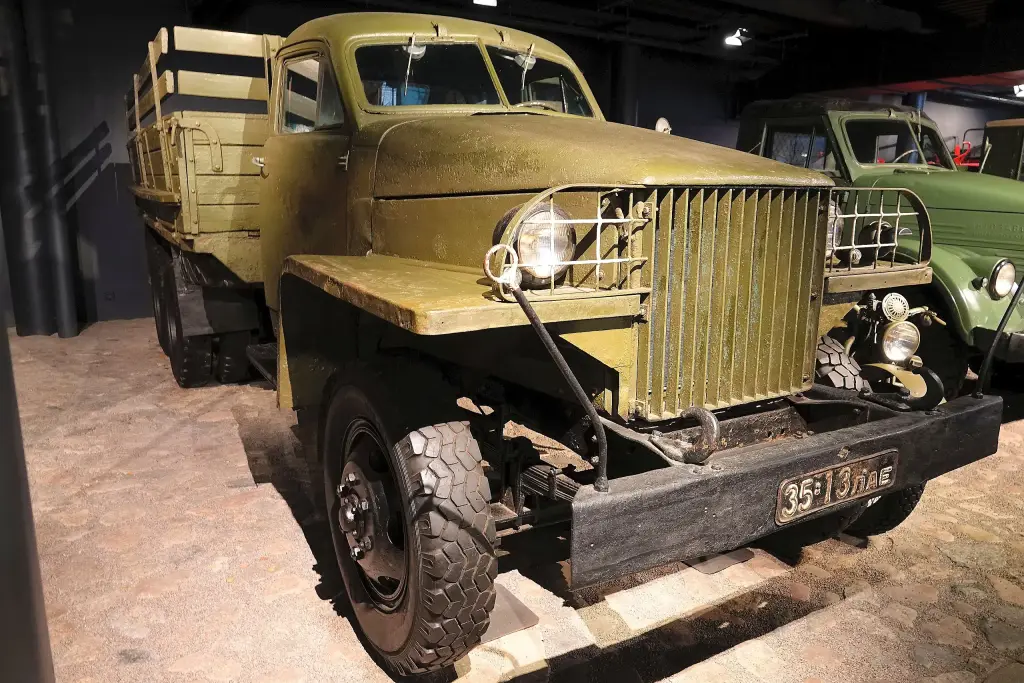
The Studebaker US6 (G630) was a family of 2½-ton 6×6 and 5-ton 6×4 military trucks built during the Second World War. Most of them went to the Soviet Union under Lend-Lease, where the type became a standard artillery tractor and rocket-launcher platform.
Studebaker US6 at a glance
| Maker | Studebaker Corporation, South Bend; REO Motor Car Company, Lansing |
|---|---|
| Military designation | G630 |
| Production | 1941–1945 |
| Capacity | 2½ tons off-road (6×6); 5 tons on road (6×4) |
| Built | 197,678 by Studebaker and 22,204 by REO, more than 200,000 in all |
| Engine | Hercules JXD, 320 cu in L-head six, 86 hp at 2,800 rpm |
| Torque | 200 lb·ft at 1,150 rpm |
| Gearbox | Warner T 93 five-speed with overdrive fifth |
| Transfer case | Timken T-79, high and low range, front axle engageable |
| Wheelbases | 148 in short and 162 in long |
| Tyres | 7.50-20, dual rear wheels |
| Cab | closed Studebaker cab with opening vent windows |
Based on one source: the English Wikipedia article on the US6.
History of the Studebaker US6
Design and development
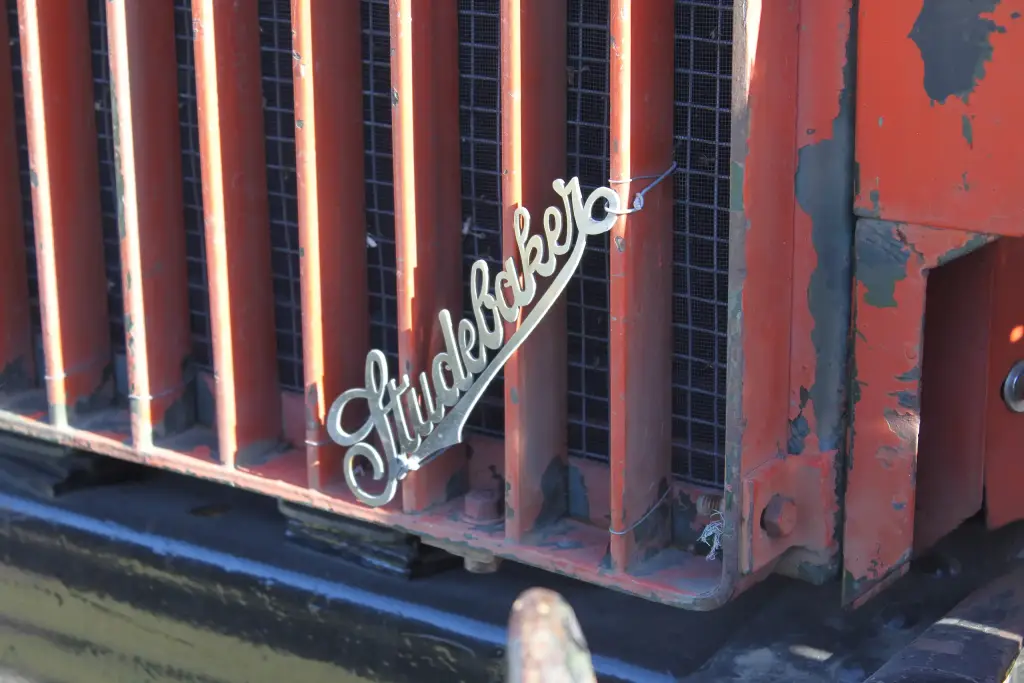
In 1939–1940 the US Army Ordnance Corps was looking for 2½-ton tactical 6×6 trucks that could work off-road in any weather. Studebaker, Yellow Coach (a General Motors company) and International Harvester all submitted designs that were accepted and put into production in 1941. The US6 used the cab of Studebaker’s civilian M-series truck, modified for military use, and was built in thirteen variations, including 6×4 models rated at 5 tons for road work. Studebaker built 197,678 trucks at South Bend; REO added 22,204 at Lansing, Michigan, from 1944 under a sub-contract. The REO trucks were identical apart from being long-wheelbase cargo models without the front winch, known as the US6 U9.
Lend-Lease and Soviet service
The US6 was made mainly for export under Lend-Lease, and the Soviet Union became its largest user: the first trucks arrived in the autumn of 1941, many of them through the Persian Corridor in Iran. Between July 1942 and May 1943 the Red Army tested eleven US6 trucks, and the results led to the payload being raised from 2½ to 4 short tons; in 1945 it was set at 3½ tons, although on good roads the trucks could carry up to 5 tons. In Soviet hands they towed artillery and anti-tank guns, moved troops over long distances and served as platforms for Katyusha rocket launchers. The type was prized for its toughness and its ability to run on poor fuel, and Stalin sent Studebaker a personal letter thanking the company for the quality of the trucks for Soviet service; Soviet troops called them “Studers”.
Elsewhere in the war
US forces used the US6 in the construction of the Ledo Road in Burma and the Alcan Highway in North America. The engine, the Hercules JXD, was also fitted to the M3 Scout Car and later to the M8 Greyhound and M20 armoured cars, which says something about how conservative and reliable the design was: its compression ratio of only 5.82:1 let it burn 68-octane petrol. Production by both manufacturers ended in 1945.
Chassis and cab
The US6 had a ladder frame with three beam axles — the front on semi-elliptical leaf springs and the rear tandem on quarter-elliptical springs with locating arms. Both axles were Timken split units with a 6.6:1 ratio, the front with ball-type constant-velocity joints. The cab followed the civilian M-series design but added vent windows in each door that could be swung out for ventilation; the Soviet customer preferred this closed cab to the open type that Studebaker designed for the GMC CCKW, and production of the closed-cab US6 was restarted after only 10,000 open-cab trucks had been built.
Design and features
- Hercules JXD engine: a low-compression 320 cu in six that ran on 68-octane fuel.
- Timken T-79 transfer case: high and low range with a connectable front axle.
- Closed cab with vent windows: the detail that set Studebaker trucks apart from other 2½-ton 6×6 types.
- Two wheelbases: 148 in for tractors, dump trucks and short cargo bodies, 162 in for tankers and long cargo models.
- Winch option: a power take-off could drive a front winch or the hoist of a dump truck.
Studebaker US6 versions
- U1 and U2: short-wheelbase cargo trucks, the U2 with a front winch and a 9 ft bed.
- U3 and U4: long-wheelbase 6×6 cargo trucks.
- U7 and U8: 6×4 cargo trucks rated at 5 tons for road use.
- U9: chassis-cab built by REO, long wheelbase, no winch.
- 6×4 versions: on-road trucks rated at twice the off-road capacity of the 6×6.
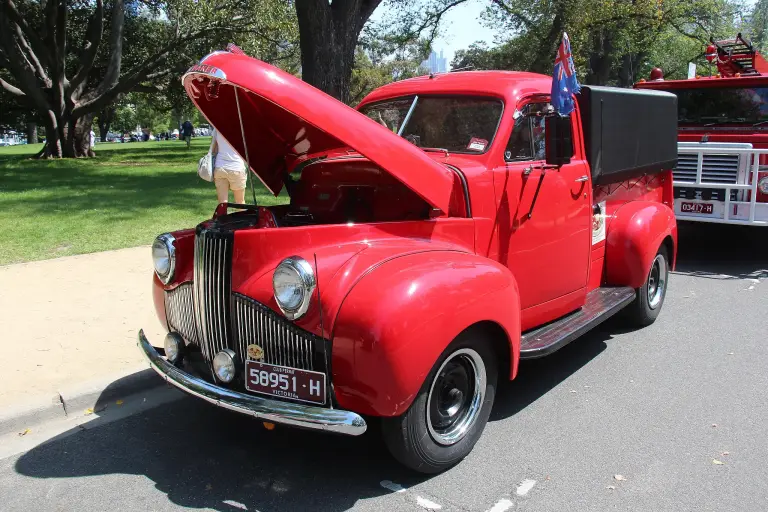
The US6 was derived from the civilian Studebaker M-series truck, and Studebaker’s post-war trucks continued in the Champ and Transtar. More military and civilian Studebakers are in the Studebaker collection.
Video: 1942 Studebaker US6 Slide Show restoration
Video by Phantom US6 Studebaker on YouTube.
Sources
- Studebaker US6 2½-ton 6×6 truck, English Wikipedia: production, Lend-Lease, engine, chassis, models