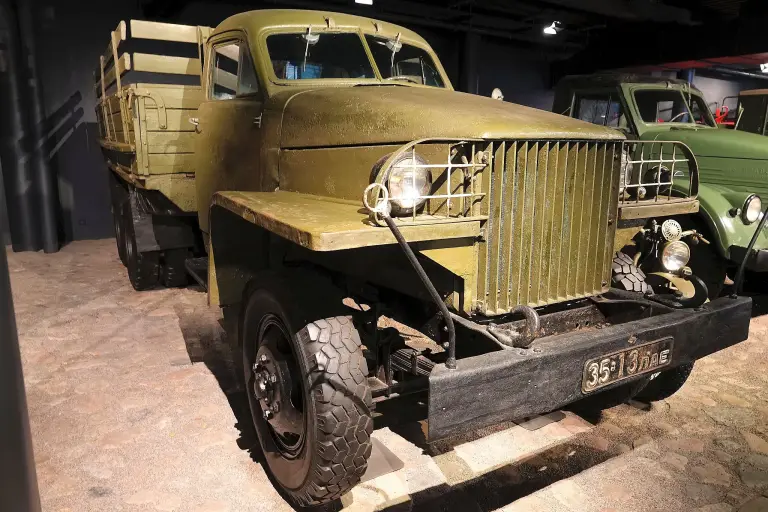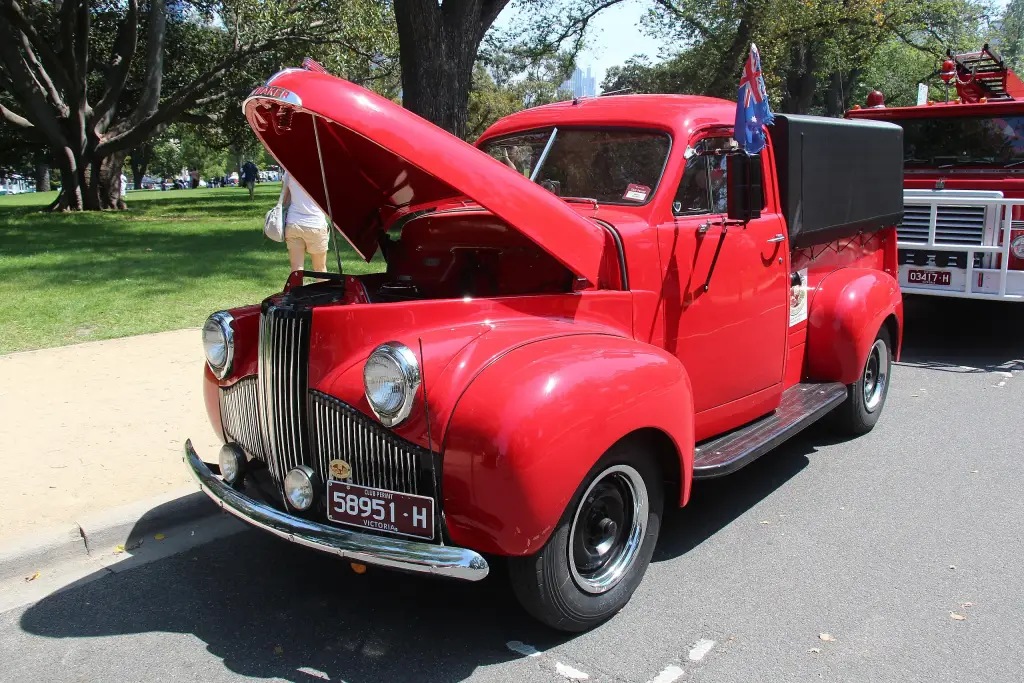
The Studebaker M-series is the pickup and light-truck range that Studebaker designed in the late 1930s and built, with a wartime pause, until 1949. It was offered from half-ton to two-ton capacity, and the M16 version served as the basis for the military US6, one of the most widely built trucks of the Second World War.
Studebaker M-series at a glance
| Maker | Studebaker Corporation, South Bend, Indiana |
|---|---|
| Designed | late 1930s |
| Production | 1939–1942 and 1945–1949 |
| M-5 | half-ton, Champion 169 cu in engine |
| M15 | three-quarter ton, Champion 169 cu in engine |
| M15A | one and one-and-a-half ton, Champion 169 cu in engine |
| M16 | one-and-a-half and two ton, Commander 226 cu in engine |
| Body styles | pickup, or cab and rolling chassis for outside body builders |
| Cab feature | “wind wing” vent windows in both doors |
| Military derivative | Studebaker US6, based on the M16 |
| End of production | 1949 |
Based on one source: the English Wikipedia article on the M-series truck.
History of the Studebaker M-series
A truck designed before the war
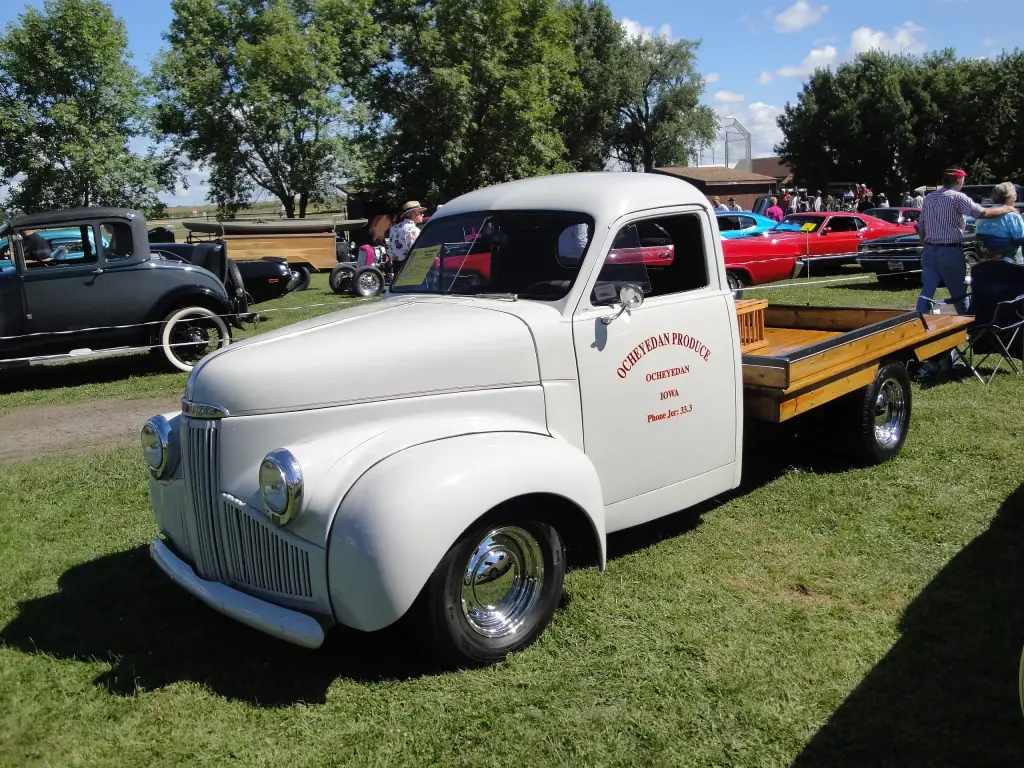
The M-series was drawn up in the late 1930s as Studebaker’s replacement for its earlier commercial range. Compared with most American trucks of the period it had a more aerodynamic shape, and its most distinctive detail was a pair of “wind wing” vent windows in the driver’s and passenger’s doors — a feature, according to the English Wikipedia article, not found on any other make of American truck during the Second World War. When the pickup was introduced in 1941, Studebaker briefly used the Coupe Express name from its 1937–1939 coupe utility in advertising, although no M-series truck was ever officially designated a Coupe Express.
The range and its engines
The line was built around two engines. The M-5 half-ton, the M15 three-quarter-ton and the M15A one-and-a-half-ton models all used the Champion 169 cu in six, while the larger M16, rated at one-and-a-half and two tons, received the more powerful Commander 226 cu in unit. The M16 kept the same front sheet metal as the smaller trucks but used a different firewall in the cab, and a spacer in the front fenders to clear its wider front wheel track. Only the M-5, M15 and M15A were offered with a factory pickup bed; all versions could be ordered as a cab and rolling chassis so that outside body manufacturers could fit standard beds and boxes or build bodies to a customer’s specification.
War, and the return to civilian sale
Civilian production stopped in 1942 because of the Second World War and restarted in 1945, after Studebaker was given permission in early 1945 to build some M-series trucks for civilian use; the range then continued until 1949. The war years were spent on the US6, a two-and-a-half-ton 6×4 and 6×6 military truck derived from the M16 and differing from it in having a new engine, a new front end and all-wheel drive. The M-series therefore stands at the head of Studebaker’s post-war truck line, which carried the same basic cab and chassis ideas into the 2R, 3R and E-series trucks and, through them, into the Champ and Transtar.
Design and features
- Wind wing vents: opening vent windows in both doors, a detail no other American truck maker used during the war.
- Aerodynamic body: a rounder, lower shape than most contemporary American trucks.
- Two engine families: the Champion 169 cu in six for the light models and the Commander 226 cu in six for the M16.
- Chassis-cab option: buyers could order a rolling chassis and have a body built locally.
- Military derivative: the M16 provided the basis of the US6, built in six-figure numbers.
Studebaker M-series versions
- M-5: half-ton, Champion 169 cu in, factory pickup bed.
- M15: three-quarter ton, Champion 169 cu in.
- M15A: one and one-and-a-half ton, Champion 169 cu in.
- M16: one-and-a-half and two ton, Commander 226 cu in, wider front track.
- US6: military 2½-ton 6×6 and 5-ton 6×4 derivative with a new nose, engine and all-wheel drive.
The military version has its own article: the Studebaker US6. Later Studebaker trucks are covered in the Champ and Transtar pages, and the whole range is listed in the Studebaker collection.
Video: 1947 Studebaker Truck M Series Flatbed
Video by Steven Martini on YouTube.
Sources
- Studebaker M-series truck, English Wikipedia: versions, engines, production years, design details