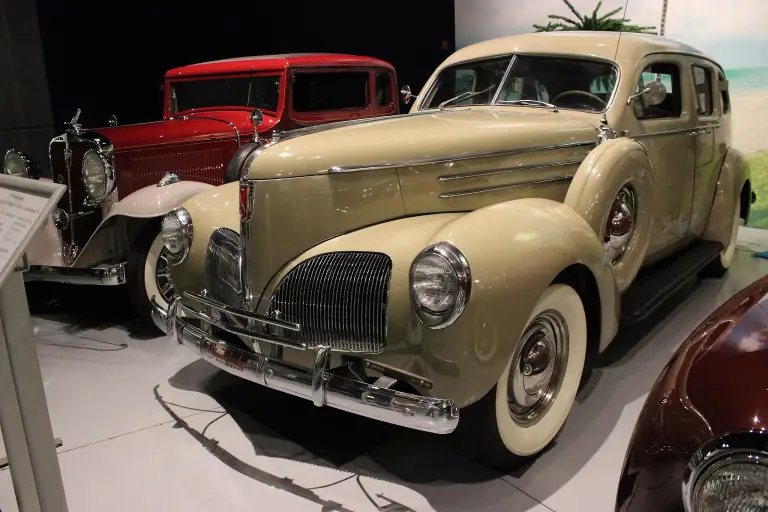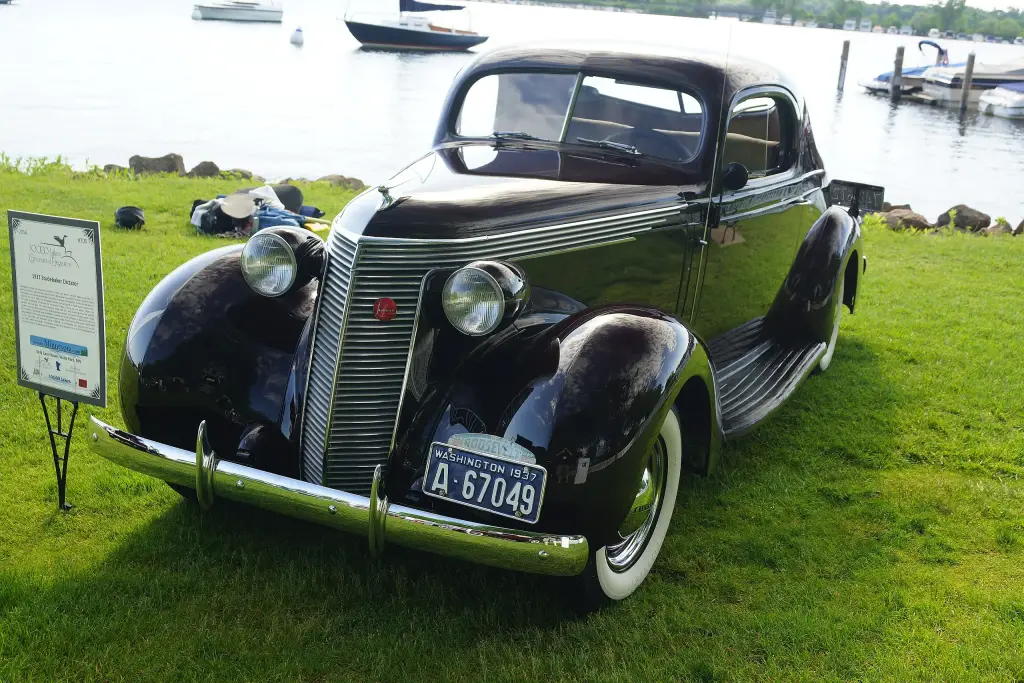
The Studebaker Dictator was produced from 1927 to 1937 as the company’s cheapest model. It was the car previously known as the Standard Six, renamed to suggest that it “dictated the standard” other makers would have to follow.
Studebaker Dictator at a glance
| Maker | Studebaker Corporation, South Bend |
|---|---|
| Production | 1927–1937 |
| Internal code | model GE |
| Previously | Studebaker Standard Six |
| Position | cheapest Studebaker, below Commander and President |
| Body styles | the full range offered by the company |
| 1929 option | 221 cu in straight-eight, 70 bhp at 3,200 rpm |
| Eight design | Barney Roos |
| Missing year | no 1933 Dictator because of the bankruptcy |
| 1934 | redesigned, lower-priced model with a six |
| Overseas name | sold as the Director |
| Renamed | Commander in 1937 |
Based on one source: the English Wikipedia article on the Dictator.
History of the Studebaker Dictator
A new name for the Standard Six
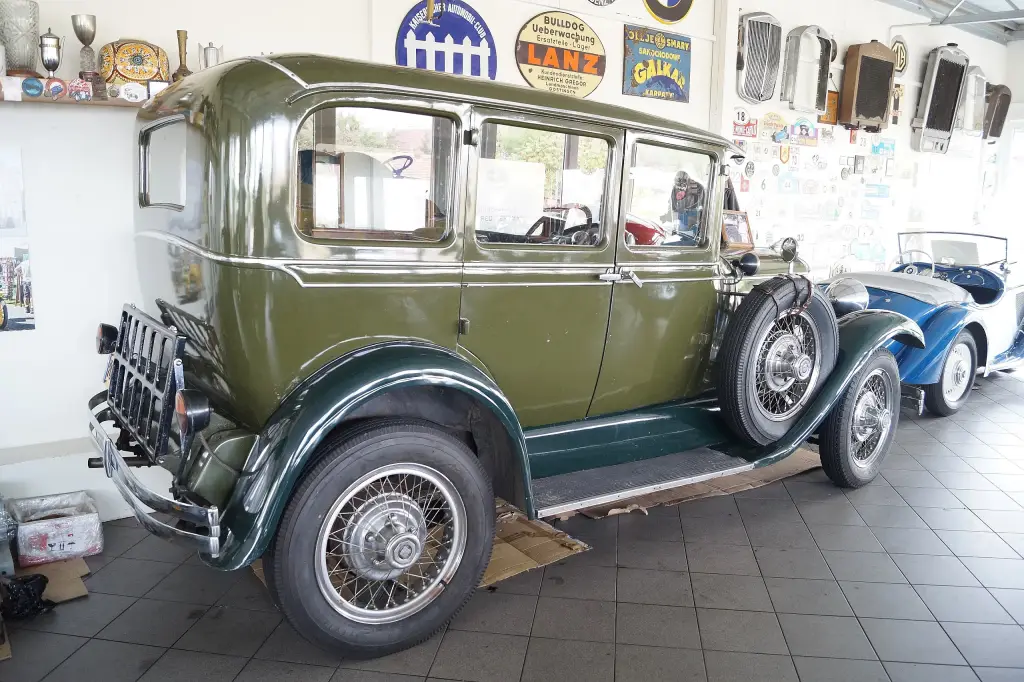
In the mid-1920s Studebaker began renaming its cars. The model known as the Standard Six became the Dictator during the 1927 model year, internally model GE, and the name was meant to convey that the model dictated the standard other makes would be obliged to follow. The Dictator was Studebaker’s lowest-priced line, with the Commander and President above it in ascending order; a Chancellor was offered for 1927 only. Dictators came in the full range of body styles the company built.
The straight-eight
In June 1929 Studebaker began offering an eight-cylinder engine in the Dictator series: 221 cu in, 70 bhp at 3,200 rpm, designed by Barney Roos. The old six remained available for another year. No 1933 Dictator was built because of Studebaker’s bankruptcy, and when the model returned for 1934 it was a redesigned, lower-priced car with a six-cylinder engine; the eight was then reserved for the Commander and President.
Renaming and legacy
Studebaker marketed the Standard Six as the Director overseas, and although the name had caused no problems in the United States, the company dropped the Dictator name in 1937 and called the car the Commander, a name last used in 1935. At that time Raymond Loewy and Helen Dryden were working on new concepts for body design and customer appeal, and the renamed car became the least expensive Studebaker before the Champion arrived in 1939. The Dictator is remembered today mainly as the model that carried Studebaker’s entry-level buyers through the Depression, and its 1937 Coupe Express body style links it to the company’s commercial range.
Design and features
- Entry-level model: the cheapest car in Studebaker’s range for a decade.
- Wide body choice: the Dictator was available in the full range of Studebaker body styles.
- Optional straight-eight: a 221 cu in unit designed by Barney Roos, offered from 1929.
- 1934 redesign: a lower-priced six-cylinder car after the bankruptcy.
- Two names: Dictator at home, Director in export markets.
Studebaker Dictator versions
- 1927–1928 Dictator: the former Standard Six, model GE.
- 1929–1932 Dictator: six or the new 221 cu in straight-eight.
- 1934–1936 Dictator: redesigned lower-priced model with a six.
- 1937 Dictator: the last year, including the Coupe Express body style.
- Director: the export name used for the same car.
Above the Dictator in the range were the Commander and the President; after 1937 the Dictator became the Commander. More cars are in the Studebaker collection.
Video: 1936 Studebaker Dictator
Video by Jeff Howard on YouTube.
Sources
- Studebaker Dictator, English Wikipedia: naming, engines, bankruptcy, 1934 model, export name