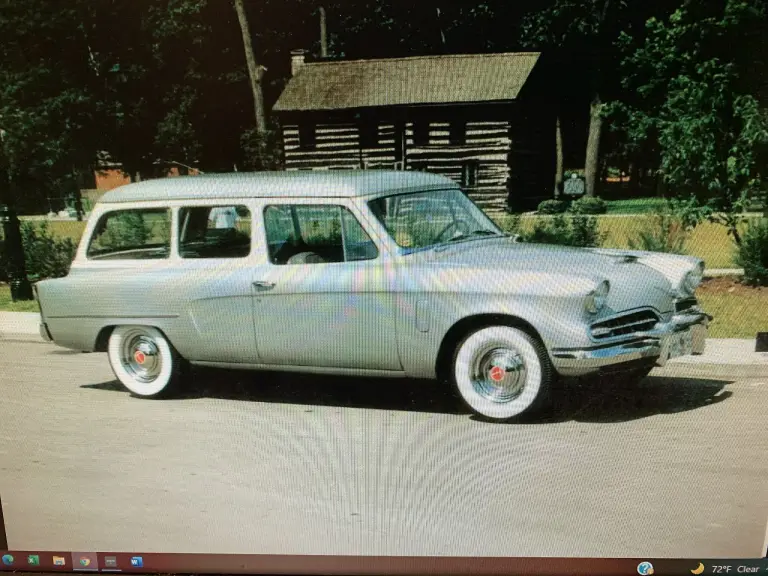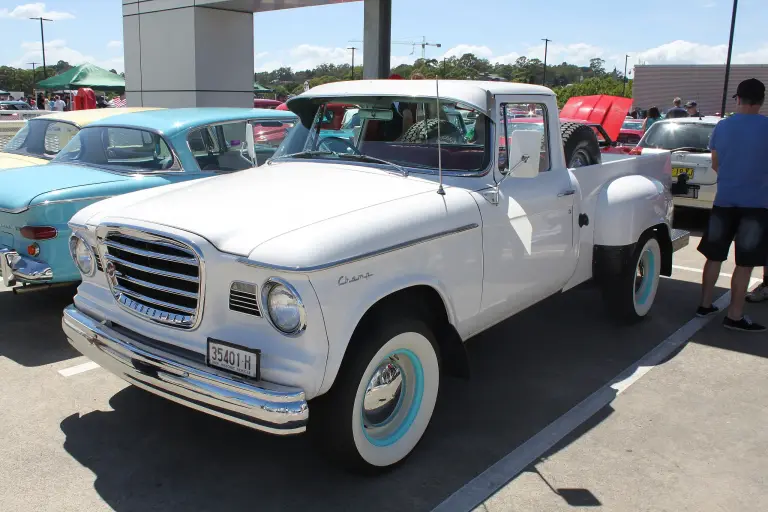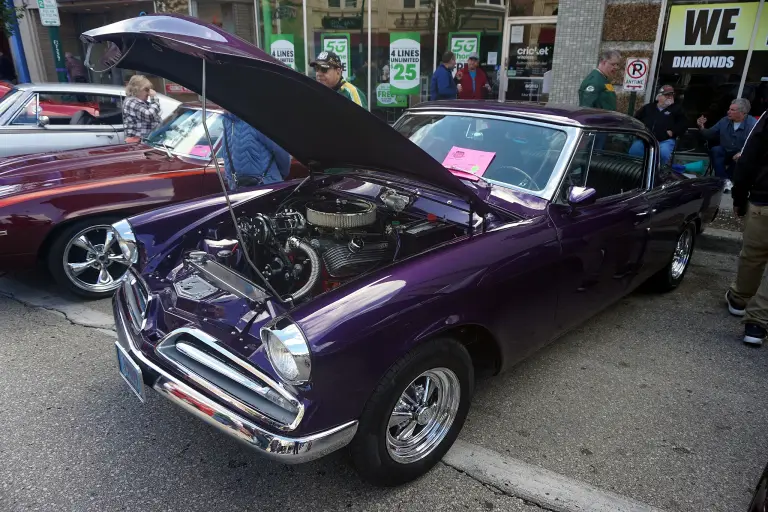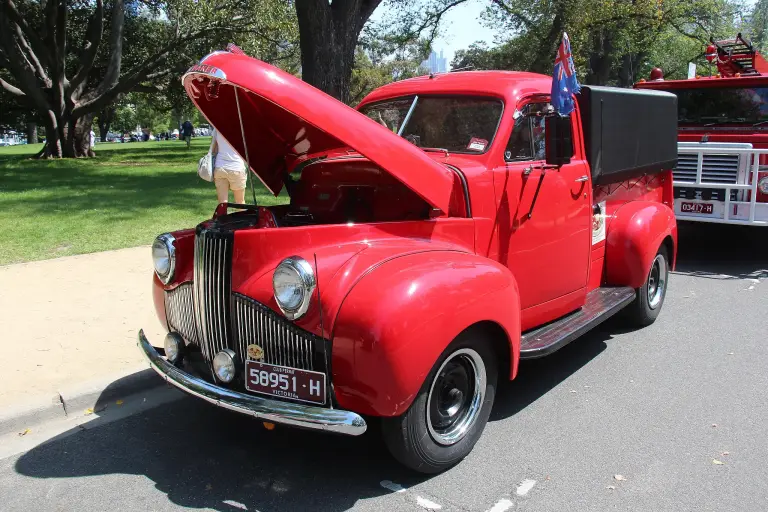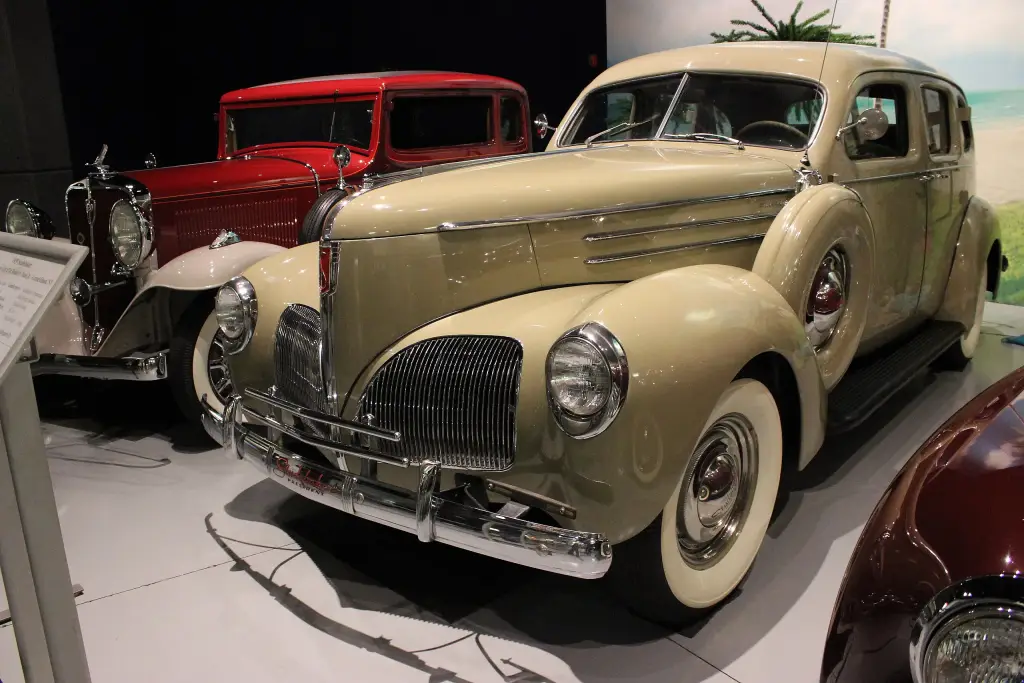
The Studebaker President was the company’s premier model from 1926 until 1942, and again from 1955 until the end of the 1958 model year. It was built to rival Cadillac, Packard and Lincoln, and its early eight-cylinder cars are among the few Studebakers accepted as full classics.
Studebaker President at a glance
| Maker | Studebaker Corporation, South Bend |
|---|---|
| Production | 1926–1942, then 1955–1958 |
| First shown | 23 July 1926, model ES |
| First engine | 354 cu in six |
| From 1928 | 312.5 cu in straight-eight |
| Prices in the late 1920s | $1,985 to $2,485 |
| 1931 engine | 337 cu in straight-eight, 122 hp |
| 1931 detail | Ovaloid oblong headlights |
| 1934 body | Land Cruiser |
| 1955 | name reintroduced for premium models, including the Speedster |
| Racing | 118 stock car records in 1928; third at the 1932 Indianapolis 500 |
| Full classic | 8-cylinder FA and FB cars of 1928, and 1929–1933 Presidents |
Based on one source: the English Wikipedia article on the President.
History of the Studebaker President
First generation
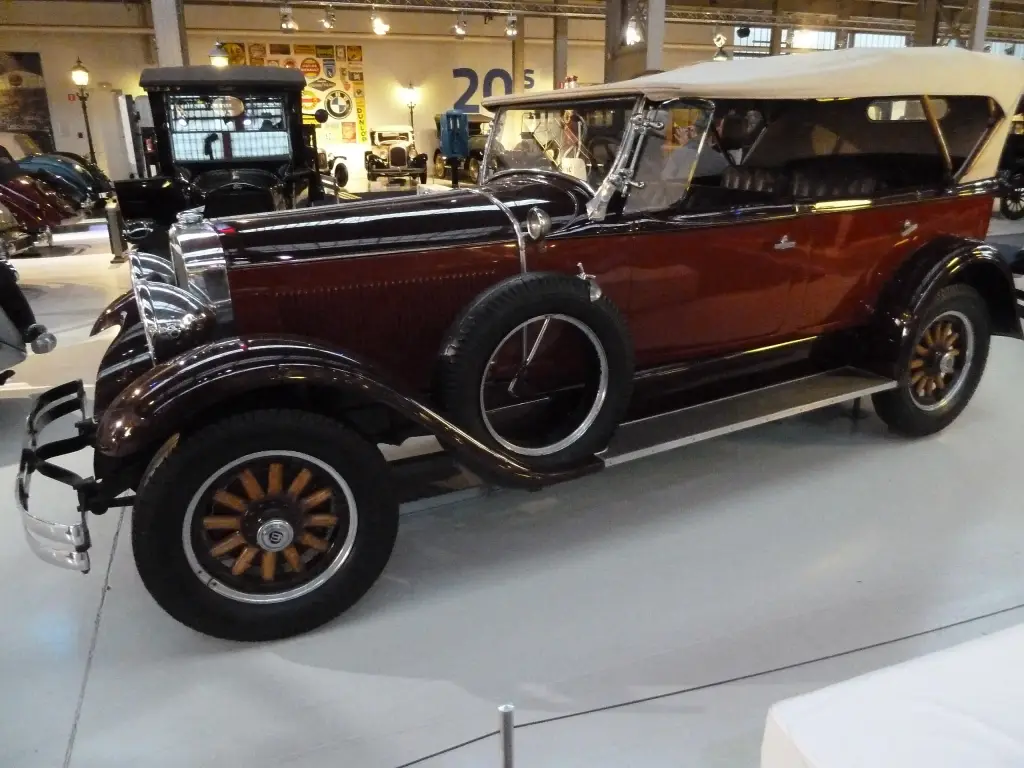
Before mid-1926 Studebaker’s premium model was the Big Six. The first car to carry the President name was unveiled on 23 July 1926, internally the ES model, with a 354 cu in six. In January 1928 a smaller, smoother straight-eight of 312.5 cu in replaced it. Albert Russel Erskine, Studebaker’s president, spared no expense to make the President the finest car on the American road, and prices ran from $1,985 to $2,485. Presidents built between 1928 and 1933 set land speed records, some of which stood for 35 years, and the model benefited from engineering improvements after Studebaker took control of Pierce-Arrow in 1928.
The 1931 engine grew to 337 cu in, its crankshaft drilled for oil passages to each of nine large main bearings, at a time when many rival straight-eights had only five. The valves had spring dampers, the muffler was a straight-through type, and the result was 122 hp, with modern air, oil and fuel filters, an improved thermostat and a Lanchester vibration damper. Studebaker introduced “Ovaloid” oblong headlights in 1931 to make the President and the other senior models easy to recognise. These cars were considered rivals to Cadillac, Packard, Lincoln and Chrysler’s Imperial, but Studebaker went into receivership in 1933–34, Erskine took his own life, and the era of the big President ended abruptly.
Second and third generations
For 1934 Studebaker trimmed its range and streamlined its cars. The new body, the Land Cruiser, was offered on the Dictator, Commander and President and was recognisable by its four-piece rear window, its trunk and the full rear fender skirts. The new Presidents were smaller and less impressive but still fine cars at $1,245. For 1935 Presidents and Commanders offered an optional wood sliding roof, and in 1936 all Studebakers received the Planar suspension, the Startix automatic starting system was optional, Raymond Loewy and Helen Dryden were shaping the design, and the Hill-Holder anti-rollback brake became standard on the President. In 1938 the company offered the remote-controlled Miracle-Shift transmission with a dashboard lever, dropped in 1939 when the shift lever moved to the steering column.
For 1941 the President received a four-door sedan with rear-opening rear doors, the Land Cruiser, with concealed running boards and no rear quarter windows; it came in Custom and DeLuxetone series, and mid-year the Skyway series was added with better upholstery and less side chrome. That style continued into the shortened 1942 model, after which the President was dropped. A fourth generation arrived in 1955, when the name was applied to all premium-trimmed Studebakers; the best known is the 1955 Speedster. The name was retired after 1958 as Studebaker concentrated on the compact Lark, and the last Packards of 1957–58 were based on the fourth-generation President platform.
Design and features
- Straight-eight power: from 312.5 cu in in 1928 to 337 cu in with 122 hp in 1931.
- Nine main bearings: a drilled crankshaft with more bearings than most rivals.
- Ovaloid headlights: oblong lamps that identified the senior Studebakers from 1931.
- Land Cruiser body: streamlined four-door with a four-piece rear window and fender skirts.
- Early technology: Planar suspension, Startix starting, Hill-Holder brakes and Miracle-Shift.
Studebaker President versions
- ES (1926): the first President, 354 cu in six.
- FA and FB (1928): straight-eight cars recognised as full classics.
- 1931 President: 337 cu in, 122 hp, Ovaloid headlights.
- Land Cruiser (1934–1942): streamlined bodies, from 1941 with rear-opening rear doors.
- Skyway (1941): upgraded trim series added mid-year.
- 1955–1958 President: premium-trimmed cars including the 1955 Speedster.
The President sat above the Commander and the Champion, and the cheaper Dictator shared its Land Cruiser body in 1934. More cars are in the Studebaker collection.
Video: 1955 Studebaker President Speedster – My Car Story with Lou Costabile
Video by Lou Costabile on YouTube.
Sources
- Studebaker President, English Wikipedia: generations, engines, prices, records, classic status