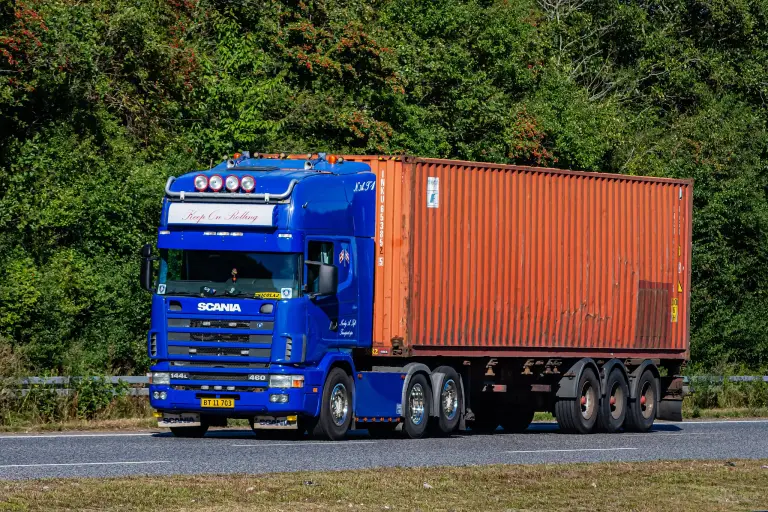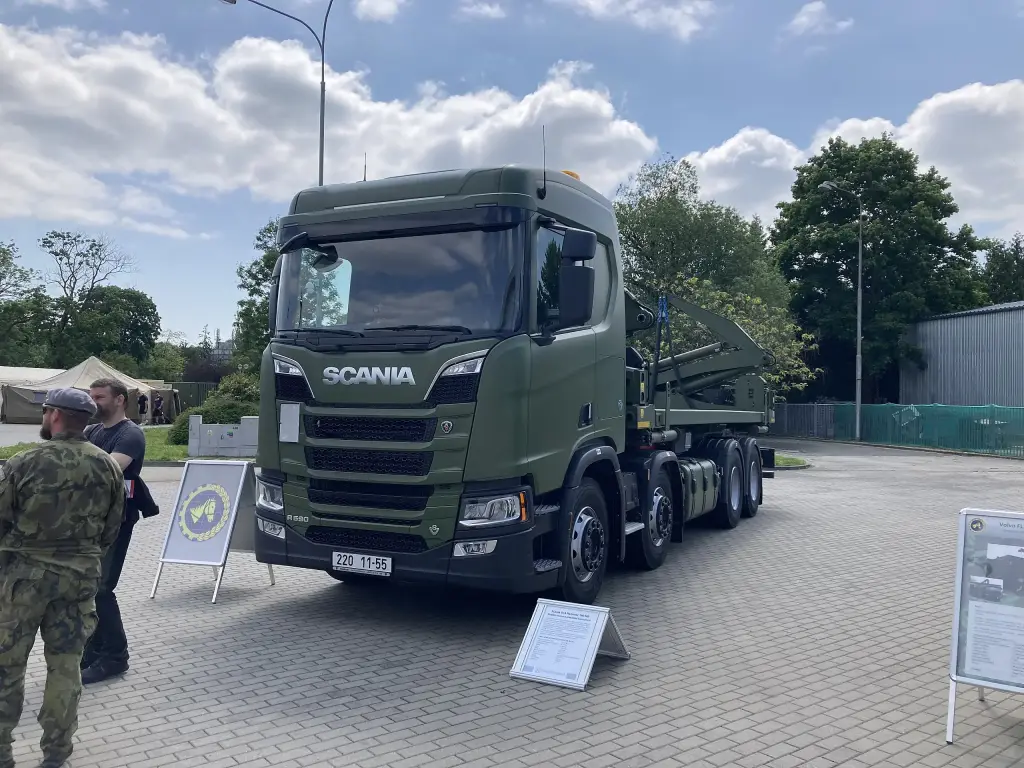
The Scania R-series was introduced on 31 March 2004 as the first member of Scania’s new truck range. It replaced the R94, R114, R124, R144 and R164 of the 4-series, shared 65 percent of its components with them, and brought a new cab design and interior.
Scania R-series at a glance
| Launched | 31 March 2004 |
|---|---|
| Replaced | R94, R114, R124, R144, R164 |
| Shared parts | 65 percent with the 4-series |
| Production | Södertälje from April 2004, Zwolle from May, Angers from June |
| Engines at launch | Euro III, with a 420 hp Euro IV from September 2004 |
| Public debut | IAA show, Hanover, late September 2004 |
| Most powerful | R730 of April 2010, 730 hp and 3,500 N·m |
| Upgrade | 17 September 2009 |
| Streamline | March 2013, Euro 6 engines |
| Second generation | launched in Paris on 23 August 2016 |
The R-series has no separate English Wikipedia article; this page uses the material on it in the article on the PRT range. based on one source
History of the Scania R-series
Launch in 2004
The R-series was the first model of the new range, introduced on 31 March 2004 as the successor to the 4-series tractors and rigids from R94 to R164. It had 65 percent of the same components as its predecessors, but with a new cab design, a new interior and other technical improvements. Full-scale production began in Södertälje in Sweden in April 2004, in Zwolle in the Netherlands in May and in Angers in France in June. At launch it used Euro III engines, with a 420 hp Euro IV engine available from September; the range made its public debut at the IAA commercial vehicle show in Hanover in late September 2004.
The 730 hp V8
In April 2010 Scania launched a new version of its V8 engine with a maximum output of 730 hp (537 kW) and 3,500 N·m, while preparing for the future Euro VI requirements. The new R 730 became the most powerful large-scale production truck in the world, a title it held until the Volvo FH16 750 of September 2011.
Upgrades and Streamline
On 17 September 2009 Scania launched an upgraded R-series with sharper exterior styling and larger grille openings, new interior details including the possibility of a factory-installed coffeemaker, a new version of the Opticruise gear system with automatic clutch and a driver support system. In March 2013 the Streamline versions of the R- and G-series followed, with engines complying with Euro 6 and aerodynamic improvements for lower fuel consumption. The front air filters of the G- and R-series were redesigned in 2014.
Second generation
Since Scania signed a deal with Porsche Engineering in August 2010 a completely new cab had been under development, with masked prototypes seen in Sweden, Spain and Norway from early 2014. The second generation was launched at the Grand Palais in Paris on 23 August 2016, with a new R-series sleeper cab and the all-new S-series sleeper cab offering a flat interior floor; other cab heights, including the R-series day cab, followed later. The new range has two touchscreen infotainment systems, a 5-inch Base package and a 7-inch Premium package that gained Apple CarPlay support in April 2017.
Special edition
In Brazil a Special Edition based on the R-series marked 60 years of Scania Brasil, inspired by the Brazilian-built 3-series T113 bonneted truck of 1991 and painted in a blue-sky colour with pink, lilac and purple. Sales began in July 2017.
Design and features
- New cab in 2004: a fresh design and interior on 65 percent shared components.
- R730: the 730 hp V8 that was the world’s most powerful production truck in 2010.
- Streamline (2013): Euro 6 engines and aerodynamic improvements.
- Second generation (2016): new sleeper cab and touchscreen infotainment.
Scania R-series versions
- First generation (2004–2017): the original high-cab range.
- R730 (2010): 730 hp and 3,500 N·m from the new V8.
- Streamline (2013): Euro 6 engines and aerodynamic package.
- Second-generation R (2016): new cab with sleeper and later day-cab versions.
The low-cab member of the range is the Scania P-series, the middle one the Scania G-series and the flat-floor top model the Scania S-series. The trucks it replaced are in Scania 4-series, and more vehicles are in the Scania collection.
Sources
- Scania PRT-range, English Wikipedia: launch, production, R730, upgrades, second generation