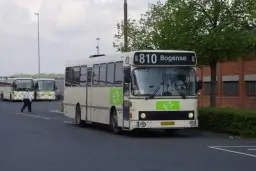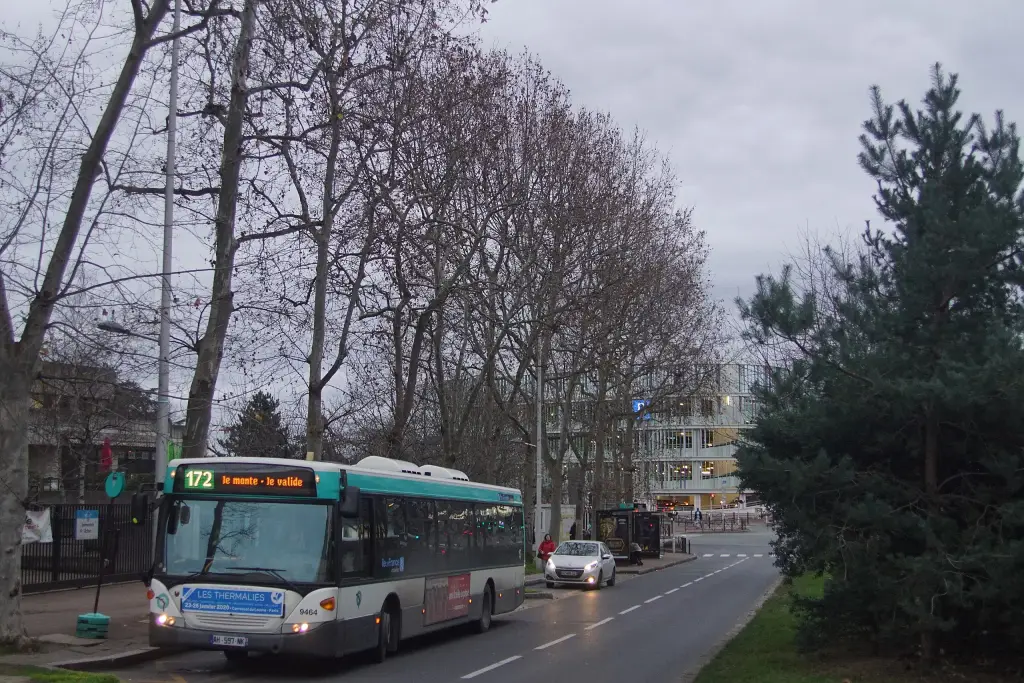
The Scania OmniCity was an integrally constructed low-floor city bus with a vertical engine, sold on the European market between 1996 and 2012. It was introduced in September 1996 as the first product based on the 4-series bus range, and it was later built as a double-decker for the United Kingdom.
Scania OmniCity at a glance
| Introduced | September 1996 |
|---|---|
| Sold until | 2012 |
| Type | integral low-floor city bus, vertical engine |
| First built at | former DAB plant, Silkeborg, Denmark |
| Later plants | Katrineholm, Sweden; Słupsk, Poland |
| Upgraded in 2006 | from 4-series to N-series basis, with facelift |
| Single-decker UK name | CN94UB, later CN230UB and CN270UB |
| Double-decker | from 2005 on the N94UD chassis |
| Replaced by | Scania Citywide, 2011, outside right-hand drive markets |
| UK examples | more than 2,200 |
based on one source
History of the Scania OmniCity
The first 4-series product
The OmniCity was introduced in September 1996 as the first product based on the 4-series bus range. The first prototypes were built in the former DAB plant in Silkeborg, Denmark, and serial production continued there in 1997, joined by Scania’s plant in Katrineholm, Sweden. From 1999 it was also built at Słupsk in Poland. Production in Silkeborg ended in early 2000 and in Katrineholm in 2004, with only a few test buses in 2005 and 2006; after that every OmniCity came from Poland.
Facelift and the N-series
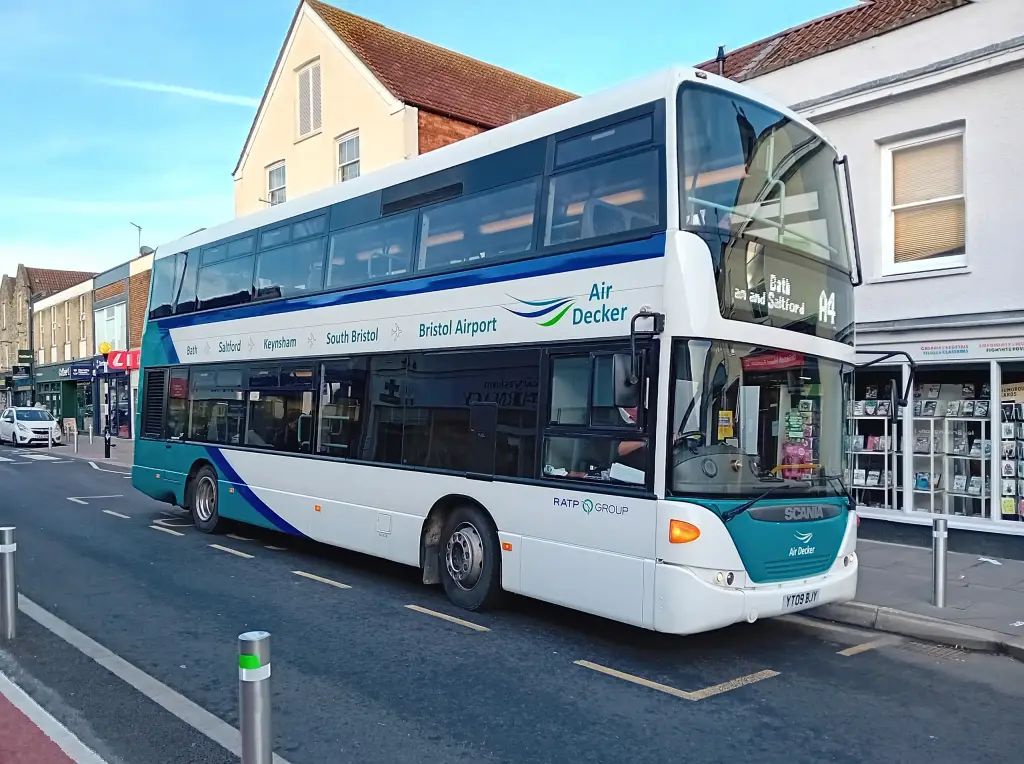
In 2006 the OmniCity was upgraded from the 4-series to the new N-series, which also brought a thorough facelift: the large rectangular front headlamps were replaced by smaller round items and the rear styling was tweaked. The Scania Citywide was launched in 2011 as its replacement, except in right-hand drive markets where Scania chose to rely on external bodywork manufacturers including Alexander Dennis. The last few OmniCities were built in 2012, after more than 2,200 units for the United Kingdom.
In Europe
Single-deck rigid and articulated OmniCities were popular in continental Europe. They ran in the Nordic countries, including deliveries to Norgesbuss in Oslo in 2006, to Concordia Bus, Linjebuss in Sweden, the Helsinki public transport authority and Strætó in Reykjavík, as well as in Tallinn and Tartu. In Poland, 108 rigid OmniCities went to PKS in Warsaw between 2007 and 2008, 15 articulated buses went to Kraków from 2001 to 2003, and an ethanol-fuelled batch was delivered to Słupsk in 2007. In France, RATP ordered over 300 from 2006 to 2010 in 12-metre rigid and 18-metre articulated form, the articulated buses working the Orlybus express services to Orly Airport. Operators in Milan, Genoa, Bergamo and Venice bought OmniCities, and EMT in Valencia took 81 rigid buses from 2000 to 2004.
The British double-decker
The single-decker OmniCity came to Britain in right-hand drive form in 2002 as the CN94UB; the Euro IV versions were CN230UB and CN270UB, the numbers giving the engine output. Unlike the L94UB and OmniLink, the OmniCity had a full low floor with no steps or ramps to the rear seats. In September 2004 Scania announced a 2-axle double-decker to complement the OmniDekka, with production at Słupsk from January 2005. The 9-metre double-deck OmniCity was a complete Scania integral product on the N94UD chassis, unlike the OmniDekka with its East Lancashire body. Lothian Buses placed the first production order, five N230UD buses for the Airlink network in 2006, followed by ten more in late 2007. London operators took 462 double-deck OmniCities, 206 of them with London United and London Sovereign and 174 with the East London Bus Group; London United donated its first double-decker to the London Bus Museum in February 2022.
Design and features
- Fully integral: a complete Scania bus rather than a chassis with separate bodywork.
- Full low floor: no steps or ramps were needed to reach the rear seats.
- Vertical engine: the layout behind the low-floor design.
- Double-decker for Britain: the 9-metre N94UD-based integral bus.
Scania OmniCity versions
- Rigid single-decker: 12-metre city bus, also built as CN94UB, CN230UB and CN270UB.
- Articulated single-decker: 18-metre version used on services such as Orlybus.
- Double-decker (from 2005): integral 9-metre bus on the N94UD chassis.
The chassis generation behind it is described in Scania 4-series bus and its replacement in Scania OmniLink. The separate double-deck body of the same period is the East Lancs OmniDekka, and more vehicles are in the Scania collection.
Sources
- Scania OmniCity, English Wikipedia: history, plants, operators, UK models