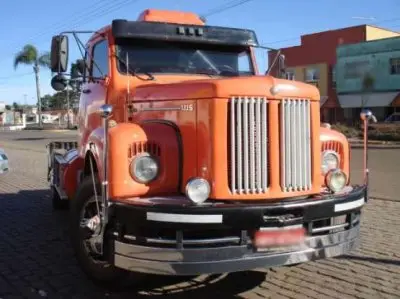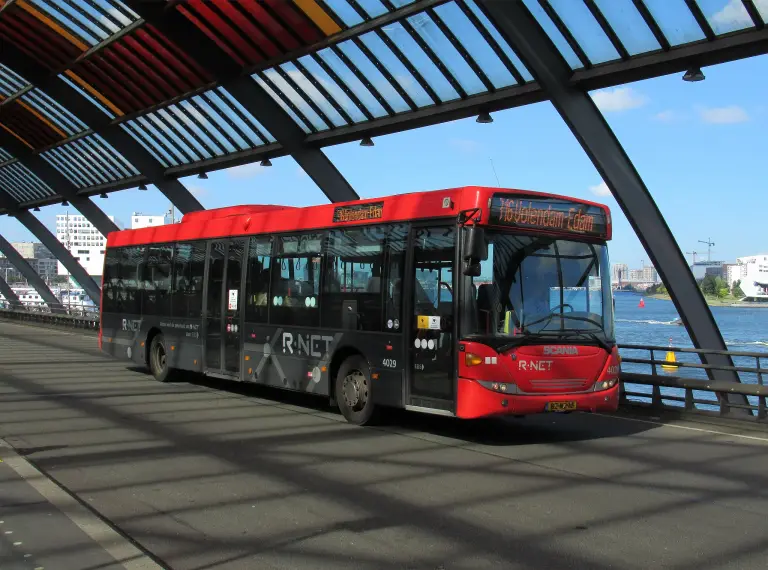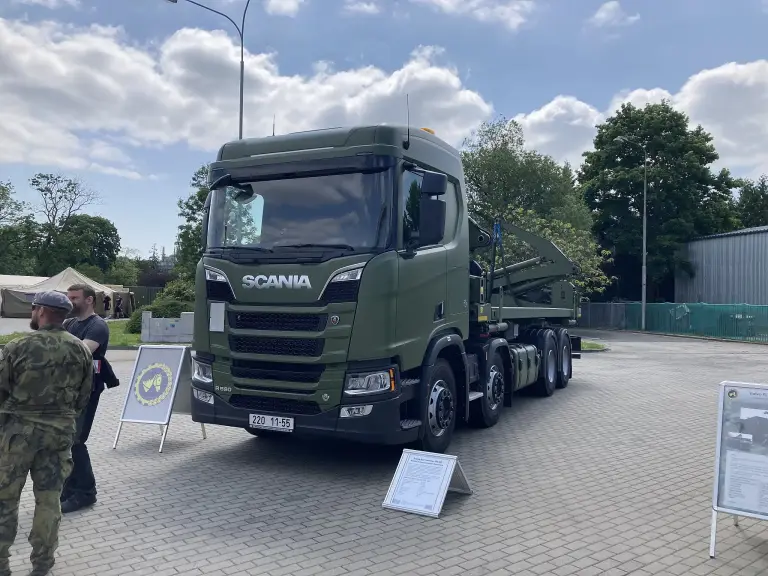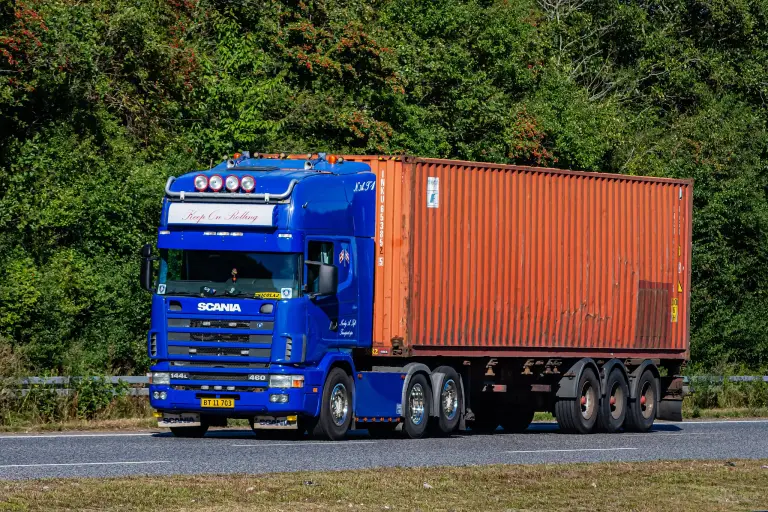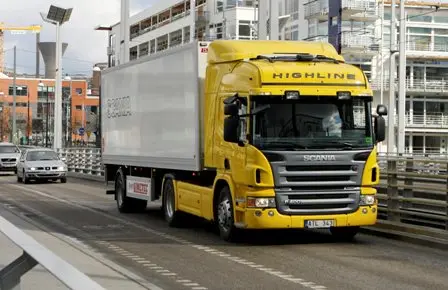
The Scania P-series was launched on 20 August 2004 as the low forward control cab member of Scania’s new truck range. Together with the R- and T-series it replaced the rest of the 4-series, and it became the standard Scania for distribution, construction and municipal work.
Scania P-series at a glance
| Launched | 20 August 2004 |
|---|---|
| Cab | low forward control |
| Range | modular PRT range, first generation 2004–2017 |
| Replaced | the remaining 4-series models |
| Engines | 9-litre inline five to 16-litre V8 |
| V8 availability | higher models of the range only |
| Low-entry cab | CP19E, late 2006, intended for refuse trucks |
| Upgrade | received the 2009 R-series update during 2011 |
| Latin America | launched 9 October 2007 with G- and R-series |
| Debut | IAA commercial vehicle show, Hanover, late September 2004 |
The P-series has no separate English Wikipedia article; this page uses the material on it in the article on the PRT range. based on one source
History of the Scania P-series
Completing the new range
The new truck range had begun with the high-cab R-series on 31 March 2004. On 20 August the P- and T-series followed, completing the range and replacing the rest of the 4-series models. The new trucks made their public debut at the IAA commercial vehicle show in Hanover in late September 2004. The whole range is modular, which gives a wide choice of configurations, and the trucks were available with engines from a 9-litre inline five to a 16-litre V8, the V8 only in the higher models.
A cab for refuse work
In late 2006 Scania launched a new low-entry version of the P-series cab, known as the CP19E, specially intended for garbage trucks where the driver needs to get in and out quickly. The cab was aimed at the Mercedes-Benz Econic.
Updates and world markets
On 17 September 2009 Scania launched an upgraded R-series with sharper exterior styling, larger grille openings, new interior details, a new version of the Opticruise gear system with automatic clutch and a driver support system. The G-series received the upgrade shortly afterwards and the P-series during 2011. In Latin America the new range was launched on 9 October 2007 with all three of the P-, G- and R-series from the start. Meanwhile, production of the old 4-series continued at the Scania plant in São Bernardo do Campo, Brazil, but from October 2004 it was relaunched there as the Série Evolução, using the new engines of the range and the new model designations with the old 4-series cabs.
Alternative fuels
In April 2008 Scania unveiled its first ethanol-powered (ED95) trucks, having built ethanol-powered buses for nearly two decades; the modular range allowed the same engines to be offered across the P-, G- and R-series.
Design and features
- Low cab: easy access for drivers who climb in and out frequently.
- Modular range: engines from a 9-litre five to a 16-litre V8.
- Refuse version: the low-entry CP19E cab of late 2006.
- Wide market: sold in Europe from 2004 and in Latin America from 2007.
Scania P-series versions
- P-series (2004): the standard low-cab truck.
- CP19E low-entry: refuse and municipal work.
- 2011 specification: the features of the 2009 R-series upgrade.
- Série Evolução: Brazilian 4-series cabs with the new engines from October 2004.
The high-cab member of the range is the Scania R-series and the middle one the Scania G-series. The bonneted version was the Scania T-series, the trucks it replaced are in Scania 4-series, and more vehicles are in the Scania collection.
Sources
- Scania PRT-range, English Wikipedia: launch, cab, engines, updates