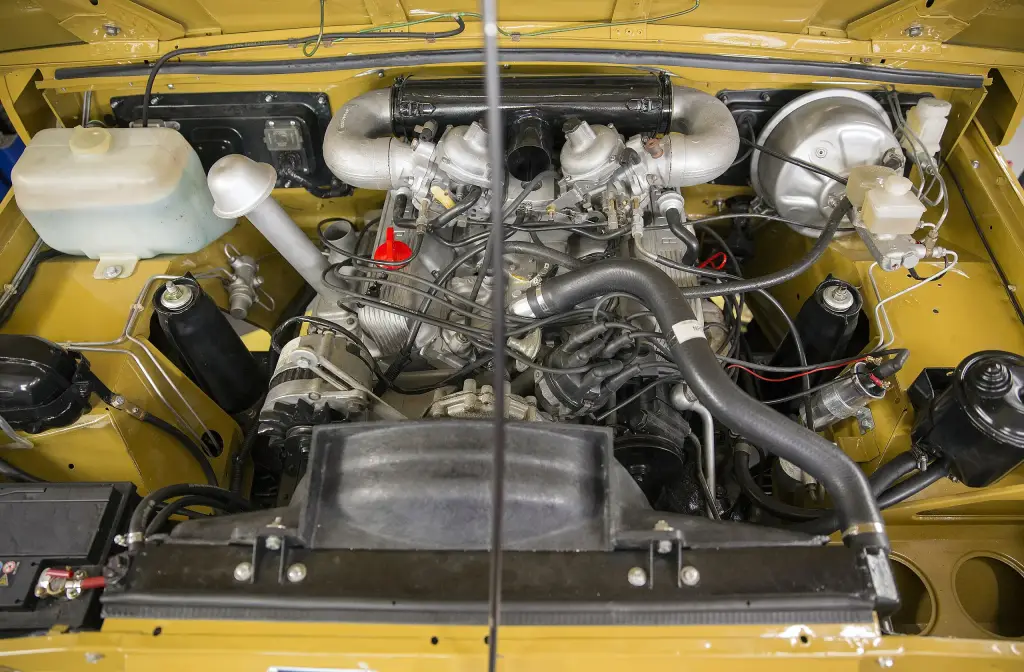
The Rover V8 engine is a compact overhead-valve V8 with aluminium cylinder block and heads, designed and produced by Rover in the United Kingdom on the basis of a General Motors engine. It was used in a wide range of vehicles from Rover and other manufacturers from its British debut in 1967 until the last mass-produced unit was made in 2004.
Rover V8 at a glance
| Origin | Buick 215, an all-aluminium OHV pushrod engine introduced by GM in 1960 |
|---|---|
| Weight | just 144 kg (317 lb) |
| Buick output | up to 200 hp; the Oldsmobile Jetfire turbo version made 215 hp |
| Buick production | 376,799 cars in three years, plus comparable Oldsmobile numbers |
| Sold to Rover | tooling bought from GM in January 1965 |
| British debut | 1967, in the Rover P5B |
| Displacement | 3,528 cc in the first Rover applications |
| Fuel systems | SU carburettors, then Strombergs, Bosch L-Jetronic, Hitachi Hotwire, GEMS and Motronic |
| Last mass-produced engine | May 2004, after 37 years and just under a million engines |
| Also used by | Land Rover, Morgan +8, TVR, Triumph TR8 and MGB V8 |
Based on one source: the English Wikipedia article on the Rover V8 engine.
History of the Rover V8
The Buick 215
The Rover V8 began life as the Buick 215, an all-aluminium overhead-valve pushrod engine introduced in 1960 for the 1961 US model year. The compact alloy engine was light at just 144 kg and capable of high power outputs: the most powerful Buick version rated 200 hp, and the very similar Oldsmobile Jetfire turbocharged version made 215 hp, both SAE gross. It was a success by sales volume and press reports, with Buick producing 376,799 cars using it in just three years and comparable numbers of Oldsmobile 215 engines, while some Pontiac models also used the Buick engine, giving rise to the BOP 215 nickname for Buick, Oldsmobile and Pontiac. The aluminium engine was relatively expensive to produce, however, and suffered from oil and coolant sealing problems and radiator clogging from antifreeze incompatible with aluminium, so GM stopped production of the all-aluminium engine after 1963, keeping instead a similar iron-block engine and a V6 derivative.
How Rover bought it
In January 1964 Rover gave the head of its American operations, J. Bruce McWilliams, permission to investigate buying an American V8 for Rover cars. He first saw the Buick V8 at the works of Mercury Marine, where he was discussing the sale of Rover gas turbines and diesel engines, although he probably knew of the engine before. McWilliams realised that the lightweight Buick V8 would be ideal for smaller British cars, since it weighed less than many of the four-cylinder engines it would replace, and he and William Martin-Hurst campaigned to convince GM to sell the tooling, which GM finally agreed to do in January 1965. The retiring Buick engineer Joe Turlay moved to Britain as a consultant. The engine made its British debut in 1967 in the Rover P5B, and it went on to power the Rover P6 3500 and the SD1 as well.
A long life
The British-built engines ran on two SU carburettors, initially HS6 and then HIF6 and HIF44 for fourteen years, followed by two CD175 Stromberg carburettors for two to three years, Bosch L-Jetronic for seven or eight years, Hitachi Hotwire for five, then the GEMS system for many years and finally Bosch Motronic for two. As well as appearing in Rover cars, the engine was sold to small car builders and appeared in a wide variety of vehicles, including some Morgans, TVRs, the Triumph TR8, Land Rovers and the MGB V8, and it has long been a common choice for British kit cars, much as the Chevrolet small-block is for American hot rods. By the late 1990s the Rover V8 had become uncompetitive: it produced less power, used more fuel and kept an aged pushrod architecture while rivals moved to overhead cams. After Land Rover switched to the BMW M62 V8 in the 2003 Range Rover and the Discovery 3 petrol took the Jaguar AJ-V8, the last mass-produced Rover V8 was made in May 2004, after 37 years and just under a million engines; the 2004 Land Rover Discovery II was the last mass-produced vehicle to use it. The last Rover-badged vehicle with the engine was the SD1, discontinued in 1986, and production later restarted on a limited scale at Weston-super-Mare under MCT for aftermarket and replacement use.
Design and features
- All-aluminium: block and heads in light alloy, just 144 kg, lighter than many four-cylinders it replaced.
- Compact pushrod V8: a simple overhead-valve design that fitted British engine bays.
- Many fuel systems: from SU carburettors to Bosch Motronic over nearly four decades.
- Wide use: Rover cars, Land Rovers, Morgans, TVRs, the Triumph TR8 and kit cars.
Rover V8 versions
- 3.5-litre (1967): the first Rover version, in the P5B and later the P6 3500 and SD1.
- Carburettor and injection versions: SU and Stromberg carburettors, then Bosch L-Jetronic, Hitachi Hotwire, GEMS and Motronic.
- Land Rover versions: fitted to the Range Rover and Discovery until 2004.
- Specialist applications: Morgan +8, TVR, Triumph TR8 and MGB V8.
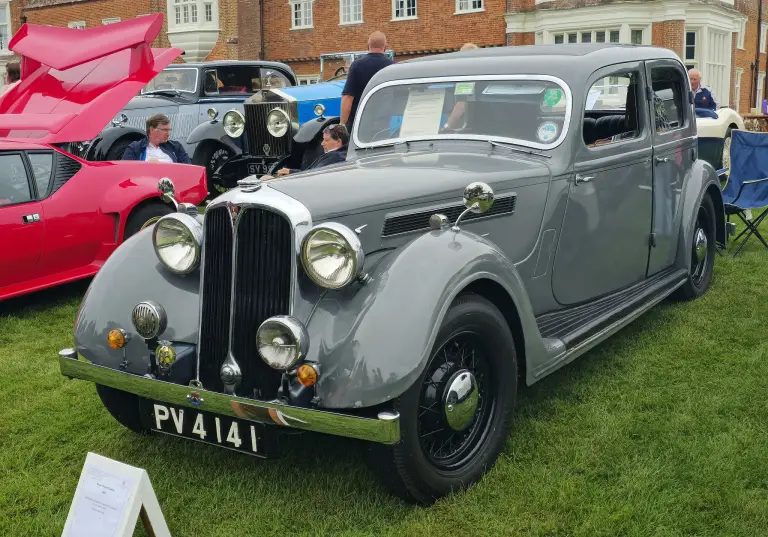
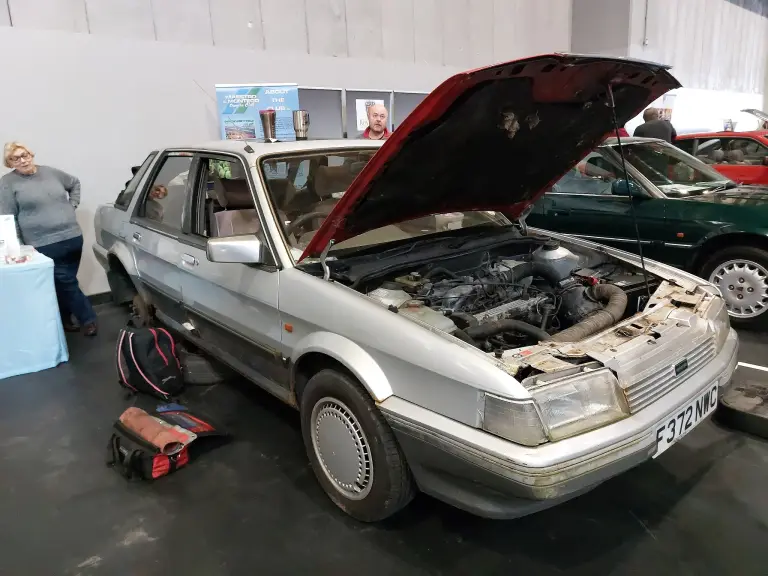
The first Rover to use the engine was the Rover P5, and it also powered the Rover P6 and the Rover SD1. More cars are in the Rover collection.
Video: Land Rover 3.5 V8 with no exhaust
Video by Diesel25031984 on YouTube.
Sources
- Rover V8 engine, English Wikipedia: the Buick origin, the purchase by Rover and the engine’s long production