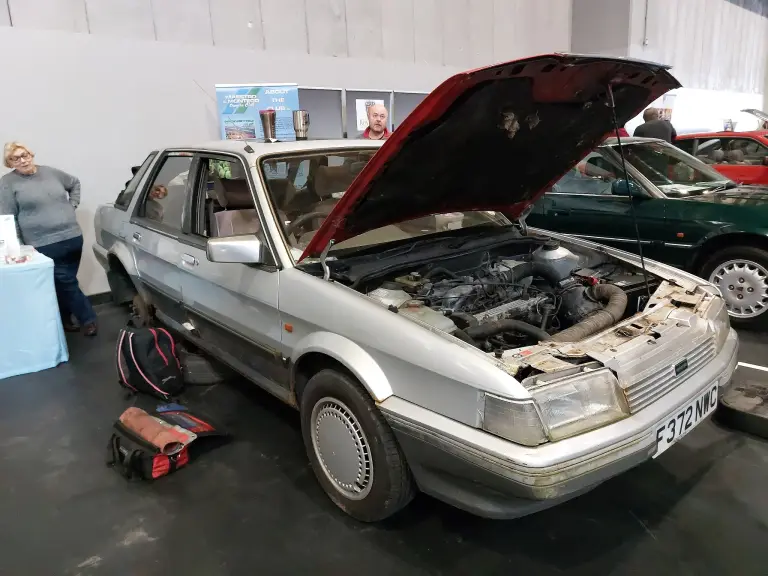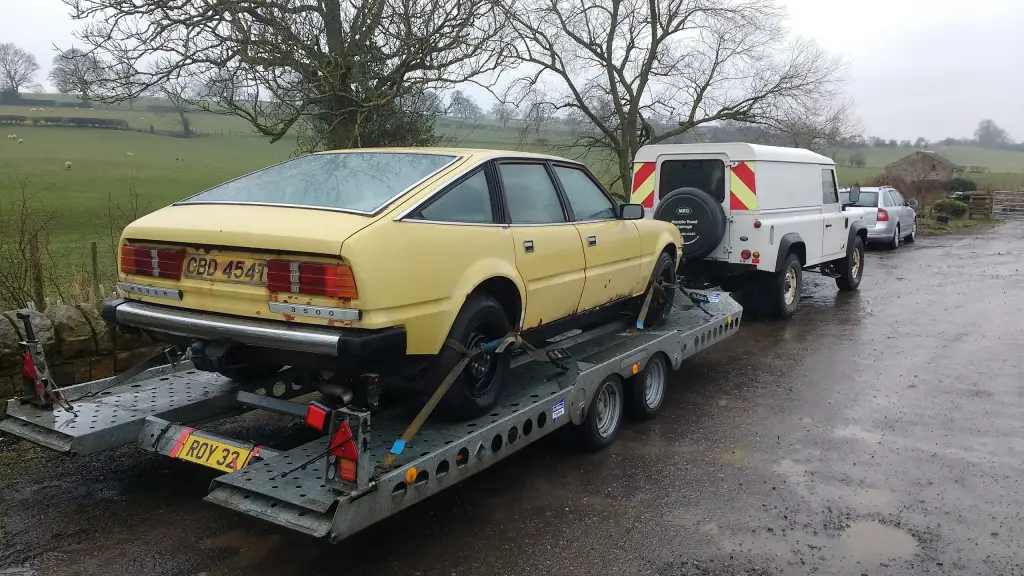
The Rover SD1 was an executive car manufactured by British Leyland from 1976 until 1986 and sold under the Rover marque. A large five-door hatchback with fastback styling and rear-wheel drive, it replaced both the Rover P6 and the Triumph 2000, won the European Car of the Year title in 1977 and was eventually replaced by the Rover 800.
Rover SD1 at a glance
| Production | 1976–1986, at Solihull |
|---|---|
| Launched | June 1976 as the V8-engined Rover 3500 |
| Six-cylinder models | 2.3 and 2.6-litre, from November 1977 |
| Layout | front engine, rear-wheel drive, five-door hatchback |
| Design | David Bache, engineering by Spen King |
| Project names | RT1 first, then SD1 for Specialist Division Number 1 |
| Suspension | beam axle at the rear, with drum brakes |
| Award | European Car of the Year 1977 |
| Built under licence | as the Standard 2000 in Chennai, India, 1985–1988 |
| Replaced by | Rover 800 in 1986 |
Based on one source: the English Wikipedia article on the Rover SD1.
History of the Rover SD1
Background
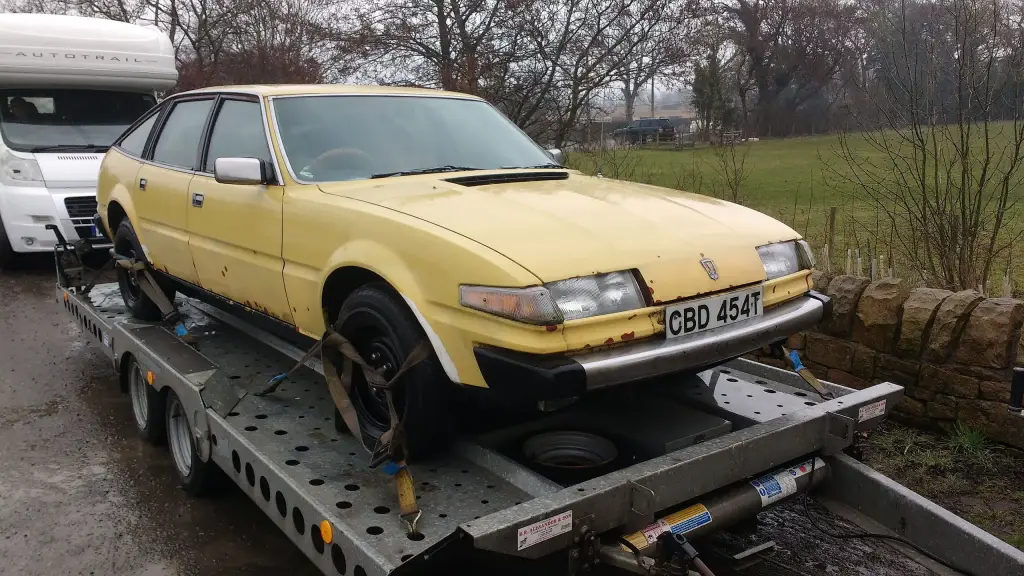
In 1971 Rover, then part of British Leyland, began developing a new car to replace both the Rover P6 and the Triumph 2000 and 2500. Designers from both Triumph and Rover submitted proposals, known as the Triumph Puma and Rover P10, and the latter was chosen. David Bache headed the design team, inspired by exotic machinery such as the Ferrari Daytona and 365 GTC/4 and by the late 1960s Pininfarina design study for the BMC 1800, which also guided the design of the Citroën CX. Spen King was responsible for engineering, and the two had previously collaborated on the Range Rover. The project was first code-named RT1, for Rover Triumph Number 1, but soon became SD1, for Specialist Division Number 1, as Rover and Triumph were put into British Leyland’s new Specialist Division.
Design and engineering
The new car was designed with simplicity of manufacture in mind, in contrast to the P6, whose de Dion suspension was complicated, and it used a simple beam axle instead; the Triumph 2000 it replaced had fully independent rear suspension. That approach was chosen because surveys showed that although the motoring press was impressed by sophisticated designs, the buying public was not unless the results were good, although the live axle brought a retrograde step in the shape of rear drum brakes. Rover’s plans to use a new 2.2-litre DOHC 16-valve Slant-Four with Bosch L-Jetronic injection were soon abandoned, as BL management ruled that substantially redesigned versions of Triumph’s six-cylinder engine were to power the car instead. The Rover V8 was fitted in the engine bay, and the three-speed automatic gearbox was the Borg-Warner 65. The dashboard had an air vent unusually facing the passenger, and the display binnacle sat on top of the dashboard in front of the driver, which allowed the same dashboard moulding to be used for left- and right-hand drive and could be fitted on either side; the vent doubled as a passage for the steering column. The idea had been used on the Range Rover and was used again on the Mk 1 Austin Metro, both also designed by David Bache. The Series 1 interior was notable for its lack of wood compared with previous Rover saloons, using modern soft-feel plastics instead, and a new skeletal Rover badge appeared on the bonnet as Bache made a clean break from the past. An estate body was envisaged but never got beyond the prototype stage; two surviving prototypes are at the Heritage Motor Centre and the Haynes International Motor Museum, one having been the personal transport of BL chairman Sir Michael Edwardes.
Series 1 and the end
The car was launched on its home market in June 1976 in hatchback form only, as the V8-engined Rover 3500, and SOHC 2.3 and 2.6-litre sixes followed in November 1977 when the Rover P6 and Triumph 2000 were finally discontinued. There was no four-cylinder SD1 at that point, so British Leyland produced 1.8, 2.0 and 2.2 versions of the smaller Princess to compete with entry-level Ford Granadas and more expensive Cortinas. The SD1 was warmly received by the press and won the European Car of the Year award for 1977; its launch on the European mainland coincided with its appearance at the Geneva Motor Show in March 1977, some three months after the award, although dealers had no left-hand-drive cars because production had been blocked by a toolmakers’ strike. It was built in a new extension to Rover’s Solihull factory, largely funded by the British government after the 1975 bail-out, but this did nothing for the patchy build quality that then plagued British Leyland, and quick-wearing interior materials and poor detailing turned initial enthusiasm into disappointment. The SD1 was the final Rover-badged vehicle built at Solihull, and it was produced under licence in Chennai, India, as the Standard 2000 from 1985 to 1988.
Design and features
- Fastback hatchback: a five-door body with a long, low roofline inspired by Italian exotics.
- Rover V8: the 3.5-litre engine from launch in the 3500.
- Simple rear axle: a beam axle with drum brakes, chosen for ease of manufacture.
- Dashboard binnacle: a pod that could be fitted on either side for left- and right-hand drive.
Rover SD1 versions
- 3500 (1976): the V8 hatchback that launched the range.
- 2300 and 2600 (1977): the six-cylinder models that followed.
- 3500 Vitesse: the sporting V8 version.
- Standard 2000 (1985–1988): the Indian-built version from Chennai.
The SD1 replaced the Rover P6 and was replaced by the Rover 800. More cars are in the Rover collection.
Video: Design with Style — The Rover SD1
Video by King Rose Archives on YouTube.
Sources
- Rover SD1, English Wikipedia: development, design, Series 1 and production