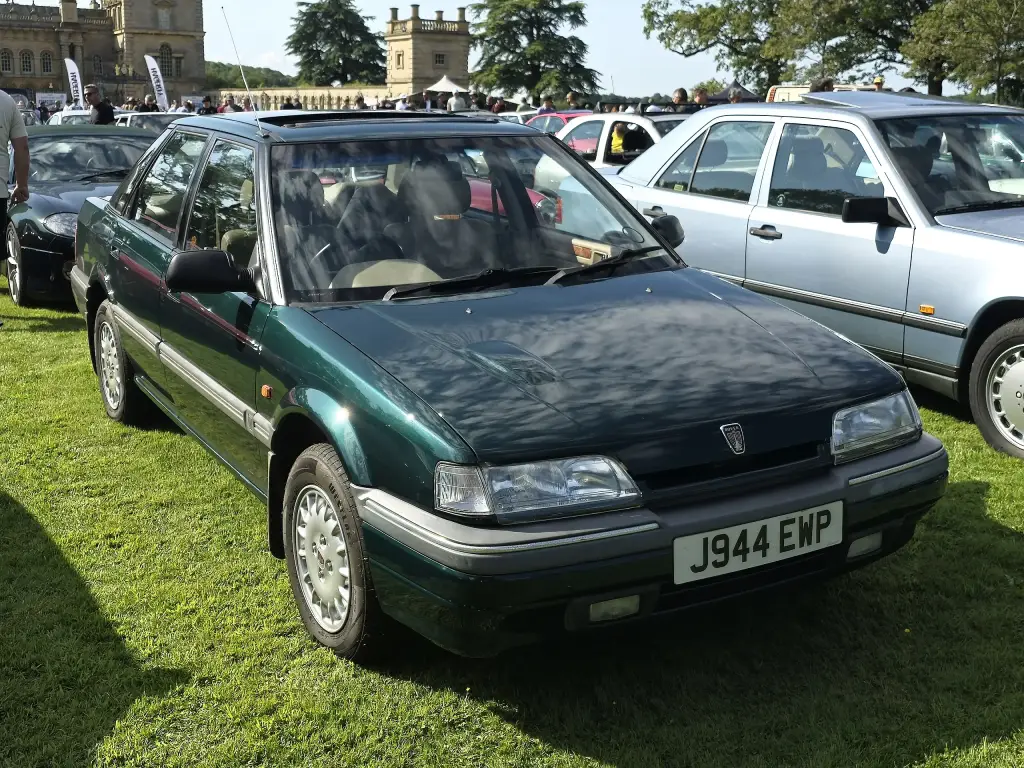
The Rover 400 Series was a small family car built by Rover from 1990 to 1999 as the saloon version of the Rover 200 hatchback. The first generation shared its structure with the Honda Concerto, and the second was based on the Honda Domani before the model was renamed the Rover 45 in 1999.
Rover 400 at a glance
| Production | 1990–1999, two generations |
|---|---|
| First generation | R8, launched 1990 as a four-door saloon |
| Tourer | estate version introduced in summer 1994, built until 1998 |
| Second generation | HH-R or Theta, launched 1995 as a hatchback, saloon later |
| Honda relatives | Concerto for the R8, Domani and European Civic for the HH-R |
| Engines (R8) | 1.4-litre K-series, 1.6-litre Honda D-series, 2.0-litre M-series from 1991 |
| Turbo | 420 GSi and GSi Sport turbo, 197 bhp T-series, limited numbers |
| Diesels (R8) | 1.9-litre XUD9 and turbocharged 1.8-litre XUD7T |
| Gearboxes | Peugeot/Rover R65 for the 1.4, Rover PG1 for the 1.6 and 2.0 |
| Facelift | September 1993, the return of the Rover grille |
| Built at | Longbridge, Birmingham |
Based on one source: the English Wikipedia article on the Rover 400 and 45.
History of the Rover 400
The R8 saloon, 1990–1998
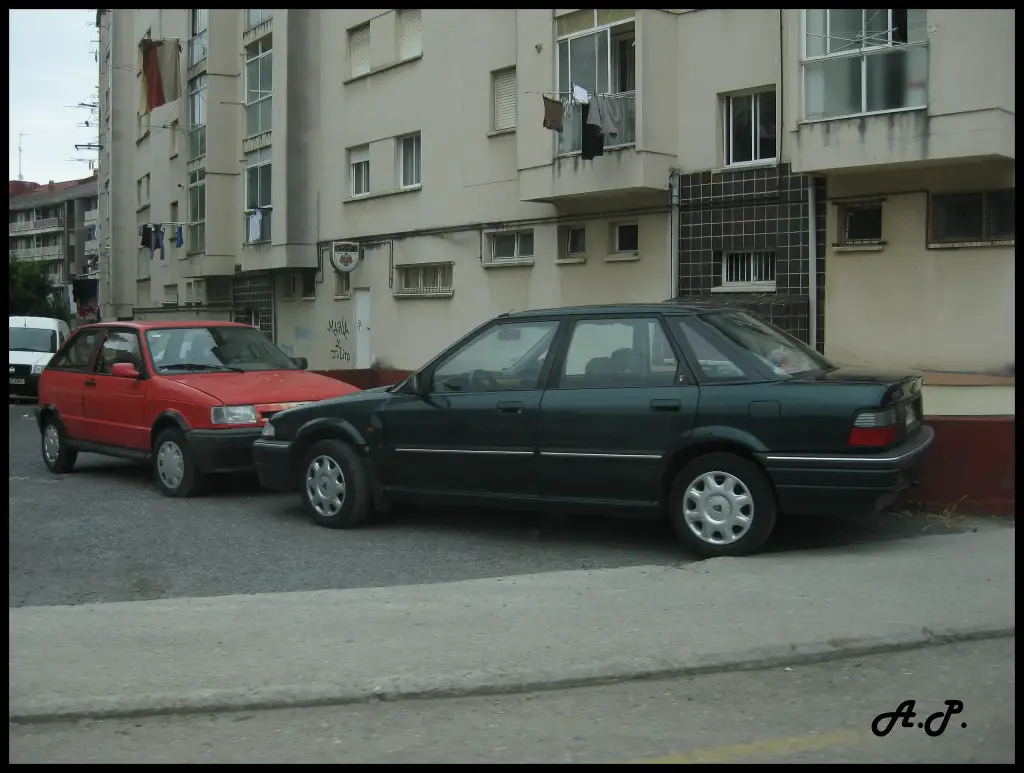
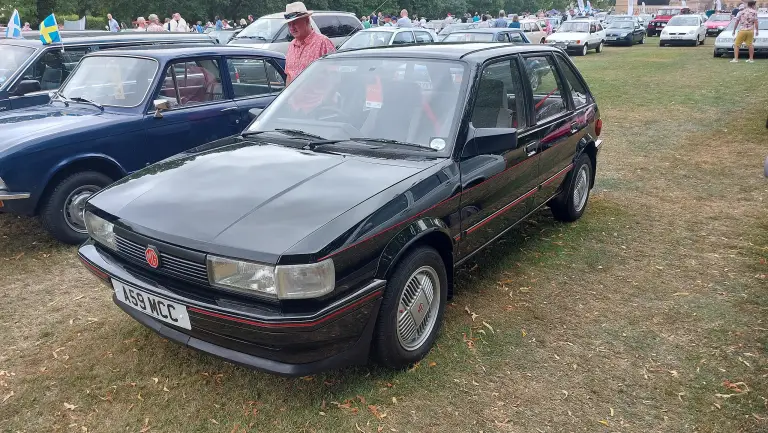
The original 400 Series was launched in 1990 as a four-door saloon version of the second-generation Rover 200 hatchback, both sharing the codename R8 during development; the 200 had been launched six months earlier. Like the 200, the 400 was designed with Honda, which produced the corresponding designed-for-Europe Concerto, and both shared production lines at Longbridge. It used the same core structure and mechanicals as the Honda, but the rear-end redesign of the glasshouse and body was unique to Rover, while interior trim and electrical architecture were shared with the R8 200. The R8 Rover 200 and 400 were the first applications of Rover’s K-series engine family, in 1,396 cc twin-cam 16-valve form. The 1.6-litre version used Honda D16 engines, and the 2.0-litre M-series unit from the 800 Series followed in 1991 in the sportier versions. Rover-engined cars drove the front wheels through jointly developed Peugeot/Rover R65 gearboxes on the 1.4 and the Rover PG1 on the 1.6 and 2.0. The limited-run 420 GSi turbo and GSi Sport turbo used the turbocharged 197 bhp Rover T-series engine. Two PSA indirect-injection diesels were also offered, a naturally aspirated 1.9-litre XUD9 and a turbocharged 1.8-litre XUD7T. They replaced the noisier Rover MDi and Perkins Prima diesel of the Maestro and Montego, which was considered too unrefined for the new cars. A mid-life facelift in September 1993, also applied to the Rover 200, brought back the Rover grille, which had first reappeared on the R17 facelift of the Rover 800; the change gave the cars a more distinctive Rover family look and set them further apart from the Honda Concerto.
The 400 Tourer
An estate version was developed by Rover Special Products and introduced in the summer of 1994. Badged Rover 400 Tourer, it stayed in production alongside the second-generation 400 until 1998, because no estate was built of the later car, and many Tourers were exported to Japan. The Tourer did without the 1.4-litre engine, the naturally aspirated diesel and the turbocharged petrol engines.
The HH-R, 1995–1999
The second-generation 400, codenamed Theta or HH-R, was launched in 1995 as a hatchback with a saloon added later. It was based on the Honda Domani, which had appeared in Japan in 1992 and was sold in Europe as part of the five-door Honda Civic range. It was no longer as closely related to the 200, which Rover revised independently while still sharing many components with the 400, and it proved to be the last collaborative model between Rover and Honda, ending a partnership that had begun with the Triumph Acclaim in 1981. Power came from 1.4- and 1.6-litre K-series engines, a 1.6-litre Honda D-series SOHC unit available only with an automatic gearbox, a 2.0-litre Rover T-series petrol engine and a 2.0-litre L-series turbodiesel borrowed from the larger 600 Series. Although the car was the size of a Ford Escort or Vauxhall Astra, Rover priced it against the Ford Mondeo and Vauxhall Vectra, because its only offering in that class at the time was the ageing Montego. The related Honda Civic was not sold as a saloon in Britain, although a four-door was available elsewhere, which helped the Rover expand into the executive segment and further separate the two cars. The second-generation 400 was initially popular, one of Britain’s best-selling cars between 1995 and 1997, but within three years it was being outsold by cars such as the Volkswagen Passat and Renault Laguna.
Design and features
- First K-series: the R8 200 and 400 were the first cars to use Rover’s 1.4-litre K-series engine.
- Honda engineering: the first generation shared its core structure and mechanicals with the Concerto.
- Tourer estate: a Rover Special Products design that outlived the second-generation 400.
- Rover grille: the September 1993 facelift gave the range its family face back.
Rover 400 versions
- 400 saloon (R8): the original four-door, with 1.4 K-series, 1.6 Honda and 2.0 M-series engines.
- 420 GSi turbo: a limited-run model with the 197 bhp turbocharged T-series engine.
- 400 Tourer (1994–1998): the estate, popular in Japan.
- 400 hatchback and saloon (HH-R): the 1995 second generation on the Honda Domani platform.
- 400 diesel: XUD engines in the R8, the 2.0-litre L-series in the HH-R.
The 400 was the saloon sister of the Rover 200, and it became the Rover 45 in 1999. More cars are in the Rover collection.
Video: Introduction to the 1996 Rover 400 models
Video by rallychamp2003 on YouTube.
Sources
- Rover 400 / 45, English Wikipedia: the R8, the Tourer and the HH-R