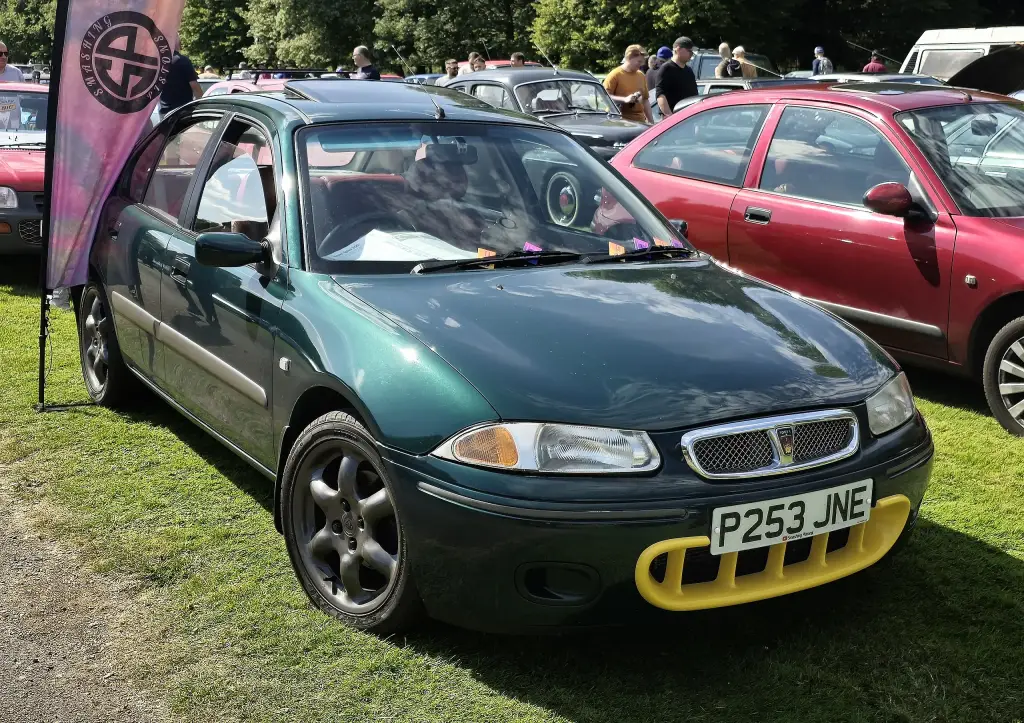
The Rover 200 was a small family car produced at the Longbridge factory from 1984 until 1999, when the third generation was facelifted and renamed the Rover 25. The first two generations were designed in partnership with Honda, and the third was developed by Rover on the platform of its predecessor.
Rover 200 at a glance
| Production | 1984–1999, three generations |
|---|---|
| First generation | SD3, 1984–1989, four-door saloon |
| Second generation | R8, launched 11 October 1989, five-door hatchback |
| Third generation | 1995–1999, renamed Rover 25 in 1999 |
| Engines in 1984 | 1.3-litre Honda E-series, 71 PS; 1.6-litre S-series, 86 or 103 PS |
| Gearboxes | Honda five-speed manual; Honda three-speed automatic in the 213; ZF four-speed automatic on some 216 |
| Honda sister cars | Ballade for the SD3, Concerto for the R8 |
| R8 body styles | three- and five-door hatchback, plus coupé and cabriolet |
| Facelift | new indicator lights in autumn 1992; new grille and body-coloured bumpers in 1993 |
| Built at | Longbridge, Birmingham |
Based on one source: the English Wikipedia article on the Rover 200 and 25.
History of the Rover 200
SD3: the Honda-based saloon, 1984–1989
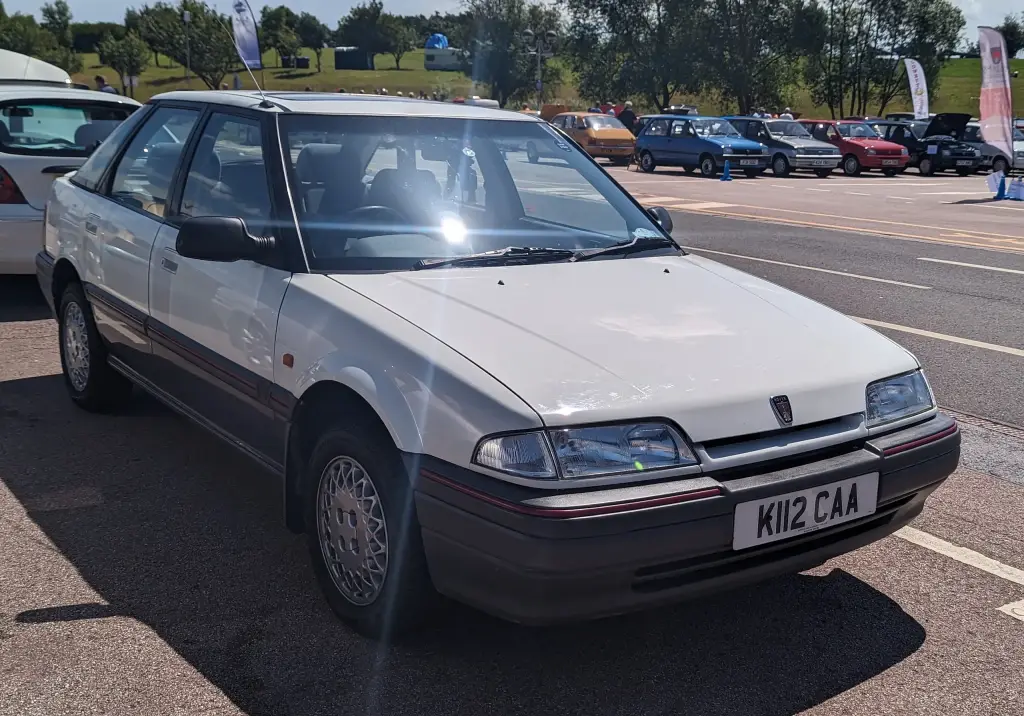
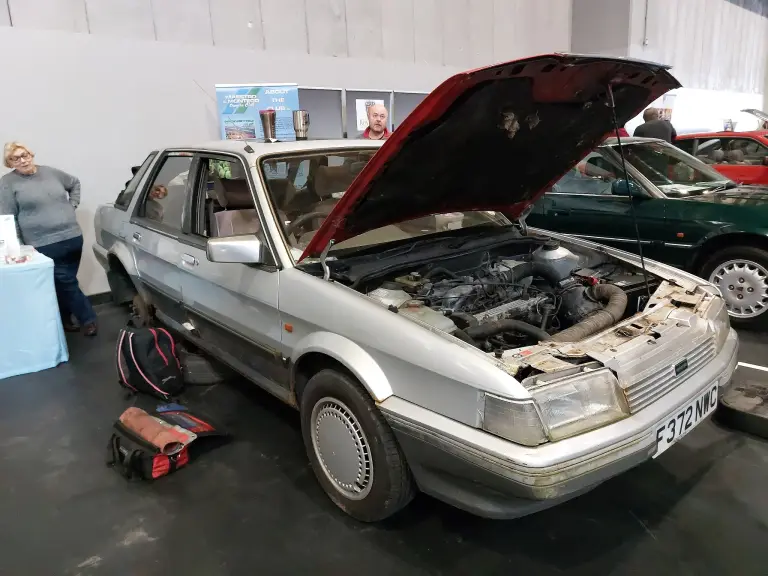
The original Rover 200, sometimes called the SD3, replaced the Triumph Acclaim and was the second product of the alliance between British Leyland and Honda. It was available only as a four-door saloon and was intended to be more upmarket than the company’s Maestro and Montego models, between which it sat in size. It was launched on 19 June 1984, when small family saloons were still in high demand and many makers sold them under a different nameplate from similar hatchbacks — Ford sold the saloon Escort as the Orion, Volkswagen called the Golf saloon the Jetta and Vauxhall was about to launch the Astra-based Belmont. The Rover 200 Series, by contrast, was not based on a hatchback. Earlier in 1984 Austin Rover had confirmed that the Acclaim’s successor would be badged a Rover rather than a Triumph, a decision that signalled the end of the Triumph brand; the move was controversial because Rover had long been associated with large executive saloons as well as with Land Rover and Range Rover. Essentially the car was a British-built Honda Ballade, and its engines were either the Honda Civic-derived 1.3-litre E-series unit of 71 PS or British Leyland’s own 1.6-litre S-series in 86 PS carburettor or 103 PS Lucas EFi form. The resulting cars were badged Rover 213 or Rover 216. The 213 used a Honda five-speed manual or three-speed automatic, and the 216 also used the Honda five-speed manual, unlike the S-series in the Maestro and Montego; a German ZF four-speed automatic was optional on some 216s. Ballade bodyshells, and later complete cars, were made at Longbridge alongside the Rover, with the Ballades then going to Honda’s new Swindon plant for quality checks. Production stopped in late 1989 and stocks lasted until early 1990, when the car was replaced by the Rover 400.
R8: the hatchback, 1989–1995
The R8 Rover 200, sometimes called the Mk 2, was launched on 11 October 1989. Unlike the Ballade-based Mk 1 it was a five-door hatchback, designed to replace the Maestro, while the saloon variant called the 400 Series effectively replaced the previous 200 when it arrived in April 1990; the 400 had a different name to position it slightly upmarket, just as Ford did with the Orion. The model was again designed with Honda, which produced the new designed-for-Europe Concerto, and the two shared production lines at Longbridge. The 200 and Concerto were based on the fourth-generation Civic, whose three-door hatchback, CRX coupé and saloon versions were sold in Britain. The R8 200 was the first car introduced by the newly privatised Rover Group, and the Maestro continued beside it as a budget option until December 1994. In autumn 1992 the 200 had a mild facelift with redesigned front indicator lights, but unlike its 400 sibling it did not get a new grille or body-coloured bumpers, which led some owners to retrofit the 400’s grille; Rover finally added both to the 200 in 1993. The 200 also spawned three-door hatchback, coupé and convertible versions, codenamed Tracer and Tomcat, while the 400 later gained an estate called the Tourer. Plans to sell the coupé as an MG were abandoned, and the five-door hatchback was the most popular version.
The third generation and the Rover 25
The third-generation Rover 200 arrived in 1995, developed independently by Rover on the platform of its predecessor. It was downsized and available as a three- or five-door hatchback. The model was facelifted in 1999 and renamed the Rover 25, with a higher-performance variant sold as the MG ZR with changes to the suspension. Production ended in 2005, when MG Rover went into administration.
Design and features
- Honda partnership: the first two generations were joint designs, sharing their lines at Longbridge with the Ballade and Concerto.
- Wide engine choice: Honda E-series and British S-series engines in 1984, with the T-series later in the range.
- Many body styles: the R8 range added a three-door, a coupé and a cabriolet to the five-door hatchback.
- Long life: the basic design ran from 1984 to 2005 as the 200 and then the Rover 25.
Rover 200 versions
- 213 (SD3): the 1.3-litre Honda-engined saloon.
- 216 (SD3 and R8): the 1.6-litre S-series model, with Honda or ZF automatic options.
- R8 five-door hatchback: the main version from 1989, with the 400 saloon as its sister.
- R8 coupé (Tomcat): the two-door model with its own glass roof.
- R8 cabriolet (Tracer): the four-seat convertible.
- Third generation (1995): the Rover-designed car that became the Rover 25 in 1999.
The 200 was replaced by the Rover 25, and its saloon sister was the Rover 400. The two-door version has its own page on the Rover 200 Coupé. More cars are in the Rover collection.
Video: Old Top Gear (1995): Rover 200
Video by Daddy281202 on YouTube.
Sources
- Rover 200 / 25, English Wikipedia: the SD3, the R8 range and the third generation