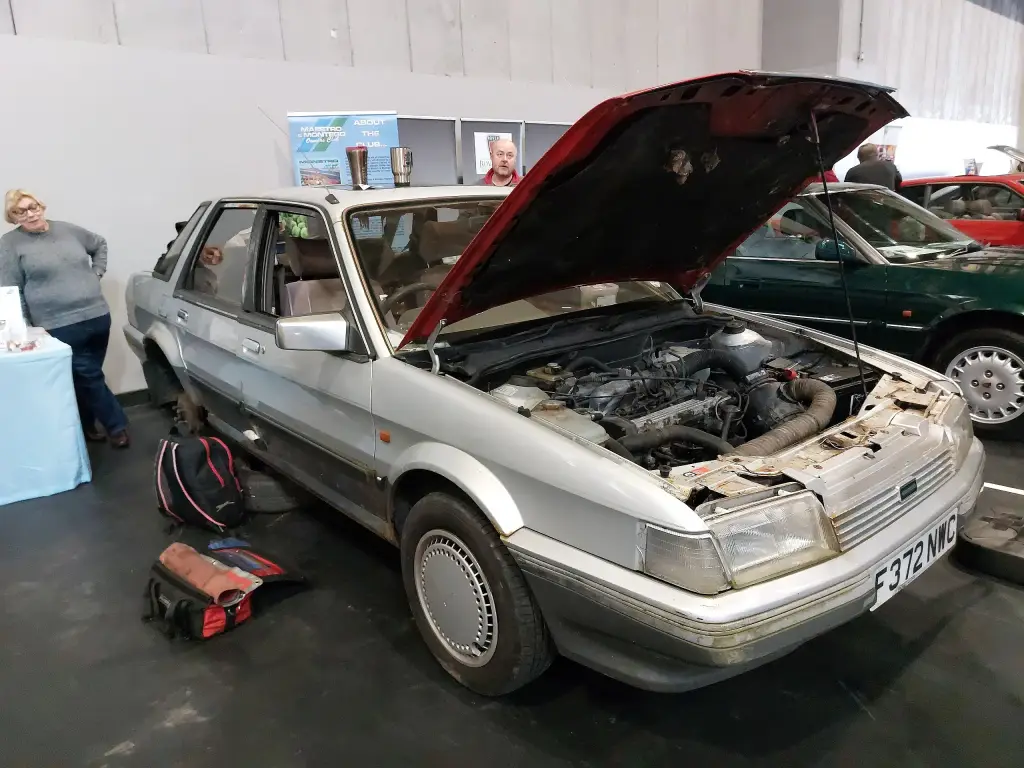
The Montego was a British family car produced from 1984 to 1994, first by British Leyland and then by the Rover Group. It replaced both the rear-wheel-drive Morris Ital and the front-wheel-drive Austin Ambassador, was the last car launched under the Austin marque, and after the 1989 facelift was sold simply as the Montego.
Rover Montego at a glance
| Production | 1984–1994; the saloon ended in 1993, the estate in December 1994 |
|---|---|
| Launched | 25 April 1984 as the Austin Montego |
| Project code | LM11, derived from the LC10 platform |
| Bodies | four-door saloon and estate |
| Replaced | Morris Ital and Austin Ambassador |
| Engines | including the new SOHC S-series |
| MG Turbo | 150 bhp at 5,100 rpm, 0–60 mph in 7.3 s, 126 mph |
| Facelift | 1989 model year, after which the Austin name was dropped |
| Numbers | built at Cowley, Oxford |
| Successor | Rover 600 Series for the saloon |
The car was launched as an Austin and later sold without a marque; this page uses the English Wikipedia article on the Austin Montego, which covers those years.
History of the Rover Montego
From LC10 to LM11
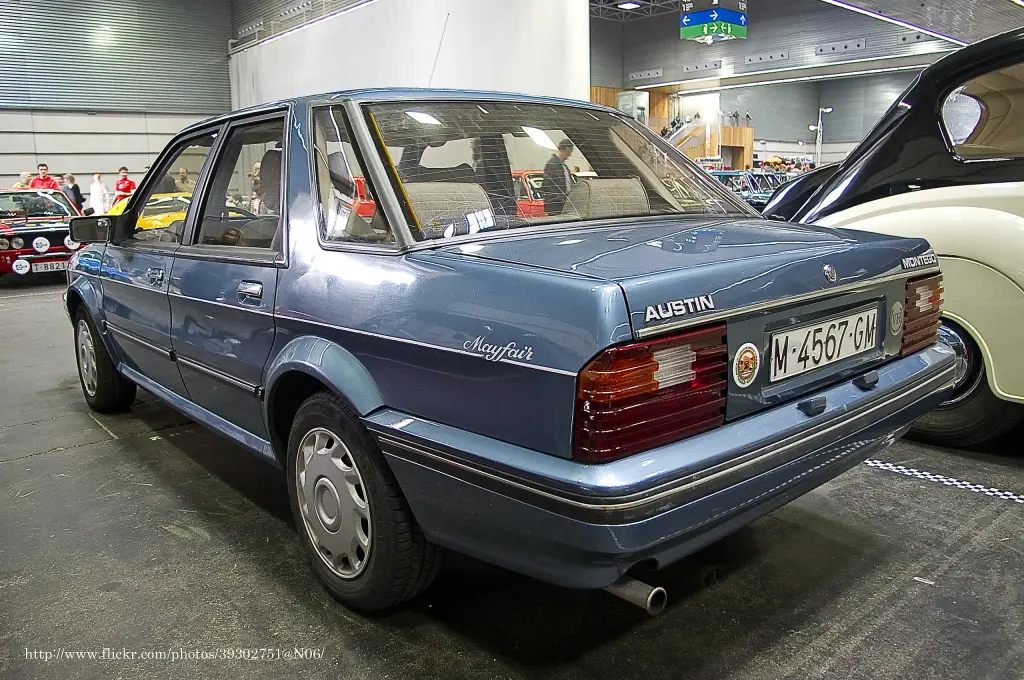
The Montego started life as a four-door notchback variant of project LC10. Development of the new model, intended to succeed both the Morris Marina and the Princess ranges by the turn of the 1980s, began in 1977, but the car was not launched until seven years later; in the meantime the Marina had been updated and rebadged as the Morris Ital from 1980, and the Princess had become the Austin Ambassador in 1982. The Honda-based Triumph Acclaim of 1981 was largely a stop-gap until the Montego and the Rover 200 were launched in 1984. The Maestro emerged as the five-door hatchback variant, while the Montego became project LM11 and stayed on a lengthened version of the LC10 chassis, with MacPherson struts in front and a twist beam at the rear. The Montego received different front and rear styling after Roy Axe replaced David Bache as design director, and it had body-coloured bumpers and front wipers that hid under the bonnet when parked. It offered many improvements over the Maestro, later carried across to that car, including a new SOHC engine, the S-series, and a more robust dashboard with a rally-style tachometer, a service indicator and a display showing open doors and lights left on.
The estate and the MG Turbo
An estate variant with larger luggage capacity than its competitors, two additional rear-facing child seats and self-levelling suspension followed shortly after the saloon, styled by Roy Axe, and won the company a Design Council award. The Montego was launched on 25 April 1984 as a four-door saloon, filling the gap left by the Morris Ital saloon, and it was produced alongside the Ital estate until that model was discontinued in August 1984. The estate was shown at the British International Motor Show in October that year, and the MG turbocharged variant arrived in early 1985 with 150 bhp at 5,100 rpm and 169 lb·ft at 3,500 rpm, making it the fastest production MG ever with 0–60 mph in 7.3 seconds and 126 mph. The Vanden Plas version had leather seats, walnut veneer, electric windows, central locking and power door mirrors. There were plans to rename the car the Rover 400 series for the late 1988 model year facelift, and pre-production cars in Warwickshire were seen with ROVER badges and 413i, 416i, 420 and 420i designations, but the facelift did not fully materialise because of costs, and the unrelated 400 series arrived in April 1990.
End of the line
The Montego was the last car to be launched under the Austin marque, which was used until the facelift introduced for the 1989 model year; afterwards the car was sold without a marque as the Austin name was phased out. Like many BL cars before it, early Montegos suffered from build quality and reliability problems that damaged the car’s reputation, and the model was compromised by sharing a platform and doors with the Maestro. Saloon production ended in 1993 following the introduction of the Rover 600 Series, while the estate remained in production until December 1994.
Design and features
- S-series engine: the new single-overhead-cam unit first used in the Montego and later fitted to the Maestro.
- Estate practicality: more luggage space than its rivals, with two rear-facing child seats and self-levelling suspension.
- MG Turbo: 150 bhp and 126 mph made it the fastest production MG when it arrived in 1985.
- Vanden Plas trim: leather, walnut and electric equipment at the top of the range.
Rover Montego versions
- Austin Montego saloon (1984–1989): the original four-door car.
- Montego estate (1984–1994): the long-lived estate, including the Countryman.
- MG Montego Turbo (1985): the 150 bhp performance model.
- Montego without marque (1989–1994): the facelifted car sold after the Austin name was dropped.
- Vanden Plas: the luxury trim with leather and walnut.
The Montego was the saloon sister of the Rover Maestro and was replaced by the Rover 600. More cars are in the Rover collection.
Video: Rover Montego Countryman TD Estate
Video by Eddiebear’s Cave on YouTube.
Sources
- Austin Montego, English Wikipedia: development, launch, estate, MG Turbo and the end of production