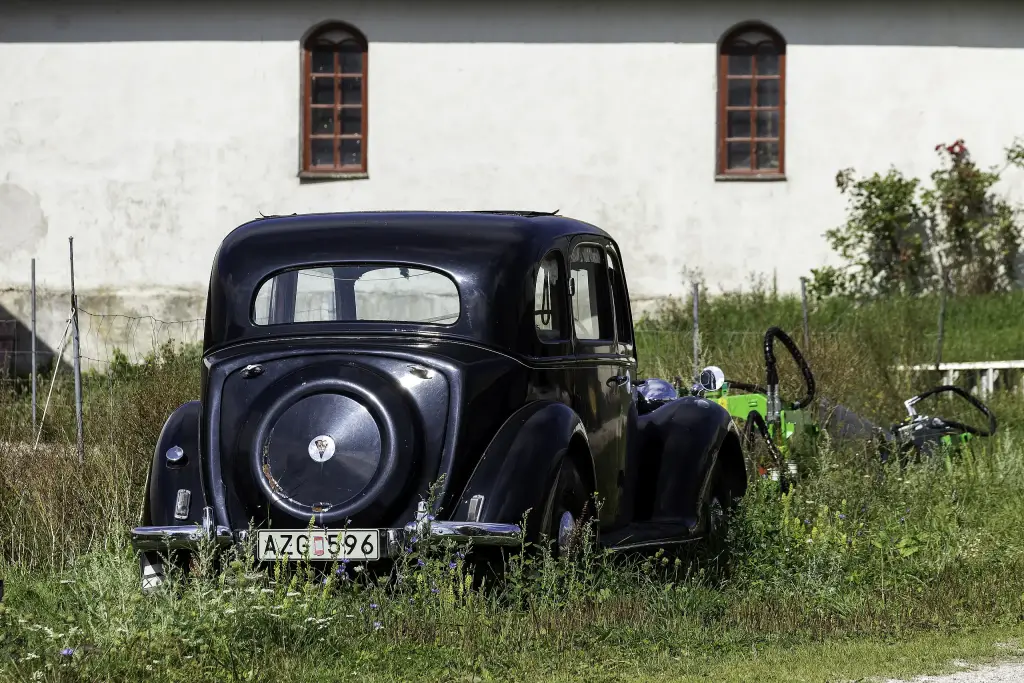
The Rover 16 name was used for two mid-sized cars: the 16/50, built from 1926 to 1929, and the six-cylinder P2 Rover 16, produced from 1936 to 1940 and again from 1945 to 1947. The second of them was the last model replaced by the Rover 75 at the start of 1948.
Rover 16 at a glance
| 16/50 | announced 21 May 1926, available into 1929 |
|---|---|
| 16/50 engine | 2.4 litres, four-cylinder overhead valve, 75 mm bore |
| 16/50 gearbox | four-speed, a strengthened version of the 14/45 unit |
| 16/50 brakes | four-wheel, Perrot system at the front |
| 16/50 prices (1926) | £575 open, £675 Weymann saloon, £775 coachbuilt saloon |
| Rover 16 P2 | announced mid-August 1936, built 1936–1940 and 1945–1948 |
| P2 engine | six-cylinder overhead valve, 2,147 cc |
| P2 top speed | 124 km/h (77 mph) claimed |
| P2 bodies | six-light saloon, four-light sports saloon and Tickford drophead coupé |
| Predecessor and successor | Rover Meteor 16 before, Rover P3 after |
Based on one source: the English Wikipedia article on the Rover 16.
History of the Rover 16
The 16/50 of 1926
Rover was responding to requests for a more powerful engine for its four-cylinder 14 hp car when it announced the 16/50 on 21 May 1926. The engine had a larger bore and was now rated at 16 rather than 14 hp for tax purposes, with a capacity of 2.4 litres instead of 2.1; the 75 mm bore of the 14/45 had grown by 5 mm. The whole chassis closely followed the design of the 14/45, and so did the engine, which carried a Lanchester vibration damper on the front of its crankshaft. Its overhead valves were set at 45 degrees on either side of the spark plug, worked by a camshaft driven by a vertical shaft at the back of the engine through rockers for the inlet valves and horizontal pushrods for the exhaust valves. Air reached the carburettor through a tunnel in the crankcase, so it was slightly warmed while cooling the crankshaft’s central bearing, and a water impeller in unit with the belt-driven fan fed the honeycomb radiator. Pressure feeds from one reservoir oiled the engine, clutch, gearbox, steering and spigot bearing. Petrol was kept in a tank midway in the frame and fed to an Autovac on the dash. The four-speed gearbox was a strengthened version of the 14/45 unit, assembled with the engine and operated by a right-hand lever whose reach could be adjusted. The saloon had a V-shaped windscreen, and its six-light body mixed two sliding panels, two winding panels and fixed rear windows. The Times thought the engine’s hemispherical combustion chambers and angled valves unnecessarily complex, but called the four-wheel braking system the best part of the car and found the seating comfortable, with a comfortable maximum of 55 to 60 mph. It also thought the price high for a four-cylinder 16 hp car: the open car cost £575, the Weymann saloon £675 and the coachbuilt saloon £775.
The six-cylinder P2 Rover 16
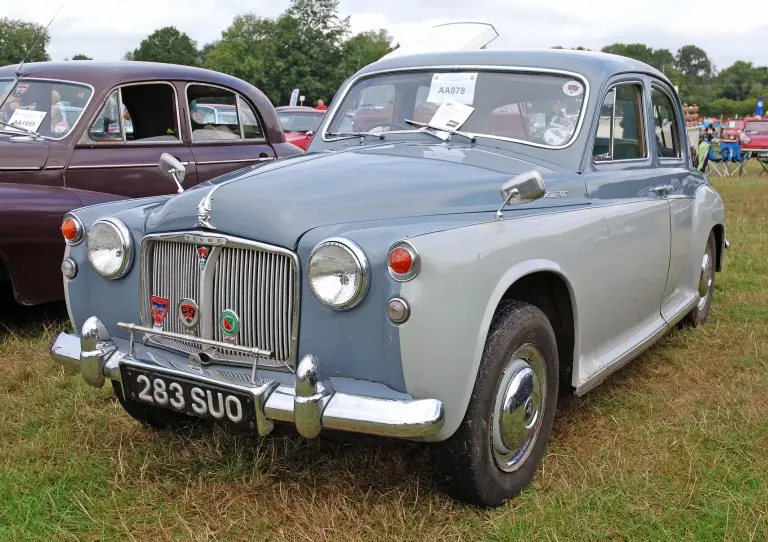
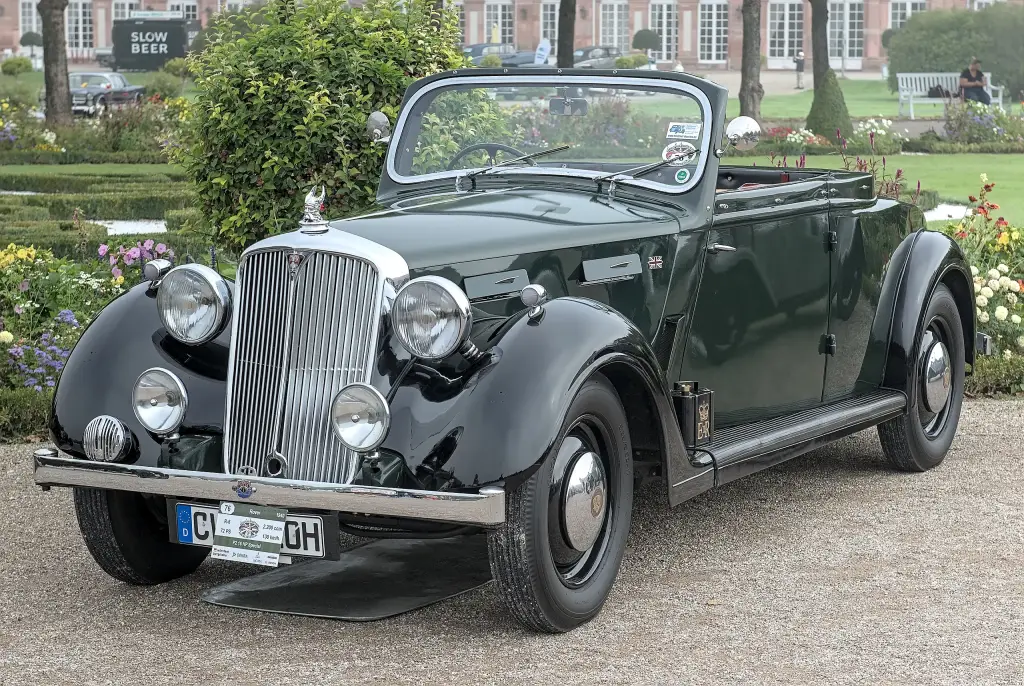
The Rover 16 returned in mid-August 1936 as a successor to the Rover Meteor 16, produced from 1936 to 1940 and put back into production in 1945 after the Second World War. The 16 was part of the Rover P2 range alongside the Rover 10, 12, 14 and 20 models. Its mildly streamlined body resembled the existing Rover 10 and 12 but was slightly longer, with a more rounded back end, and the six-cylinder overhead-valve engine had a capacity of 2,147 cc and a claimed top speed of 124 km/h (77 mph). Buyers could choose a six-light saloon, a four-light sports saloon or a two-door cabriolet, usually called a drophead coupé, with bodywork by Tickford. The sports saloon and the drophead coupé had slightly less length between the front and rear seats. The 16 stayed on sale until it was replaced by the Rover P3 in 1948.
Design and features
- Two different sixteens: a 2.4-litre four in 1926, then a 2,147 cc six from 1936.
- Four-wheel brakes: the 16/50 used the Perrot system at the front and was praised for its braking.
- P2 body range: six-light saloon, four-light sports saloon and a Tickford drophead coupé.
- Comfortable tourer: The Times rated the 16/50 seating and its 55 to 60 mph cruising pace.
Rover 16 versions
- 16/50 open car (1926): £575, with the four-speed gearbox and four-wheel brakes.
- 16/50 Weymann saloon: £675, with a fabric body and a V-shaped windscreen.
- 16/50 coachbuilt saloon: £775, the most expensive of the three 1926 bodies.
- P2 six-light saloon (1936–1948): the standard four-door car with the 2,147 cc six.
- P2 sports saloon: a four-light body with slightly less rear legroom.
- P2 drophead coupé: a two-door cabriolet with Tickford bodywork.
The 16 was the larger alternative to the Rover 14 and above the Rover 12. More cars are in the Rover collection.
Sources
- Rover 16, English Wikipedia: the 16/50 of 1926 and the six-cylinder P2 of 1936