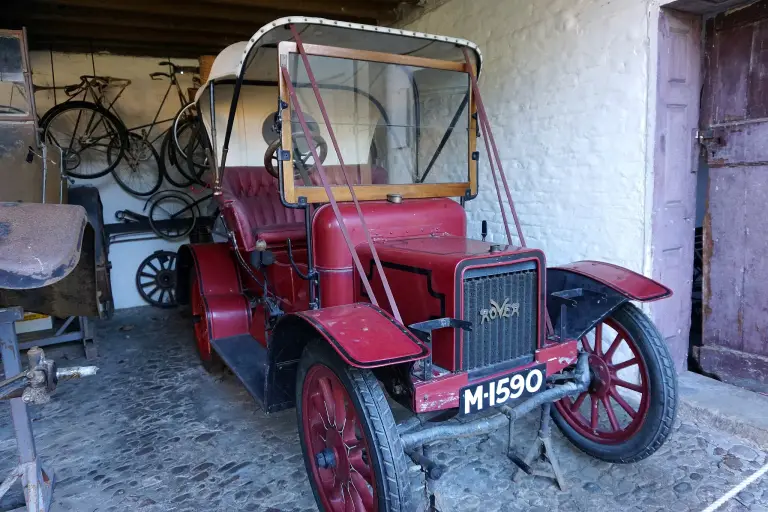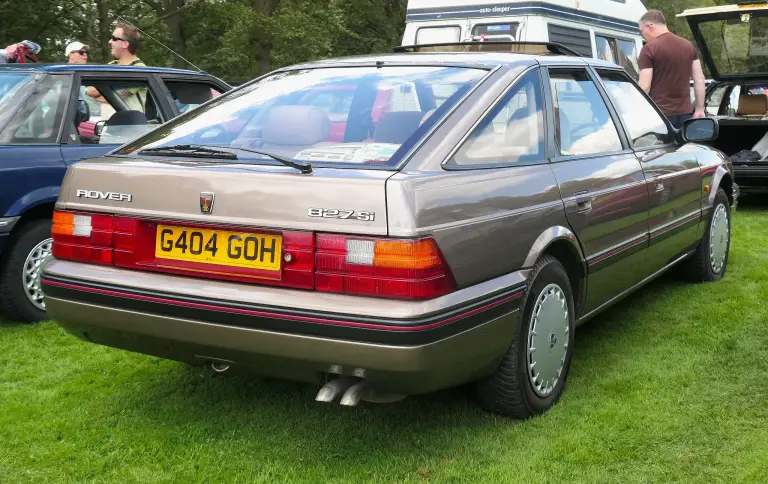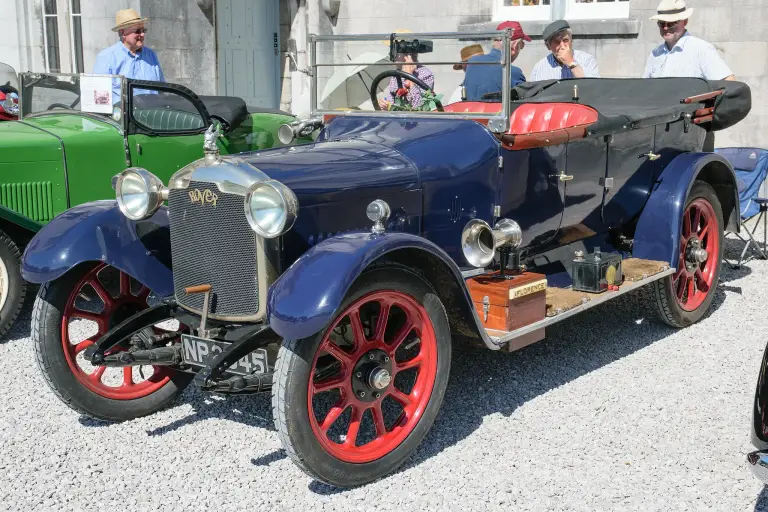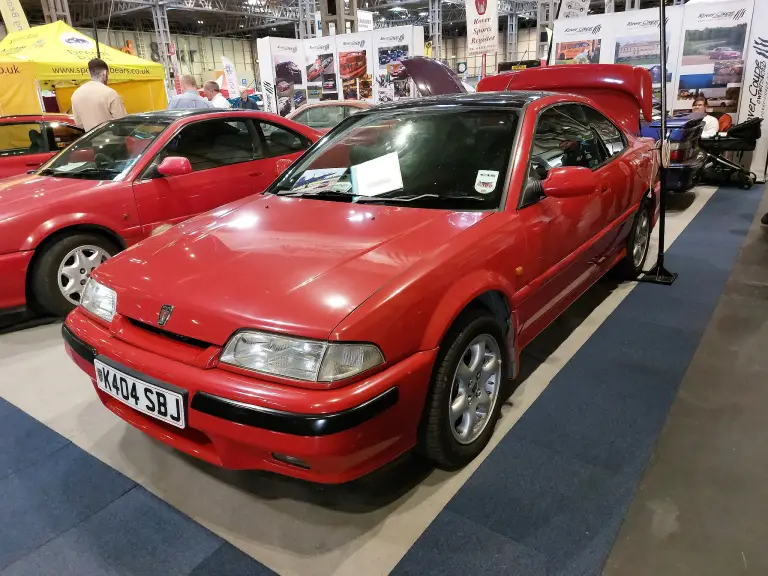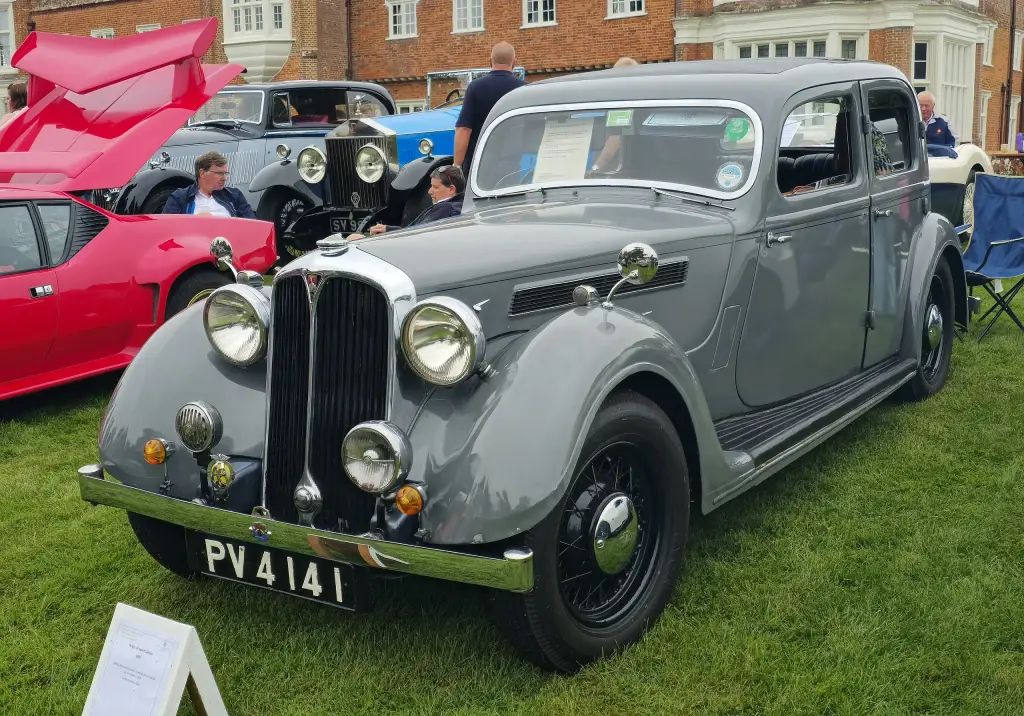
The Rover Fourteen was a medium-sized family car produced by the British Rover company between 1924 and 1948. Civilian production stopped in 1940 for the war, but the 14 came back in 1945 and stayed on the market until it was replaced by the Rover 75 at the beginning of 1948.
Rover 14 at a glance
| Production | 1924–1948, interrupted 1940–1945 |
|---|---|
| Clegg 14 | 1923–1925, simply the Rover 12 renamed |
| 14/45 | announced October 1924, on sale until 1928 |
| 14/45 engine | four-cylinder with spherical combustion chambers and 45-degree overhead valves |
| 14/45 gearbox | four speeds, in a unit with the engine and clutch |
| 14/45 brakes | four-wheel internally expanding, Perrot system at the front |
| Pilot 14 | the Pilot renamed after its engine grew from 12 to 14 hp in mid-1932 |
| Rover 14 P1 | 1933–1938; six-cylinder 1,577 cc, 48 bhp at 4,600 rpm, 69 mph |
| Speed Fourteen | 54 bhp at 4,800 rpm, three semi-downdraught carburettors |
| Body styles | saloon, Streamline saloon and coupé, sports saloon, drophead coupé |
| Replaced by | Rover 75 in early 1948 |
Based on one source: the English Wikipedia article on the Rover 14.
History of the Rover 14
The Clegg 14 and the 14/45
Rover’s first 14 was no more than a renamed 12: the car introduced in 1912 and designed by Owen Clegg became known as the Clegg 12, took the name 14 in 1923 and was last offered for sale in 1925. The 14/45 was announced in October 1924 with a much more powerful engine and remained available until 1928, although from May 1926 it was supplemented by the 2.4-litre 16/50, which used a strengthened transmission on the same chassis. The 14/45 was unconventional in three ways: an unusual engine with spherical combustion chambers, four-wheel brakes and a four-speed gearbox. The sparking plugs sat in the centre of each combustion chamber with the overhead valves on either side at 45 degrees to the head; one overhead camshaft acted directly on the inlet valves and, through horizontal pushrods, worked the exhaust valves on the other side of the engine. The camshaft was driven by a vertical shaft at the rear, water circulation was helped by an impeller, and the worm drive for the camshaft and accessories was modified after the first Motor Show to cure a noise problem. Engine, clutch and gearbox were held as a unit at three points, with a single-plate clutch cast in one piece with the four-speed gearbox, an enclosed drive shaft and a spiral bevel final drive. The worm and sector steering box was fixed to the engine and lubricated from it. All four wheels had internally expanding brakes, the hand lever worked only the rear pair and the front brakes used the Perrot system. Springs were half-elliptical, flat-set and gaitered. The Times liked the car, though it thought the flexible and responsive engine had no very marked bite; the engine stayed cool throughout the test, the suspension allowed too much rocking fore and aft, and the accommodation was unusually comfortable and wholly quiet.
Pilot 14 and the P1
A Pilot 14 became the 14 when its engine was enlarged from 12 to 14 horsepower in mid-1932. The Rover Fourteen P1 was announced in early September 1933 to replace that interim model, having already been seen in prototype on the RAC Rally at Hastings as the competition-winning Rover Speed Fourteen four-door coupé. Its B H Thomas six-cylinder overhead-valve engine from the Pilot had a capacity of 1,577 cc and was claimed to give 48 bhp at 4,600 rpm and a top speed of 111 km/h (69 mph). The car had no luggage compartment: the spare wheel and tyre were carried in a metal case above the back bumper, with a fold-out luggage rack.
Streamline bodies and the Speed Fourteen
During 1934 an extra body shape was offered, the Streamline saloon, and a more compact Streamline coupé; both were fastbacks, the rear portion not unlike the Riley Kestrel body. The four-door Streamline coupé’s roof left even less headroom for rear passengers than the already restricted Streamline saloon. For the 1934 Olympia Motor Show the wheelbase was extended by 3 inches to 115 inches and the track widened by half an inch, which put the seats well within the wheelbase. The Speed engine had three semi-downdraught carburettors instead of the standard single down-draught instrument, specially streamlined ports and manifolds and a high-compression cylinder head, for 54 bhp at 4,800 rpm. The Times drove a Speed Fourteen Hastings coupé and found it rapid and smooth, with pleasing lines and about 80 mph on the open road; a standard Fourteen six-light saloon tested in April 1937 reached 70 mph and was described as fast for its size and stable. The 14 returned after the war and was replaced by the Rover 75 at the start of 1948.
Design and features
- Spherical combustion chambers: a rare layout for a British family car, with centrally placed plugs and angled overhead valves.
- Four-wheel brakes: internally expanding all round, with the Perrot system at the front.
- P1 six-cylinder: the 1,577 cc B H Thomas engine gave 48 bhp and 69 mph.
- Speed Fourteen: three carburettors, streamlined ports and a high-compression head raised output to 54 bhp.
Rover 14 versions
- Clegg 14 (1923–1925): the Rover 12 renamed, with no mechanical change.
- 14/45 (1924–1928): the new car with spherical combustion chambers and four-wheel brakes.
- Pilot 14 (1932): the Pilot with its engine enlarged from 12 to 14 hp.
- 14 P1 (1933–1938): the six-cylinder model with its spare wheel above the rear bumper.
- Streamline saloon and coupé (1934): fastback bodies on the longer 115-inch wheelbase.
- Speed Fourteen: the tuned three-carburettor version, good for about 80 mph.
The 14 sat between the Rover 12 and the larger Rover 16. More cars are in the Rover collection.
Sources
- Rover 14, English Wikipedia: the 14/45, the P1, the Streamline bodies and the Speed Fourteen