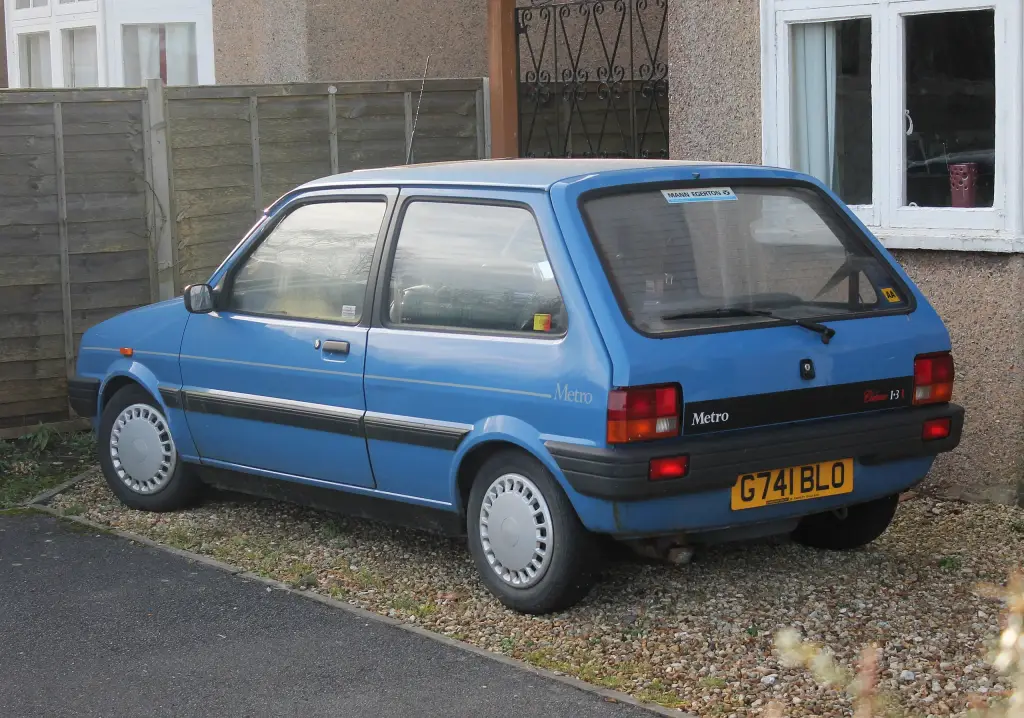
The Metro was a supermini, later a city car, produced from 1980 to 1997 first by British Leyland and then by the Rover Group. In 1990 it was redesigned and given the Rover brand, sold as the Rover 100 abroad, and from 1995 the Rover 100 name replaced the Metro in Britain.
Rover Metro at a glance
| Production | 8 October 1980–23 December 1997 |
|---|---|
| Launched as | Austin Mini Metro |
| Name | chosen by a ballot of BL employees from Match, Maestro and Metro |
| MG versions | from 1982 |
| Metro name alone | from 1987, after the Austin brand ceased |
| Rover Metro | 1990 redesign, sold as the Rover 100 abroad |
| Rover 100 in Britain | from 1995 |
| End of production | 23 December 1997 |
| Total built | 2,078,218 Metros of all types |
| Van version | sold under the Morris badge, later as the Metrovan |
The Metro and Rover 100 are described in one English Wikipedia article; the Rover 100 was the Metro’s final name, not a separate design.
History of the Rover Metro
From ADO88 to LC8
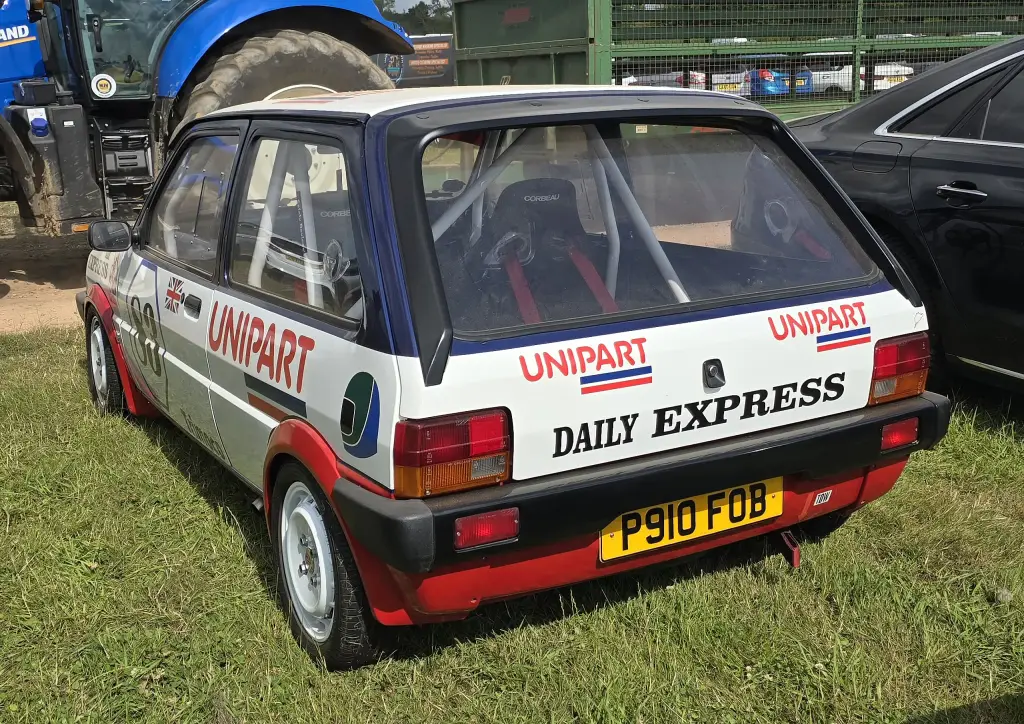
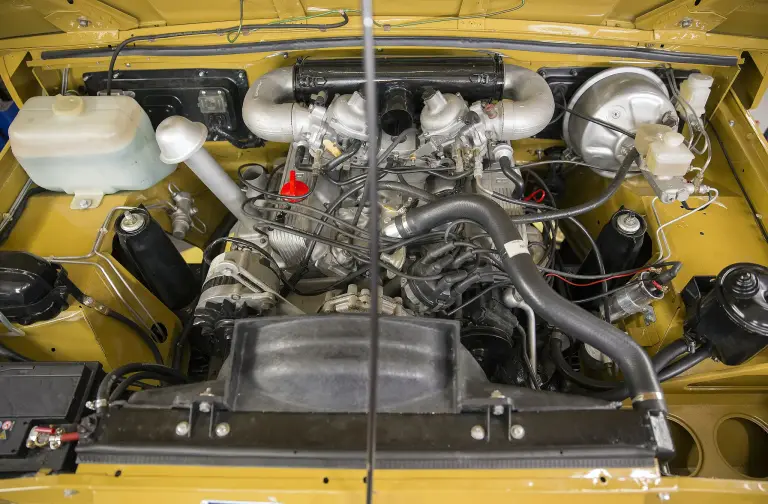
The roots of the Metro lay in ADO88, a project intended as a direct replacement for the Mini. By 1977 it was well advanced, with running prototypes and much of the body structure designed, but poor reception of its styling at customer clinics and the growing dominance of superminis forced a change of focus. In late 1977 BL chairman Michael Edwardes ordered an eleventh-hour redesign to make the car larger and less utilitarian, and it became BL’s first supermini rather than an economy car. The revised project was designated LC8 and the definitive design emerged under BL’s chief stylists David Bache and Harris Mann. With limited time and budget, LC8 reused much of the Mini’s engineering — the A-Series engine, front-wheel drive through a sump-mounted four-speed transmission and front and rear running gear in steel subframes separate from the unitary bodyshell — and borrowed the Hydragas suspension developed for the Allegro. Every external panel was changed from ADO88. The A-Series drivetrain was updated with new materials and tooling to become the A-Plus, the car had 12-inch wheels and all versions had servo-assisted four-piston front disc brakes with fully split hydraulic systems, where the entry-level Mini still had 10-inch wheels and drum brakes all round. Longbridge was expanded in 1978 with a £200 million robotised body assembly line to build the new model.
The Austin Metro and the Rover years
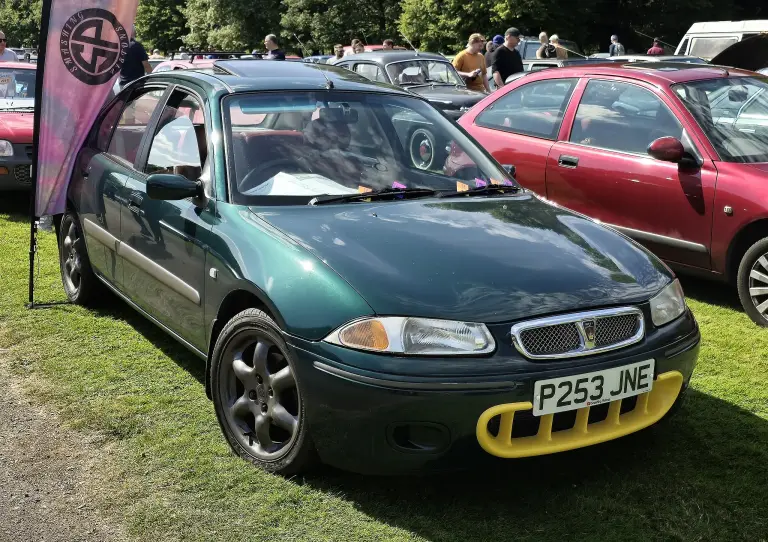
On 8 October 1980 BL introduced the Austin Mini Metro; the name was chosen by a ballot of BL employees, who were offered Match, Maestro or Metro. Sportier MG versions followed in 1982, and from 1987 the car was sold simply as the Metro after the Austin brand ceased. In 1990 the Metro was redesigned and given the Rover brand, sold as the Rover 100 abroad, and from 1995 the Rover 100 nameplate also replaced Metro in Britain. Although the R3-generation Rover 200 of 1995 had originally been designed as a replacement for the Metro, it was not marketed as one after launch. The Metro, now known as the Rover 100, finally ceased production on 23 December 1997, outlived by three years by the original Mini that it was meant to replace. A total of 2,078,218 Metros of all types were built, and there was also a van version, sold under the Morris badge and later as the Metrovan.
Design and features
- Mini engineering, modernised: the A-Plus engine, front-wheel drive and steel subframes carried over from the Mini.
- Hydragas suspension: borrowed from the Austin Allegro for a softer ride.
- Better brakes: servo-assisted four-piston front discs on every Metro, where the Mini still used drums.
- Long life: 2,078,218 built over seventeen years, ending as the Rover 100.
Rover Metro versions
- Austin Mini Metro (1980–1987): the original car, including the Metrovan commercial version.
- MG Metro (1982 onwards): the sporting models, including the MG Metro Turbo.
- Metro (1987–1990): the car sold without the Austin marque.
- Rover Metro (1990–1995): the redesigned car, sold as the Rover 100 abroad.
- Rover 100 (1995–1997): the final version, including the Knightsbridge SE.
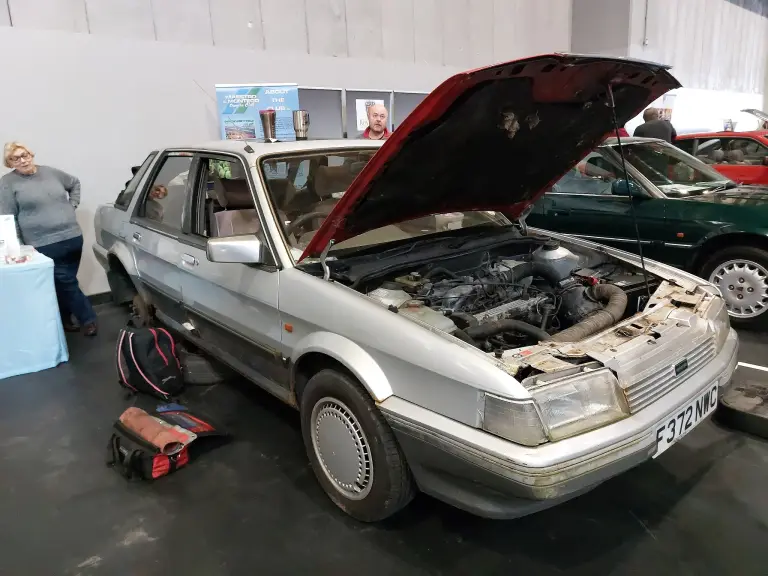
The Metro was intended to replace the Rover Mini and shared its market with the Rover Maestro. More cars are in the Rover collection.
Sources
- Austin Metro, English Wikipedia: ADO88 and LC8, the launch, the Rover years and production totals