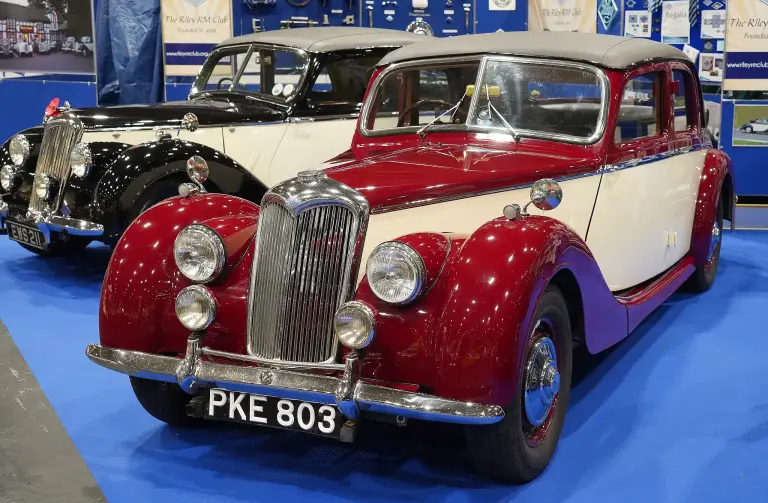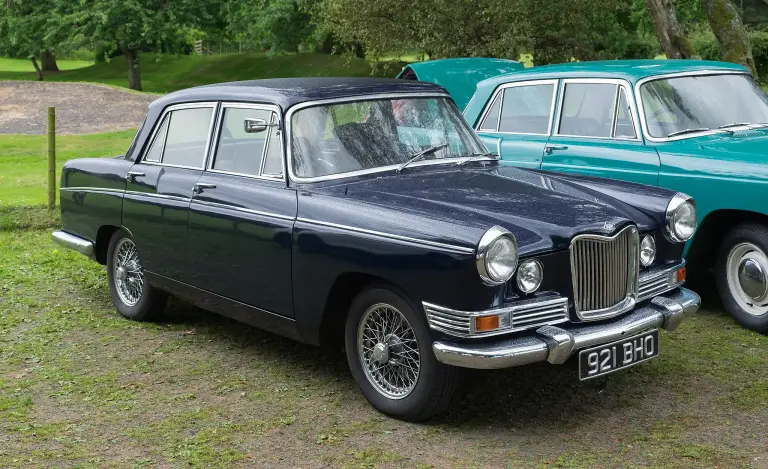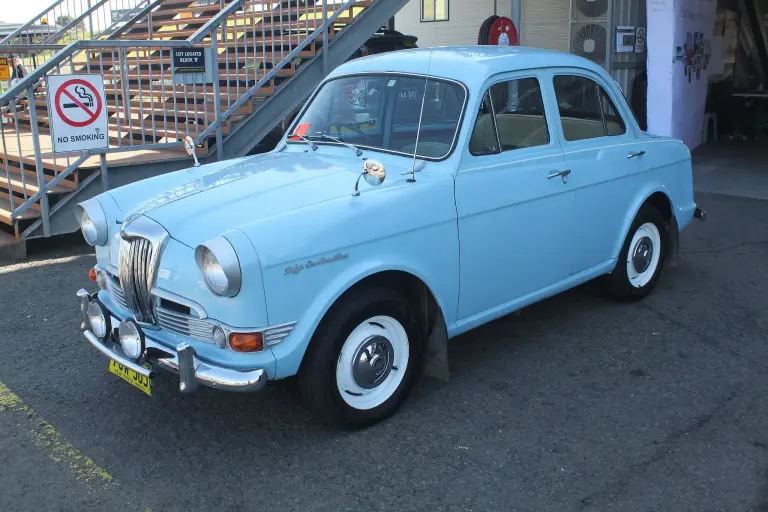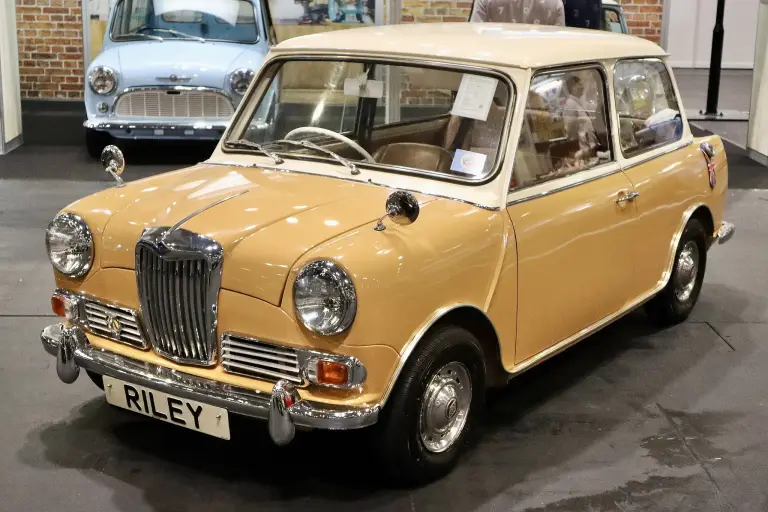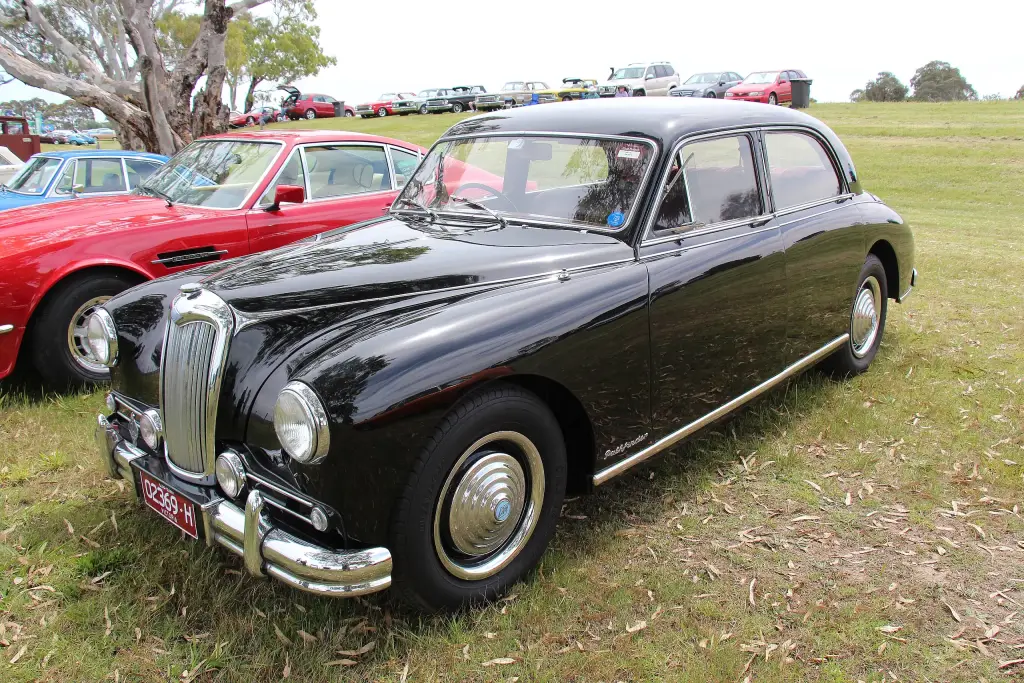
The Riley Pathfinder was built by Riley Motors in Britain from 1953 to 1957 and first shown at the London Motor Show in October 1953, where it replaced the RMF as Riley’s top model. Designed as the RMH just before the 1952 merger of Nuffield with Austin, it is often described as the last proper Riley.
Riley Pathfinder at a glance
| Maker | Riley Motors, Coventry |
|---|---|
| Production | 1953–1957 |
| Predecessor | Riley RMF |
| Design code | RMH |
| Engine | 2,443 cc Big Four four-cylinder, twin camshafts, twin SU carburettors |
| Power | 110 bhp |
| Chassis | separate all-steel, coil rear springs to begin with, leaf springs at the end |
| Front suspension | torsion-bar independent, developed from the RMF |
| Brakes | 12 in Girling drums with Clayton Dewandre Vac Hydro servo |
| Gearbox | four-speed, overdrive optional from 1956 |
| Top speed | 99.5 mph in The Motor’s 1955 test |
| Price | £1,240 including taxes in 1955 |
History of the Riley Pathfinder
An RMH for the top of the range
The Pathfinder was designed as the RMH just before the 1952 merger of Riley’s parent, the Nuffield Organization, with Austin to form BMC, and it is seen as the last proper Riley. It used Riley’s 110 bhp 2,443 cc twin-cam Big Four with twin SU carburettors, in a separate all-steel chassis with coil-sprung rear suspension, changed to leaf springs towards the end of production, and torsion-bar independent front suspension carried over from the RMF. The 12 in Girling drum brakes had a Clayton Dewandre Vac Hydro servo as standard, and from 1956 an overdrive gearbox became optional.
Body and interior
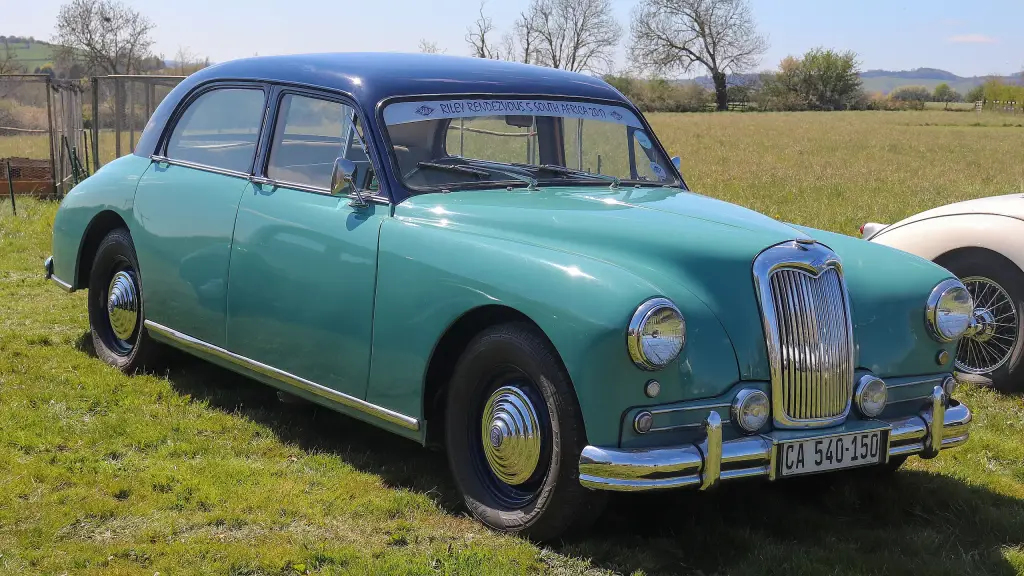
Up front buyers could choose two single seats or an optional full-width bench, with the front corner of the seat squab shaped to clear the gear lever and allow three abreast. The rear seat had a folding centre armrest and leather covers, a heater was standard, and the car came in black, maroon, green, blue or grey. The floor-mounted gear lever sat by the driver’s door, so right-hand-drive drivers changed gear with their right hand, and the handbrake lever was under the dashboard. The body looked like the Wolseley 6/90, though the Riley’s bonnet lifted with the radiator grille while the Wolseley’s grille was fixed; both cars were designed by Morris’s Gerald Palmer for Nuffield before the merger, the Riley being launched a year earlier, in 1953.
The Ditchfinder and the road test
All Pathfinders had the front independent suspension developed from the RMF, but the sophisticated Riley rear layout was dropped for conventional leaf springs in the last examples. A Panhard rod located the rear axle, and on some early cars it sheared under hard cornering, earning the unfortunate nickname “Ditchfinder”. The Motor tested a Pathfinder in 1955: 99.5 mph, 0–60 mph in 16.8 seconds, 19.5 mpg and a price of £1,240. The Pathfinder was replaced in 1957 by the short-lived Wolseley 6/90-derived Riley Two-Point-Six.
Design and features
- Big Four power: 110 bhp from the 2,443 cc twin-cam four, the last Riley engine of its kind in a saloon.
- Servo brakes: 12 in Girling drums with a Clayton Dewandre vacuum servo as standard.
- Flexible seating: two front seats or a three-place bench, with a folding rear armrest.
- Long-legged: overdrive available from 1956 for fast main-road cruising.
- Palmer styling: the Nuffield family look shared with the Wolseley 6/90.
Riley Pathfinder versions
- Pathfinder (1953–1957): the standard saloon with coil rear springs.
- Bench-seat cars: the optional three-abreast front seat.
- Overdrive cars (1956–1957): the optional overdrive gearbox.
- Late leaf-spring cars: conventional rear suspension at the end of production.
The Pathfinder replaced the RMF at the top of the range and was itself replaced by the Riley Two-Point-Six. Its successor at the bottom of the range was the One-Point-Five; more cars are in the Riley collection.
Sources
- Riley Pathfinder, English Wikipedia: engine, chassis, interior, road test, Ditchfinder