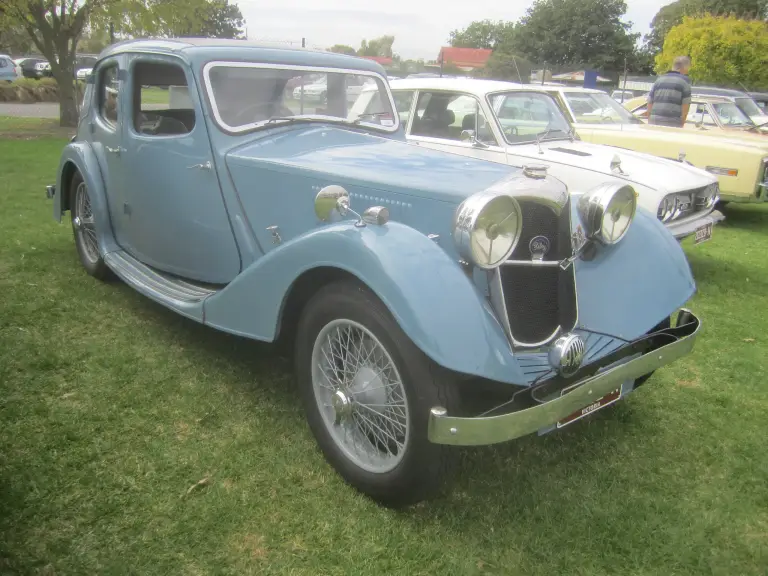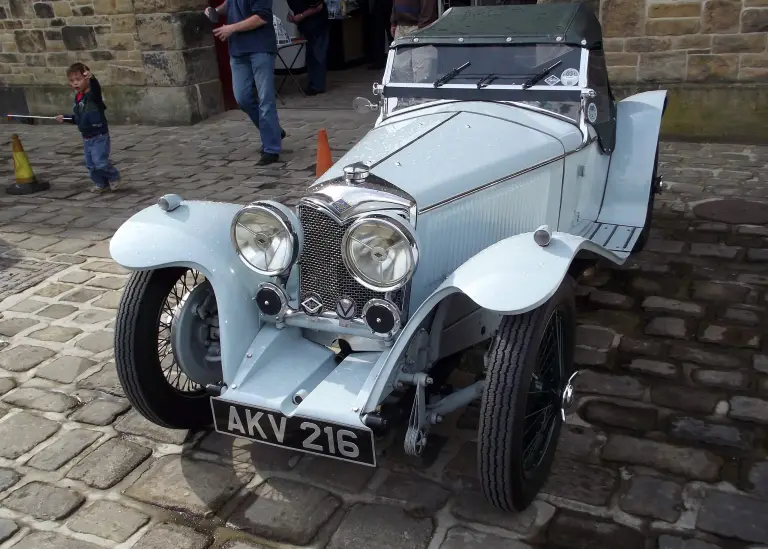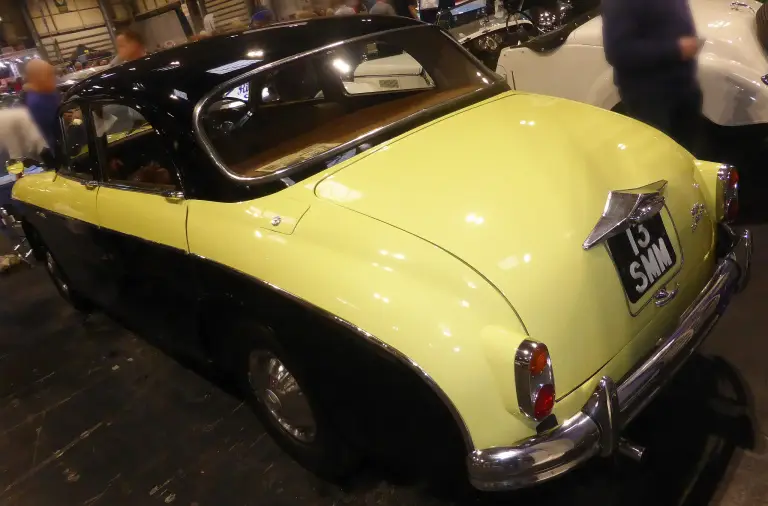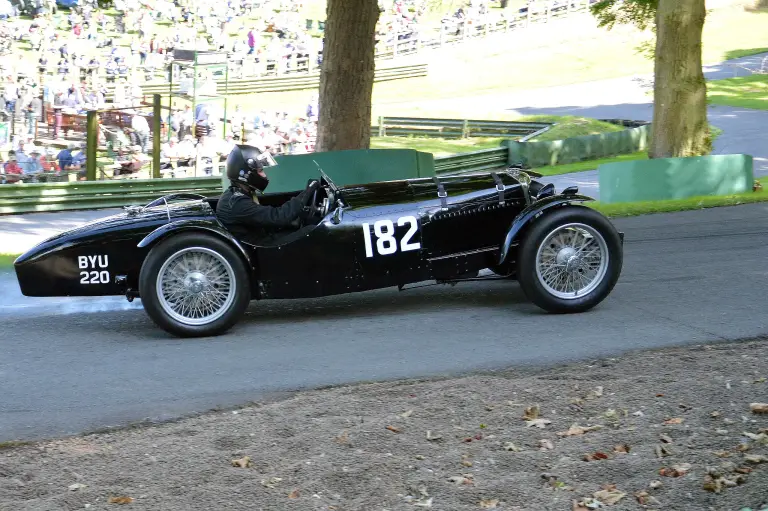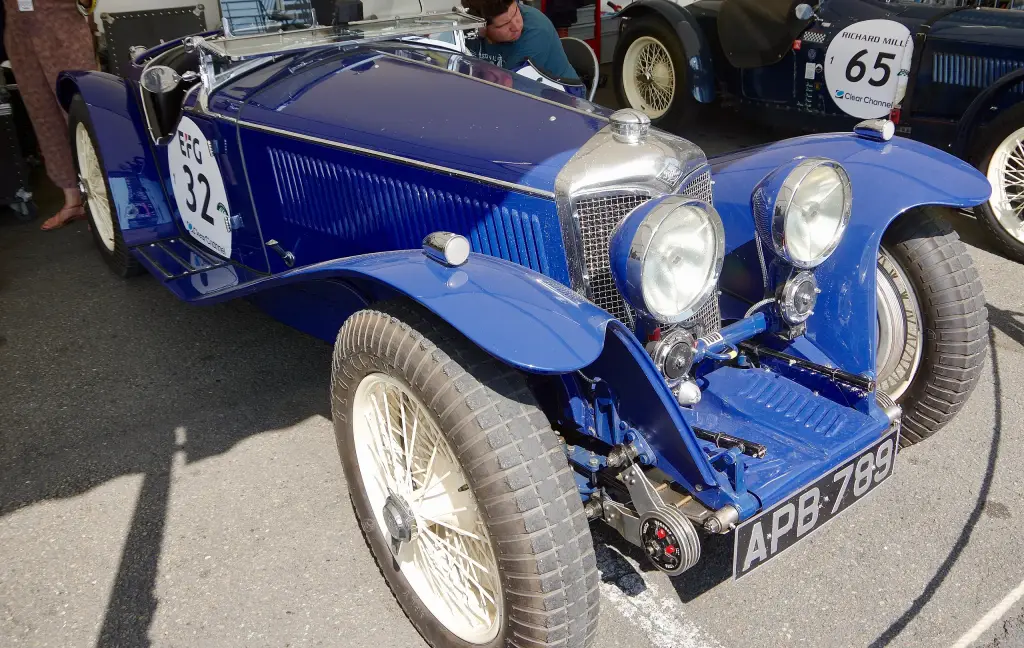
The Riley MPH is a small-production, two-seat sports car made between 1934 and 1935 by the Riley company of Coventry. Very few were made, and examples are now highly sought after.
Riley MPH at a glance
| Maker | Riley, Coventry |
|---|---|
| Production | 1934–1935 |
| Chassis basis | the car prepared for the 1933 TT races |
| Suspension | half-elliptic springs, rigid axles front and rear |
| Brakes | large 15 in drums |
| Body | aluminium over a traditional wood frame |
| Engines | six-cylinder 1,458, 1,633 or 1,726 cc |
| Carburettors | triple, or more usually twin SU |
| Power | 1,726 cc: 56.8 PS at 4,800 rpm |
| Top speed | about 90 mph with the 1,726 cc engine |
| Gearboxes | four-speed manual or ENV preselector |
| Price and numbers | £550; believed around 15 built, 14 known to survive |
Based on one source, the English Wikipedia article on the Riley MPH.
History of the Riley MPH
A TT chassis for the road
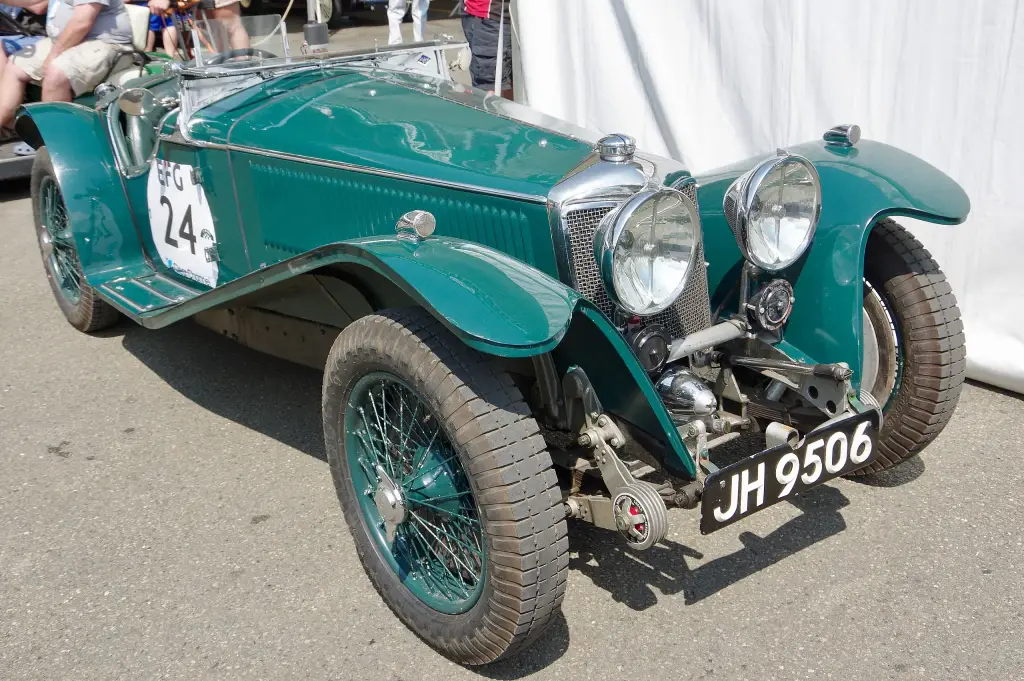
The MPH’s chassis, with half-elliptic springs and rigid axles front and rear, was based on that of the car prepared for the 1933 TT races. To keep the height as low as possible the side members were positioned under the axle at the rear. Large fifteen-inch drum brakes were used, and the bodywork was mainly aluminium, built over a traditional wood frame, with a long bonnet, front wings flowing into running boards and a short, rounded tail. The windscreen could fold flat to reduce air resistance.
Sixes of three sizes
Buyers could choose between three sizes of six-cylinder engine: 1,458, 1,633 or 1,726 cc, fitted with triple or, more usually, twin SU carburettors. The engines kept Riley’s traditional arrangement of twin camshafts mounted high in the crankcase and used aluminium alloy connecting rods; the 1,726 cc version produced 56.8 PS at 4,800 rpm. Drive went to the rear wheels through either a four-speed manual “crash” gearbox or an ENV preselector supplied by Armstrong Siddeley, and the 17 hp version could reach about 90 mph.
Fifteen cars, many replicas
The exact number made is not known, but is believed to be around 15, and the MPH was expensive at £550. Numerous replicas have been made, while fourteen original cars are thought to survive — which explains why the model is so sought after today.
Design and features
- Low chassis: rear side members under the axle, derived from the 1933 TT car.
- Aluminium body: hand-formed over a wood frame, with a folding windscreen.
- Three sixes: 1,458, 1,633 and 1,726 cc, twin camshafts high in the crankcase.
- Preselector option: an ENV gearbox supplied by Armstrong Siddeley.
- Rarity: around fifteen built, fourteen believed to survive.
Riley MPH versions
- 1,458 cc MPH: the smallest six.
- 1,633 cc MPH: the middle engine.
- 1,726 cc MPH: the 17 hp version, about 90 mph.
- Preselector cars: the ENV gearbox option.
- Replicas: numerous copies built since, distinguished from the originals by historians.
The MPH followed the Riley Imp and its chassis underpinned the Riley Sprite. Both grew out of the Riley Nine; more cars are in the Riley collection.
Video: 1935 Riley MPH: Pebble Beach Concours d’Elegance 2014
Video by Forbes on YouTube.
Sources
- Riley MPH, English Wikipedia: chassis, engines, performance, numbers