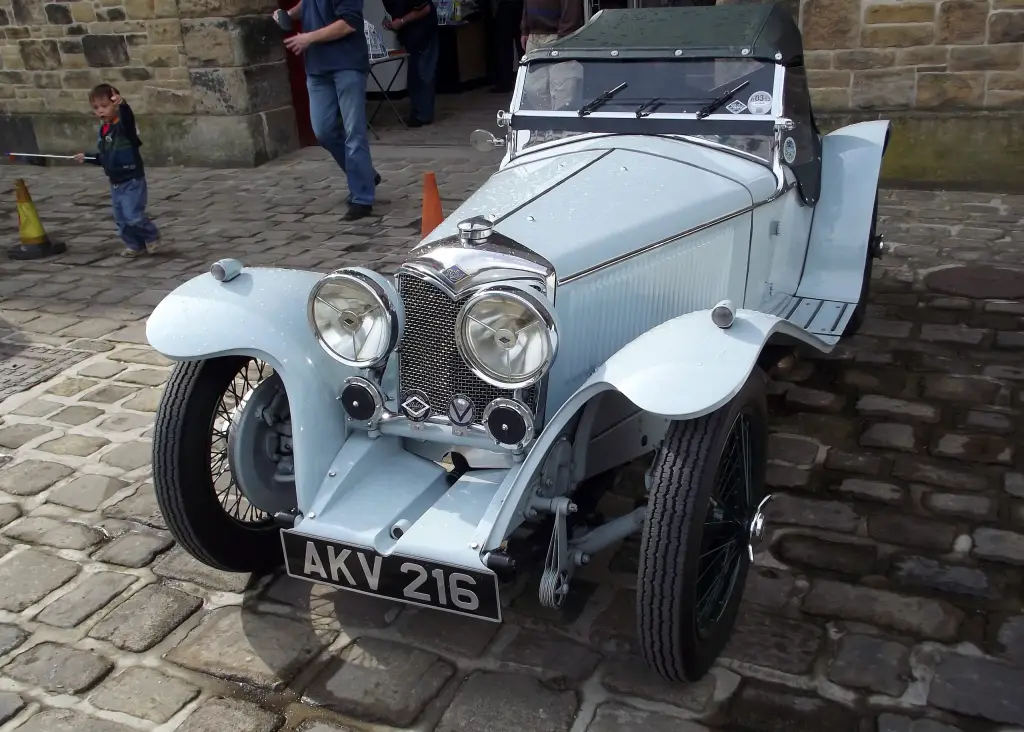
The Riley Imp was a sports version of the Riley Nine, produced in 1934 and 1935. It shared the Nine’s 1,087 cc twin-cam engine and low chassis but wore a small open body with swept-back wings, and it gained quite a reputation for its good looks.
Riley Imp at a glance
| Maker | Riley, Coventry |
|---|---|
| Production | 1934–1935 |
| Basis | Riley Nine, built 1926–1938 |
| Engine | 1,087 cc four-cylinder, twin camshafts high in the crankcase |
| Prototype | shown at the Motor Show at Olympia, London, in 1933 |
| Body | open two-seater sports car |
| Styling | swept-back front wings |
| Competition version | Riley Ulster Imp |
| 1934 Ulster TT | success for the light competition cars |
| 1934 Le Mans | 13th place, Kay Petre and Dorothy Champney |
The Imp is described in a section of the English Wikipedia article on the Riley Nine; this page uses that section together with the Nine’s design details.
History of the Riley Imp
A sporting body for the Nine
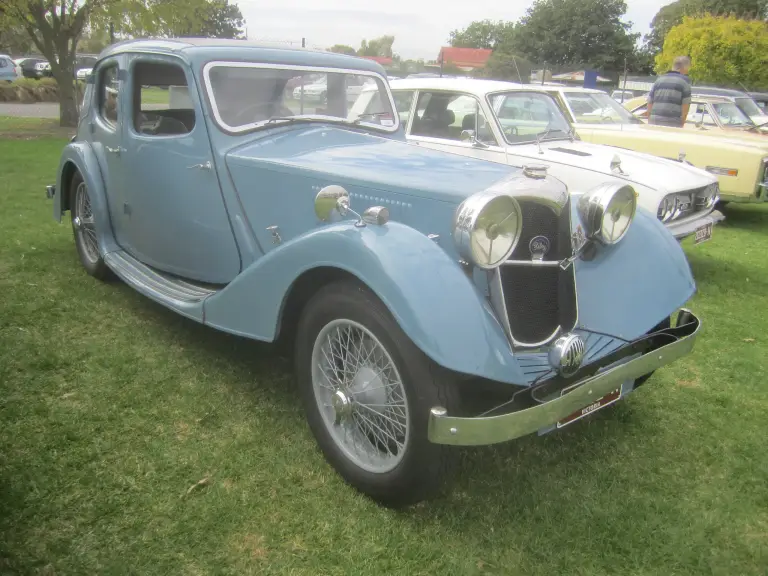
The Imp was the sports version of the Riley Nine, a car one of the most successful light sporting models of inter-war Britain, built by Riley of Coventry with a wide range of body styles between 1926 and 1938. The Nine’s 1,087 cc four had hemispherical combustion chambers with valves inclined at 45 degrees in a crossflow head, worked by two camshafts mounted high in the crankcase through short pushrods and rockers. The Imp took that engine and the Nine’s low chassis and clothed them in a small open two-seater body whose swept-back wings set it apart from the saloons.
Olympia 1933 and the Ulster Imp
A prototype version was displayed at the 1933 Motor Show at Olympia, London, and the production Imp followed in 1934 and 1935, at the same time as Riley was adding the Lynx, Kestrel and Falcon bodies to the Nine range. Light-bodied competition versions gained success in the 1934 Ulster Tourist Trophy and were thereafter known as the Riley Ulster Imp.
Le Mans 1934
The Imp’s most famous result came at Le Mans in 1934, when Kay Petre and Dorothy Champney took 13th place driving a standard-bodied Imp with competition chassis and drivetrain. It was a strong showing for a small sports car against much larger machinery, and it fixed the Imp in the story of the Nine as the model that carried Riley’s sporting reputation into the middle of the 1930s.
Design and features
- Nine underpinnings: the 1,087 cc twin-cam four and low chassis of Riley’s most successful pre-war car.
- Swept-back wings: the styling that gave the Imp its reputation for good looks.
- Open two-seater body: light and simple, in the tradition of British club sports cars.
- Competition career: the Ulster Imp and a class-defying Le Mans entry in 1934.
Riley Imp versions
- Imp (1934–1935): the standard open sports two-seater.
- Ulster Imp: the light competition version that won in the 1934 Ulster TT.
- Le Mans car (1934): standard body with competition chassis and drivetrain.
The Imp was based on the Riley Nine and passed its sporting brief to the Riley Sprite. The Nine’s 1,496 cc descendant went into the Riley 12/4; more cars are in the Riley collection.
Sources
- Riley Nine, English Wikipedia: Imp production, styling, Ulster TT and Le Mans results