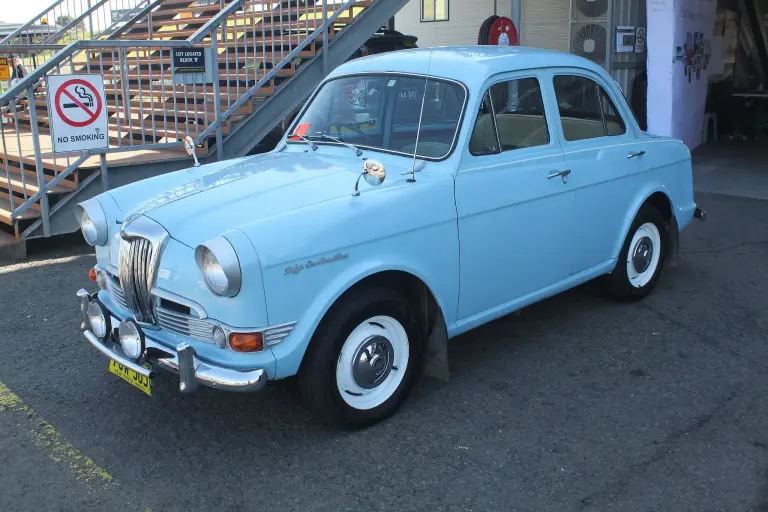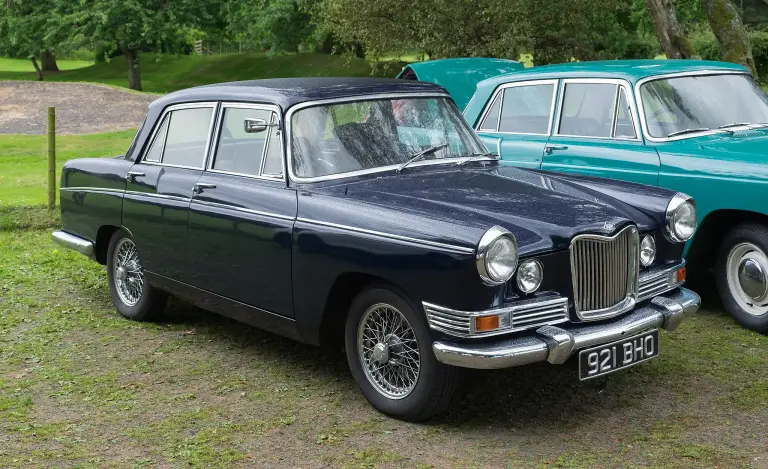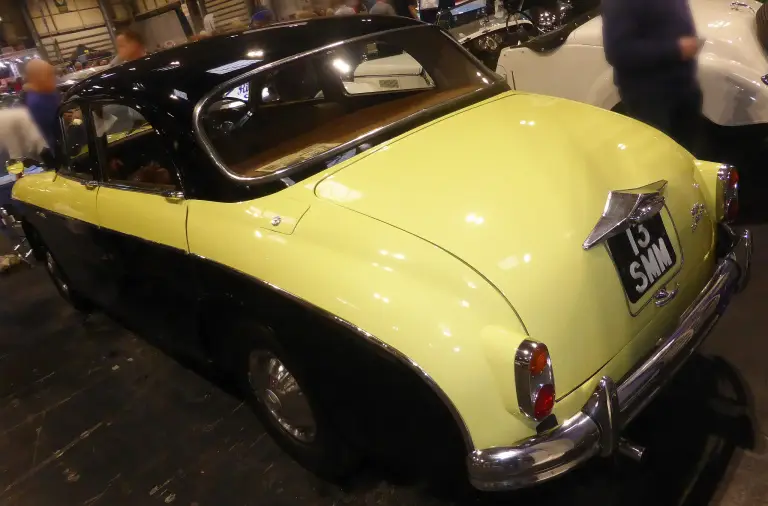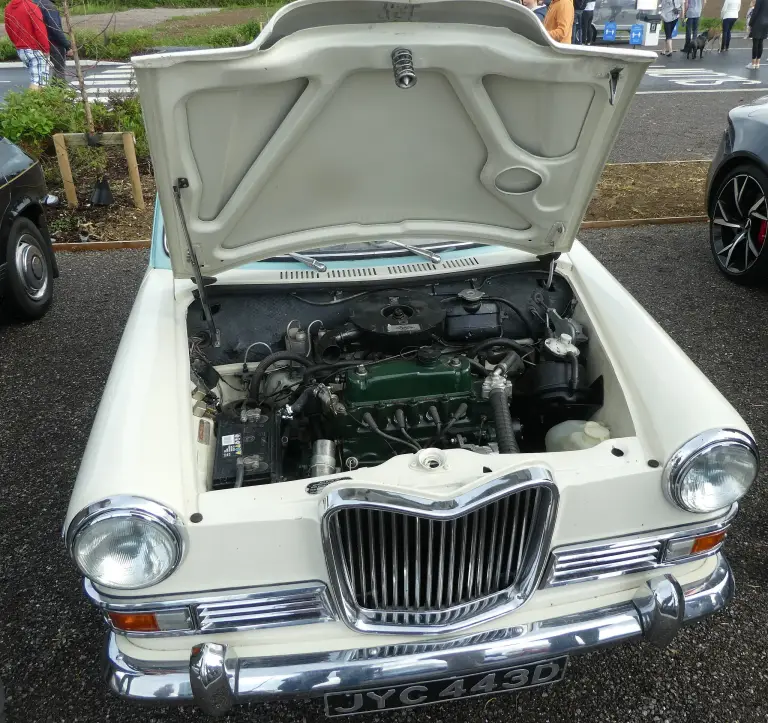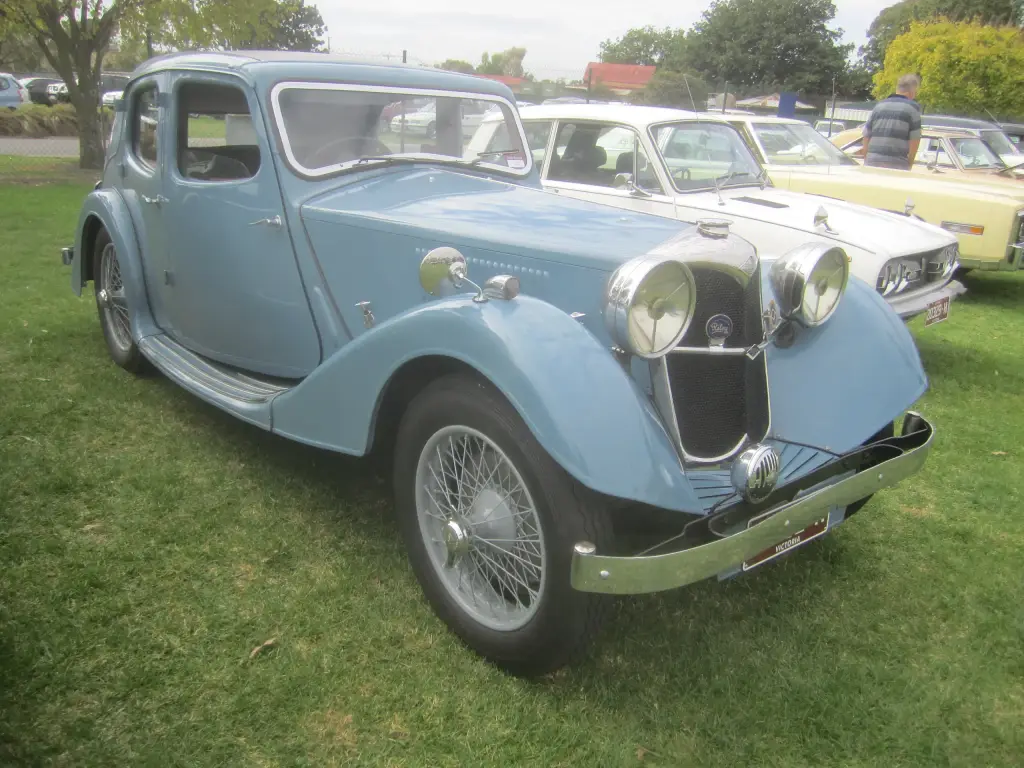
The Riley 12/4, called the Riley 1½-litre from 1936, was a range of cars made from 1935 to 1938 by the British Riley company and offered with saloon, touring and sports or racing coachwork. Its 1,496 cc four was designed by Hugh Rose and became one of the longest-lived Riley engines, staying in production until 1955.
Riley 12/4 at a glance
| Maker | Riley, Coventry |
|---|---|
| Production | 1935–1938 |
| Also called | Riley 1½-litre from 1936 |
| Engine | 1,496 cc four-cylinder “12/4” by Hugh Rose |
| Engine construction | cylinder block and crankcase cast as one unit |
| Valve gear | twin camshafts high in the engine block, crossflow head on some versions |
| Carburettors | one or two Zenith, or twin SU |
| Chassis | half-elliptic springs all round, Girling rod brakes |
| Gearboxes | four-speed preselector or manual |
| Wheelbases | three, with tracks of 48 in or 51 in |
| Body styles at launch | Kestrel four-light fastback, Falcon saloon, Lynx tourer |
| From 1936 | six-light Kestrel, Adelphi saloon, Continental touring saloon |
History of the Riley 12/4
Hugh Rose’s engine
The 1,496 cc four used one or two Zenith carburettors. Designed by Hugh Rose, it was based on the Riley Nine engine but with significant changes, above all the cylinder block and crankcase cast as a single unit. It kept the advanced Riley layout of twin camshafts mounted high in the engine block, with a crossflow head on some versions and Zenith or twin SU carburettors. The engine was so good that production continued until 1955: it powered the Riley 12 of 1939–1940 and then the RMA and RME of 1946–1955, while the One-Point-Five of 1957–1965 used a BMC B-Series instead.
Chassis and coachwork
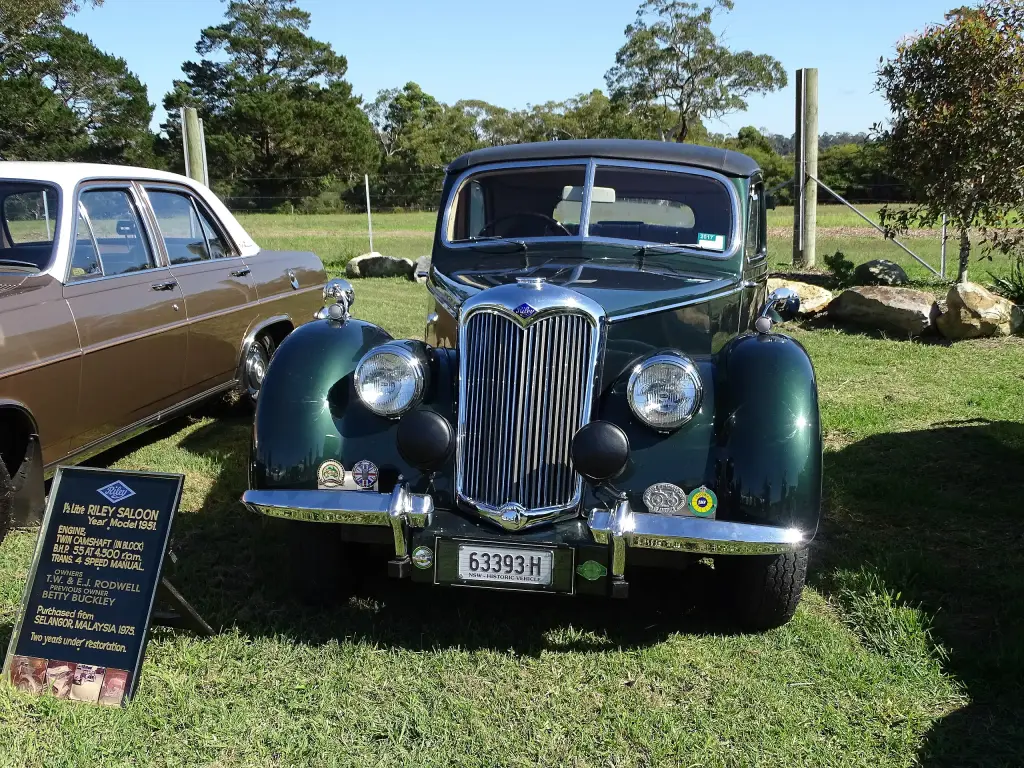
The chassis had half-elliptic leaf springs all round, with drive to the rear wheels through either a four-speed preselector or a manual gearbox, and Girling rod brakes. Three different wheelbases were made and there were two track options: 48 in on most versions or the wider 51 in on the 1936 Adelphi, Continental and Kestrel saloons. At the 1935 launch three body styles were available: the Kestrel four-light fastback saloon, the Falcon saloon and the Lynx open tourer. In 1936 the Kestrel became a six-light, the Falcon was replaced by the six-light Adelphi saloon and the Continental touring saloon was introduced. The same 12/4 chassis in narrow-track form also carried the Briggs Merlin steel body as the Riley Falcon, replacing its coachbuilt body.
After the war
The 12/4 engine outlived the car by nearly twenty years. Riley’s first post-war saloons could not reuse the pre-war body tooling, but the 1,496 cc four carried straight over into the RMA and RME of 1946–1955. It is the link between the Nine of 1926 and the last of the twin-cam Rileys, and the reason the 12/4 is remembered more for what was under the bonnet than for any single body style.
Design and features
- One-piece block and crankcase: the main change from the Nine’s engine, for stiffness and cheaper production.
- Twin high camshafts: the Riley trademark, with a crossflow head on some versions.
- Two track options: 48 in as standard, 51 in for the wider Adelphi, Continental and Kestrel saloons.
- Long-lived engine: in production from 1935 until 1955, through the war and the RM series.
- Five bodies: Kestrel, Falcon, Lynx, Adelphi and Continental.
Riley 12/4 versions
- Kestrel (1935): four-light fastback saloon, six-light from 1936.
- Falcon (1935–1936): coachbuilt saloon, replaced by the Adelphi and later built with the Briggs Merlin steel body.
- Lynx (1935): open tourer.
- Adelphi (1936): six-light saloon on the wider track.
- Continental (1936): touring saloon on the wider track.
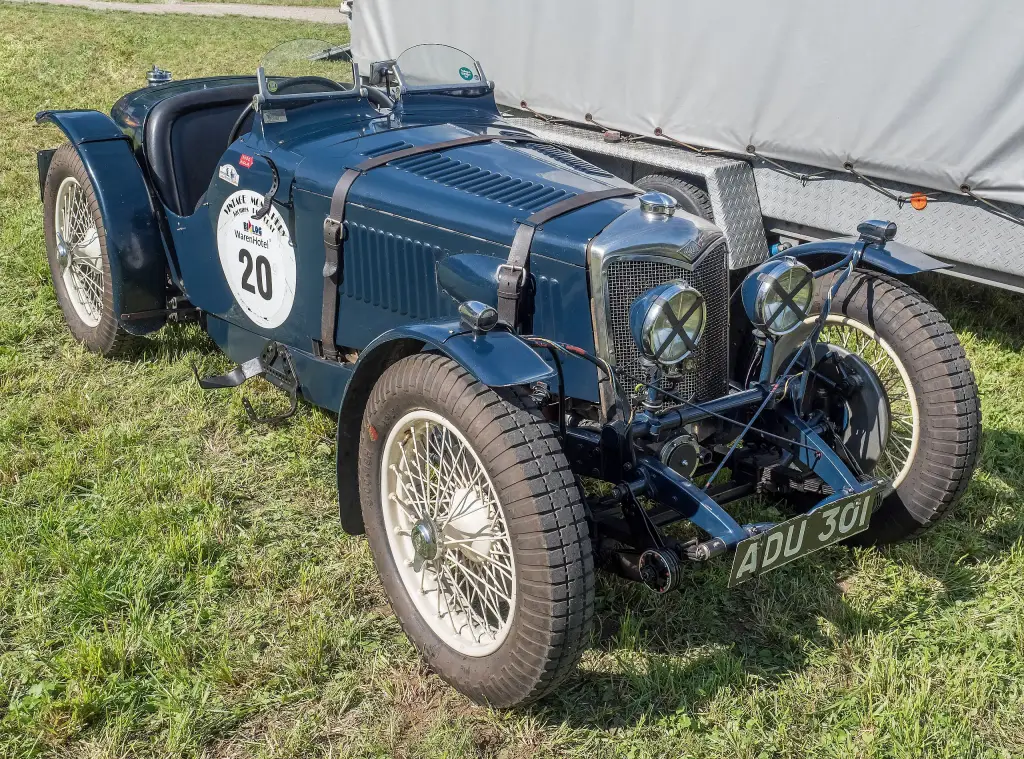
- 12/4 Specials: light competition cars built on the same chassis.
The 12/4’s engine grew out of the Riley Nine and went into the post-war RM saloons. Its Kestrel body name was revived in 1965 for the Riley Kestrel; more cars are in the Riley collection.
Sources
- Riley 12/4, English Wikipedia: engine, chassis, wheelbases, coachwork
- Riley Nine, English Wikipedia: Merlin body on the narrow-track 12/4 chassis