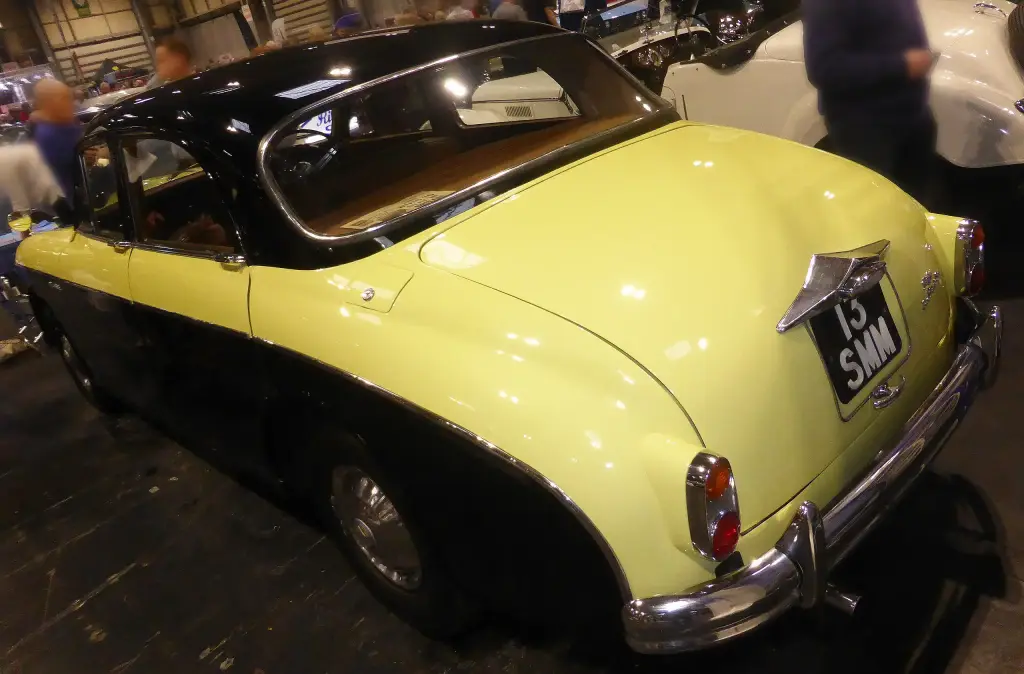
The Riley Two-Point-Six was produced by the British Motor Corporation from August 1957 until 1959. Announced on 23 August 1957, it replaced the Pathfinder as Riley’s flagship, but where the Pathfinder kept Riley’s own twin-cam four and coil rear suspension, the Two-Point-Six was virtually identical to the Wolseley Six-Ninety Series III.
Riley Two-Point-Six at a glance
| Maker | British Motor Corporation |
|---|---|
| Production | August 1957–May 1959 |
| Announced | 23 August 1957 |
| Predecessor | Riley Pathfinder |
| Twin car | Wolseley Six-Ninety Series III |
| Engine | 2,639 cc C-Series straight-six |
| Power | 101 hp, less than the 2.5-litre Big Four it replaced |
| Gearbox | four-speed manual, overdrive or automatic optional |
| Grille | fixed, where the Pathfinder’s lifted with the bonnet |
| Paint | monotone and duotone |
| Replaced by | Riley 4/68 of 1959 |
History of the Riley Two-Point-Six
A Wolseley in Riley clothes
The Two-Point-Six arrived in August 1957 as Riley’s flagship, replacing the Pathfinder, but it was in most respects a Wolseley Six-Ninety Series III with Riley badges. Gone were the Pathfinder’s twin-cam Big Four, its coil rear suspension and its gearbox; in their place was BMC’s 2,639 cc C-Series straight-six with 101 hp, actually less than the 2½ litre four it replaced. Right-hand-drive cars with a manual gearbox had the gear lever on the right, left-hand-drive cars on the left, and both an automatic transmission and overdrive for the manual were available as options.
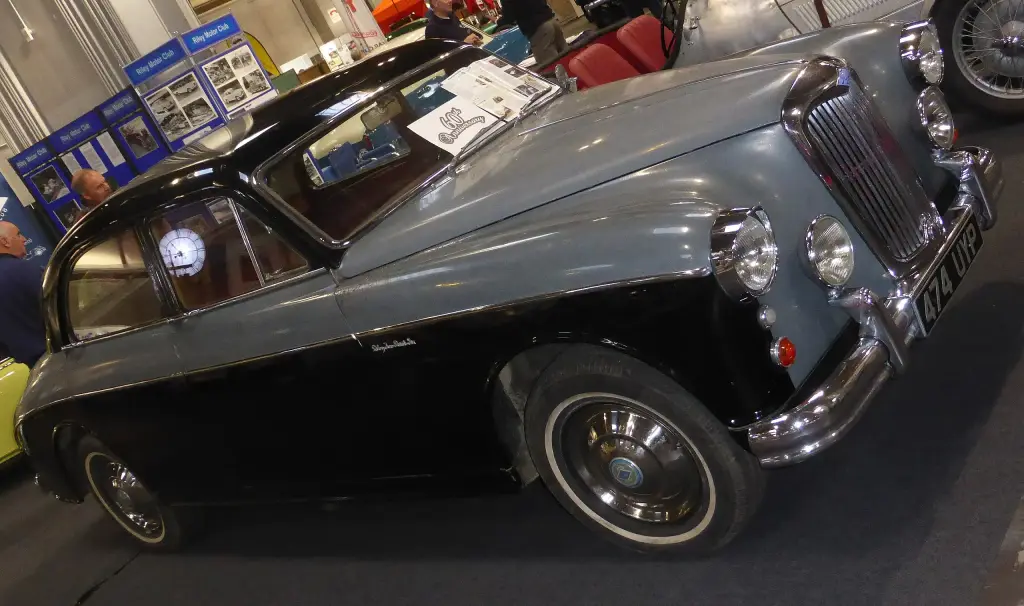
What told it apart
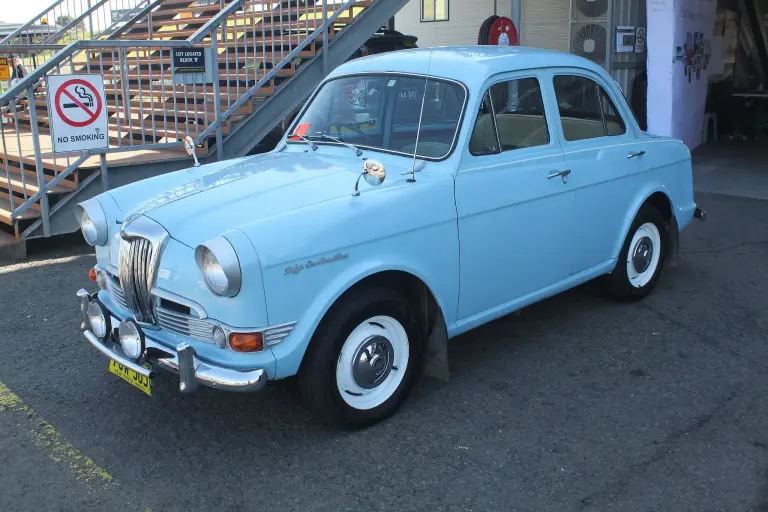
Externally the most obvious differences from the Pathfinder were the bonnet arrangement, with the Two-Point-Six having a fixed grille in common with the 6/90 while the Pathfinder’s grille lifted with its bonnet, and wheel arches with a raised edge. The car was offered in both monotone and duotone paintwork, as were the last Pathfinders. Inside it followed the Wolseley, which meant a roomy saloon aimed at a conservative buyer rather than the sporting Riley client of the 1930s.
The end of large Rileys
The Two-Point-Six was sold to a specific clientele and was never intended to be mass-produced; it sold at the same pro-rata rate as the Pathfinder until production ended in May 1959. It was the last large Riley, and BMC kept the badge alive by replacing it with the Farina-styled Riley 4/68, a cousin of the Wolseley 15/60 and MG Magnette. From then on Riley’s largest car was a 1.5-litre B-Series saloon.
Design and features
- C-Series six: 2,639 cc and 101 hp, smooth but less powerful than the Big Four it replaced.
- Fixed grille: the clearest visual difference from the Pathfinder.
- Raised wheel arches: a small body change shared with the Wolseley 6/90.
- Choice of transmission: manual, overdrive or automatic.
- Two-tone paint: offered alongside monotone finishes.
Riley Two-Point-Six versions
- Two-Point-Six manual: four-speed gearbox, overdrive optional.
- Two-Point-Six automatic: the optional automatic transmission.
- Duotone cars: two-colour paintwork, as on the last Pathfinders.
The Two-Point-Six replaced the Riley Pathfinder and was followed by the smaller Riley 4/68. Its 2.5-litre predecessor’s engine lived on in the RM saloons; more cars are in the Riley collection.
Sources
- Riley Two-Point-Six, English Wikipedia: engine, equipment, differences, production