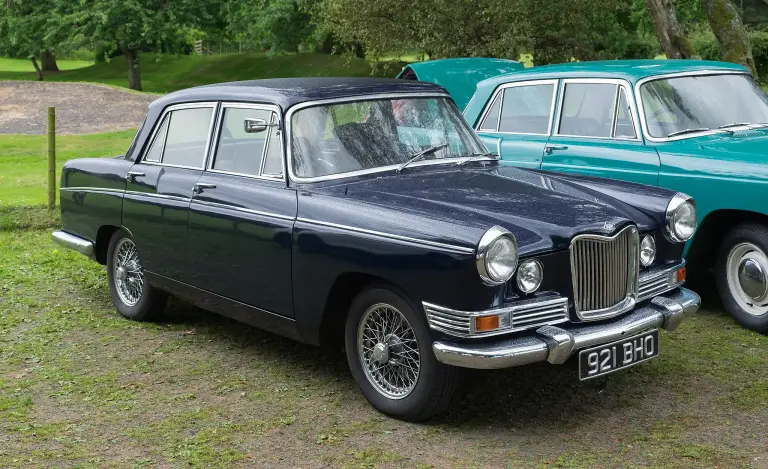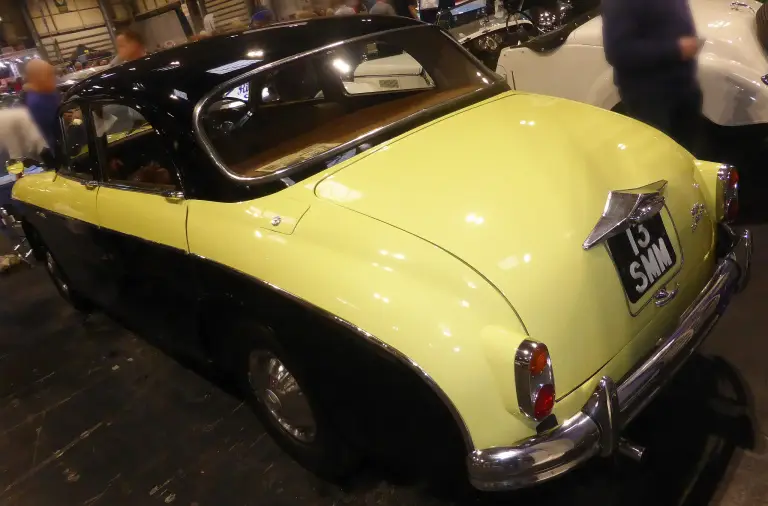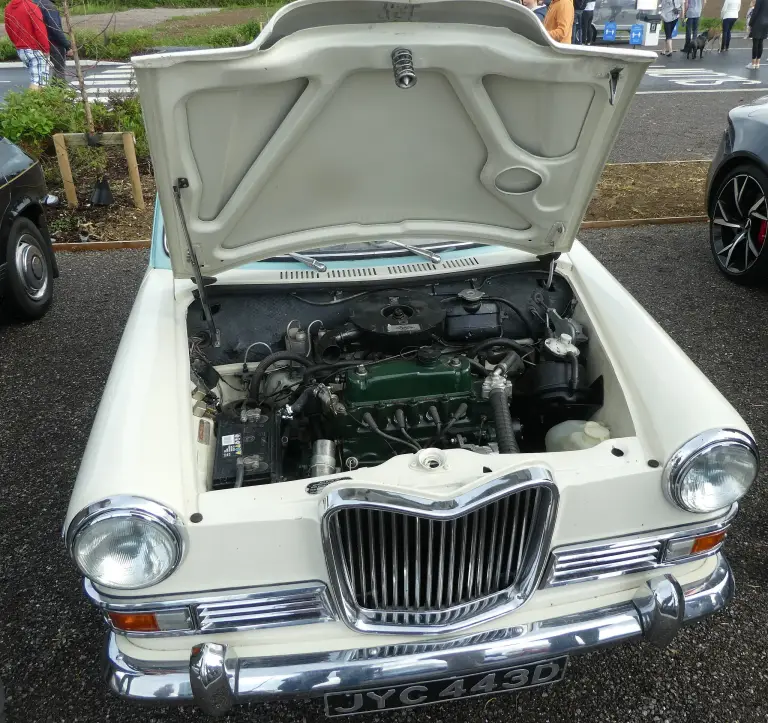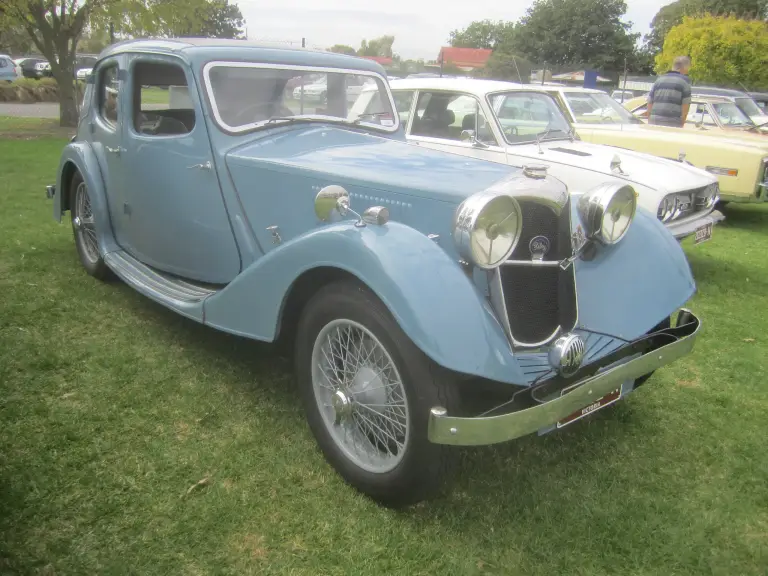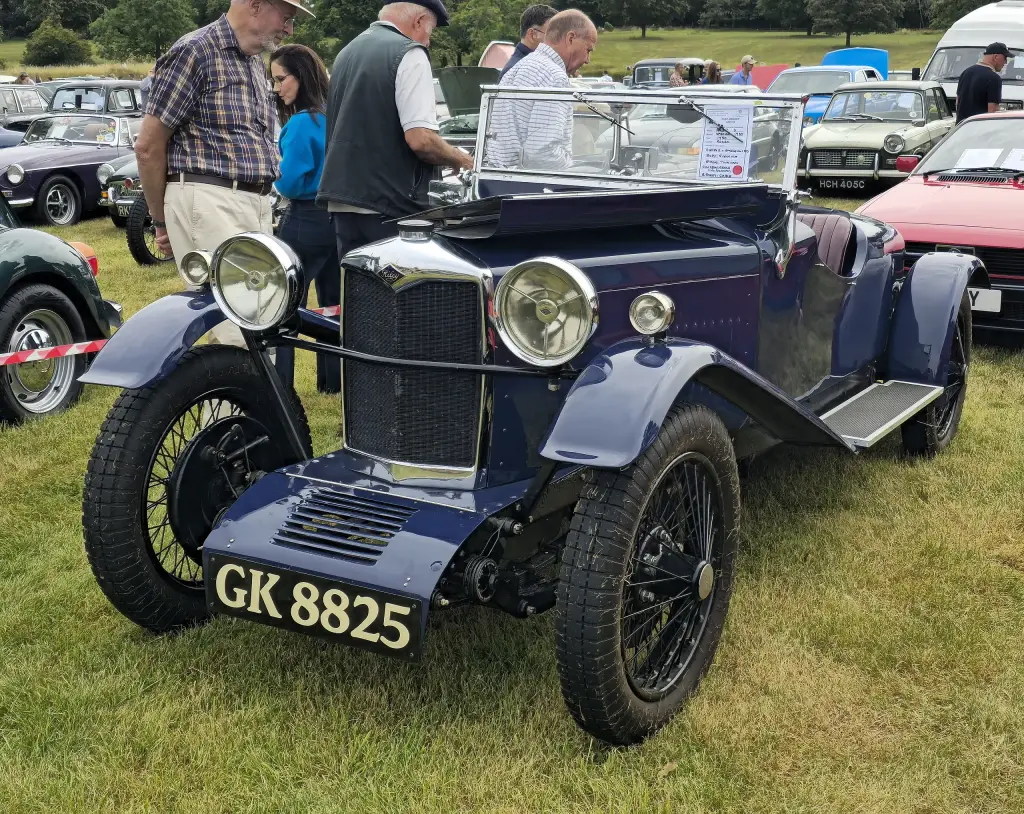
The Riley Nine was one of the most successful light sporting cars produced by the British motor industry between the wars. Riley of Coventry built it with a wide range of body styles between 1926 and 1938, and its twin-cam engine and low chassis made it a favourite of club racers as well as a family saloon.
Riley Nine at a glance
| Maker | Riley, Coventry |
|---|---|
| Production | 1926–1938 |
| Designers | Percy Riley (engine), Stanley Riley (chassis and body) |
| Engine | 1,087 cc four-cylinder, twin camshafts high in the crankcase |
| Combustion chambers | hemispherical, valves inclined at 45 degrees in a crossflow head |
| Launch body prices | Monaco saloon £285, four-seat tourer £235 |
| Saloon performance | 60 mph and 40 mpg |
| Gearboxes | cone clutch, then Silent Third, helical and ENV preselector |
| Final chassis | Briggs “Merlin” steel body from 1936 |
| Last model | Victor of 1938, also with a 1,496 cc engine |
History of the Riley Nine
A Nine designed by two brothers
The car was largely designed by Percy and Stanley Riley: Stanley was responsible for the chassis, suspension and body, while the elder Percy designed the engine. The 1,087 cc four had hemispherical combustion chambers with valves inclined at 45 degrees in a crossflow head. To avoid the expense of overhead camshafts, the valves were worked by two camshafts mounted high in the crankcase through short pushrods and rockers. The engine was carried on a rubber-bushed bar through the block with a further mount at the rear of the gearbox, and drive went to the rear through a torque tube and a spiral bevel axle on semi-elliptic springs.
Bodies from Monaco to Lynx
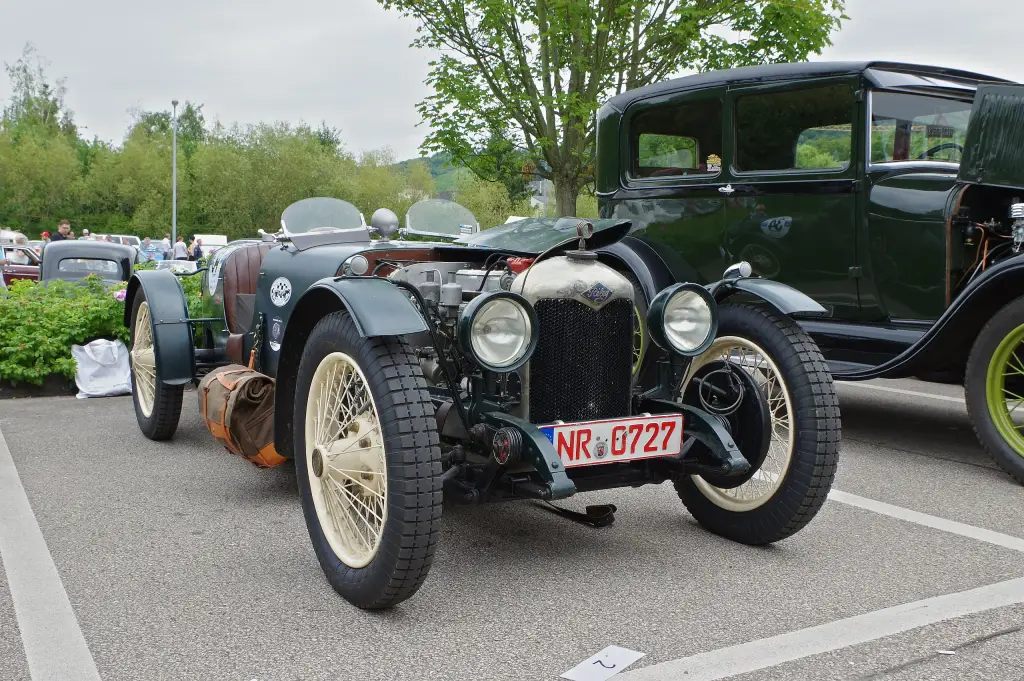
At the July 1926 launch two bodies were offered: a fabric saloon called the Monaco at £285 and a fabric four-seat tourer at £235. The saloon could reach 60 mph and return 40 mpg. A basic artillery-wheeled saloon, the San Remo, and a two-seater with dickie followed quickly, and steel panelling became an option on the tourer. The thirties brought the two-door Lynx, the Kestrel and the Falcon in the busy year of 1933; by 1934 the Monaco and Kestrel were all-aluminium coachbuilt cars, and the Lynx gained four doors and lost its disappearing hood.
Marks and the Plus series
Mark 1 production really began in 1927 at Percy’s engine factory, but the Nine was such a success that the works soon stopped side-valve production and tooled up for it in early 1928. The Mark II dropped the cone clutch, moved the gear lever and handbrake to the centre and adopted a Riley steering box. The Mark III of late 1928 brought stronger wheels and a new arrangement of rear brake rods. The Mark IV was a thorough rework with Riley-made six-stud hubs and axles and a new cable braking system with larger drums, adjustable from the driver’s seat; the de-luxe Biarritz saloon joined the range in 1929. The Plus series moved the fuel tank to the rear of the chassis with an Autovac, and the Plus Ultra used a chassis that dropped between the axles to lower the car. A preselector gearbox was offered in 1934 for £27 extra.
Steel bodies and the end
To keep costs down Riley agreed with Briggs Manufacturing on a steel body for a new chassis introduced in 1936, with Girling rod brakes and, for the Nine, a propeller-shaft final drive. The Briggs body was named Merlin and was sold alongside the last Kestrel Nine, which also moved to the Merlin chassis. The body grew in 1937 into the Touring Saloon, a higher-specified Monaco was added on the same chassis, and the final Nine, the 1938 Victor, was also available with the 1,496 cc engine, with the engine further forward, the battery in the engine bay and smaller wheels. Riley was bought by Lord Nuffield in 1938 and Nine production stopped as the company settled on two engines, a policy continued after the war by the RM series.
Design and features
- Twin-cam four: camshafts high in the crankcase, short pushrods and a crossflow head at a modest price.
- Low chassis: the Plus Ultra frame dropped between the axles, a hallmark of the Nine’s handling.
- Many bodies: Monaco, San Remo, Biarritz, Lynx, Kestrel, Falcon, Merlin and Victor coachwork.
- Club racing: the basis of the Brooklands and Ulster competition cars.
- Cable brakes: Riley’s continuous cable system, adjustable from the driving seat.
Riley Nine versions
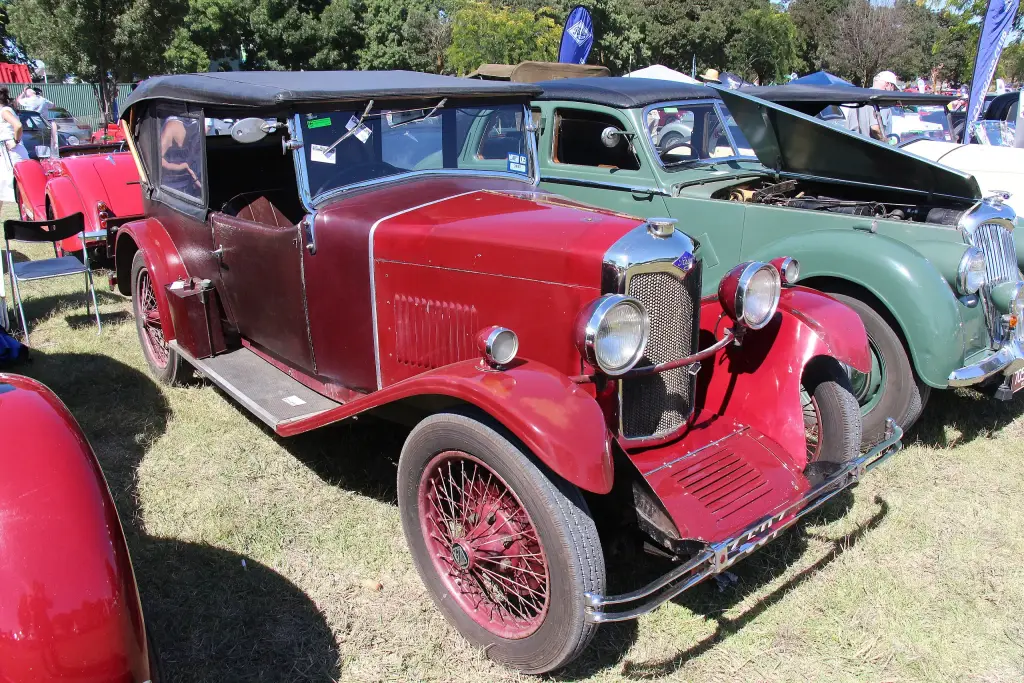
- Monaco (1926): the original fabric saloon at £285.
- San Remo and Biarritz: basic and de-luxe saloons of the early thirties.
- Lynx, Kestrel and Falcon (1933): two-door, fastback and sporting saloons.
- Brooklands and Ulster: light competition versions that made the Nine’s name.
- Merlin (1936) and Touring Saloon (1937): Briggs steel bodies on the new chassis.
- Victor (1938): the last Nine, offered with 1,087 or 1,496 cc.
The Nine spawned the Riley Imp and the Riley 12/4, whose 1,496 cc engine was a development of the Nine’s. The post-war RM series carried the twin-cam layout on; more cars are in the Riley collection.
Sources
- Riley Nine, English Wikipedia: design, engines, bodies, marks, steel bodies