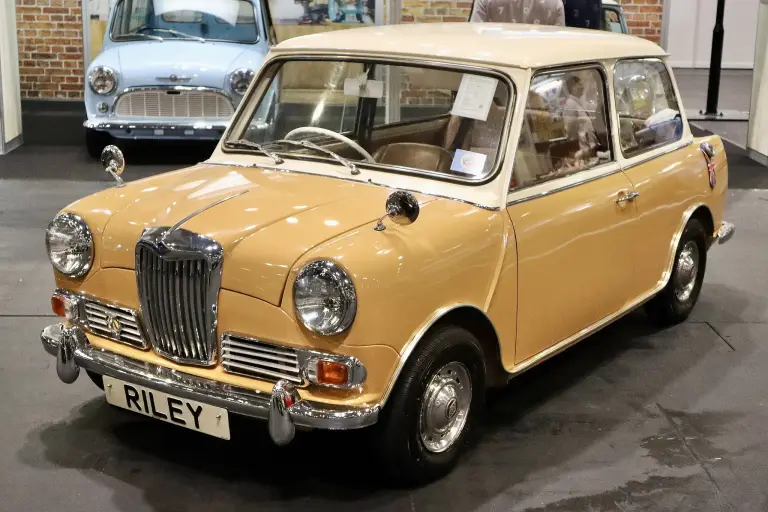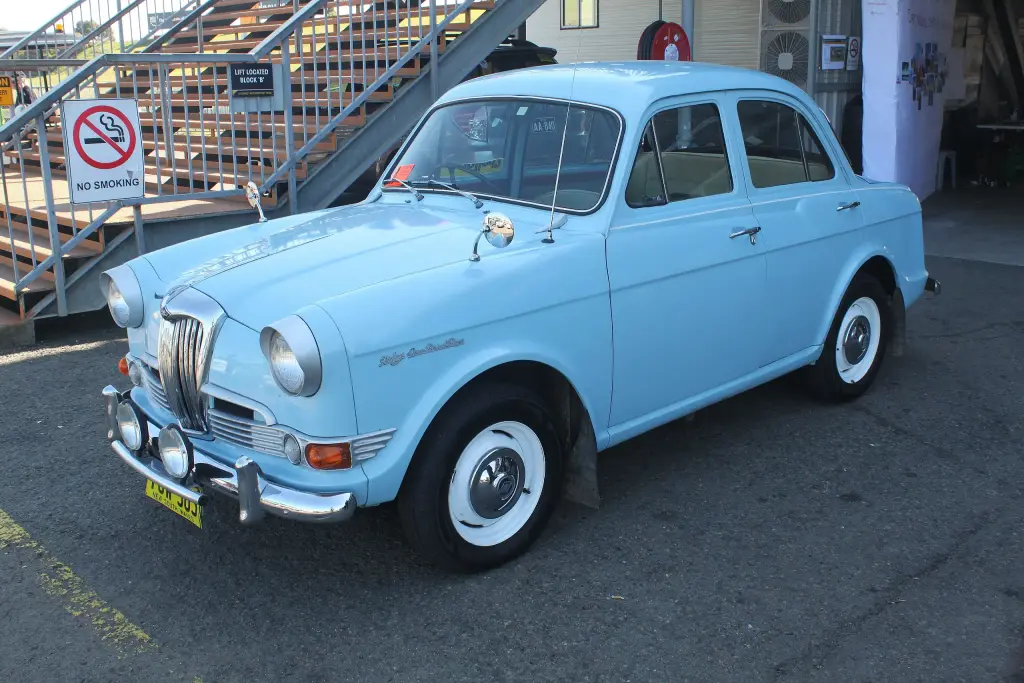
The Riley One-Point-Five and the similar Wolseley 1500 were built from 1957 until 1965. They used the Morris Minor’s floor pan, suspension and steering, but were fitted with the larger 1,489 cc B-Series engine and the MG Magnette gearbox, which made the Riley a quick and well-equipped small saloon.
Riley One-Point-Five at a glance
| Maker | Riley, BMC |
|---|---|
| Production | 1957–1965 |
| Twin model | Wolseley 1500 |
| Underpinnings | Morris Minor floor pan, suspension and steering |
| Engine | 1,489 cc B-Series four, twin 1½ in SU H4 carburettors |
| Power | 68 hp, against 50 hp for the Wolseley |
| Gearbox | MG Magnette four-speed |
| Brakes | Girling, larger than the Wolseley’s Lockheed system |
| Series I | launched November 1957 after the London show |
| Series II | May 1960, hidden hinges and full-width parcel shelf |
| Series III | October 1961, revised grille and lights |
| Built | 19,568 Rileys, against 103,394 Wolseleys |
History of the Riley One-Point-Five
Two models from one design
The One-Point-Five and the Wolseley 1500 shared the Morris Minor’s floor pan, suspension and steering but used the larger 1,489 cc B-Series engine and the MG Magnette gearbox. The two cars were separated by nearly 20 hp: the Riley had twin SU carburettors and a slightly sportier cylinder head for 68 hp, while the Wolseley made do with a single carburettor and 50 hp. The Wolseley was released in April 1957 and the Riley followed in November, directly after the London Motor Show.
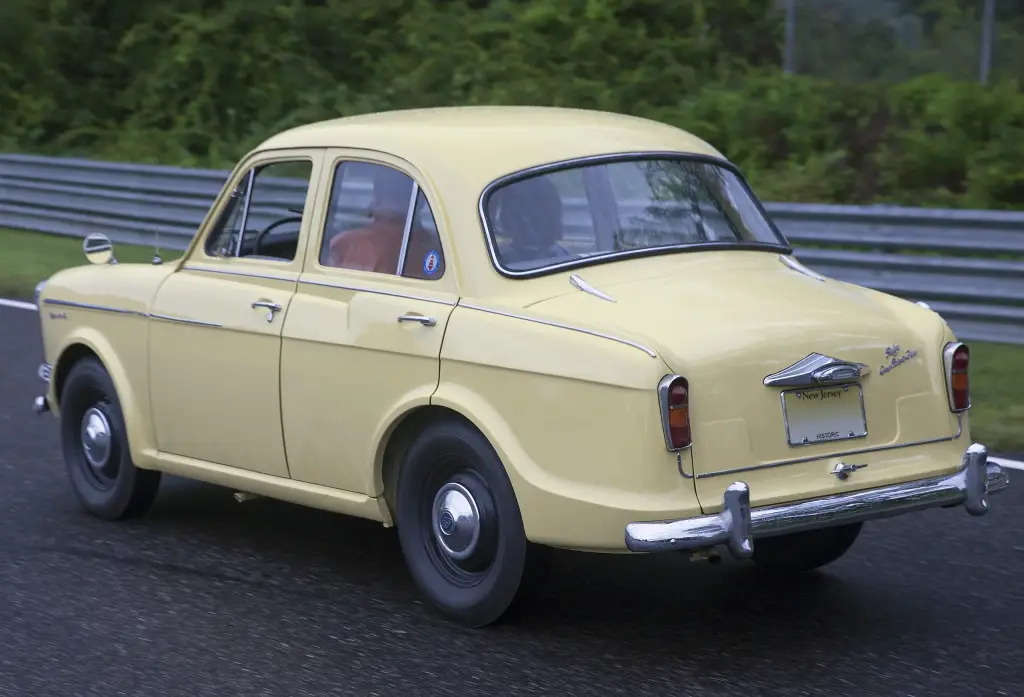
Series I to III
The Series II arrived in May 1960 with hidden boot and bonnet hinges and a full-width parcel shelf under the fascia. The Series III came in October 1961 with a revised grille and front and rear lights, and in October 1962 both cars received the more robust crank and bearings of the larger 1,622 cc unit then being fitted to the Austin Cambridge and its Farina-styled relatives, though the Riley and Wolseley kept their 1,489 cc capacity. Production ended in 1965 with 19,568 Rileys and 103,394 Wolseleys built.
How it differed from the Wolseley
Beyond the engine, the Riley had a different front panel and grille and different stainless side trim. Both had wooden dashboards, but the Riley’s full set of instruments — speedometer, tachometer and temp, oil and fuel gauges — sat directly in front of the driver, while the Wolseley made do with a speedometer and a combined gauge in the centre. The Riley had leather seats where the Wolseley often used Rexine, and Girling brakes rather than Lockheed, so useful that Morris Minor owners sought them out as an upgrade.
On the road and abroad
The Motor tested a Riley One-Point-Five in 1961: 82.4 mph, 0–60 mph in 18.9 seconds, 29.8 mpg and a price of £815 including taxes. A Wolseley 1500 tested in 1957 reached 76.7 mph, took 24.8 seconds to 60 mph and recorded 36.6 mpg at £758. In its day the Riley was raced and rallied and still appears in historic events. BMC Australia built the Wolseley 1500 from 1958 alongside the Morris Major and Austin Lancer, and 1959 Series I Rileys were exported to North America, where a number survive with collectors. The badging changed early in Series I production, between car number 4861 and 6353, from small badges on the front wings and boot lid to simpler, larger ones.
Design and features
- Twin-carb engine: 68 hp from 1,489 cc, nearly 20 hp more than the Wolseley 1500.
- Morris Minor chassis: familiar suspension and steering in a much faster car.
- Full instrumentation: rev counter and separate gauges in front of the driver.
- Girling brakes: a larger system than the Wolseley’s, prized by Minor owners.
- Rally pedigree: raced and rallied in period and still seen in historic events.
Riley One-Point-Five versions
- Series I (1957–1960): small badges at first, simpler larger badges from about car 4861.
- Series II (1960–1961): hidden hinges and a full-width parcel shelf.
- Series III (1961–1965): revised grille and lights, stronger crank and bearings from October 1962.
- North American exports: 1959 Series I cars sold in the USA and Canada.
The One-Point-Five followed the 1½-litre RME and was sold alongside the larger Riley 4/68, which was the most expensive car in its BMC family. Its sporting character points forward to the Kestrel of 1965; more cars are in the Riley collection.
Sources
- Riley One-Point-Five, English Wikipedia: series, engines, differences, road tests, production