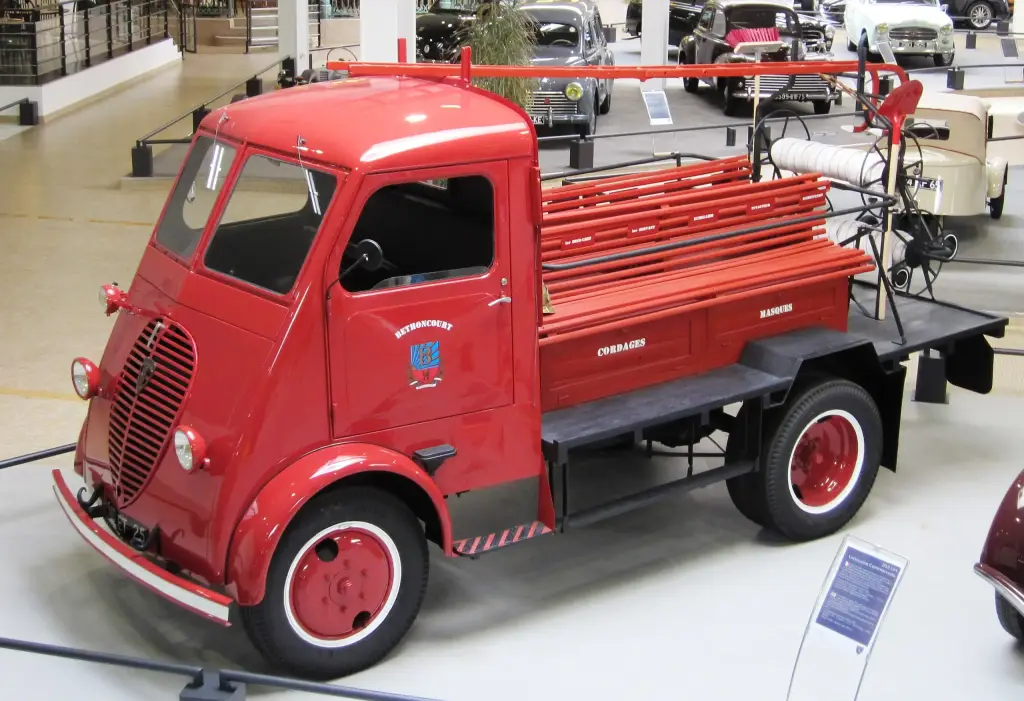
The Peugeot DMA is a light truck that Peugeot built between 1941 and 1948. It was the company’s first commercial vehicle with a forward control cab, with the driver sitting right at the front of the vehicle.
Peugeot DMA at a glance
| Production | 1941–1948 |
|---|---|
| Type | light truck, forward control cab |
| Layout | front cab, rear-wheel drive |
| Engine | 2,142 cc petrol, from the Peugeot 402 |
| Power | 50 PS with the Alpax head, 45 PS with cast iron |
| Top speed | 70 km/h |
| Payload | 2,000 kg, on twin rear wheels |
| Gas version | DMAG, running on charcoal gas |
| Wartime production | March 1941 to September 1944, 15,306 built |
| Post-war production | 8,046 built from June 1945 |
| Successor | DMAH, then Q3A |
based on one source
History of the Peugeot DMA
A new cab layout
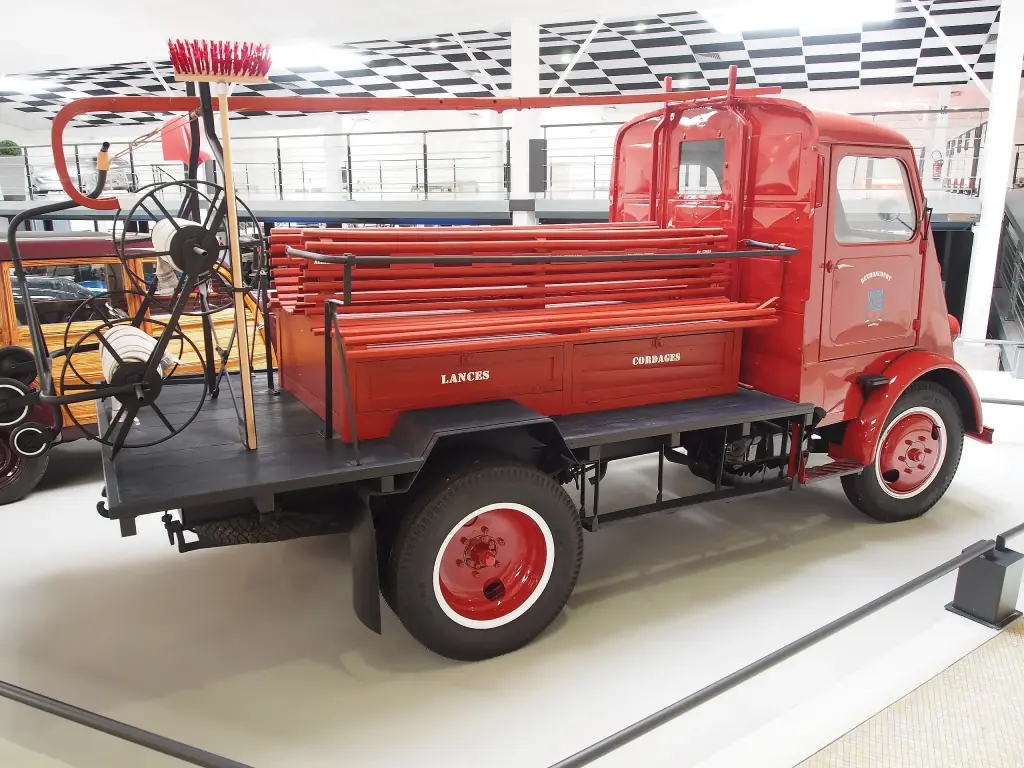
The DMA was the first Peugeot commercial vehicle with a forward control cab, where the driver sat at the very front. The layout maximised the length of the load deck and gave the driver a good view of the road, but it meant the driver shared the cab with the engine: being rear-wheel drive, the truck could not offer the large, low, flat load area of the front-wheel-drive Citroën TUB van.
War production
In the DMA’s early years France was under German occupation, and Peugeot’s plant lay in the strip of land known as the zone interdite between the Swiss frontier to the east and occupied northern France to the west. Most of the trucks built during the war were used by the German army, which commandeered 13,779 of them. Wartime production under German control ran from March 1941 to September 1944 and accounted for 15,306 vehicles. In the immediate post-war years, with funds for new models desperately short, the truck was put back into production for French users such as local fire services.
Engine and versions
The 2,142 cc petrol engine came from the Peugeot 402 and could be adapted to run on charcoal-derived gas, a technology Peugeot had developed in the late 1930s when the prospect of war and the shortages it would bring were already clear; the gas version was called the DMAG. With petrol and an Alpax aluminium alloy head the engine produced a claimed 50 PS and gave a top speed of 70 km/h, while wartime material shortages led to a cast-iron head version of 45 PS. Twin rear wheels gave the truck a maximum load capacity of 2,000 kg.
After the war
Production restarted in June 1945 and continued unchanged until September 1946, with 8,046 vehicles built. The DMA was then replaced by the updated DMAH, where the H marked a change from mechanical to hydraulic Lockheed brakes; the DMAH also received roll-down windows and pressed-steel bodywork, and from March 1947 hydraulic shock absorbers at the front instead of friction dampers. The DMAH was revised in 1948 and became the Peugeot Q3A light truck. Two years later the light commercial slot was filled by the D3 van, which came into the Peugeot range in 1950 with the acquisition of the cash-strapped Chenard-Walcker business.
Design and features
- Forward control cab: Peugeot’s first truck with the driver at the front.
- 402 engine: 2,142 cc petrol, 50 PS with the aluminium head.
- Gazogene: a charcoal-gas version sold as the DMAG.
- Twin rear wheels: a 2,000 kg payload.
- DMAH: hydraulic brakes, roll-down windows and pressed-steel bodywork.
Peugeot DMA versions
- DMA (1941): the original petrol truck.
- DMAG: charcoal-gas version.
- DMAH (1946): hydraulic brakes and updated bodywork.
- Q3A (1948): the revised DMAH under a new name.
The DMA led to the Q3A and to the D3 and D4 vans, and used the engine of the Peugeot 402. More in the Peugeot collection.
Video: Restauration Peugeot DMA 04
Video by on YouTube.
Sources
- Peugeot DMA, English Wikipedia: cab layout, engine, wartime and post-war production, DMAH