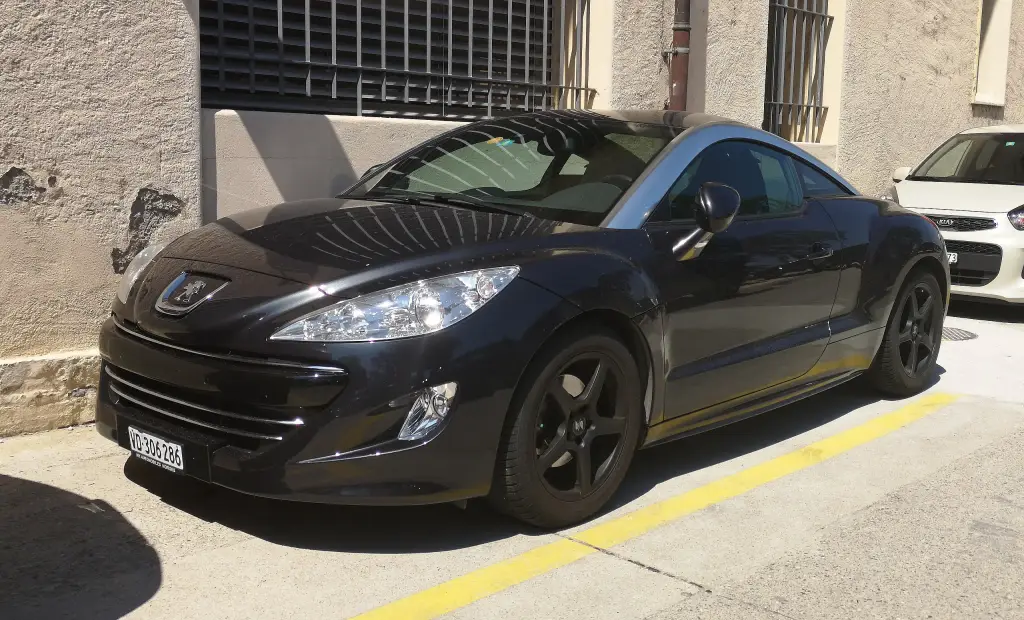
The Peugeot RCZ is a sports coupé with a 2+2 seating layout, a front engine and front-wheel drive. It was assembled in Austria by Magna Steyr from 2009 until 2015.
Peugeot RCZ at a glance
| Type | 2+2 sports coupé |
|---|---|
| Production | 2009–2015 |
| Assembly | Magna Steyr, Graz, Austria |
| Project code | T75 |
| Concept | 308 RCZ, Frankfurt 2007 |
| Roof | double-bubble design inspired by Zagato |
| Engines | Prince petrol and HDi diesel |
| 300,000th car | not applicable; 30,000th in June 2011 |
| 50,000th car | built 14 February 2013 |
| RCZ R | 1.6 turbo, 270 PS, 5.9 seconds to 100 km/h |
History of the Peugeot RCZ
From concept to production
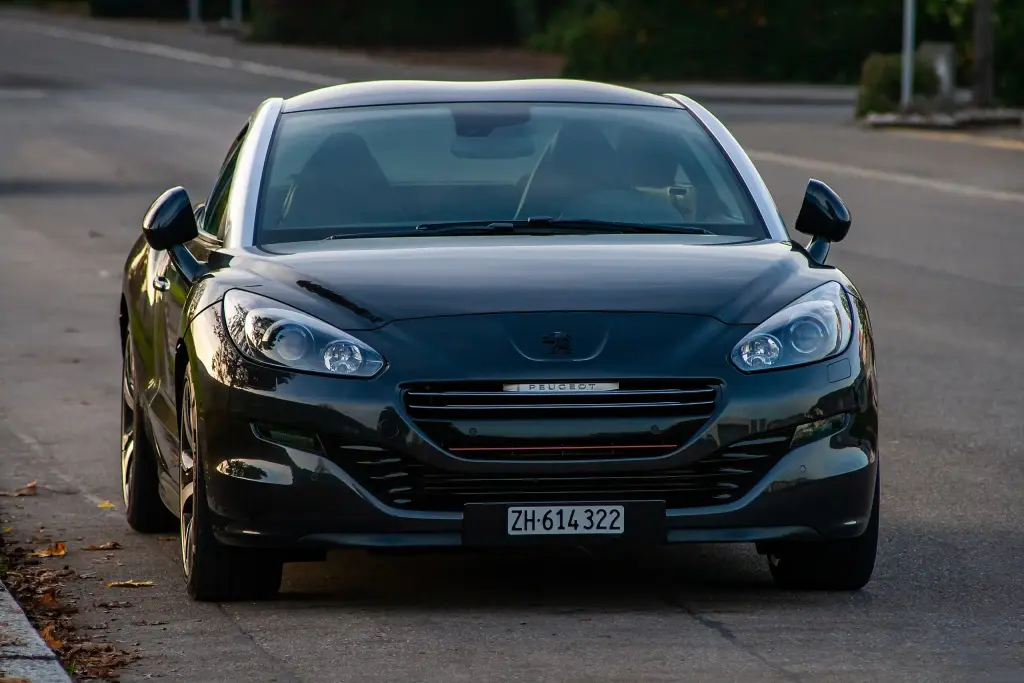
The car was shown as the 308 RCZ concept at the Frankfurt Motor Show in 2007. It had been developed as a showcase, but after considerable critical acclaim Peugeot put it into production, keeping much of the concept. The RCZ was formally introduced at Frankfurt in 2009 and went into production late that year under the code name T75, with a double-bubble roof inspired by Zagato. By 2013 it was available in almost 80 countries.
Engines and equipment
Petrol engines came from the Prince family and the diesels from the HDi range. Options included electrically heated and adjustable seats with driver memory, leather seats and dashboard, a hill assist function, 19-inch alloy wheels and a JBL sound system, and an Elan or Sportif kit changed the colour of the roof, door mirrors and grille. The rear seats were too small for adults to sit comfortably.
RCZ R
In November 2012 Peugeot announced a more powerful version, and in July 2013 the first official pictures appeared. The RCZ R used a turbocharged 1.6-litre engine producing 270 PS at 6,000 rpm and 330 Nm from 1,900 to 5,500 rpm, a specific output of 166 bhp per litre, the highest of any production car of that capacity at the time. It reached 100 km/h in 5.9 seconds with a top speed limited to 249 km/h, and had 380 mm Alcon brakes, uprated suspension, a lower kerb weight and a Torsen front differential. It went on sale in January 2014 at £31,995, and 3,054 were built, 305 of them for Britain.
Special editions and racing
Special editions included the Allure, the Asphalt limited to 500 cars, the Brownstone for Germany, the Magnetic for Britain limited to 170, and the Raidillon for Belgium and Luxembourg limited to 55. The RCZ won the Top Gear 2010 Coupe of the Year award, three Auto Express Best Coupé awards, the Auto Express readers’ Special Design Award 2010 and a Red Dot Best of the Best award, and was named Best Sports Car by Diesel Car magazine five times from 2010 to 2014. A racing version, the RCZ Peugeot Sport, took class wins at the Nürburgring 24 Hours with diesel cars in 2010 and 2011 and with the Peugeot Sport car in 2012. The 30,000th RCZ was built in June 2011, the 50,000th on 14 February 2013 in red, and the last car left the Graz plant in September 2015.
Design and features
- Austrian assembly: built by Magna Steyr in Graz.
- Double-bubble roof: a Zagato-inspired shape carried from the concept.
- RCZ R: 270 PS from 1.6 litres, the highest specific output of its day.
- Awards: five Diesel Car Best Sports Car titles in a row.
- Racing: class wins at the Nürburgring 24 Hours.
Peugeot RCZ versions
- RCZ (2009): the production coupé with Prince petrol and HDi diesel engines.
- RCZ R (2014): 270 PS, Torsen differential, 3,054 built.
- Asphalt: 500 cars with 19-inch black and silver wheels.
- Magnetic: 170 cars for Britain.
- Raidillon: 55 cars for Belgium and Luxembourg.
The RCZ grew from the Peugeot 308 and followed the ideas of the RC concept. More in the Peugeot collection.
Video: JP Performance – Peugeot RCZ R
Video by on YouTube.
Sources
- Peugeot RCZ, English Wikipedia: production, engines, RCZ R, special editions, awards, racing