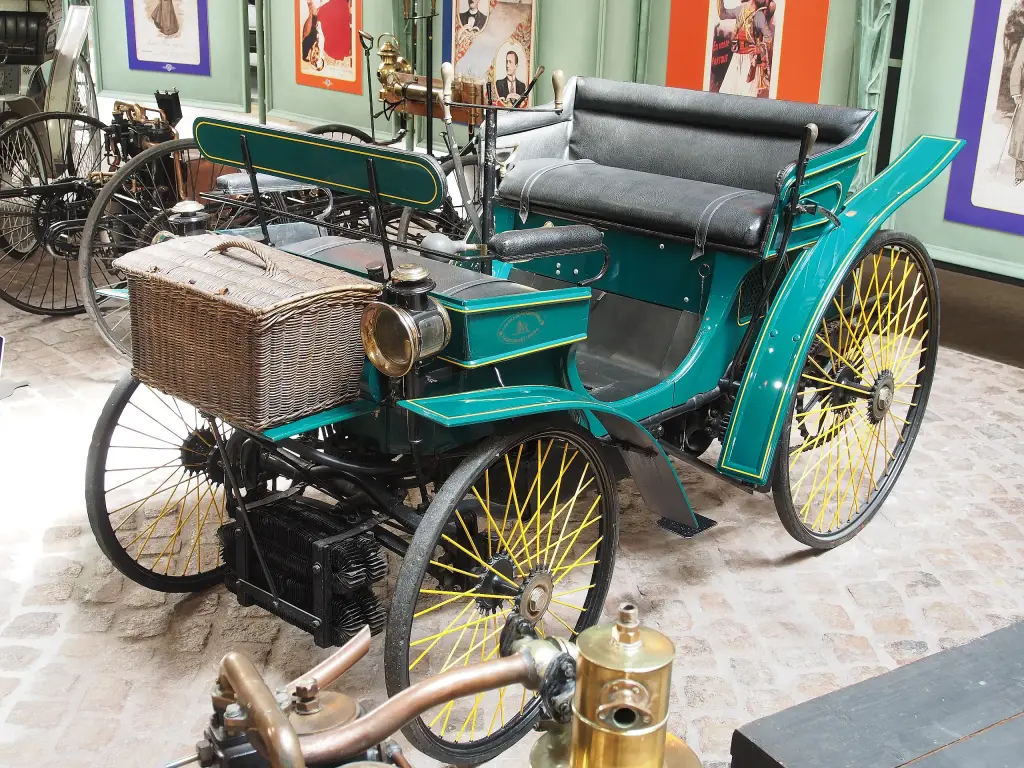
The Peugeot Type 3 was an early French automobile, Peugeot’s first model to be produced in significant numbers and only its second car with an internal combustion engine.
Peugeot Type 3 at a glance
| Type | early automobile |
|---|---|
| Year | 1891 |
| Place in history | first Peugeot produced in significant numbers |
| Previous model | Type 2, the first petrol Peugeot |
| Engine | Daimler-designed 15° V-twin |
| Power | 2 bhp |
| Top speed | about 18 km/h |
| Engine licensed | by Panhard et Levassor for France |
| Demonstration | 2,045 km in the Paris–Brest–Paris cycle race of 1891 |
| Italian assembly | Costruzioni Meccaniche di Saronno, from 1891 |
History of the Peugeot Type 3
From steam to petrol
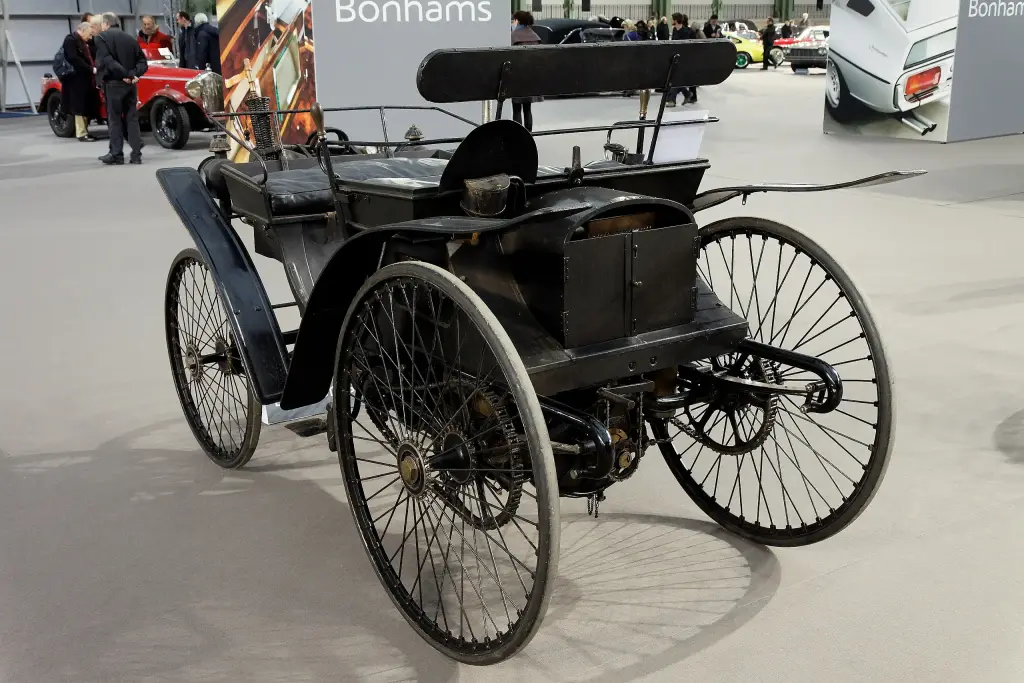
Peugeot’s earliest models from 1889 were steam-powered tricycles built with Léon Serpollet. In 1890 Armand Peugeot met Gottlieb Daimler and Émile Levassor and became convinced that reliable, practical and light vehicles would have to be petrol-powered and have four wheels. The Type 2 was the first such model, and the Type 3 followed it as the car Peugeot could build in quantity. Serpollet continued with steam under the Gardner-Serpollet name until his death in 1907.
The engine
The engine was a German design by Daimler, licensed for production in France by Panhard et Levassor and then sold to Peugeot. It was a 15-degree V-twin producing 2 bhp, enough for a top speed of about 18 km/h.
The Paris–Brest–Paris demonstration
To show the quality of the Type 3, Peugeot ran a demonstration car alongside the cyclists in the first Paris–Brest–Paris cycle race in September 1891, gaining official confirmation of its progress from the race marshals and timekeepers. The chief engineer Louis Rigoulot and the workshop foreman Auguste Doriot proved the robustness of the design: the car ran 2,045 km, from Peugeot’s factory at Valentigney to Paris, over the race course and back to Valentigney, at an average of 14.7 km/h without major faults. It was the longest run by a petrol-powered vehicle to that date, about four times the previous record set by Serpollet from Paris to Lyon, and the demonstrator became the first Peugeot sold to the public.
A lightened Type 3 entered the Paris–Bordeaux–Paris race in June 1895, finishing second at an average of 21.7 km/h.
Built in Italy too
In 1891 Costruzioni Meccaniche di Saronno of Varese in Italy began assembling Peugeot Type 3 cars under a Peugeot licence, an early example of the company’s designs being built outside France.
Design and features
- First volume model: the Peugeot that turned a workshop design into a product.
- Daimler V-twin: 2 bhp and about 18 km/h.
- Long-distance proof: 2,045 km covered in the 1891 Paris–Brest–Paris run.
- Race record: second in the 1895 Paris–Bordeaux–Paris.
- Italian assembly: built under licence at Saronno from 1891.
Peugeot Type 3 versions
- Type 3 (1891): the standard car.
- Lightened racing Type 3: entered in the 1895 Paris–Bordeaux–Paris.
The Type 3 followed the Bébé‘s ancestors and came before the smaller Type 5 and the Type 10. More in the Peugeot collection.
Sources
- Peugeot Type 3, English Wikipedia: origin, engine, Paris–Brest–Paris run, Italian production