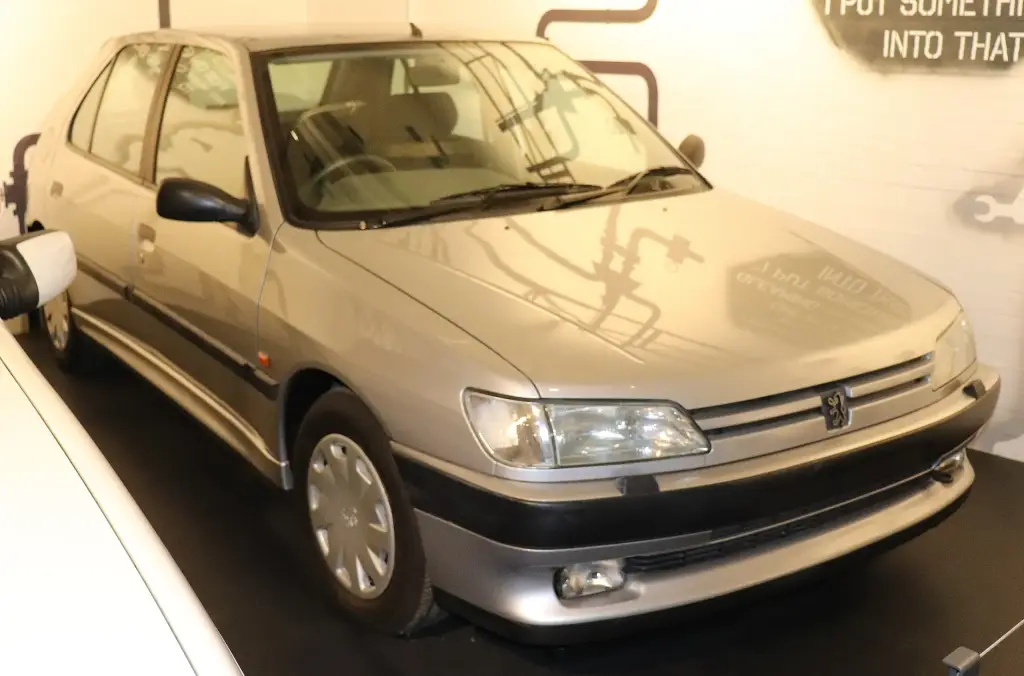
The Peugeot 306 is a small family car built by Peugeot from 1993 to 2002. It replaced the 309 and was replaced by the 307 in 2001, although the cabriolet and estate versions stayed in production until 2002.
Peugeot 306 at a glance
| Production | 1993–2002 |
|---|---|
| Developed | 1990–1992, launched February 1993 |
| Replaced | Peugeot 309 |
| Platform | shared with the Citroën ZX |
| Petrol engines | TU 1.1, 1.4 and 1.6; XU 1.8 and 2.0 |
| Diesel engines | XUD 1.8 and 1.9, turbocharged or not |
| Suspension | MacPherson front, trailing arms and torsion bars rear |
| Notable | passive rear-wheel steering through compliance bushes |
| Performance | S16, GTI-6, D-Turbo |
| Built in Argentina | 1996–2002, by Sevel |
History of the Peugeot 306
Background
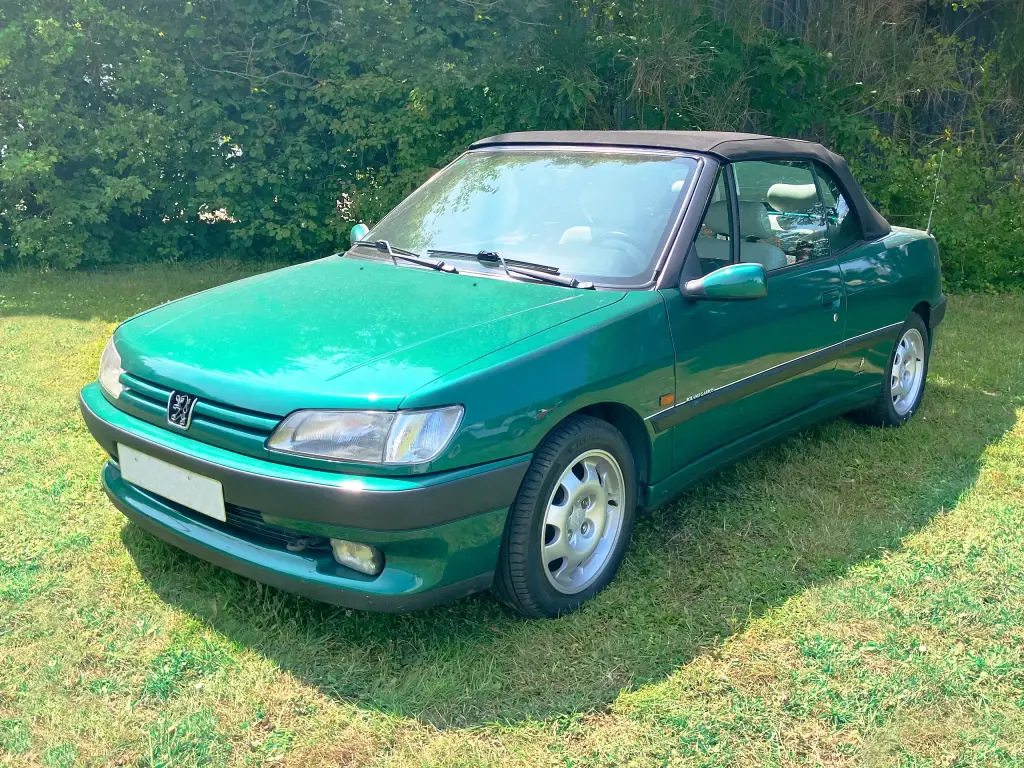
The 306 was developed between 1990 and 1992 for a launch in February 1993 as the replacement for the 309, which had broken Peugeot’s ascending numbering because it arrived before the larger 305 was dropped. Prototypes were seen at the end of 1990, and the press first reported that the new car would replace the 205; by the end of 1991 Peugeot had confirmed that it was for the 309 and part of the 205 range, with the 205 staying in production for several more years.
Mechanically the 306 is almost identical to the Citroën ZX, launched two years earlier: the same floorpan and core structure. The 306, with Pininfarina styling derived from the 205, was the more successful of the twins, and the same platform also served the Citroën Berlingo and Peugeot Partner and, later, the Citroën Xsara.
Phase 1
The car was released in 1993 as a three and five-door hatchback, with saloon and cabriolet models added a year later. Trims ran from XN and XL through XR and XT to XS, and there were special editions such as the Alpine from 1994. Performance models included the S16, the XSi and the GTI-6 on the petrol side and the D-Turbo S diesel. All versions except the GTI-6 and cabriolet were priced competitively.
Petrol engines were the proven four-cylinder TU 8-valve units of 1.1, 1.4 and 1.6 litres, the 1.1 dropped quickly while the 1.4 and especially the 1.6 sold well, and the larger XU units of 1.8 and 2.0 litres in 8 and 16-valve forms for automatic and performance models. Diesels were the XUD series of 1,769 cc, soon enlarged to 1,905 cc, normally aspirated or turbocharged; the indirect-injection design with a Ricardo Comet chamber and a Bosch pump made it a favourite for conversion to vegetable oil.
Chassis
The 306 used the familiar PSA layout of MacPherson struts with an anti-roll bar at the front and independent trailing arms with torsion bars at the rear, the arrangement first seen on the 305 estate. PSA engineers added passive rear-wheel steering through specially designed compliance bushes in the rear suspension, less pronounced than on the ZX, and made their own shock absorbers. At high mileages the axle mounting bushes wear, which is easily fixed, while wear in the trailing arm bearings damages the axle tubes and needs a rebuild or a replacement axle. The diesel and larger petrol engines were canted back to move weight behind the front axle line, lowering the centre of gravity and reducing understeer.
Design and features
- ZX floorpan: shared with the Citroën ZX, Berlingo and Partner.
- Pininfarina styling: a development of the 205 theme.
- Passive rear steering: compliance bushes that turn the rear wheels slightly.
- GTI-6: the 2.0-litre 16-valve performance model with six speeds.
- Diesel choice: XUD engines in 1.8 and 1.9 litres, turbo or not.
Peugeot 306 versions
- XN, XL, XR, XT, XS: the standard trim levels.
- XSi and S16: 2.0-litre 8 and 16-valve performance models.
- GTI-6: the six-speed 2.0-litre 16-valve.
- D-Turbo and D-Turbo S: turbodiesel performance versions.
- Alpine (1994): three-door special edition.
- Cabriolet and estate: the bodies that continued to 2002.
The 306 replaced the Peugeot 309 and was replaced by the 307, while the 405 remained the larger car in the range. More in the Peugeot collection.
Video: Peugeot 306 – Rally Car Project – Build Steps
Video by on YouTube.
Sources
- Peugeot 306, English Wikipedia: background, phases, engines, chassis, versions