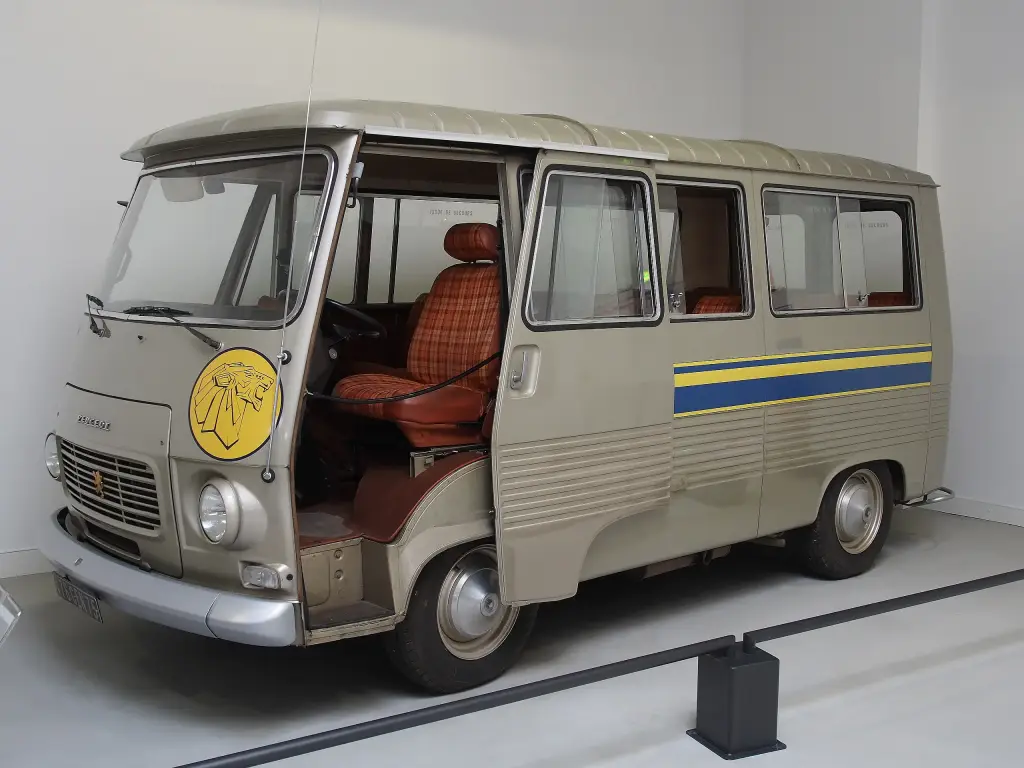
The Peugeot J7 is a small front-wheel-drive van produced from 1965 until 1980, with a total production of 336,220 vehicles. In 1981 it was succeeded by a revised version called the J9.
Peugeot J7 at a glance
| Production | 1965–1980 |
|---|---|
| Layout | front-wheel drive |
| Petrol engine | 1,468 cc four-cylinder |
| Diesel engine | 1,816 cc |
| Gross payload | 1,400 kg or 1,800 kg, depending on version |
| Bodies | panel van, minibus, pickup, pickup with cab |
| Total built | 336,220 |
| Successor | Peugeot J9, from 1981 |
| Not sold in | the United Kingdom, only private imports |
based on one short source
History of the Peugeot J7
A small front-wheel-drive van
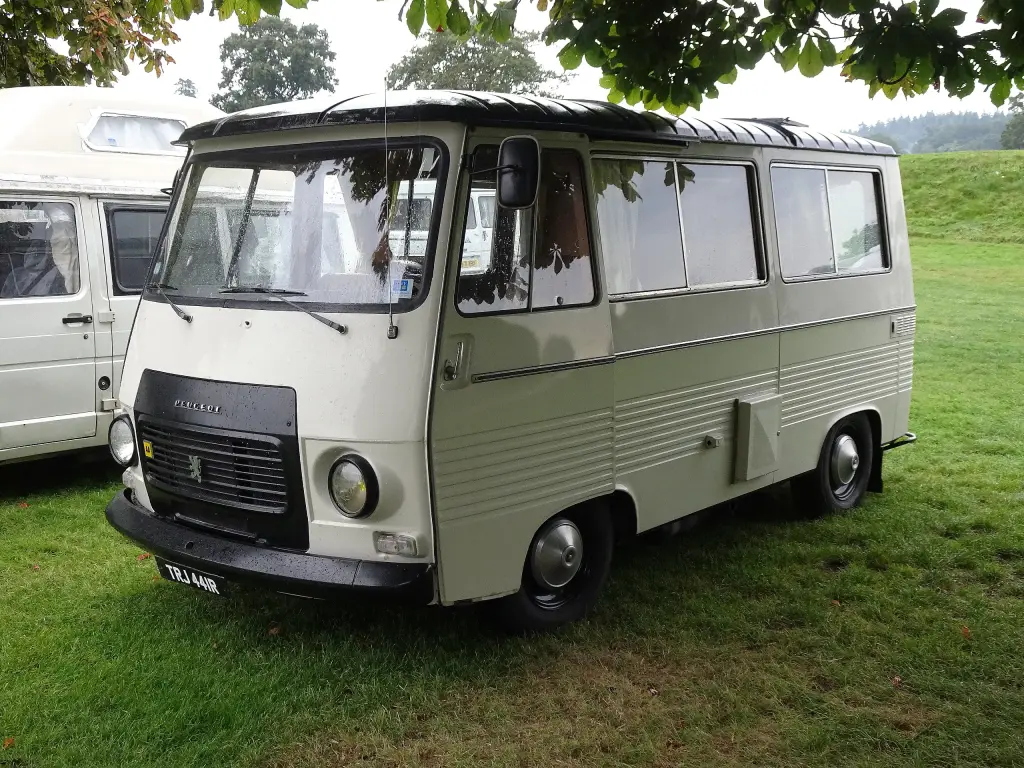
The J7 was launched in 1965 as a small van with front-wheel drive, a layout that gave it a low load floor and a useful load area for its size. It was available in a number of versions, from a panel van to a minibus, a pickup and a pickup with a cab, with a gross payload of 1,400 kg or 1,800 kg depending on the version.
Engines
At launch the J7 was offered with a choice of a four-cylinder petrol engine of 1,468 cc or a diesel of 1,816 cc. Both were modest units suited to the van’s working role, and the model’s long production run of fifteen years suggests the formula worked.
Successor
Production ended in 1980 after 336,220 vehicles, and in 1981 the J7 was replaced by the J9, a revised version of the same design. The J7 was not sold in the United Kingdom, though a number were privately imported over the years. The J-family continued with the J5, the Peugeot version of the Sevel van, and the J9, which was built in France until 1991 and under licence in Turkey for much longer.
Design and features
- Front-wheel drive: a low floor and a practical load area.
- Four body styles: panel van, minibus, pickup and pickup with cab.
- Two payloads: 1,400 kg or 1,800 kg gross.
- Petrol or diesel: 1,468 cc and 1,816 cc engines from launch.
- Long run: fifteen years in production without a full change.
Peugeot J7 versions
- Panel van: the main commercial body.
- Minibus: passenger version.
- Pickup and pickup with cab: open-bed versions.
The J7 was replaced by the Peugeot J9 and later followed by the J5, which came from the Sevel project. More in the Peugeot collection.
Video: Peugeot J7 – en promenade
Video by on YouTube.
Sources
- Peugeot J7, English Wikipedia: production, engines, bodies, payload, successor