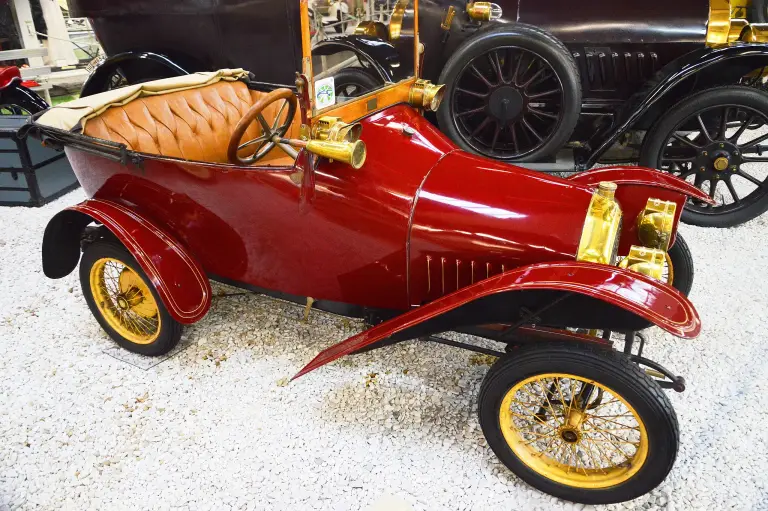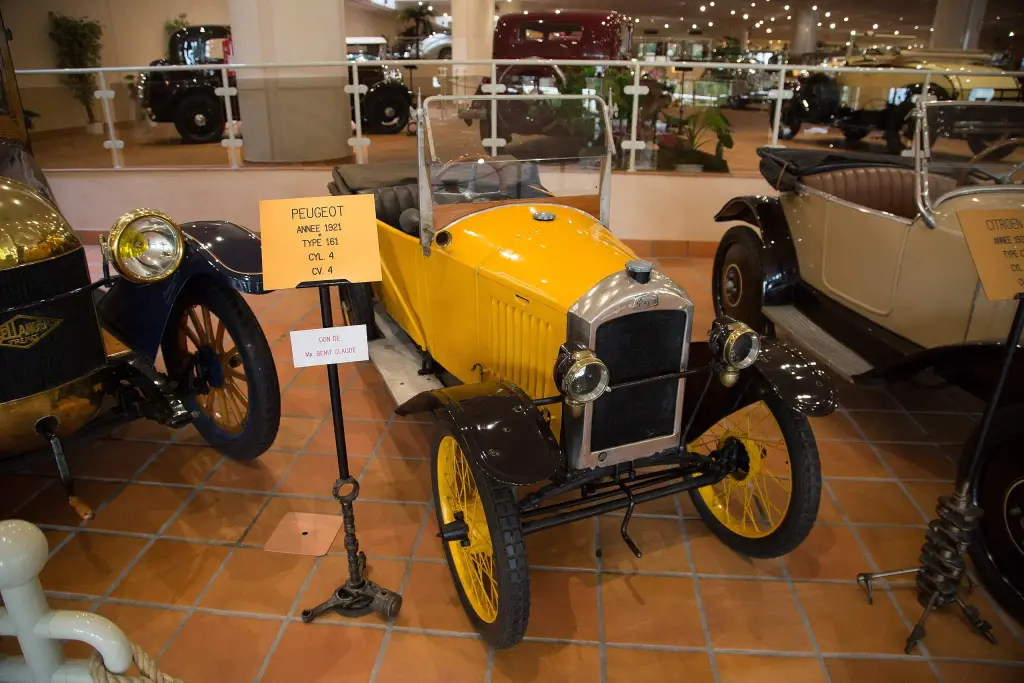
Peugeot Quadrilette is the popular name for the Peugeot Type 161 and Type 172 and associated models produced between 1921 and 1924.
Peugeot Quadrilette at a glance
| Type | cyclecar |
|---|---|
| Produced | 1921–1924 |
| Models | Type 161, Type 161E, Type 172, Type 172 BC and BS |
| Engine | four-cycle four-cylinder water-cooled, 667 cc |
| Power | 9.5 hp |
| Weight | under 350 kg |
| Top speed | 60 km/h |
| Fuel consumption | 5.0 l/100 km |
| Price | 9,900 francs with top, lights and spare wheel |
| Total built | 12,305 |
History of the Peugeot Quadrilette
The Type 161
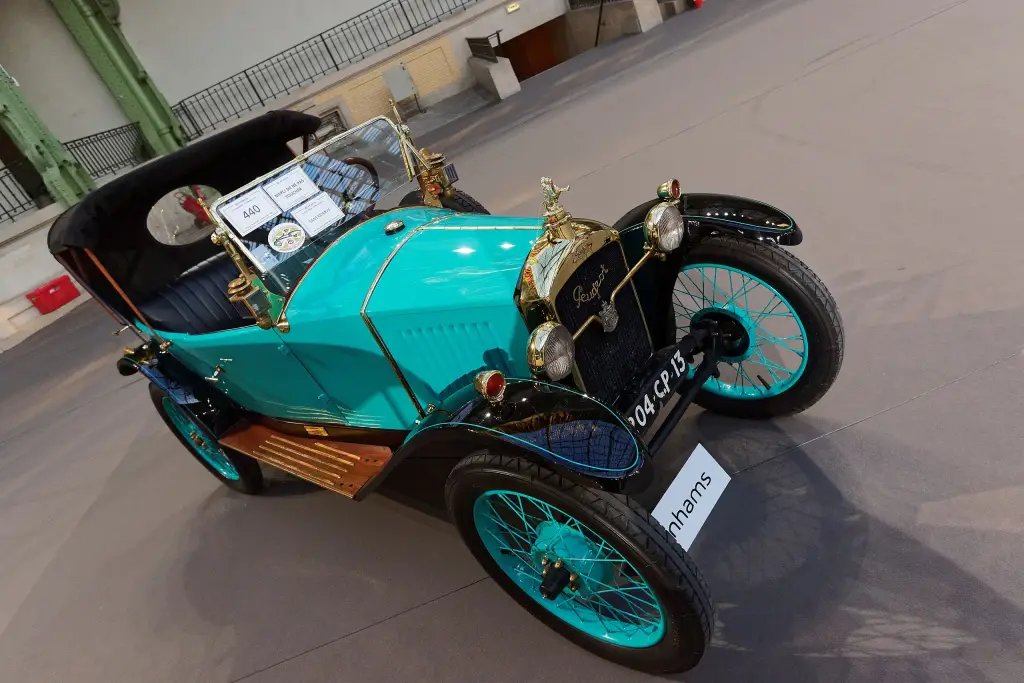
Peugeot created the Type 161 to reverse its financial troubles after the First World War. It was a cheap, practical and very small economy car, nicknamed the Quadrilette when it was shown at the Brussels Motor Show in 1920, and it went on sale in 1921. To fall into the lowest tax bracket, that of cyclecars, taxed at 100 francs a year, the four-cycle four-cylinder water-cooled engine displaced only 667 cc and produced 9.5 hp. Taking advantage of that small output was a very light body of under 350 kg. The car was so narrow that the two seats were placed in tandem rather than side by side. Later in 1921 the Type 161E arrived with side-by-side seats, the passenger’s set slightly back to give the driver room for the pedals.
The car retailed at 9,900 francs with a top, acetylene lights and a spare tyre, or 9,400 francs without. Fuel economy was impressive at 5.0 l/100 km, and the top speed was 60 km/h.
The Type 172
Changes to the Quadrilette in 1923 produced the Type 172, launched during 1924. The track was widened so that the two seats could sit side by side, improving comfort and space. Although the wheelbase was shortened, there was more luggage room because there were no longer two rows of seats. The engine stayed the same and the weight remained low. Upgraded Type 172 BC and 172 BS versions, also called the Quadrilette Grand Sport, had an enlarged 720 cc side-valve engine with slightly more power.
Production and successors
Total production of the Quadrilette was 12,305 cars over three years, which was 31% of Peugeot’s vehicle output in the period. Confusingly, Type 172 models were sold both under the Quadrilette name and under that of its successor, the Peugeot 5CV. The Quadrilette and the 5CV were sold side by side in 1924, after which Quadrilette production ended.
Design and features
- Cyclecar tax class: a 667 cc engine kept the annual tax at 100 francs.
- Tandem seats: the early car was too narrow for side-by-side seating.
- Very light: under 350 kg, which made 9.5 hp enough for 60 km/h.
- Economical: 5.0 l/100 km, an outstanding figure for the period.
- Type 172: wider track, side-by-side seats and the Grand Sport versions.
Peugeot Quadrilette versions
- Type 161 (1921): tandem seats and 667 cc.
- Type 161E (1921): side-by-side seats.
- Type 172 (1924): wider track and a shorter wheelbase.
- Type 172 BC and BS: Grand Sport with a 720 cc side-valve engine.
The Quadrilette’s replacement was the Peugeot 5CV, a name confusingly shared with late Type 172 cars, and it was followed by the larger Type 172 family. More in the Peugeot collection.
Video: Peugeot Quadrilette 1924
Video by on YouTube.
Sources
- Peugeot Quadrilette, English Wikipedia: Type 161, Type 172, prices, production