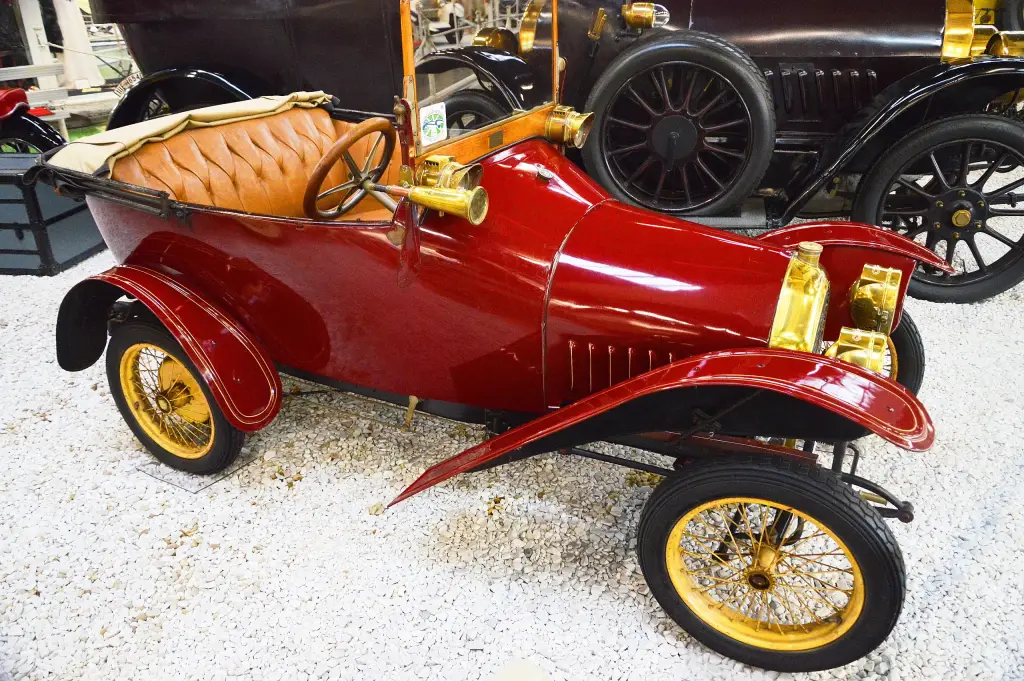
The Peugeot Bébé, or Baby, was a small car nameplate that Peugeot used from 1905 to 1916. The cars were known inside Peugeot as the Type 69 and the Type BP1.
Peugeot Bébé at a glance
| Nameplate | Bébé or Baby, 1905–1916 |
|---|---|
| Internal names | Type 69 and Type BP1 |
| Type 69 shown | Paris Motor Show, 1904 |
| Type 69 weight | 350 kg |
| Type 69 length | 2.7 m |
| Type 69 speed | 40 km/h |
| Type 69 production | from 1905 at Audincourt |
| Type BP1 designer | Ettore Bugatti |
| Type BP1 engine | straight four, 10 PS at 2,000 rpm |
| Type BP1 top speed | 60 km/h |
| Total BP1 built | 3,095 |
History of the Peugeot Bébé
Type 69
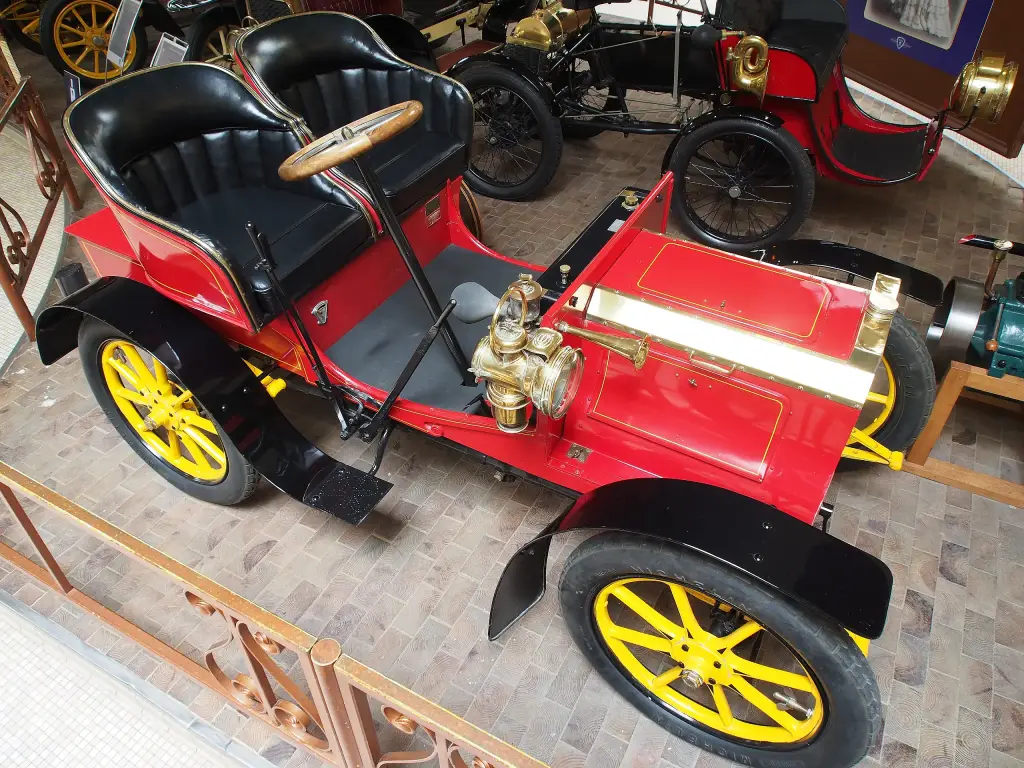
The original Bébé appeared at the Paris Motor Show in 1904 and impressed visitors as a modern, robust, cheap, small and practical car. It weighed 350 kg and was 2.7 m long, small enough for its little engine to push it to 40 km/h. Although the price was kept as low as possible, the car had rack-and-pinion steering and a driveshaft instead of a chain. Production began at Audincourt in 1905 and the car proved popular: 400 were sold in the first year, 80% of Peugeot’s production, and it was exported, particularly to Britain. The Type 69 was built only during 1905.
One Type 69 was one of the first two motor vehicles in Tibet, imported by William Frederick Travers O’Connor in 1907 and later given as a gift to the 9th Panchen Lama.
Type BP1
The Type BP1 Bébé was designed by Ettore Bugatti, first for the German firm Wanderer and then built under licence by Peugeot for the French market. Peugeot showed it under its own marque at the Paris Motor Show in 1912, and production began in 1913 after the Type 69 ended. Wanderer built its car with Bugatti’s four-speed transmission, but to keep costs down the French version used a two-speed gearbox at first, later replaced by Peugeot’s own three-speed. The engine was also Peugeot’s own, a tiny straight four producing 10 PS at 2,000 rpm for a top speed of 60 km/h. Weight was again below 350 kg, although the track was wide enough for two people to sit side by side.
The Bébé had some racing success in small-car classes, notably at Mont Ventoux in 1913, where it won its class. Advertising sold it as an economy product: one campaign compared it for a rural doctor covering about 40 km a day with a team of two horses, saying the Bébé would replace both while costing no more than one of them.
The first 3,000
The model ran until 1916. With 3,095 produced, and despite the dire economic conditions created by the war, the Bugatti-designed Bébé was the first production Peugeot to pass the 3,000-unit mark.
Design and features
- Two designs: the Type 69 of 1905 and the Bugatti Type BP1 of 1913.
- Light weight: under 350 kg in both forms.
- Modern details: rack-and-pinion steering and a driveshaft on the Type 69.
- Mont Ventoux 1913: a class win for the BP1.
- First 3,000: the first Peugeot production model past that figure.
Peugeot Bébé versions
- Type 69 (1905): the original Bébé, 2.7 m long and 40 km/h.
- Type BP1 (1913): Bugatti design, 10 PS, three-speed Peugeot gearbox.
The Bébé was Peugeot’s smallest car before the 201, which became the first mass-produced model, and it used technology later seen in the Type 3 family. More in the Peugeot collection.
Sources
- Peugeot Bébé, English Wikipedia: Type 69, Type BP1, production, racing, advertising