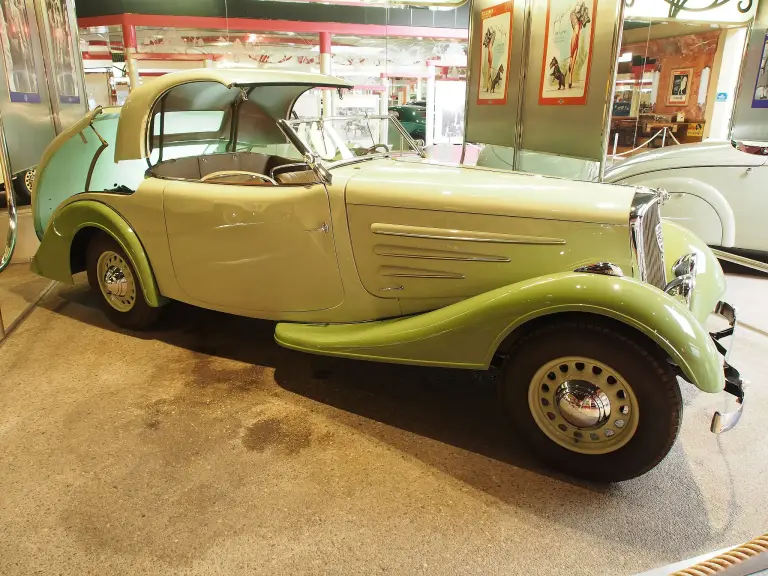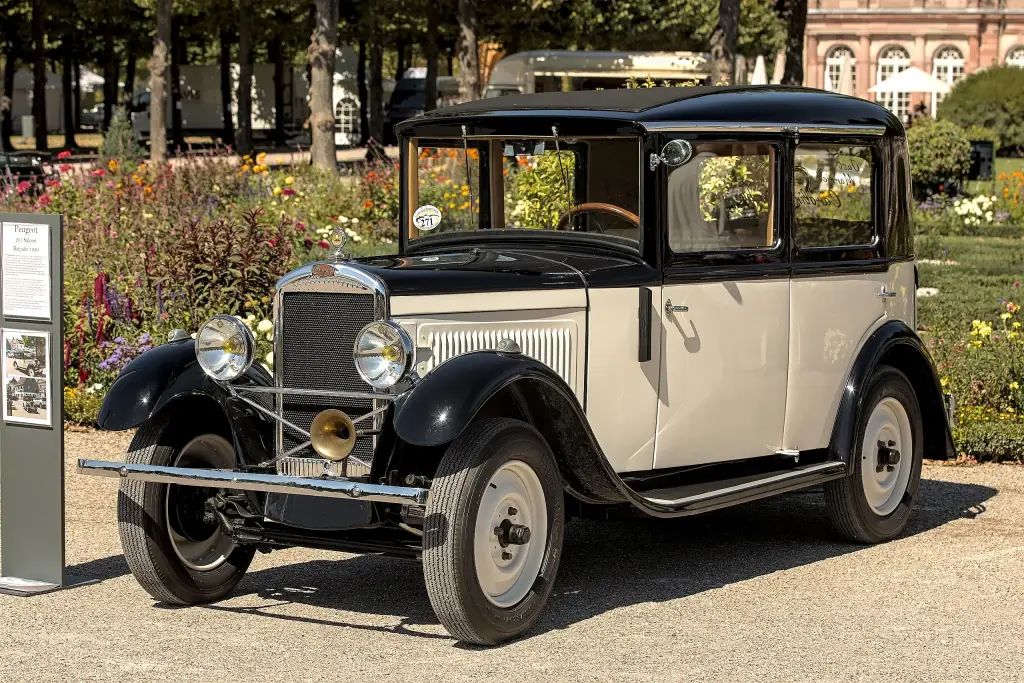
The Peugeot 201 is a car that Peugeot produced between 1929 and 1937 at Sochaux. It is often described as the company’s first mass-produced model, and it gave Peugeot the three-digit name with a central zero that the rest of the range followed.
Peugeot 201 at a glance
| Production | 1929–1937 |
|---|---|
| Plant | Sochaux |
| Presented | 1929 Paris Motor Show |
| Original engine | 1,122 cc, 23 hp at 3,500 rpm |
| Top speed | about 80 km/h |
| 201 S and CS | 1,085 cc, 30 hp, 403 built in 1932 |
| 201 D (1934) | 1,307 cc, 28 hp, synchronised gearbox |
| 201 M (1936) | 1,465 cc from the 301, 35 hp, 100 km/h |
| 201 C (1931) | independent front suspension |
| Light commercials | 1,676 built, 1931–1933 |
History of the Peugeot 201
Launch in a crisis
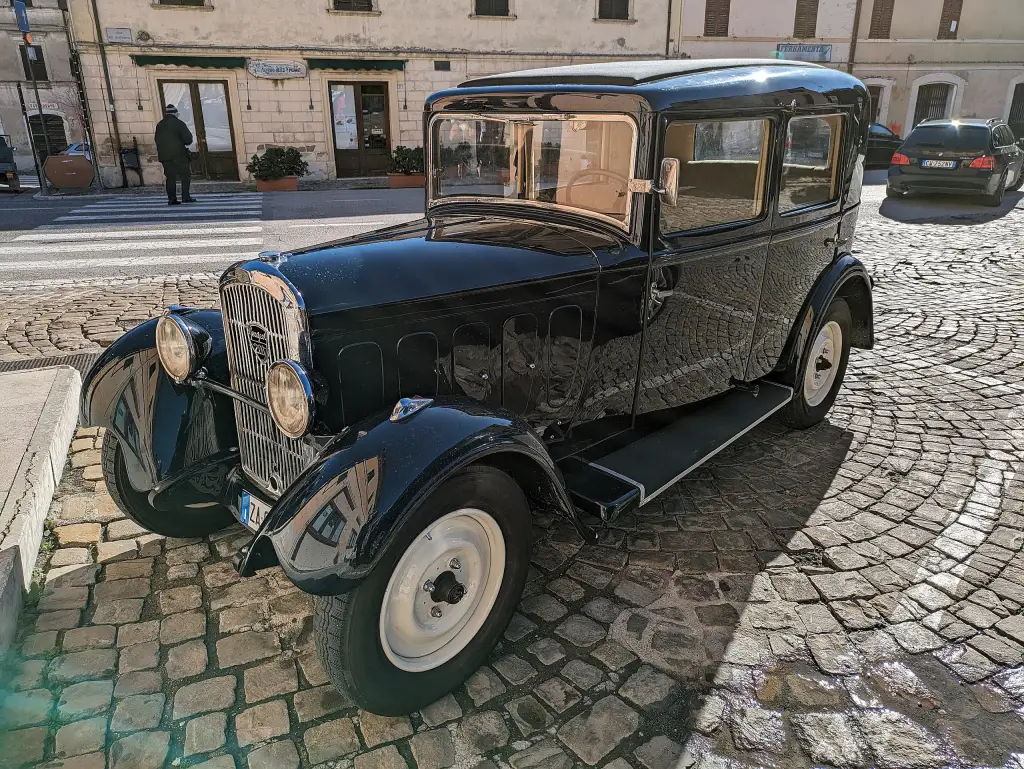
The 201 was presented at the 1929 Paris Motor Show, at the time of the Wall Street crash. Many European makers did not survive the depression that followed, but the 201’s image as an inexpensive car helped Peugeot come through the crisis with its finances intact and its position as a major producer confirmed. It was built at Sochaux, near the Swiss border, where the Peugeot museum now stands next to the works.
Engines and models
The first cars used a 1,122 cc engine of 23 hp at 3,500 rpm and reached about 80 km/h. A 1,307 cc unit of 28 hp arrived in September 1934 with the revised 201 D, and the D models also gained a fully synchronised gearbox; the same engine went into the DL, a long-wheelbase light truck. The 201 M of August 1936 was not really a 201 at all but a decontented version of the discontinued 301, fitted with that car’s 1,465 cc engine of 35 hp and a claimed 100 km/h.
The exception in the range was the 1,085 cc engine of the competition-oriented 201 S and CS, presented in March 1932. Its stroke was shortened from 90 to 87 mm with the 63 mm bore unchanged, raising output to 30 hp, and 403 examples were built until July of that year.
Front suspension and naming
The 201 C, launched in 1931, is claimed to be the first mass-produced car with independent front suspension, a layout the competition soon adopted. The simpler beam axle remained available, but the optional independent system was reported to improve road holding and reduce vibration in the steering column.
The 201 also changed how Peugeot named cars. Its predecessor, the Type 190, was named because it was the 190th design developed by the company, but few customers knew that name; in Peugeot’s own brochures the car was simply the “5CV Peugeot”. The 201 was the first model to carry three numerals with a central zero, a scheme continued by the 301 and 401, and Peugeot took steps to protect those names, which caused trouble for Porsche when it prepared the 901 in the 1960s.
Light commercials
Between 1931 and 1933 the company built 1,676 commercial versions of the 201 for small shopkeepers and other businesses. The range of bodies was wide, including a flatbed truck, a bakers’ van and light vans with and without side windows behind the B-pillar.
Design and features
- First mass-produced Peugeot: a simple, cheap car built in large numbers at Sochaux.
- Independent front suspension: offered from 1931 on the 201 C.
- Three-digit naming: the first Peugeot with a central zero in its name.
- Wide body range: saloons, coupés, a long-wheelbase truck and vans.
- Depression survivor: the cheap car that kept Peugeot solvent in the early thirties.
Peugeot 201 versions
- 201 (1929): the original 1,122 cc car.
- 201 C (1931): independent front suspension.
- 201 S and CS (1932): 1,085 cc competition model, 403 built.
- 201 D (1934): 1,307 cc and a synchronised gearbox.
- 201 DL: long-wheelbase light truck on the D mechanicals.
- 201 M (1936): 301-based 1,465 cc model at the end of the run.
The 201 was followed by the Peugeot 202 and the 203, and its naming scheme produced the 301. More in the Peugeot collection.
Video: Peugeot 201 – 1931 – Porto – Portugal
Video by on YouTube.
Sources
- Peugeot 201, English Wikipedia: history, models, engines, naming, commercials