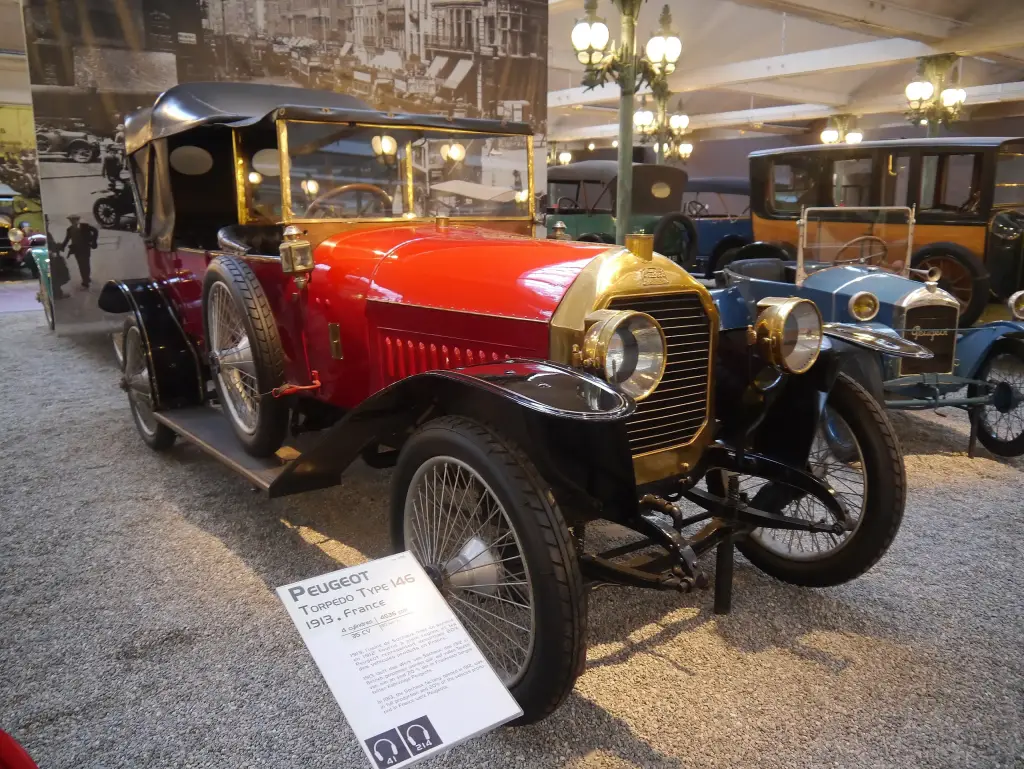
The Peugeot 146 is an automotive model produced by Peugeot between 1913 and 1914. It was built in Lille with a total of 428 examples.
Peugeot Type 146 at a glance
| Production | 1913–1914 |
|---|---|
| Plant | Lille |
| Engine | around 18 hp |
| Top speed | 75 km/h, nearly 80 km/h fully loaded |
| Shown | 1912 motor show |
| Price | 13,000 francs |
| Variants | 146S and colonial 146A |
| Total built | 428 |
| Wartime use | staff car, ambulance, fire engine, armoured car |
based on one short source
History of the Peugeot Type 146
Launch
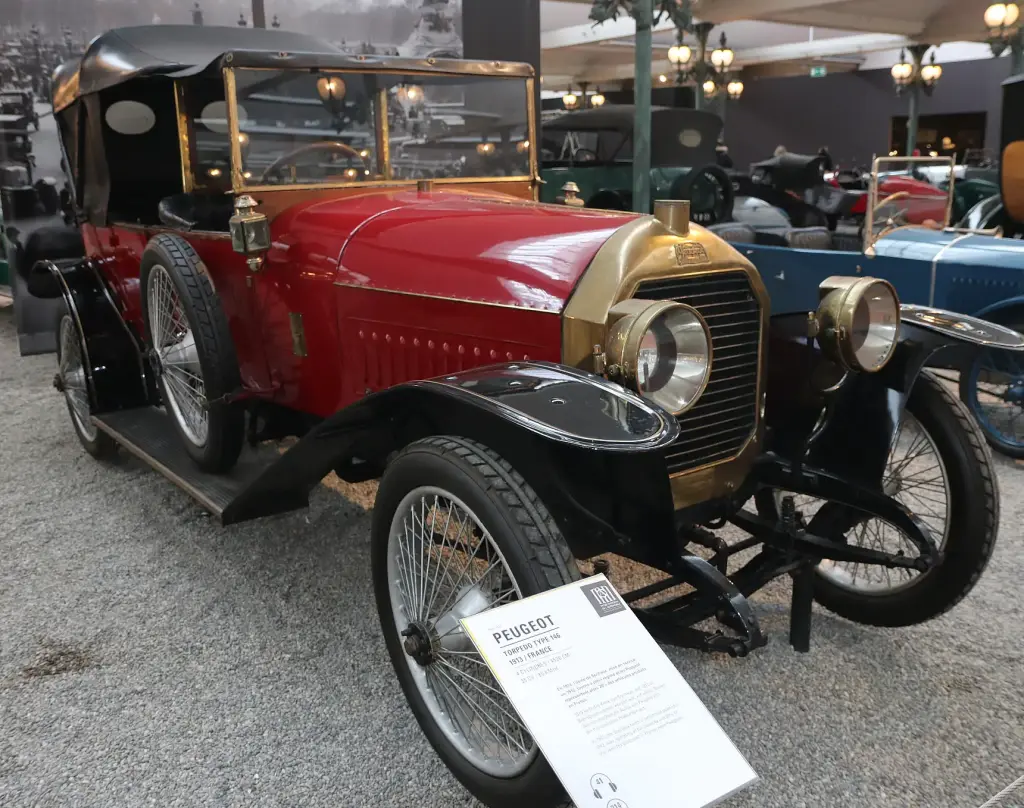
The 146 was shown at a motor show in 1912 and produced from 1913 to 1914. Its engine generated around 18 hp and gave a speed of 75 km/h, rising to nearly 80 km/h when the car was fully loaded. The price was 13,000 francs. The model included the 146S variant and the colonial 146A, and it was built in Lille.
In the war
During the First World War the car was used as a staff car or an ambulance. Its large chassis also made it suitable as a fire engine, and a number of Peugeot 146s, together with 148s and 153s, were converted into armoured cars.
Numbers
A total of 428 examples were produced before the model ended in 1914. The car sits in the middle of Peugeot’s pre-war range, between the smaller cars such as the Bébé and the large six-cylinder models.
Design and features
- Lille production: built in the north of France.
- Big chassis: strong enough to carry fire-fighting equipment or armour.
- 18 hp: around 75 km/h, nearly 80 km/h fully loaded.
- Colonial version: the 146A for overseas markets.
- Wartime service: staff car, ambulance, fire engine and armoured car.
Peugeot Type 146 versions
- 146: the standard car.
- 146S: the sportier variant.
- 146A: the colonial version.
The 146 came between the Bébé and the later Type 163, and shared its military role with the DMA truck of the next war. More in the Peugeot collection.
Sources
- Peugeot Type 146, English Wikipedia: production, engine, price, variants, wartime use