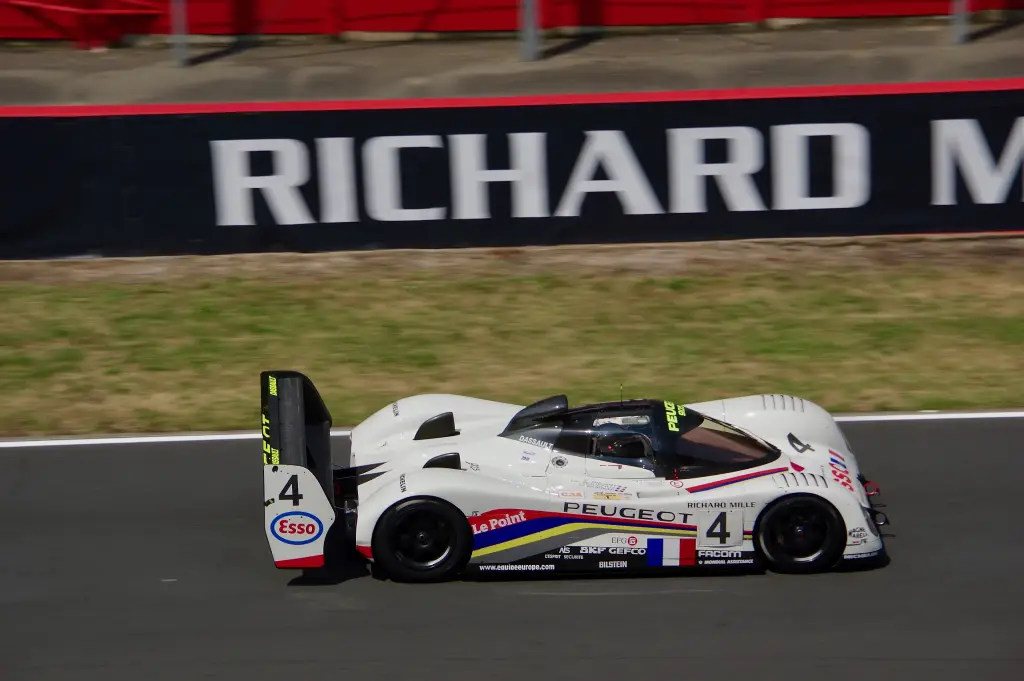
The Peugeot 905 is a sports-prototype racing car built by Peugeot Talbot Sport in the late 1980s. It won the 24 Hours of Le Mans in 1992 and 1993 and the World Sportscar Championship in 1992.
Peugeot 905 at a glance
| Type | Group C1 sports prototype |
|---|---|
| Project announced | November 1988 |
| Unveiled | 4 July 1990, Magny-Cours |
| Races entered | 17, of which 9 won |
| Engine | 3,499 cc 80-degree V10, 40 valves |
| Power | 650 PS at 12,500 rpm; about 725 PS in the 905B |
| Gearbox | six-speed sequential, mid-engine, rear-wheel drive |
| Chassis | carbon-fibre monocoque engineered by Dassault |
| Weight | 780 kg |
| Le Mans wins | 1992 and 1993 |
History of the Peugeot 905
Origins
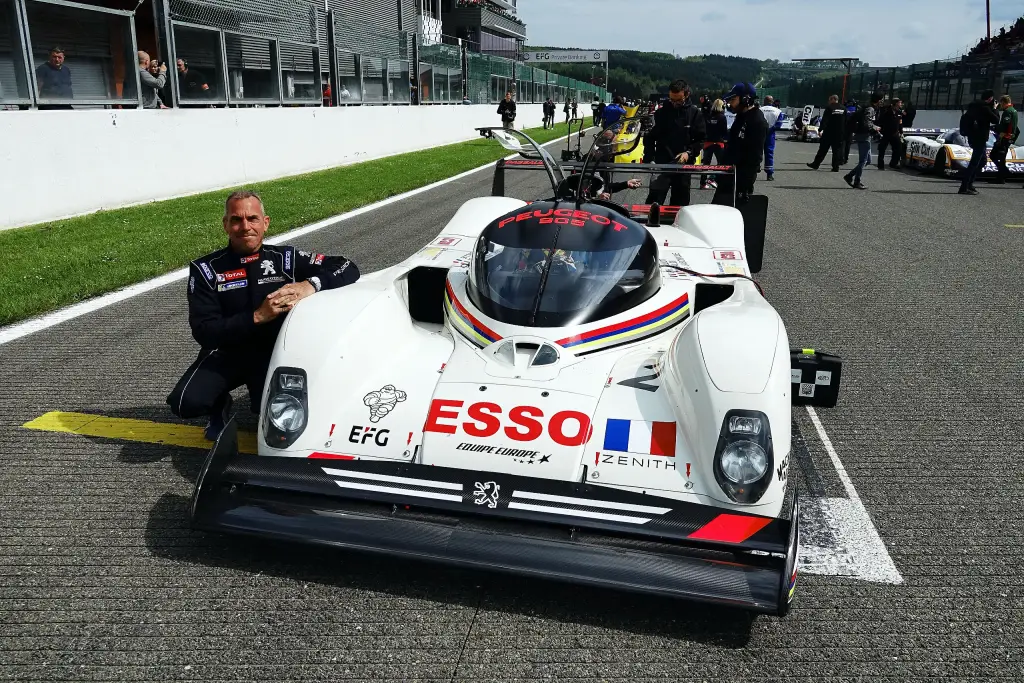
Peugeot had won the rally World Championship in 1985 and 1986, but turbocharged four-wheel-drive Group B cars were banned from the WRC for 1987 and the company moved to off-road events such as the Dakar in the meantime. In November 1988 Peugeot Talbot Sport, run by Jean Todt at Vélizy-Villacoublay near Paris, announced the 905 project for the 1991 World Sportscar Championship, which would use a new set of rules closer to Formula One technology than to Group C. The car used a carbon-fibre chassis engineered by Dassault and a light-alloy SA35-A1 V10 of 3,499 cc, similar to the Formula One engines of the time. It was built at Vélizy and unveiled on 4 July 1990 at Magny-Cours with Jean-Pierre Jabouille driving.
Racing
The 905 made its race debut in the final two rounds of the 1990 season, at Montreal and Mexico City, with Jabouille and Keke Rosberg sharing the car. It was slower than the contemporary Group C prototypes but notably quicker than the other 3.5-litre sports-prototypes.
In 1991, its first full season, the car was quicker than in 1990 but suffered performance and reliability problems and, more importantly, was much slower than the Jaguar XJR-14, which could match the lap times of most contemporary Formula One cars. It took a lucky win at Suzuka, while both cars entered at Le Mans failed to last four hours. To counter Jaguar, the car was heavily revised, carrying over only the cockpit into the 905B, with a two-tier rear wing, an optional full-width front wing and a more powerful SA35-A2 engine. The 905B debuted at the Nürburgring and the team ended the year with back-to-back one-two wins at Magny-Cours and Mexico, finishing second in the championship.
In 1992 only Peugeot and Toyota ran factory teams under the 3.5-litre rules, so competition was strong mainly at Le Mans, where the 905B brought two of the team’s three cars home first and third. The car also won the drivers’ and manufacturers’ titles in the 1992 World Sportscar Championship.
1993 and after
The World Sportscar Championship ceased to exist for 1993, though cars were still allowed at Le Mans in 1993 and 1994. Peugeot had begun a 905 Evolution 2 for 1993, but the car was never finished and the team concentrated on Le Mans with the Evolution 1B, taking a historic clean sweep of the first three places. Peugeot then withdrew from sportscar racing and moved to Formula One, supplying the same 3.5-litre V10 to McLaren from 1994 until the end of 2000. The company later returned to Le Mans in 2007 with the 908 HDi FAP.
Design and features
- Carbon monocoque: engineered by Dassault for the 905 project.
- V10 engine: 3,499 cc, 80 degrees, 40 valves, 650 PS at 12,500 rpm.
- 905B: new aerodynamics and the SA35-A2 engine.
- Le Mans record: wins in 1992 and a one-two-three in 1993.
- Formula One link: the same V10 powered McLaren from 1994.
Peugeot 905 versions
- 905 (1990): the original car with the SA35-A1 engine.
- 905B (1991): revised aerodynamics and the SA35-A2.
- 905 Evolution 1B (1993): the Le Mans sweep car.
- 905 Evolution 2: begun for 1993 but never finished.
The 905 came before the Peugeot 908, which returned Peugeot to Le Mans in 2007, and shares its racing background with the 905‘s successors in the Peugeot Sport programme. More in the Peugeot collection.
Video: Peugeot 905 V10 Le Mans winner 1993 Pure Sound @ Spa Francorchamps
Video by on YouTube.
Sources
- Peugeot 905, English Wikipedia: origins, seasons, results, specifications