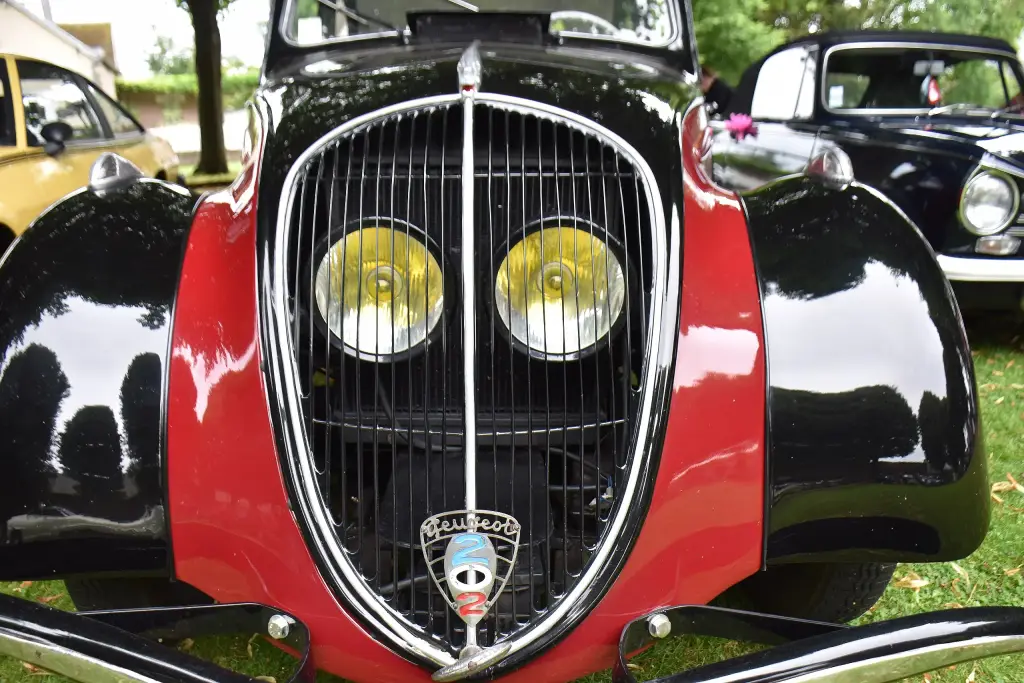
The Peugeot 202 is a small car that Peugeot produced from 1938 to 1942, briefly again in 1945 and from mid-1946 to 1949, when the 203 replaced it. In all, 104,126 were built.
Peugeot 202 at a glance
| Production | 1938–1942, 1945, 1946–1949 |
|---|---|
| Launched | 2 March 1938 |
| Engine | 1,133 cc water-cooled four-cylinder, overhead valves |
| Power | 30 PS at 4,000 rpm |
| Top speed | about 100 km/h |
| Gearbox | three-speed manual, synchromesh on the top two ratios |
| Front suspension | independent |
| Bodies | berline, berline découvrable, cabriolet, timber hatch |
| Battery | mounted ahead of the radiator |
| Total built | 104,126 |
History of the Peugeot 202
Launch in 1938
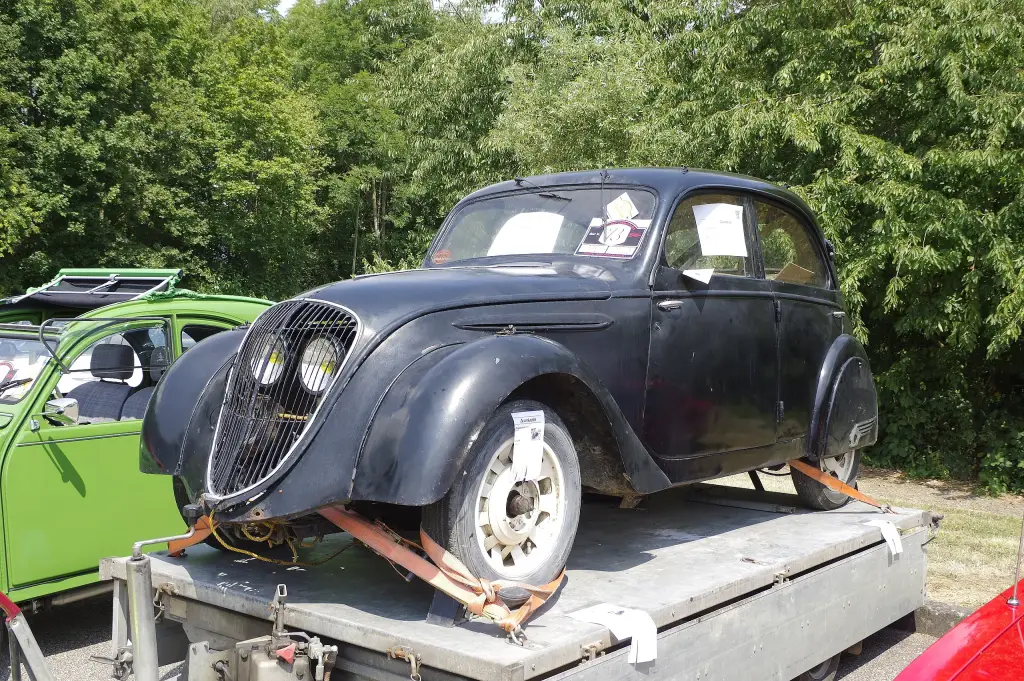
Production began in January 1938 and the car was launched on 2 March 1938 with a dinner and a presentation for the specialist press in the Bois de Boulogne in Paris. The previous autumn, at the 1937 Paris Motor Show, Peugeot had held a “referendum” among visitors to find out what customers wanted from the new small car then under development, an exercise that generated useful pre-launch publicity.
The body
The steel-bodied 202 was recognisable as a Peugeot by its headlights, set close together and protected behind the front grille as on the older 302. Most customers chose the four-door berline, which by 1948 came with a steel-panel sliding sunroof in the price, though the boot was small and could only be reached from inside the car. The two-seat two-door cabriolet had a separate boot lid but cost about 30% more. Priced close to the berline was a four-door berline découvrable with a full folding hood, a body type that became hard to build once monocoque structures took over with the 203. Both the 202 and the 203 had front suicide doors.
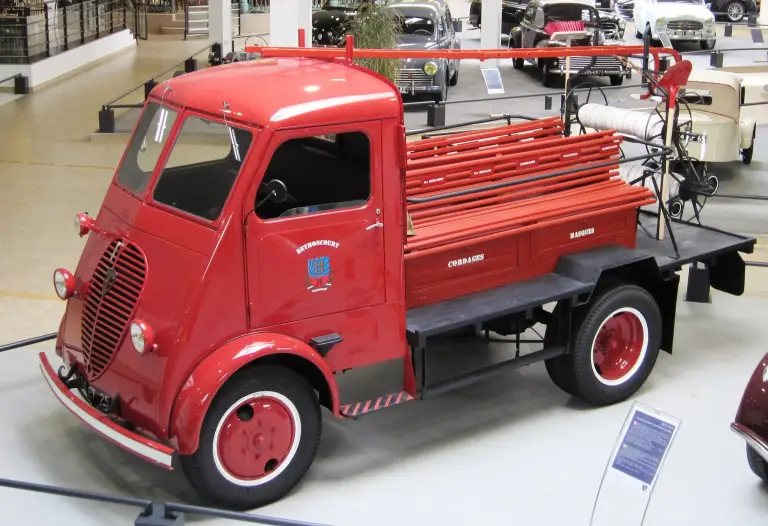
Between 1947 and 1949 Peugeot built 3,015 timber-bodied hatchback conversions, 55% dearer than the berline and on a slightly longer chassis. The use of timber went back to a technology abandoned in 1931 and was above all a response to the shortage of sheet steel in post-war France.
Chassis and engine
With the body removed, the most obvious feature of the chassis was the battery, mounted below and ahead of the radiator. The sloping front grille shared with the 402 and 302 made that arrangement possible and made the battery easy to reach. The 1,133 cc overhead-valve engine produced 30 PS at 4,000 rpm and gave a top speed of about 100 km/h, at a time when the Renault Juvaquatre still used a side-valve unit. Drive went to the rear wheels through a three-speed gearbox with synchromesh on the top two ratios. Independent front suspension, which the 201 had introduced to the mass market in 1931, was fitted again, so the whole Peugeot range had it.
Post-war updates
Hydraulic brakes arrived for 1946, and the wheels changed from the elaborate Pilote pattern to simpler pressed discs when production resumed after the war. The dashboard was redesigned with a small glovebox, and for 1948 the cars received chrome hub caps and new hydraulic shock absorbers of the design prepared for the 203. A final version, the 202 Affaires of October 1948, was a reduced-specification car without heater or sunroof and on thinner tyres, at 320,000 francs, more than 6% below the standard car; the cabriolet was dropped shortly afterwards.
Design and features
- Headlights behind the grille: the family look shared with the 302 and 402.
- Independent front suspension: standard across the range.
- Overhead valves: more modern than the side-valve Renault Juvaquatre.
- Battery ahead of the radiator: an unusual position that made servicing easy.
- Timber hatchback: 3,015 built for lack of sheet steel after the war.
Peugeot 202 versions
- Berline: the four-door saloon, the main seller.
- Berline découvrable: four-door with a full folding hood.
- Cabriolet: two-seat two-door with a separate boot lid.
- Hatch (1947–1949): 3,015 timber-bodied conversions on a longer chassis.
- 202 Affaires (1948): stripped-down version sold below the standard car.
The 202 followed the Peugeot 201 and was replaced by the 203, its direct successor in the range. More in the Peugeot collection.
Video: Video peugeot 202 1949
Video by on YouTube.
Sources
- Peugeot 202, English Wikipedia: launch, bodies, chassis, engine, updates, production