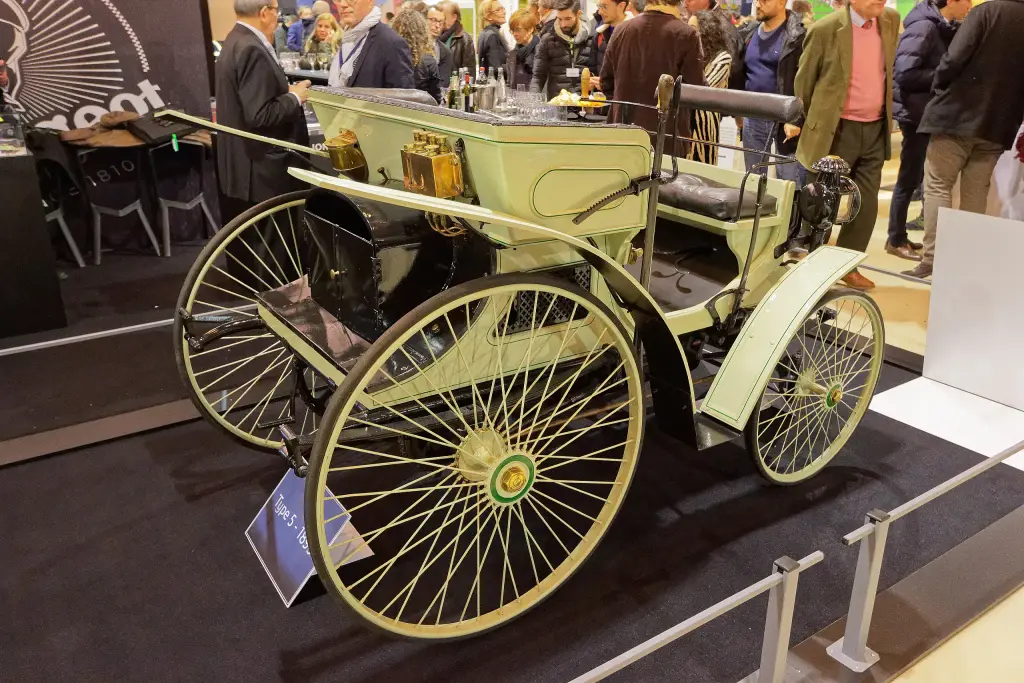
The Peugeot Type 5 was a small car produced from 1893 to 1896. Mechanically, little was changed from the Peugeot Type 3.
Peugeot Type 5 at a glance
| Production | 1893–1896 |
|---|---|
| Based on | Peugeot Type 3 |
| Engine | 2 hp V-twin, unchanged from the Type 3 |
| Body | shorter and lighter than the Type 3 |
| Number sold | 14 |
| Related event | Peugeot’s success in the 1894 Paris–Rouen contest |
based on one short source
History of the Peugeot Type 5
A smaller Type 3
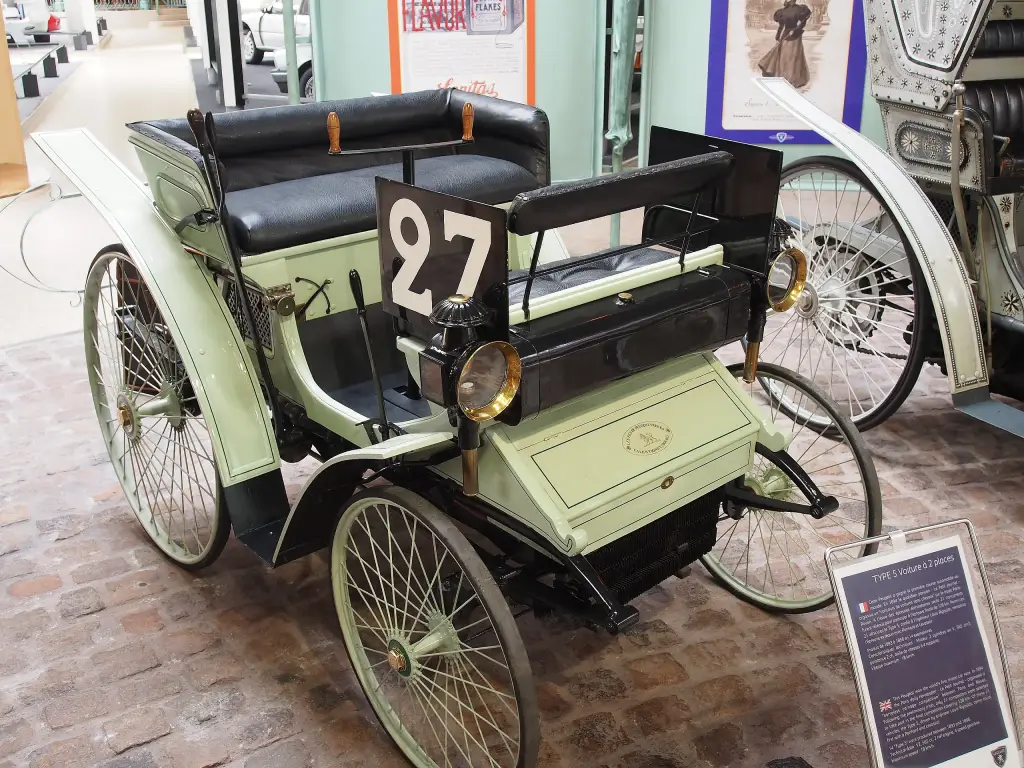
The Type 5 kept the engine and most of the mechanical parts of the Type 3 unchanged, but the car was shorter, lighter and therefore made more of its 2 horsepower. Against the larger Peugeot models of the time it did not fare well: a total of 14 were sold, and it stayed in production from 1893 to 1896.
The 1894 Paris–Rouen contest
In the same period came the 1894 Paris–Rouen “contest for horseless carriages” organised by Le Petit Journal. Albert Lemaître, driving a 3 hp Peugeot, was the first petrol-engined finisher, and five Peugeots reached the finish at Rouen: Lemaître, Auguste Doriot, Émile Kraeutler, “Michaud” and Louis Rigoulot. The firm of Les Fils de Peugeot Frères was judged to have won the first prize, the 5,000 franc Prix du Petit Journal, which it shared equally with Panhard et Levassor.
Place in the range
The Type 5 sits between the Type 3, Peugeot’s first volume model, and the larger types that followed, such as the Type 10 with its big V-twin. It shows how Peugeot in the 1890s developed its range by varying size and bodywork around a small number of mechanical designs.
Design and features
- Small and light: a shorter Type 3 that made more of 2 hp.
- Unchanged mechanics: the same engine and most parts as the Type 3.
- Rare: only 14 cars sold over three years.
- Racing heritage: the page recalls the Peugeot win at Paris–Rouen in 1894.
Peugeot Type 5 versions
- Type 5 (1893): the only version.
The Type 5 was based on the Peugeot Type 3 and sat below the larger Type 10. More in the Peugeot collection.
Sources
- Peugeot Type 5, English Wikipedia: production, relation to Type 3, sales, 1894 contest